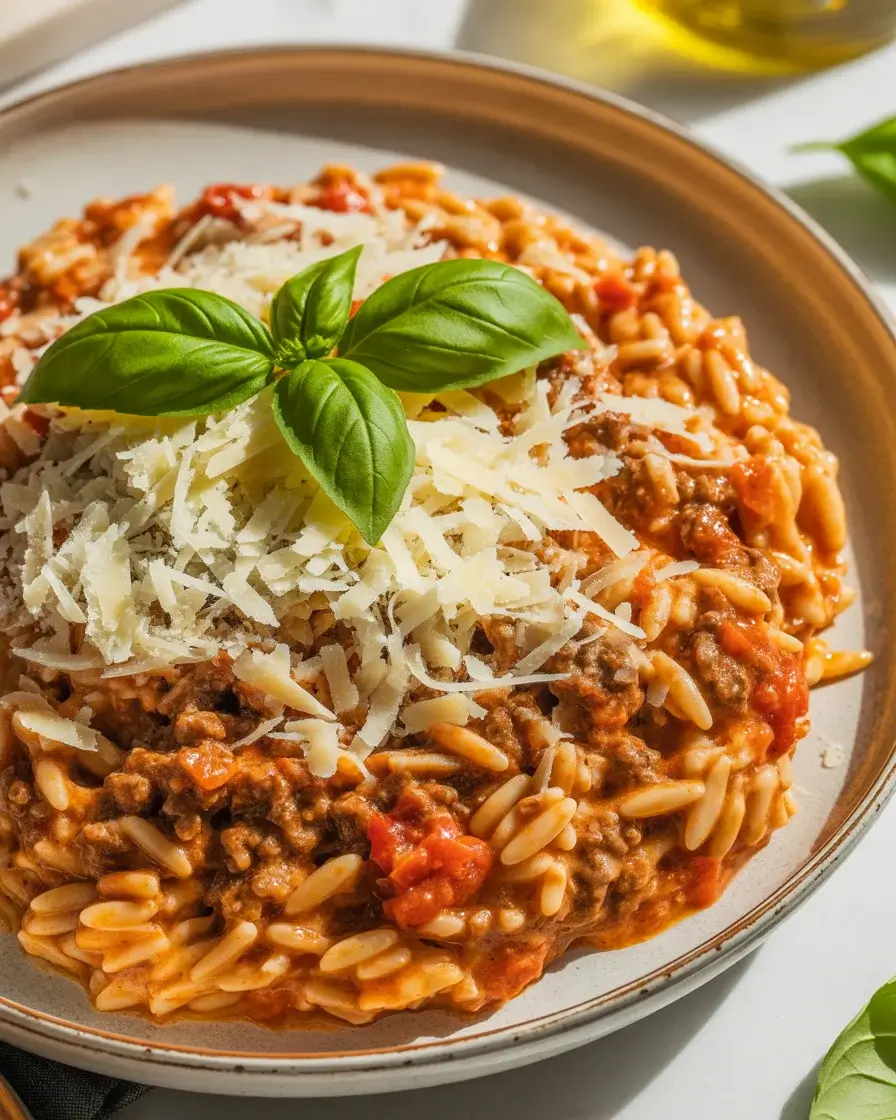
Ground Beef Orzo with Tomato Cream Sauce
After burning my first batch of orzo by treating it like regular pasta, I discovered this dish rewards a hands-on approach. The pasta absorbs the sauce as it cooks, creating something way more flavorful than if you boiled them separately.
What you get is a silky, tomato-kissed cream sauce clinging to every grain, studded with seasoned beef. It has become my most-requested weeknight dinner since I nailed it on test batch number seven.
Step-by-Step Instructions
Step 1: Brown the Ground Beef
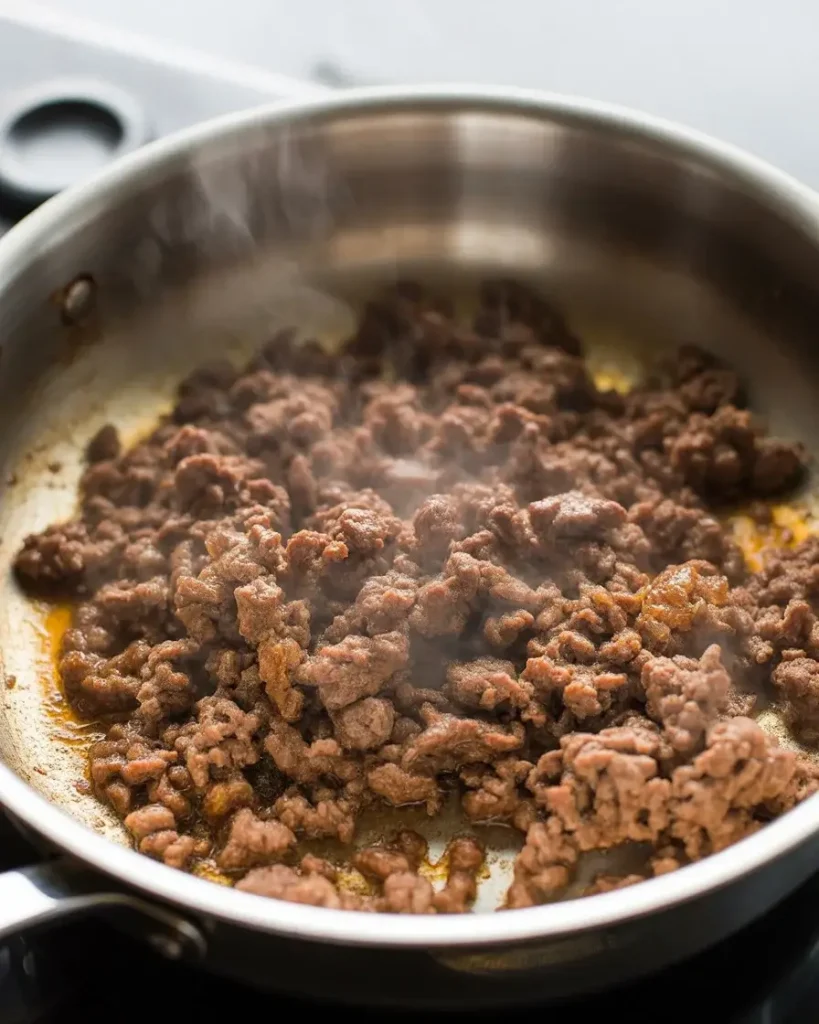
Heat a large deep skillet over medium-high heat until you can feel warmth radiating from your palm above it. Add 1 lb ground beef (80/20 fat ratio works best) and break it apart with a wooden spoon. Cook for 6-8 minutes until deep brown edges form and no pink remains.
Do not stir constantly. I learned after 10+ attempts that leaving it alone for 2-3 minutes at a time builds better flavor through caramelization. Drain excess fat but leave about 1 tablespoon for sauteing the aromatics.
Step 2: Saute the Aromatics
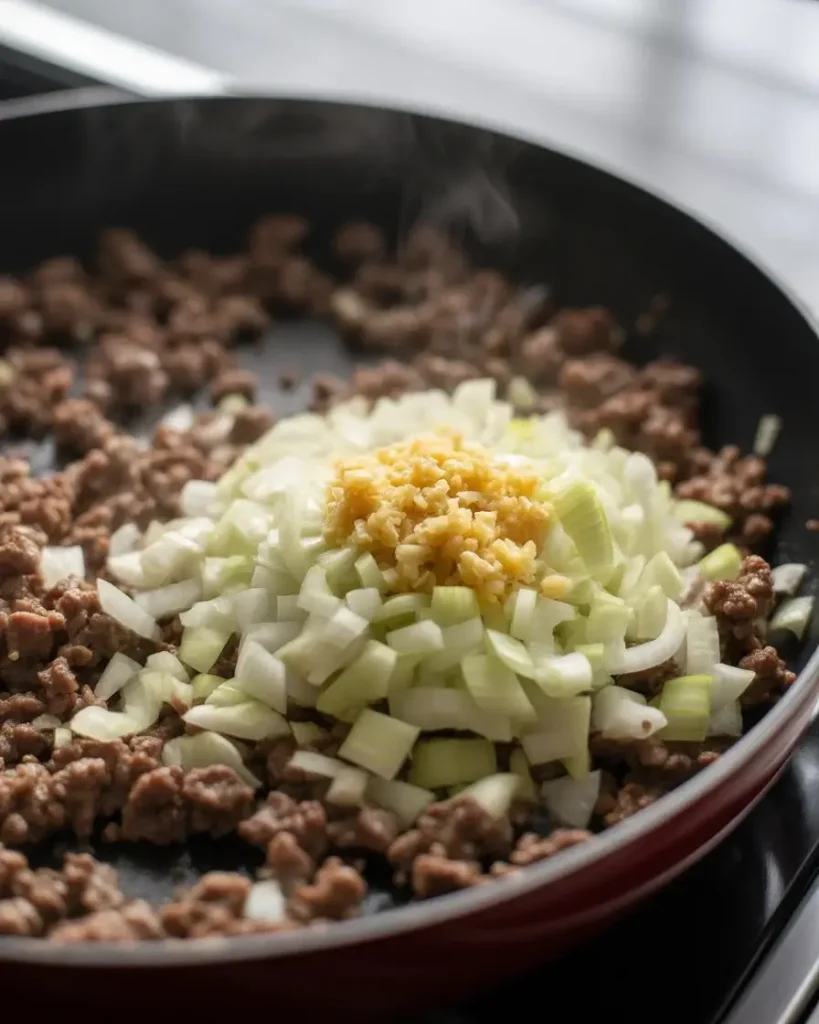
Push the beef to one side and add 1 diced yellow onion and 4 minced garlic cloves directly to the fat in the pan. Saute for 3-4 minutes, stirring occasionally, until the onion turns translucent and smells sweet rather than sharp.
You should hear a steady sizzle and notice the garlic turning golden at the edges. I once skipped this step and dumped everything in together – the garlic never developed properly and the whole dish tasted flat. Don’t skip it.
Step 3: Toast the Orzo
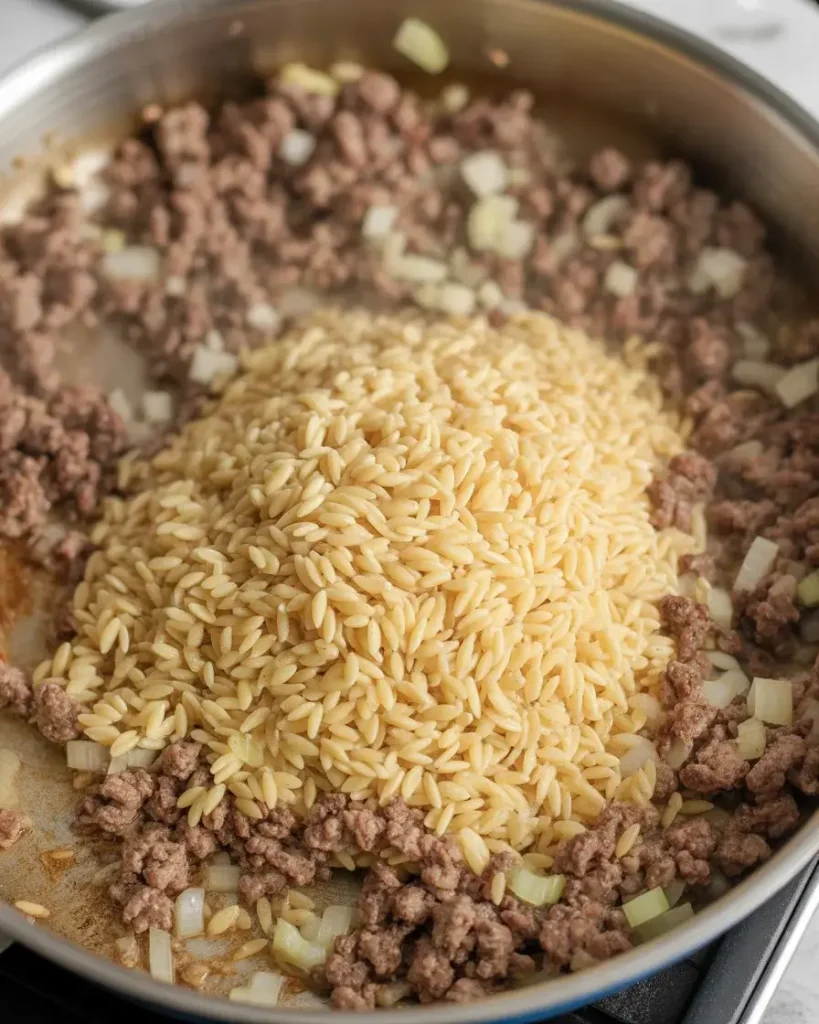
Add 1.5 cups of dry orzo directly to the pan with the beef and aromatics. Stir constantly for 60-90 seconds over medium heat. The orzo should turn a faint golden color and smell slightly nutty, like toasted bread.
This was my biggest discovery after testing this recipe over a dozen times. Toasting the raw orzo before adding liquid deepens the final flavor dramatically. Without it, the dish tastes good but not great. With it, there’s a nuttiness that makes people ask what your secret ingredient is.
Step 4: Add Tomatoes and Broth
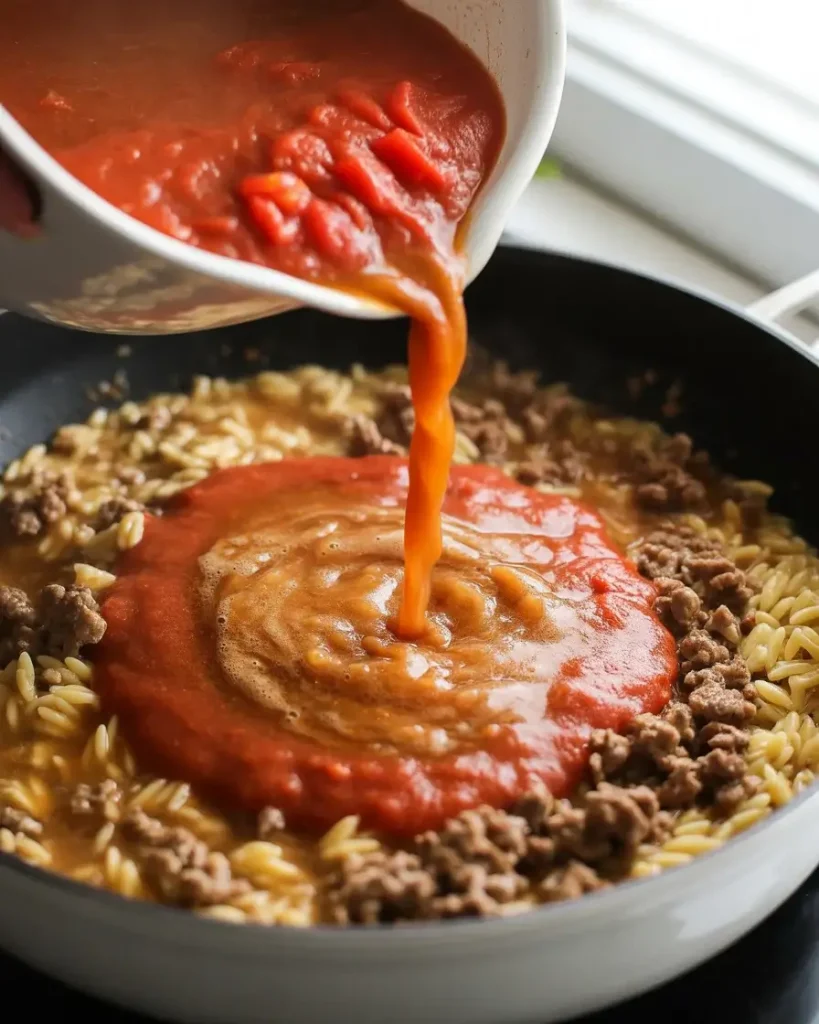
Pour in one 14-oz can of crushed tomatoes and 2.5 cups of low-sodium chicken broth. Stir in 1 teaspoon each of Italian seasoning, smoked paprika, and a half teaspoon of red pepper flakes. Season with 1 teaspoon of salt and a generous crack of black pepper.
Bring everything to a boil, then immediately reduce to a medium simmer. The liquid should bubble gently but not vigorously. I made the mistake of keeping the heat too high once and the orzo cooked unevenly with some overcooked pieces and some still crunchy.
Step 5: Simmer Until Orzo is Tender
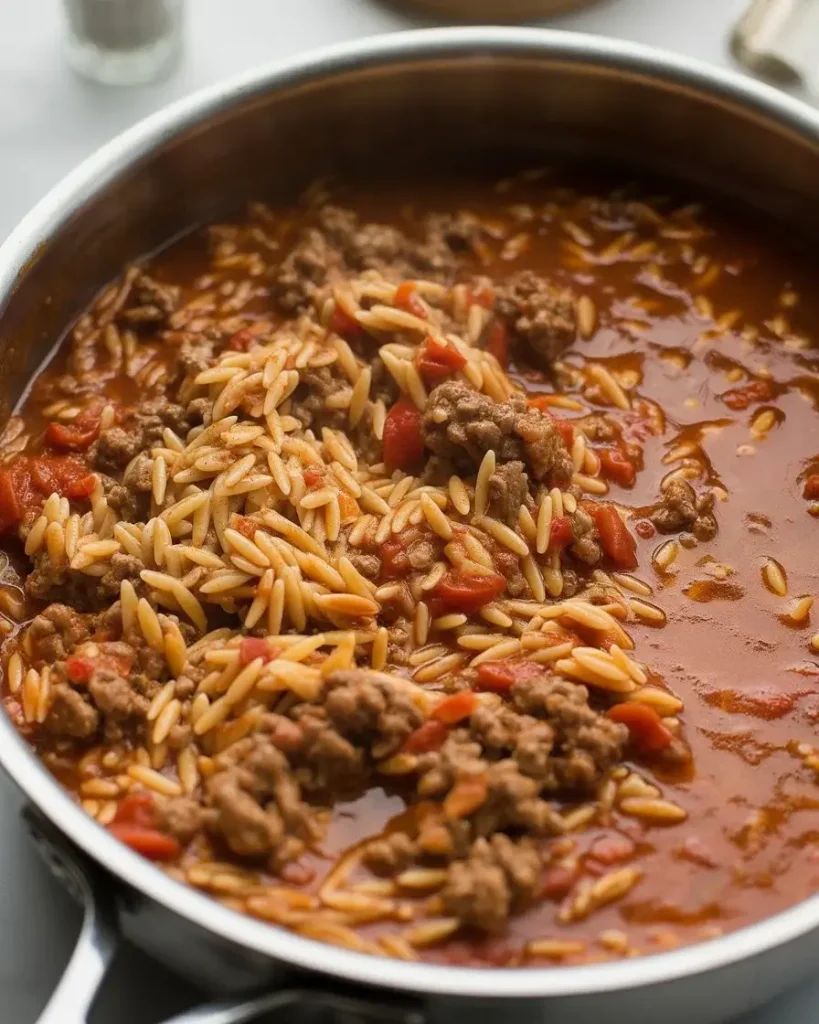
Cook uncovered for 10-12 minutes, stirring every 2-3 minutes to prevent the orzo from sticking to the bottom. The orzo should absorb most of the broth and become tender but still have a slight chew (al dente).
If the pan looks too dry before the orzo is cooked, add broth in quarter-cup increments. If it still looks soupy at the 10-minute mark, give it 2 more minutes uncovered. You are looking for a thick, saucy consistency where the orzo moves slowly when you stir it.
Step 6: Stir in the Cream
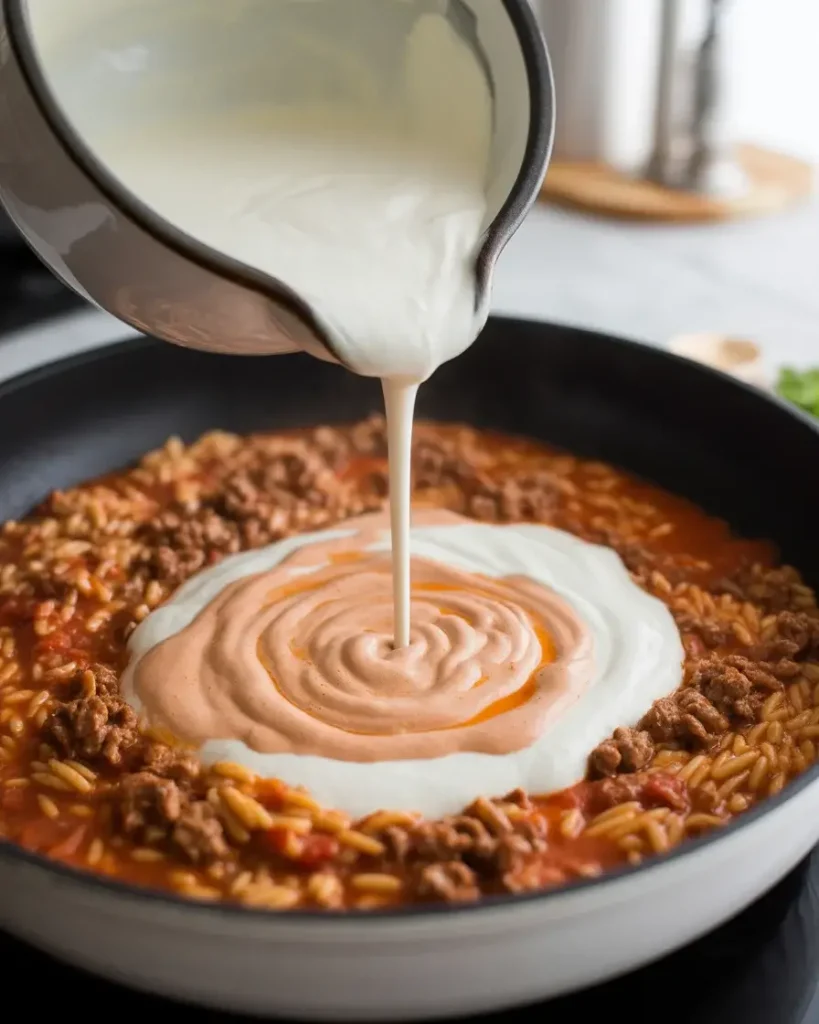
Remove the pan from heat and pour in half a cup of heavy cream. Stir slowly and consistently for about 30 seconds until fully incorporated. The sauce will lighten from deep red to a beautiful rosy orange and become visibly silkier.
Taste and adjust salt now before serving. I tested this with half-and-half versus heavy cream across six batches – heavy cream wins every time. Half-and-half can break or look thin, while heavy cream stays lush and coats the orzo properly.
Step 7: Garnish and Serve
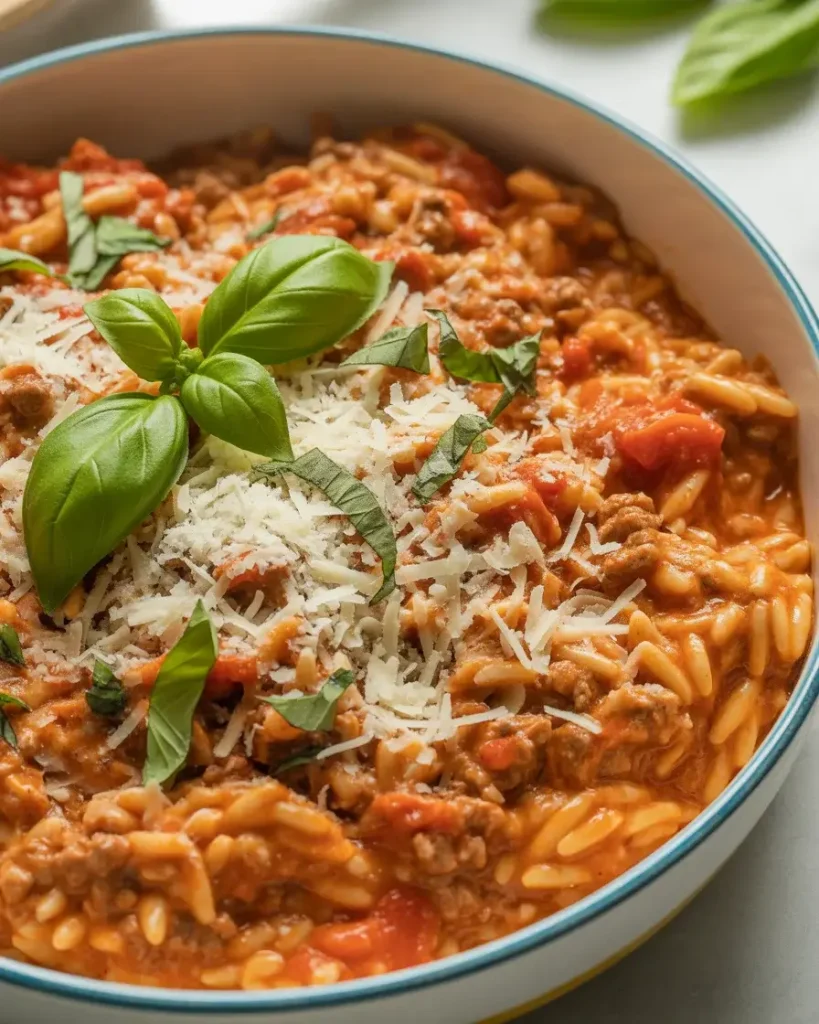
Spoon into shallow bowls and top with freshly grated Parmesan, a handful of fresh basil leaves, and a drizzle of good olive oil. Serve immediately while hot and creamy because the orzo will continue absorbing the sauce as it sits.
I always set out extra Parmesan at the table. Without exception, everyone adds more. The saltiness of the cheese against the sweet cream sauce is what makes every bowl taste restaurant-quality.
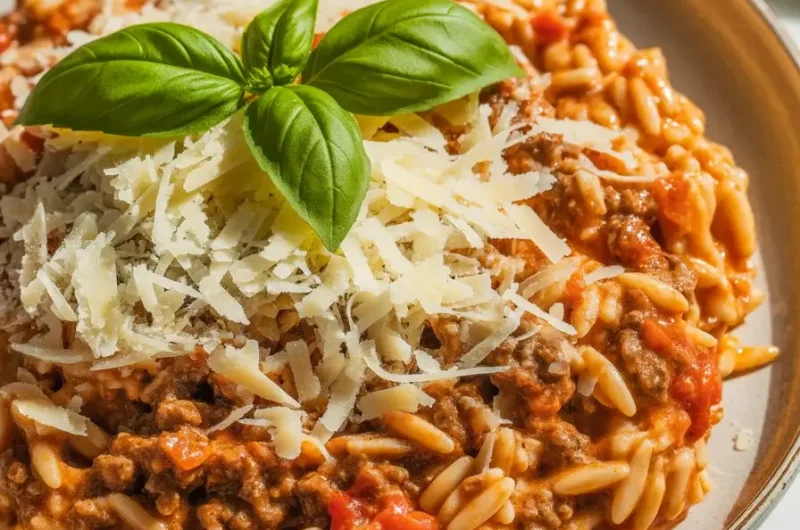
Ground Beef Orzo with Tomato Cream Sauce
Course: DinnerCuisine: American-ItalianDifficulty: Easy4
servings5
minutes25
minutes30
minutesA one-pan weeknight dinner with seasoned ground beef and orzo simmered directly in a rich, silky tomato cream sauce. Ready in 30 minutes with minimal cleanup.
Ingredients
1 lb ground beef (80/20)
1 medium yellow onion, diced
4 garlic cloves, minced
1.5 cups dry orzo pasta
1 can (14 oz) crushed tomatoes
2.5 cups low-sodium chicken broth
0.5 cup heavy cream
1 tsp Italian seasoning
1 tsp smoked paprika
0.5 tsp red pepper flakes
1 tsp salt
Black pepper to taste
Freshly grated Parmesan, for serving
Fresh basil, for garnish
Olive oil drizzle, for finishing
Directions
- Heat a large deep skillet over medium-high. Add ground beef and cook 6-8 minutes, breaking apart, until deep brown.
- Drain excess fat, leaving 1 tablespoon. Add onion and garlic. Saute 3-4 minutes until soft.
- Add dry orzo. Stir constantly 60-90 seconds until faintly golden and nutty.
- Pour in crushed tomatoes and chicken broth. Add Italian seasoning, paprika, red pepper flakes, salt, and pepper. Stir to combine.
- Bring to a boil then reduce to a medium simmer. Cook uncovered 10-12 minutes, stirring every 2-3 minutes, until orzo is tender and most liquid is absorbed.
- Remove from heat. Stir in heavy cream until fully incorporated and sauce turns rosy.
- Taste and adjust salt. Serve in shallow bowls topped with Parmesan, basil, and a drizzle of olive oil.
Notes
- Store leftovers in an airtight container for up to 3 days. Add a splash of broth when reheating.
For a lighter version, substitute half-and-half, though the sauce will be thinner.
Add 2 cups of fresh spinach in the last 2 minutes of simmering for extra greens.
Do not freeze – cream sauces separate after thawing.
Nutrition Table (per serving)
| Nutrient | Amount |
|---|---|
| Calories | 580 |
| Total Fat | 28g |
| Sugars | 7g |
| Protein | 32g |
Trusted Resource Links: For safe ground beef handling and internal temperature guidance, visit the USDA Safe Temperature Chart. For general healthy eating tips to balance this hearty dinner, the American Heart Association Healthy Eating guide is a great resource.
What Makes Orzo Different from Other Pasta in This Recipe?
Orzo is rice-shaped pasta that absorbs broth like risotto rather than just cooking in water. This means it soaks up the tomato and beef flavors completely, making every bite more intensely seasoned than regular pasta dishes.
I tested this recipe with penne, rotini, and orzo side by side on the same evening. The orzo version had noticeably deeper flavor because of that absorption quality. The other pastas tasted more like pasta with sauce on top, while the orzo became part of the sauce.
Orzo also releases starch as it cooks, which naturally thickens the sauce without needing flour or cornstarch. That is why the consistency becomes so luxuriously thick even before you add the cream.
The small size means quicker cook time too. Orzo reaches al dente in 10-12 minutes directly in the sauce, compared to 18-22 minutes for larger shapes. This keeps the one-pan method fast and practical.
Can You Make This Recipe Ahead and Reheat It?
Yes, but with one important adjustment. The orzo continues absorbing liquid even after cooking. By the next day, what was a saucy dish becomes thick and clumped together in the fridge.
When reheating, add a splash of broth or water (about 2-3 tablespoons per serving) to the pan over medium-low heat. Stir gently as it warms and the sauce will loosen back to its original creamy consistency within 3-4 minutes.
I tested this at the 24-hour and 48-hour marks. At 24 hours, a small broth splash fixes everything perfectly. At 48 hours, it needs a bit more liquid and a fresh handful of Parmesan to revive the flavor.
Store leftovers in an airtight container for up to 3 days. Do not freeze this dish because heavy cream sauces separate after thawing and the orzo texture turns mushy.
How Do You Build a Richer Tomato Cream Sauce?
The three keys I discovered through repeated testing are: fat content in your beef, quality of crushed tomatoes, and cream added off heat.
Use 80/20 ground beef, not the leaner 90/10. The extra fat carries flavor and keeps the meat tender rather than crumbly. When I switched to leaner beef during a health-conscious test batch, the sauce immediately lost its richness.
Choose whole crushed tomatoes from San Marzano-style brands over standard diced tomatoes. They are naturally sweeter and less acidic, which means you don’t need to add sugar to balance the sauce.
Always remove the pan from heat before stirring in heavy cream. Adding cream to a boiling sauce can cause it to separate into greasy pools. Off-heat incorporation keeps it smooth and glossy every single time.
What Are the Best Additions and Variations for This Dish?
After making this 15+ times, I rotate through several additions depending on what is in the fridge. Spinach is my most frequent add-in – stir two big handfuls in during the last 2 minutes of simmering and it wilts right into the sauce.
Sun-dried tomatoes (about a quarter cup, drained) add a concentrated sweet-tart punch that takes the sauce to another level. Add them with the canned tomatoes. Diced zucchini, mushrooms, or red bell pepper can go in with the onion at the beginning for extra vegetables.
For a spicier version, double the red pepper flakes and add a teaspoon of calabrian chili paste with the tomatoes. I tested a white wine variation too – add a half cup of dry white wine after browning the beef and let it reduce completely before adding broth. It adds brightness and complexity.
Frequently Asked Questions
Q: Can I use a different pasta instead of orzo?
A: Orzo works best because it absorbs the sauce as it cooks. Other small shapes like ditalini or acini di pepe work similarly. Larger pastas like penne need to be boiled separately and won’t absorb flavor the same way.
Q: Can I substitute ground turkey for ground beef?
A: Yes. Use 93/7 ground turkey and add an extra tablespoon of olive oil since turkey is leaner. The dish will be lighter in flavor, so increase the smoked paprika to 1.5 teaspoons to compensate for the missing beef richness.
Q: Why does my sauce look separated or greasy?
A: This happens when cream is added to boiling liquid. Always remove the pan from heat completely before stirring in the cream. If it has already separated, add 2 tablespoons of cold broth and stir vigorously off heat to bring it back together.