Garlic Herb Parmesan Sourdough Discard Quick Bread
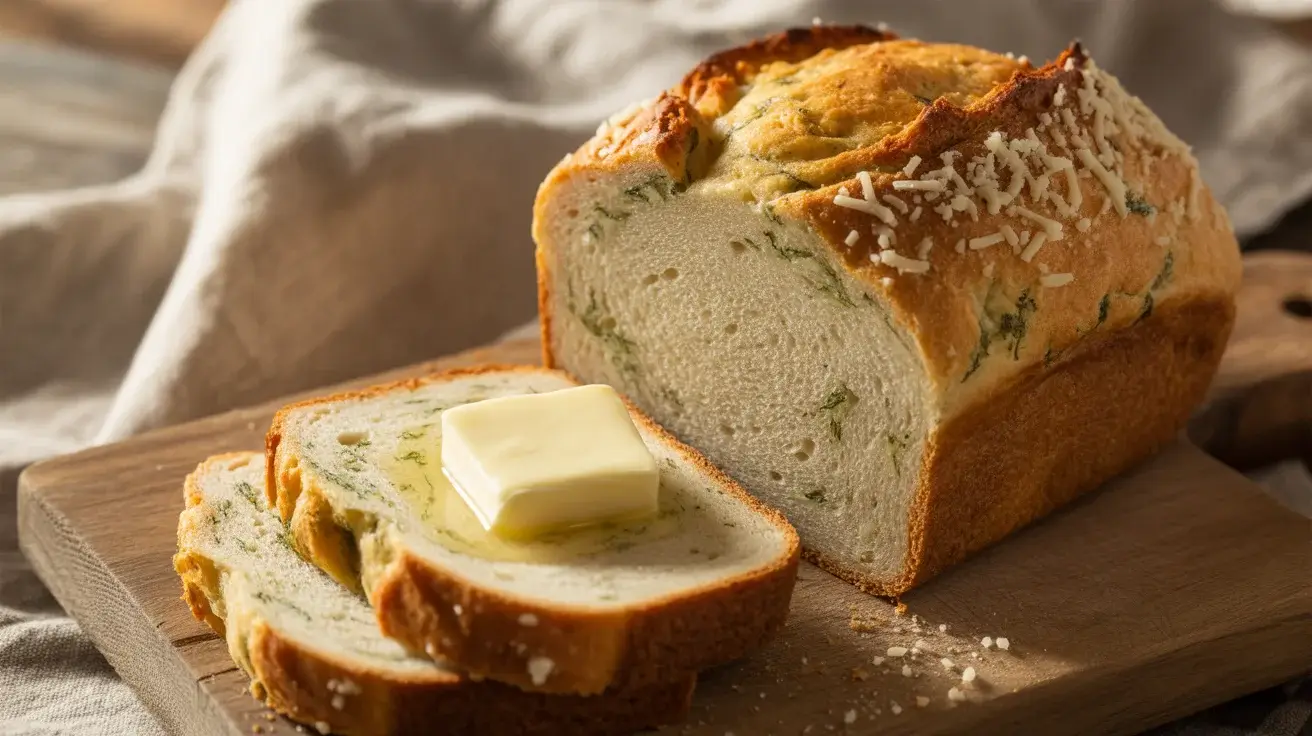
This garlic herb parmesan sourdough discard quick bread transforms your leftover starter into a savory, cheesy loaf that’s perfect for any meal. No kneading, no rising time—just mix, bake, and enjoy the most flavorful bread you’ve ever made with discard.
If you’ve been looking for ways to use sourdough discard beyond pancakes, this quick bread is about to become your new favorite recipe. It’s packed with fresh herbs, garlic, and nutty parmesan, creating a golden crust and tender crumb that rivals any artisan bakery loaf.
Why You’ll Love This Recipe
This sourdough discard quick bread requires zero waiting around for the dough to rise. Unlike traditional sourdough, you’ll have fresh bread on the table in about an hour from start to finish, making it perfect for busy weeknights or last-minute entertaining.
The combination of roasted garlic, fresh herbs, and sharp parmesan creates an irresistible savory flavor profile. Each slice has a crispy, golden exterior with a soft, moist interior that stays fresh for days when stored properly.
You’ll never waste sourdough starter again once you discover how versatile this recipe is. It works with any amount of discard (fed or unfed), and you can customize the herbs and cheese to match whatever you have in your fridge.
Key Ingredients
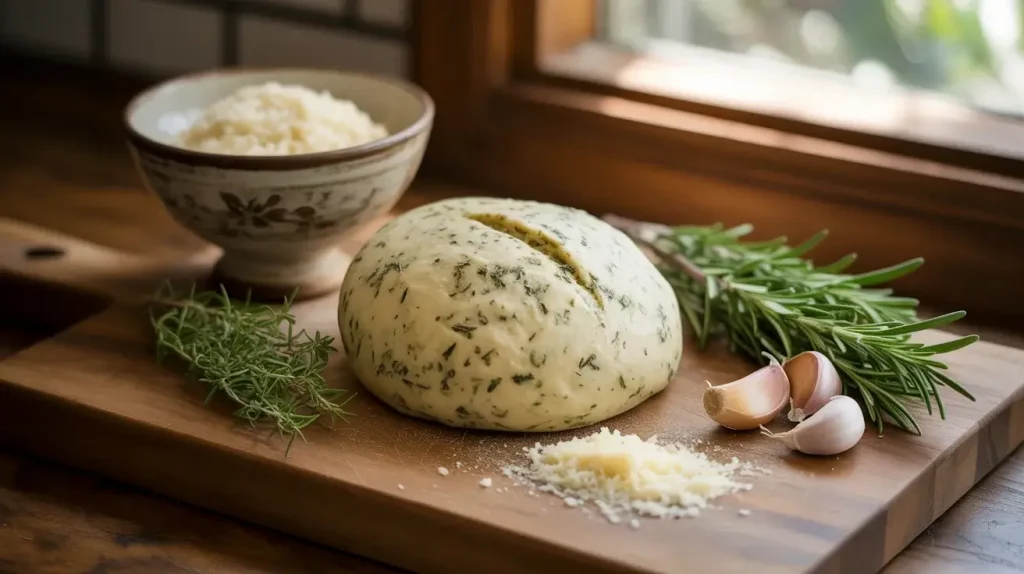
Sourdough discard is the star ingredient that adds subtle tang and incredible texture to this quick bread. You can use discard straight from the fridge—it doesn’t need to be active or recently fed, making this the ultimate zero-waste recipe.
Fresh herbs like rosemary, thyme, and parsley bring bright, aromatic flavor to every bite. Fresh herbs make a noticeable difference here, but dried herbs work in a pinch (use one-third the amount). Chop them finely so they distribute evenly throughout the batter.
Parmesan cheese adds nutty, salty depth and helps create that gorgeous golden crust. Use freshly grated parmesan for the best flavor and texture—the pre-shredded kind doesn’t melt as beautifully and contains anti-caking agents that can affect the bread’s texture.
Read More: Layered Pumpkin Cheesecake Bars: The Perfect Fall Dessert
How to Make It
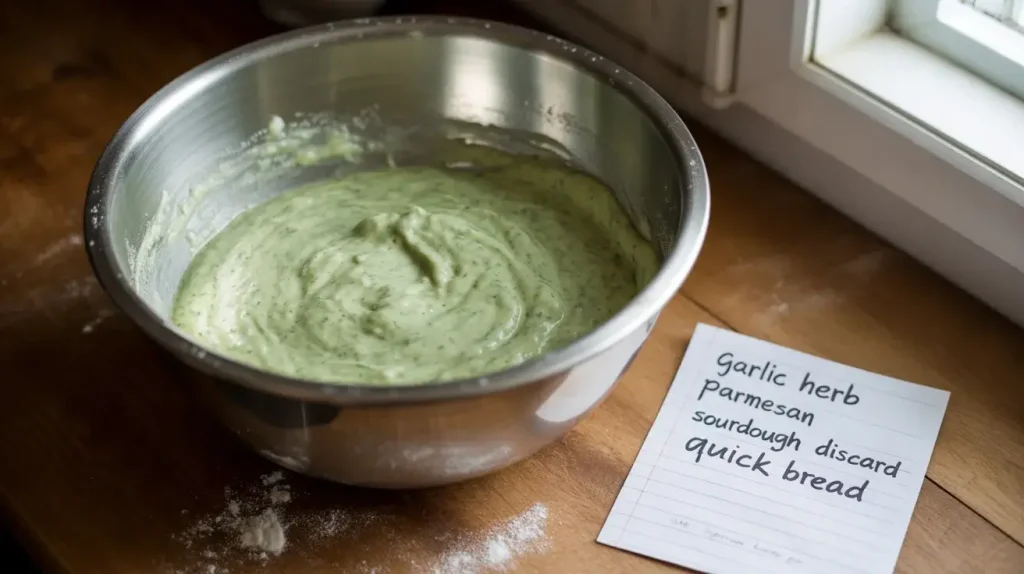
The process is incredibly straightforward—you’ll combine wet ingredients, fold in dry ingredients, and bake. Start by whisking together your sourdough discard, eggs, melted butter, and milk until smooth and well combined. The discard doesn’t need to be at room temperature; cold discard works perfectly fine.
In a separate bowl, mix your flour, baking powder, salt, minced garlic, herbs, and most of the parmesan (save some for topping). Gently fold the dry ingredients into the wet mixture until just combined—don’t overmix or your bread will be tough and dense.
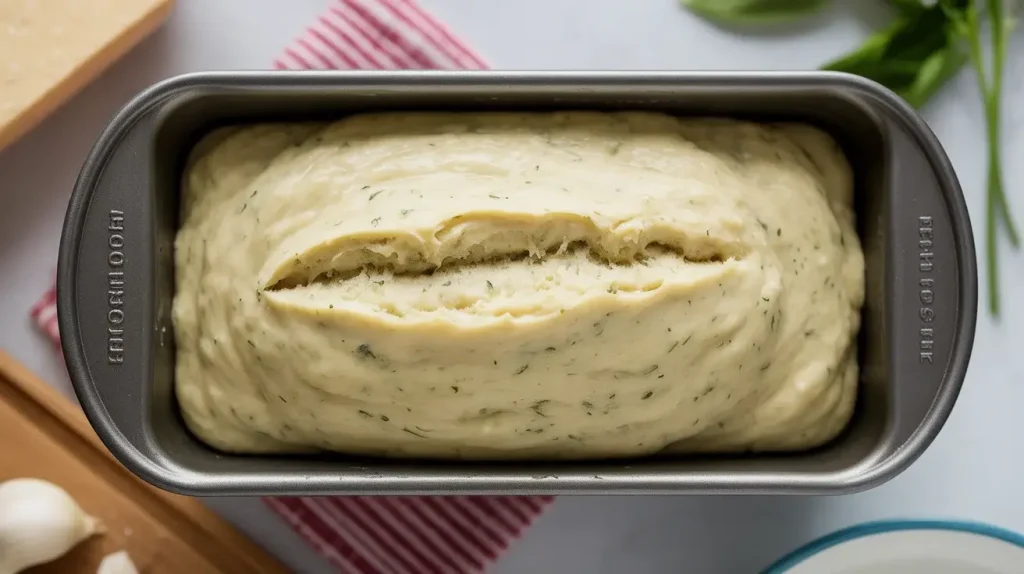
Pour the thick batter into a greased loaf pan, sprinkle with remaining parmesan, and bake until golden brown. The bread is done when a toothpick inserted in the center comes out clean and the top is deeply golden with crispy cheese edges.
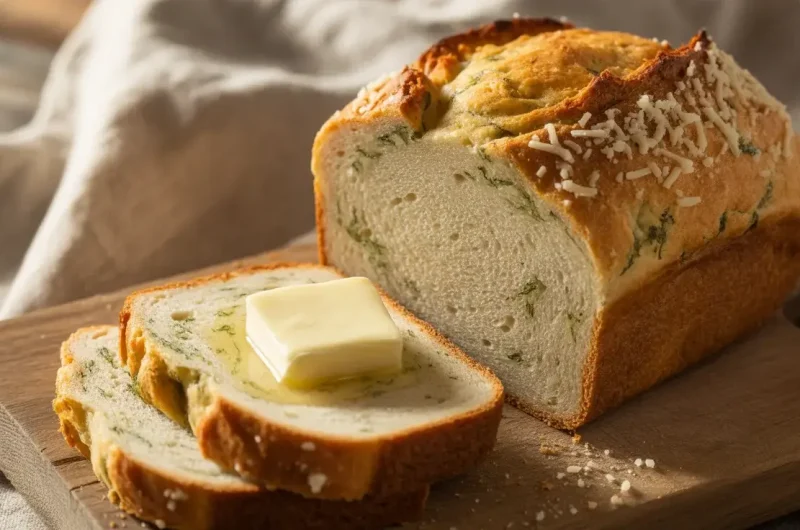
Garlic Herb Parmesan Sourdough Discard Quick Bread
Course: DessertCuisine: AmericanDifficulty: Easy10-12
servings15
45
minutes1
Ingredients
- Wet Ingredients:
1 cup (240g) sourdough discard (fed or unfed)
2 large eggs
¼ cup (60ml) melted butter or olive oil
½ cup (120ml) whole milk (or buttermilk)
- Dry Ingredients:
2 cups (250g) all-purpose flour
2 teaspoons baking powder
1 teaspoon salt
3 cloves garlic, minced
2 tablespoons fresh rosemary, chopped
2 tablespoons fresh thyme, chopped
2 tablespoons fresh parsley, chopped
1 cup (100g) freshly grated Parmesan cheese, divided
Directions
- Preheat oven to 375°F (190°C). Grease a 9×5-inch loaf pan and line with parchment paper, leaving overhang on the sides.
- Mix wet ingredients: In a large bowl, whisk together sourdough discard, eggs, melted butter, and milk until smooth and well combined.
- Combine dry ingredients: In a separate bowl, whisk together flour, baking powder, and salt. Stir in minced garlic, all herbs, and ¾ cup of the parmesan cheese.
- Preheat oven to 375°F (190°C). Grease a 9×5-inch loaf pan and line with parchment paper, leaving overhang on the sides.
- Transfer and top: Pour batter into prepared loaf pan and smooth the top. Sprinkle remaining ¼ cup Parmesan over the surface.
- Bake: Bake for 45-50 minutes, until the top is golden brown and a toothpick inserted in the center comes out clean.
- Cool: Let bread cool in the pan for 10 minutes, then use the parchment overhang to lift it out. Transfer to a wire rack and cool for at least 15 minutes before slicing.
Notes
- Herb substitutions: Use any combination of fresh herbs you prefer—basil, oregano, or dill work beautifully. If using dried herbs, use 2 teaspoons total.
Cheese options: Try gruyere, pecorino romano, or aged cheddar instead of parmesan. You can also add ½ cup shredded mozzarella for extra moisture.
Make it dairy-free: Use olive oil instead of butter, non-dairy milk, and nutritional yeast instead of parmesan (use ⅓ cup).
Add-ins: Fold in ½ cup sun-dried tomatoes, olives, or caramelized onions for extra flavor.
Pan size: This also works in an 8×8-inch square pan—reduce baking time to 35-40 minutes.
| Nutrient | Per Serving |
|---|---|
| Calories | 185 kcal |
| Total Fat | 8.5 g |
| Sugars | 1.2 g |
| Protein | 6.8 g |
| Dietary Fiber | 1.8 g |
Tips for Success
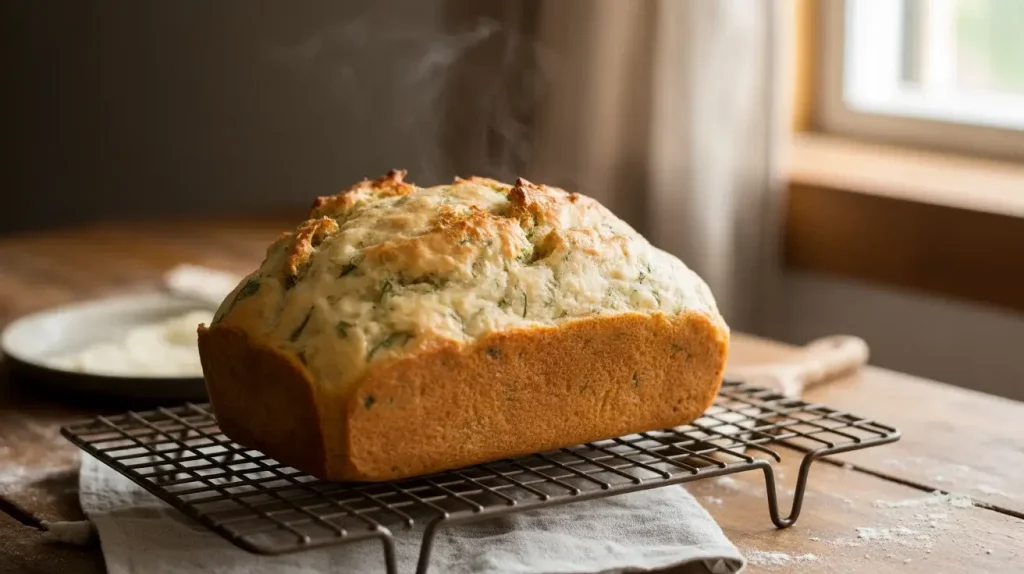
Don’t overmix the batter once you add the flour—stir until you just can’t see dry flour anymore. Overmixing develops too much gluten, which makes quick breads tough instead of tender. A few lumps in the batter are completely fine and normal.
Line your loaf pan with parchment paper for the easiest removal and cleanup. Grease the pan first, then press the parchment in so it sticks—this creates a sling that lets you lift the entire loaf out once it’s cooled slightly.
Let the bread cool in the pan for 10 minutes, then transfer to a wire rack. Slicing too early releases steam and makes the bread gummy inside. Wait at least 20 minutes before slicing for the cleanest cuts and best texture.
Serving Suggestions
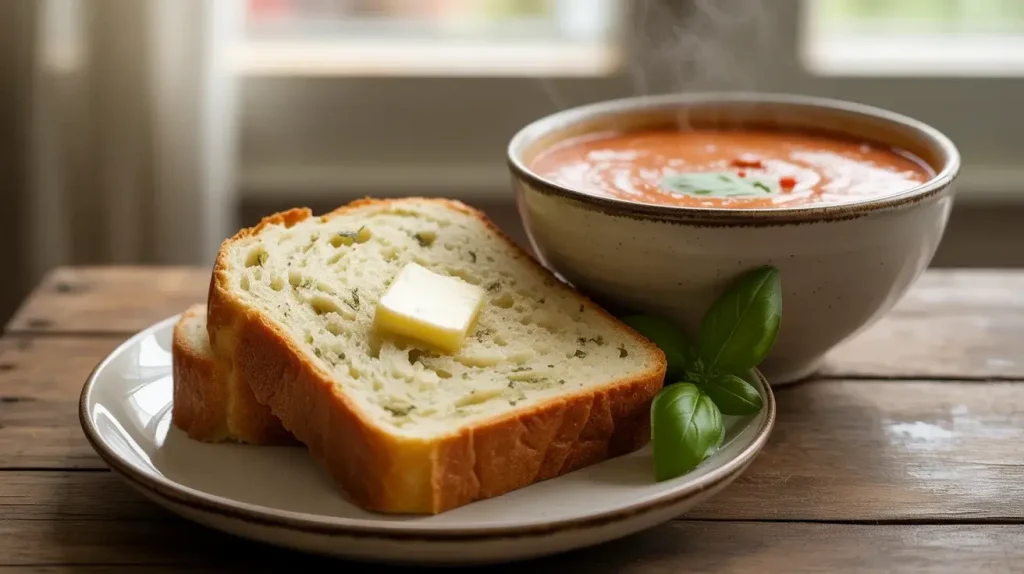
Serve this garlic herb sourdough quick bread warm with softened butter or olive oil for dipping. It’s phenomenal alongside soups, stews, or pasta dishes—the garlic and herb flavors complement Italian meals especially well.
Toast slices and use them for elevated sandwiches or paninis. The sturdy texture holds up beautifully to fillings, and toasting intensifies the garlic and parmesan flavors. Try it with fresh mozzarella, tomatoes, and basil for a caprese-style sandwich.
Turn it into garlic bread by brushing slices with garlic butter and broiling for 2-3 minutes. You can also cube it for homemade croutons that will transform any salad into something special.
Storage Instructions
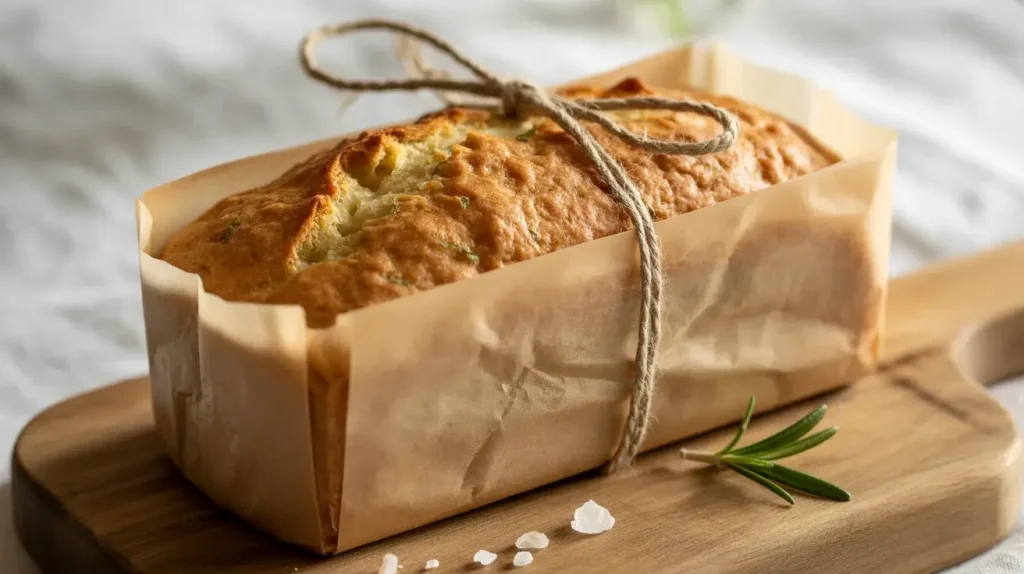
Store the cooled bread wrapped tightly in plastic wrap or in an airtight container at room temperature. It stays fresh and moist for up to 3 days—the parmesan actually helps preserve moisture, so it doesn’t dry out as quickly as plain quick breads.
Freeze individual slices wrapped in plastic wrap and stored in a freezer bag for up to 3 months. This way you can pull out just what you need for quick breakfasts or snacks. Toast frozen slices directly from the freezer—no thawing needed.
Refresh day-old bread by warming slices in a 300°F oven for 5-7 minutes. This revives the crust and makes it taste freshly baked again, perfect for serving to guests.
Frequently Asked Questions
Can I use active sourdough starter instead of discard?
Yes, absolutely! Active starter works just as well in this recipe. The bread might have a slightly more pronounced tangy flavor, but the texture and results will be nearly identical. Just use the same measurement (1 cup).
Why is my quick bread dense or gummy?
Overmixing is the most common culprit for dense quick bread. When you overmix the batter, you develop too much gluten, which creates a tough, dense texture. Also, make sure you’re using baking powder that’s fresh and not expired—old leavening agents won’t create the proper rise.
Can I make this recipe gluten-free?
You can substitute with a 1:1 gluten-free baking flour blend, but the texture will be slightly more crumbly. Make sure your blend contains xanthan gum for structure. Gluten-free versions may need 5-10 minutes less baking time, so check for doneness starting at 35 minutes.