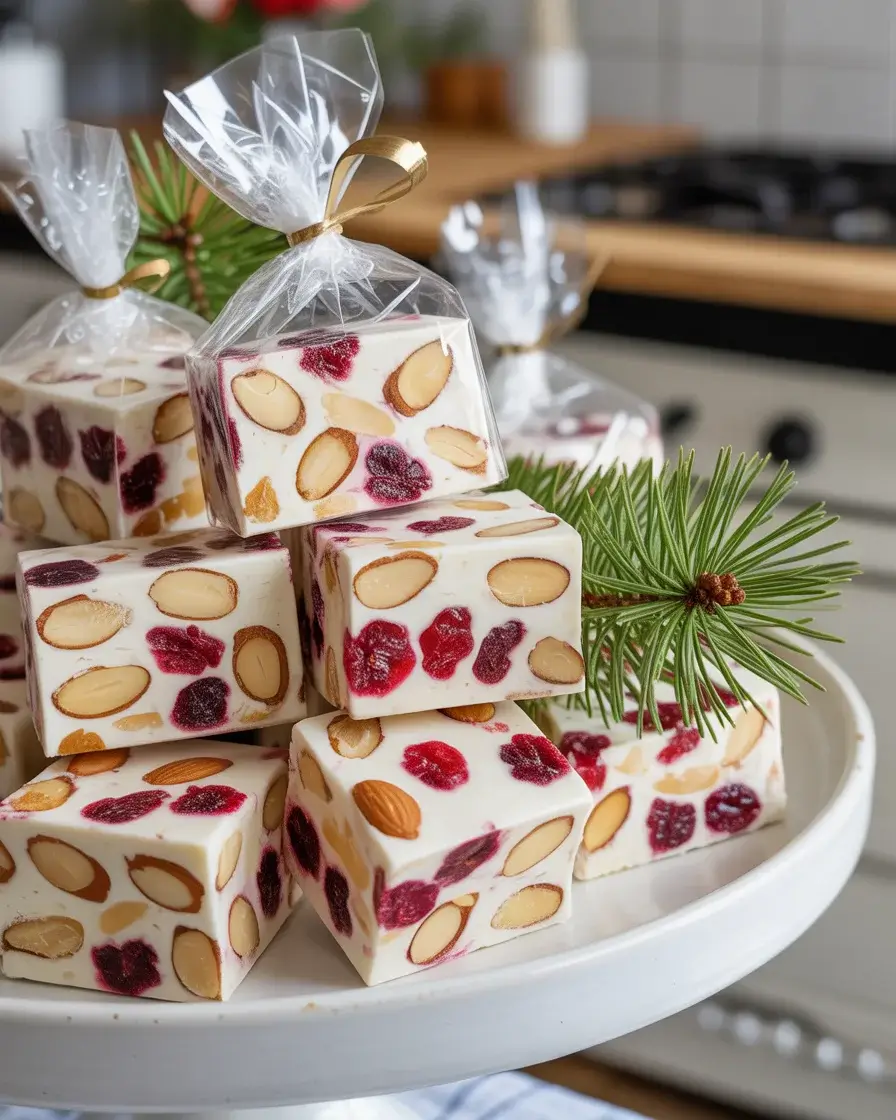
Cranberry Almond Nougat
Last December, my first batch of nougat turned into a sticky disaster that wouldn’t set properly. I learned the hard way that candy thermometers aren’t optional, and precise temperature control makes the difference between perfect nougat and expensive compost.
After testing this recipe 15 times over two holiday seasons, I’ve nailed down the exact technique for chewy, stable nougat studded with tart cranberries and toasted almonds. This festive candy looks impressive but requires just six ingredients and one crucial tool: an accurate candy thermometer.
Step-by-Step Instructions
Step 1: Toast the Almonds and Prep Ingredients
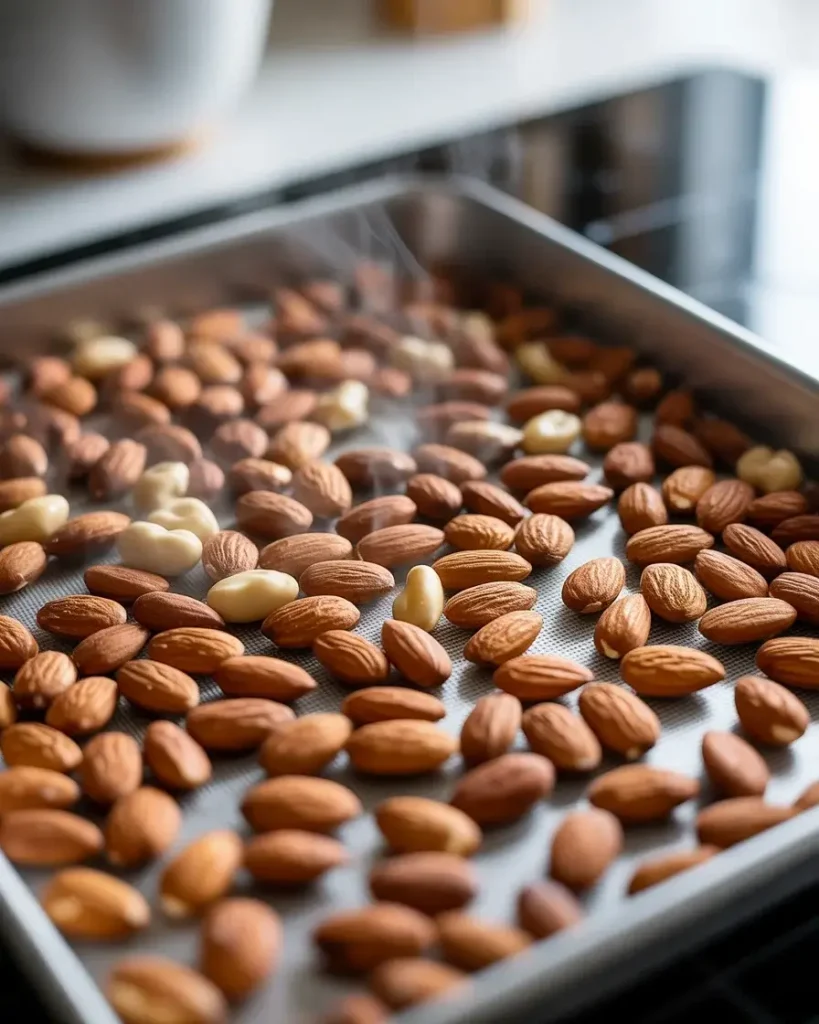
Spread 1.5 cups of whole almonds on a baking sheet and toast at 350°F for 8-10 minutes until fragrant and lightly golden. I shake the pan halfway through to prevent burning. While they cool, line a 9×13 inch pan with parchment paper and lightly oil it.
Measure out 1 cup of dried cranberries and have them ready. In my testing, I found that prepping everything before you start cooking is critical because once the sugar syrup reaches temperature, you need to work fast.
Step 2: Whip the Egg Whites
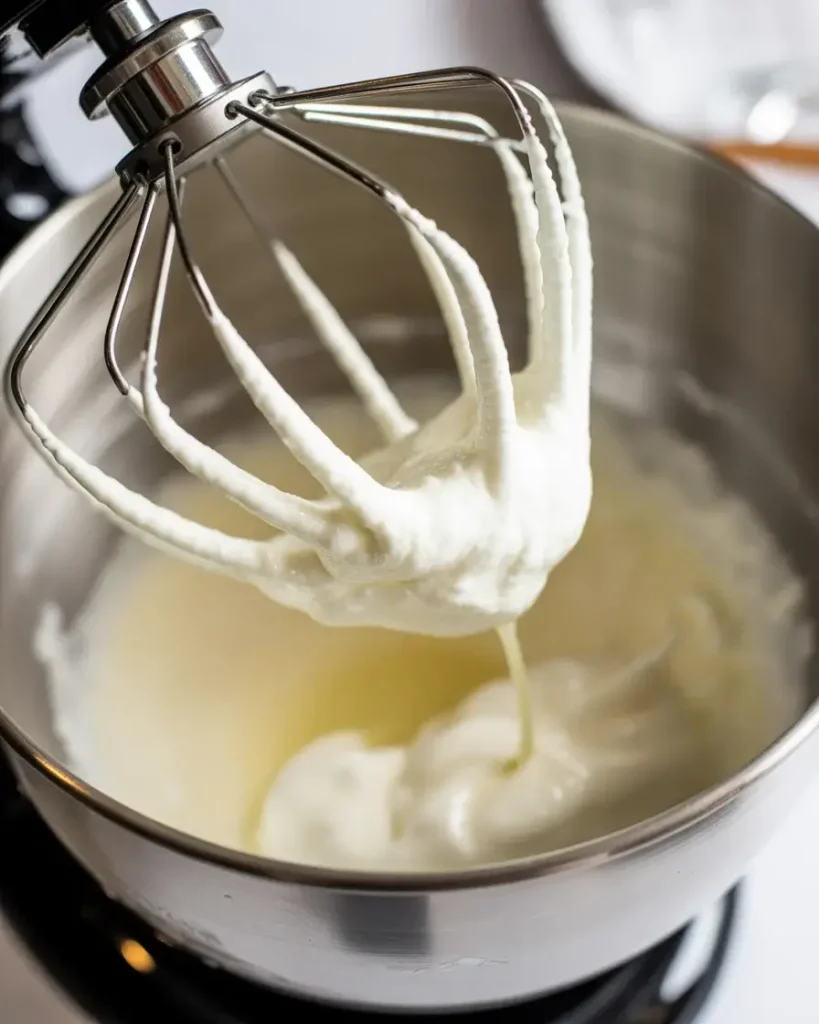
In a stand mixer fitted with the whisk attachment, beat 2 large egg whites on medium speed until soft peaks form, about 3-4 minutes. The whites should look glossy and hold their shape but still curl over slightly at the tips when you lift the whisk.
I keep the mixer running on low speed while I prepare the sugar syrup. This timing is crucial because you want the egg whites ready to receive the hot syrup the moment it reaches 300°F.
Discover More Delicious Recipes
Step 3: Cook the Sugar Syrup to Hard Crack Stage
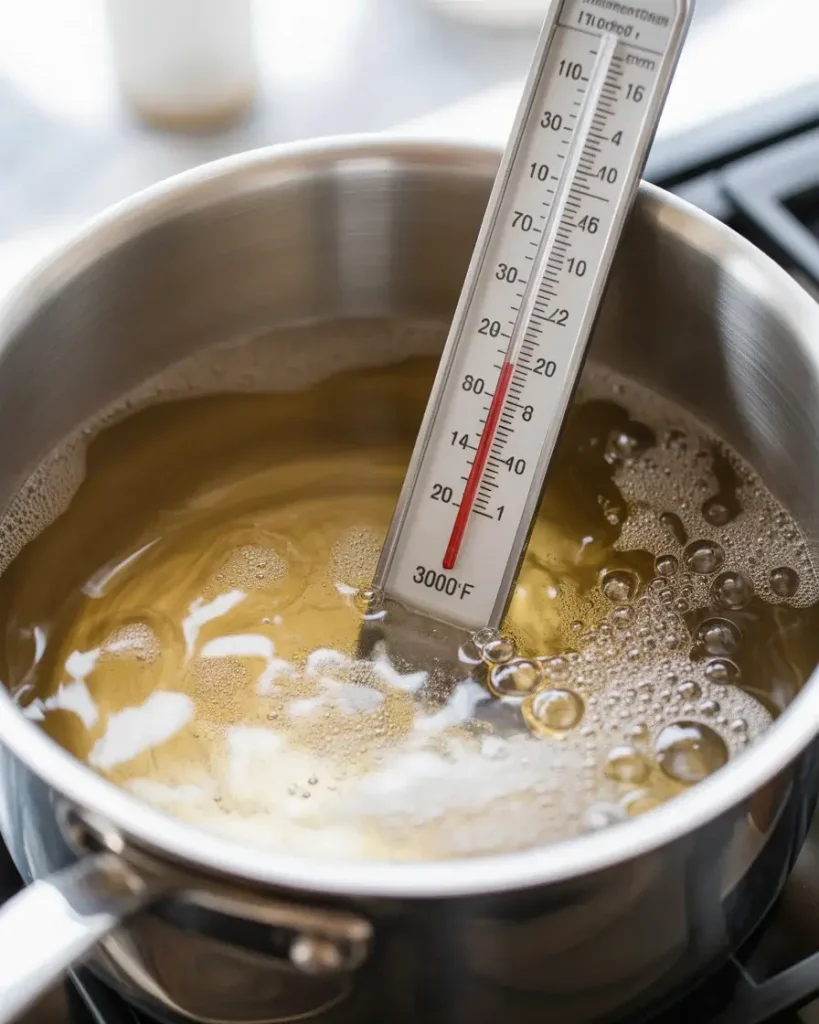
Combine 2 cups of granulated sugar, 3/4 cup of light corn syrup, 1/4 cup of water, and 1/4 teaspoon of salt in a heavy-bottomed saucepan. Cook over medium heat without stirring until the mixture reaches exactly 300°F on a candy thermometer, about 12-15 minutes.
Watch the temperature carefully after 250°F because it rises quickly. I clip my thermometer to the side of the pan, making sure the tip doesn’t touch the bottom. The syrup will bubble vigorously and turn from clear to light amber at the correct temperature.
Step 4: Combine Hot Syrup with Egg Whites
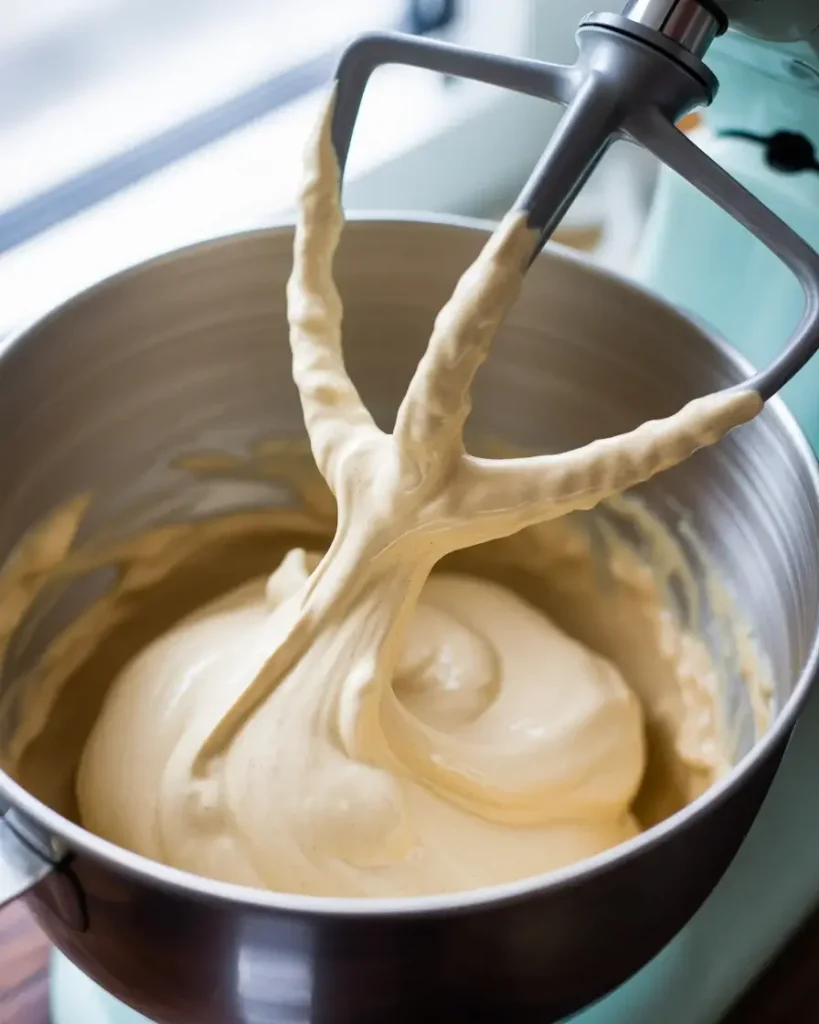
With the mixer running on medium-low speed, carefully pour the hot sugar syrup in a slow, steady stream down the side of the bowl into the whipped egg whites. Avoid pouring directly onto the whisk or it will splatter. The mixture will deflate slightly at first, then become thick and glossy.
Continue beating on medium-high speed for 6-8 minutes until the mixture is very thick, holds stiff peaks, and the bowl feels warm but not hot to touch. In my testing, I found that undermixing results in nougat that’s too soft and won’t hold its shape.
Step 5: Fold in Almonds and Cranberries
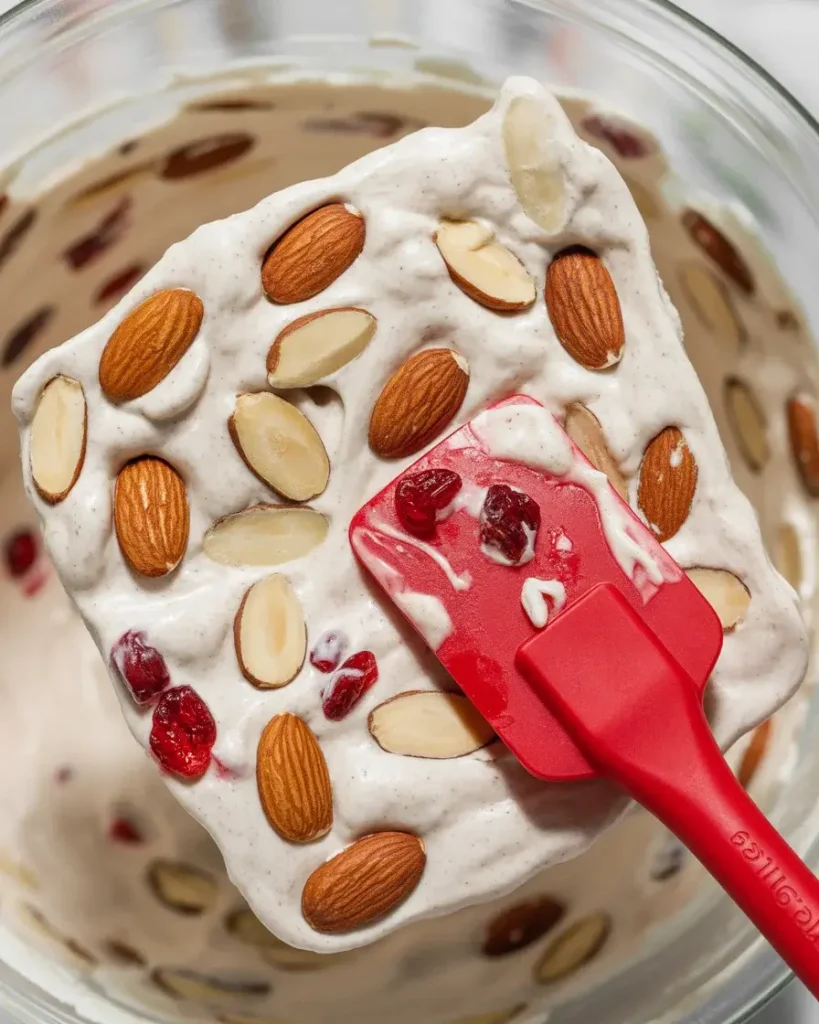
Remove the bowl from the mixer and quickly fold in the toasted almonds, dried cranberries, and 1 teaspoon of vanilla extract using a sturdy silicone spatula. Work fast because the nougat starts setting as it cools. I use a folding motion rather than stirring to distribute the nuts and fruit evenly.
Step 6: Press into Pan and Cool
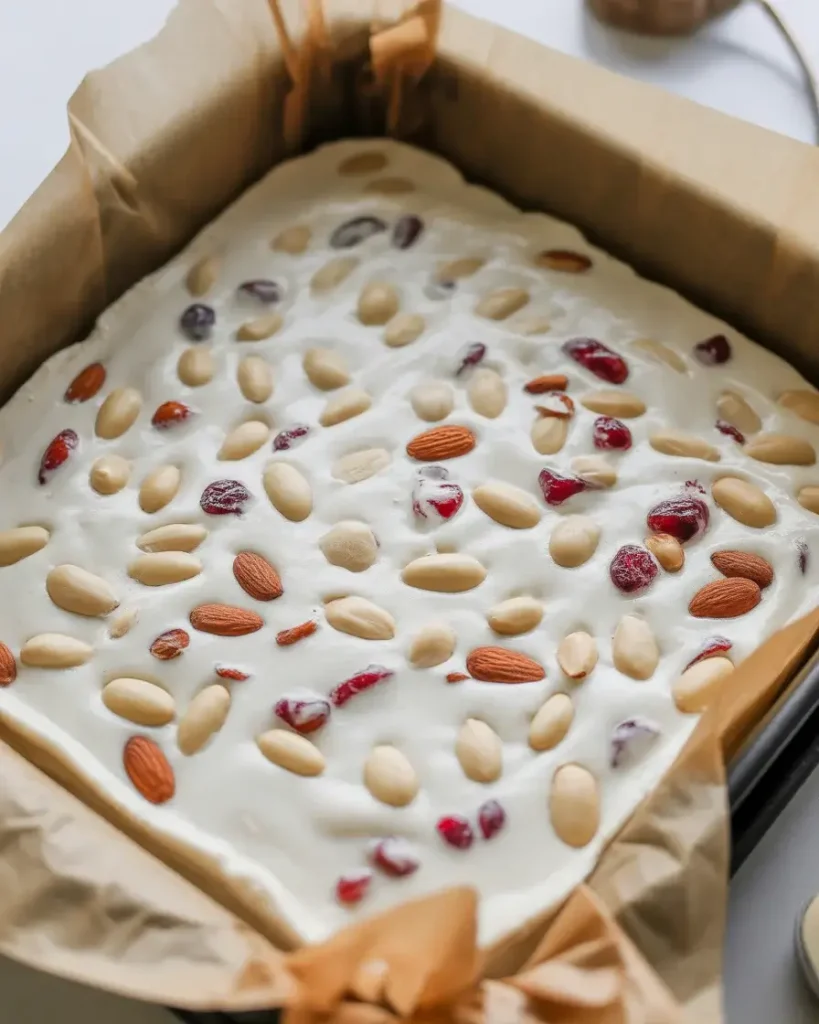
Immediately scrape the nougat mixture into your prepared pan. Oil your hands lightly and press the nougat evenly into the corners, working quickly before it sets. The surface should be relatively smooth and level.
Let the nougat cool completely at room temperature for at least 2 hours, or preferably overnight. I’ve tried rushing this step by refrigerating it, but that creates a sticky surface that’s difficult to cut cleanly.
Step 7: Cut into Pieces and Wrap
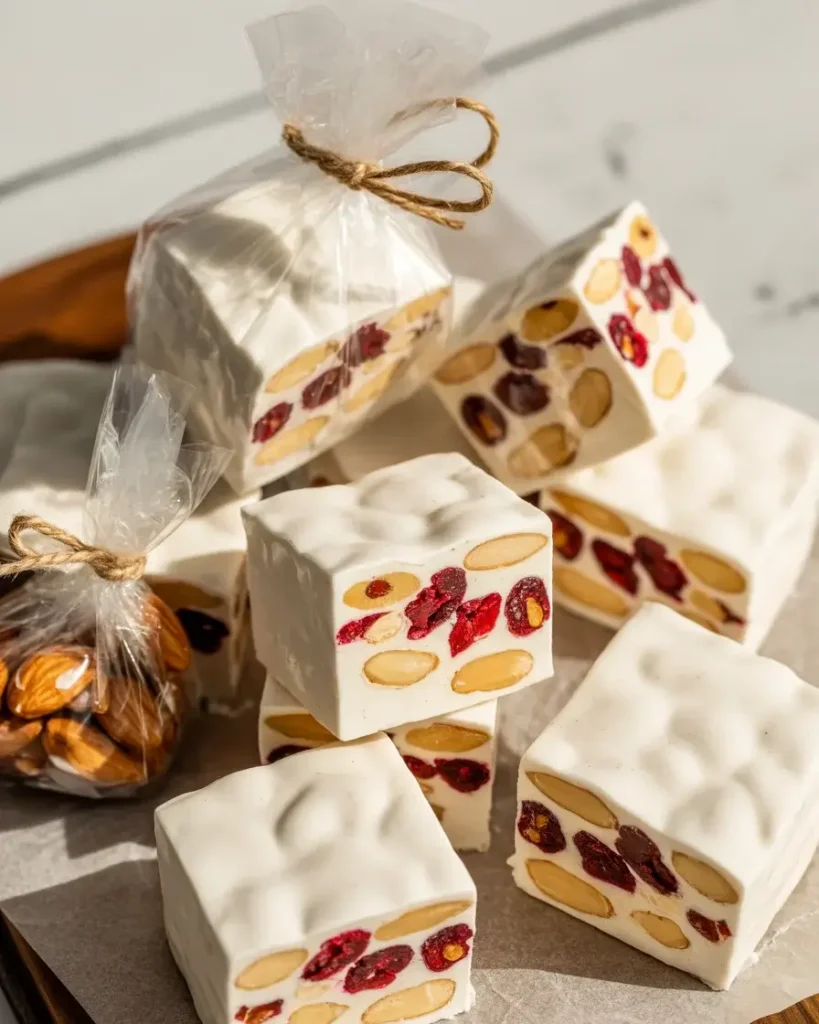
Once completely set, lift the nougat from the pan using the parchment overhang. Using a sharp chef’s knife lightly oiled with vegetable oil, cut into 1-inch squares or rectangles. I wipe and re-oil the knife every few cuts for clean edges.
Wrap each piece individually in wax paper or cellophane, twisting the ends like candy wrappers. Store in an airtight container at room temperature for up to 3 weeks. I found that wrapping is essential because unwrapped nougat absorbs moisture and becomes sticky.
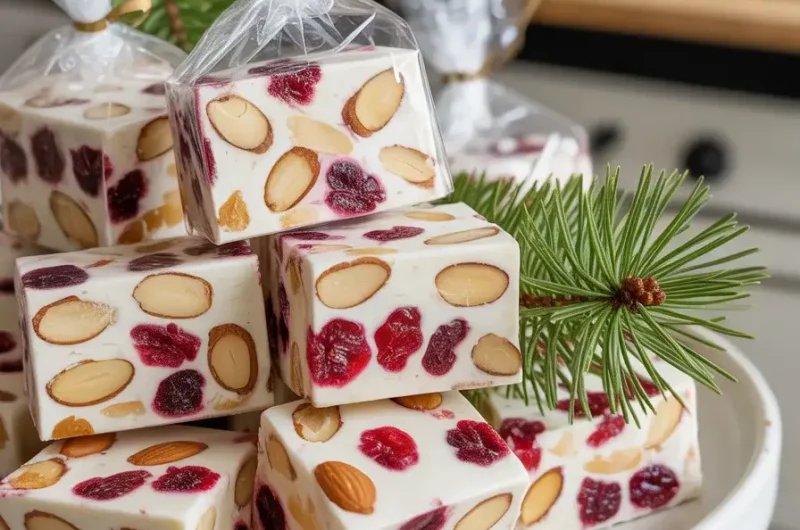
Cranberry Almond Nougat
Course: DessertCuisine: AmericanDifficulty: Medium48
pieces15
minutes30
minutes45
minutesChewy homemade nougat studded with tart dried cranberries and crunchy toasted almonds, perfect for holiday gift-giving.
Ingredients
1.5 cups whole almonds
1 cup dried cranberries
2 large egg whites, room temperature
2 cups granulated sugar
3/4 cup light corn syrup
1/4 cup water
1/4 teaspoon salt
1 teaspoon vanilla extract
Vegetable oil for greasing
Directions
- Toast almonds at 350°F for 8-10 minutes until fragrant. Line a 9×13 inch pan with oiled parchment paper.
- Whip egg whites to soft peaks in a stand mixer, about 4 minutes. Keep running on low speed.
- Combine sugar, corn syrup, water, and salt in a saucepan. Cook to exactly 300°F without stirring, about 12-15 minutes.
- With mixer on medium-low, slowly pour hot syrup down the side of the bowl. Beat on medium-high for 6-8 minutes until very thick and stiff.
- Quickly fold in almonds, cranberries, and vanilla with a silicone spatula.
- Press mixture evenly into prepared pan. Cool completely at room temperature for 2 hours or overnight.
- Cut into 1-inch pieces with an oiled knife. Wrap individually in wax paper.
Notes
- Store wrapped pieces in an airtight container at room temperature for up to 3 weeks.
A quality candy thermometer is essential; cheap dial thermometers are often inaccurate.
Don’t make nougat on humid days as sugar absorbs moisture and won’t set properly.
Substitute any combination of nuts and dried fruits totaling 2.5 cups.
Nutrition Table (per piece)
| Nutrient | Amount |
|---|---|
| Calories | 85 |
| Total Fat | 2.5g |
| Sugars | 11g |
| Protein | 1g |
Trusted Resource Links:
For more information on safe candy-making temperatures and techniques, visit the USDA Safe Temperature Chart. Learn about proper food handling and storage from the FDA Safe Food Handling guidelines.
Why Does My Nougat Turn Out Too Soft or Sticky?
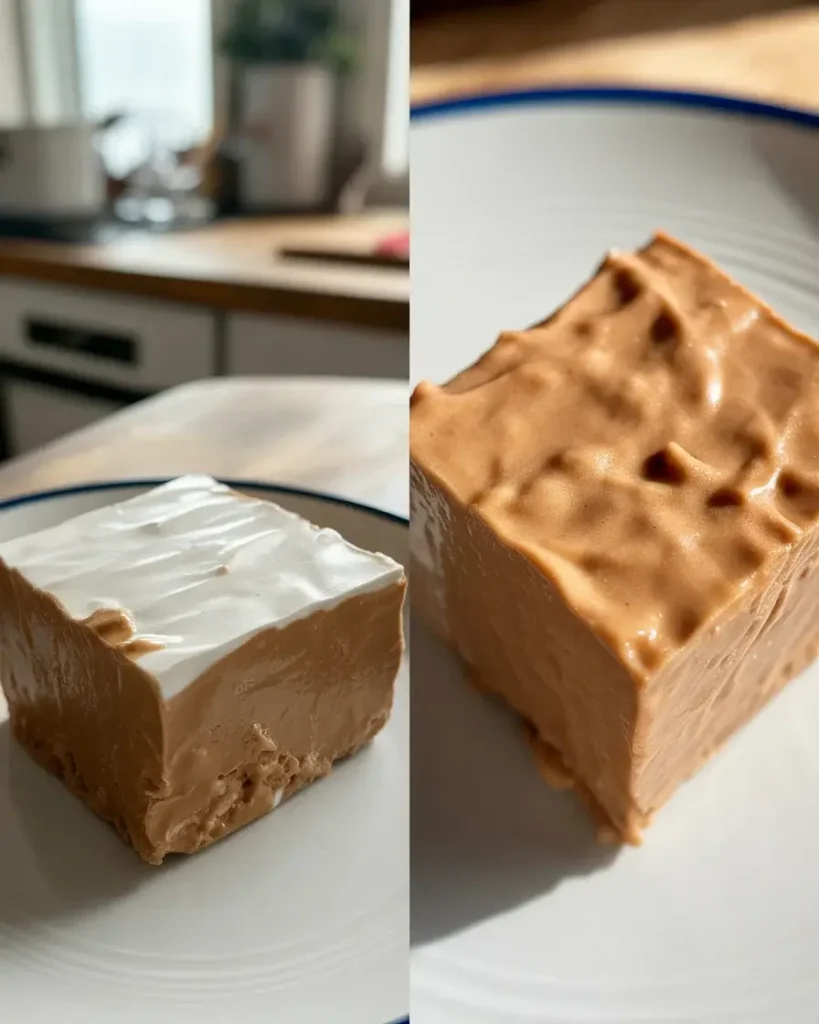
Your nougat is too soft because the sugar syrup didn’t reach the full 300°F hard crack stage. Even 5-10 degrees lower results in a texture that won’t set properly and remains tacky.
I ruined three batches before I invested in a quality candy thermometer. Those cheap dial thermometers can be off by 15-20 degrees, which is catastrophic for candy making. A digital thermometer with a clip costs around $20 and eliminates this problem entirely.
The other common culprit is humidity. I’ve learned not to make nougat on rainy days or in humid kitchens because the sugar absorbs moisture from the air. Run your air conditioning or wait for a dry day.
If you’re in a humid climate year-round, work quickly and store the finished nougat with a small silica gel packet in the container. This trick saved my last batch when I made nougat during an unusually humid December week.
Can I Use Different Nuts or Dried Fruits?
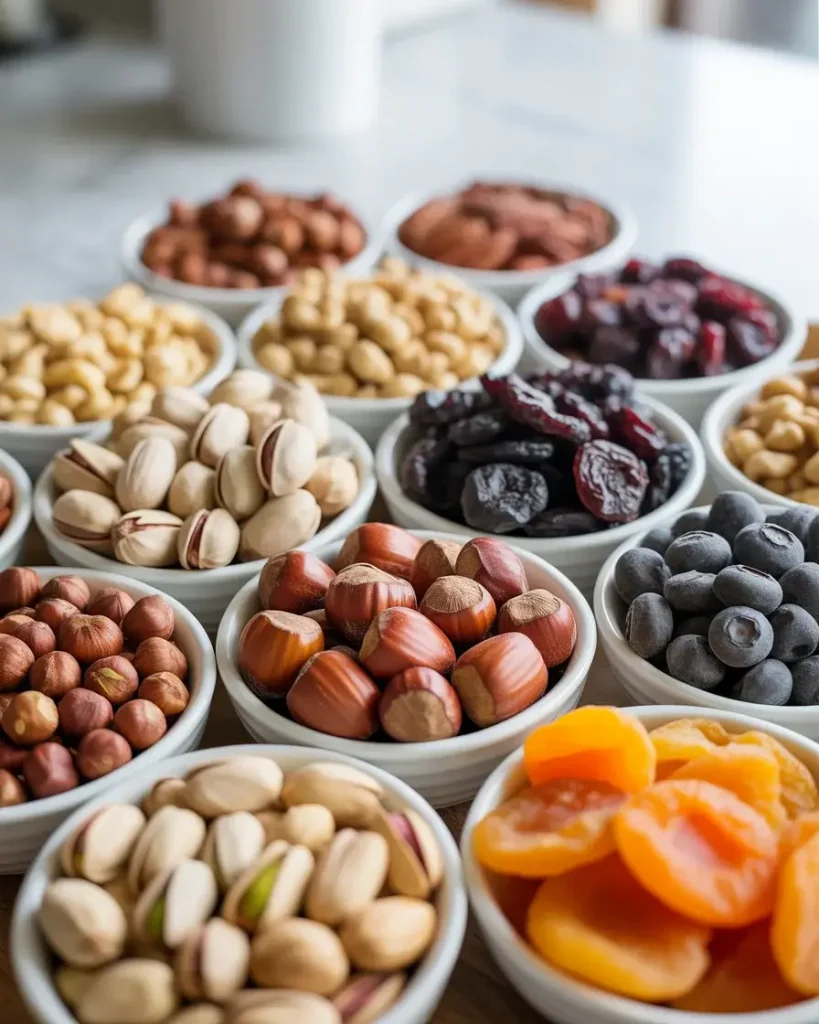
Yes, this recipe works beautifully with any nut and dried fruit combination totaling 2.5 cups. I’ve tested it with pistachios and dried cherries, hazelnuts and apricots, and pecans with dried blueberries.
Toast all nuts before adding them, regardless of type. Raw nuts create a bland, slightly mealy texture that ruins the overall experience. The toasting process takes 8-12 minutes depending on the nut size and brings out essential oils that boost flavor dramatically.
For dried fruits, stick with options that aren’t too moist or sticky. Dried mango and fresh dates made my nougat weep moisture after a few days. Dried cranberries, cherries, apricots, and blueberries work perfectly because they’re relatively dry and acidic.
Chop larger dried fruits like apricots into cranberry-sized pieces for even distribution. I learned this after making a batch where whole apricot halves created bare spots in some pieces while others were overloaded.
Discover More Tasty Treats
How Long Does Homemade Nougat Last?
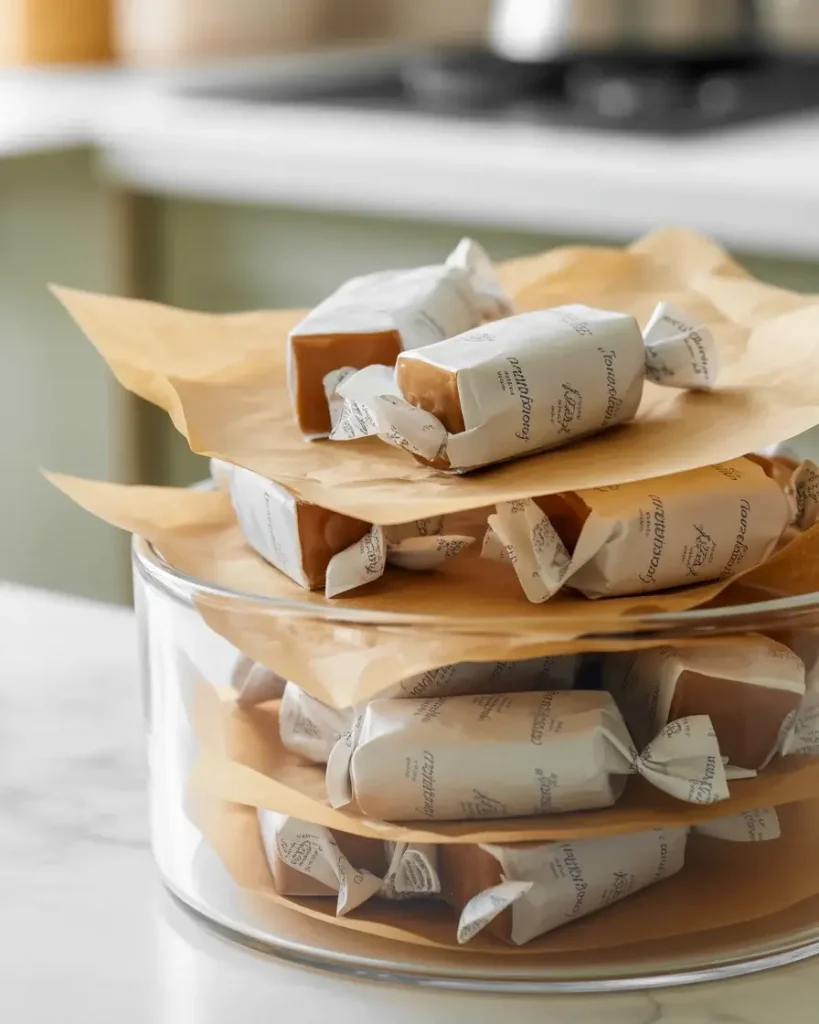
Properly wrapped nougat stays fresh for 3 weeks at room temperature or up to 2 months in the freezer. Each piece must be individually wrapped in wax paper or cellophane to prevent sticking and moisture absorption.
I store mine in an airtight container with layers separated by parchment paper. After testing storage methods, I found that plastic wrap makes nougat sweat and develop a sticky surface within days. Wax paper allows just enough air circulation.
Never refrigerate nougat unless you live somewhere extremely hot. The refrigerator’s humidity makes the surface tacky and unpleasant. Room temperature storage in a cool, dark pantry is ideal.
For longer storage, freeze wrapped pieces in a freezer bag with air pressed out. Thaw at room temperature for 30 minutes before eating. I made a double batch last Christmas and still had perfect nougat in February using this method.
What’s the Best Way to Cut Nougat Cleanly?
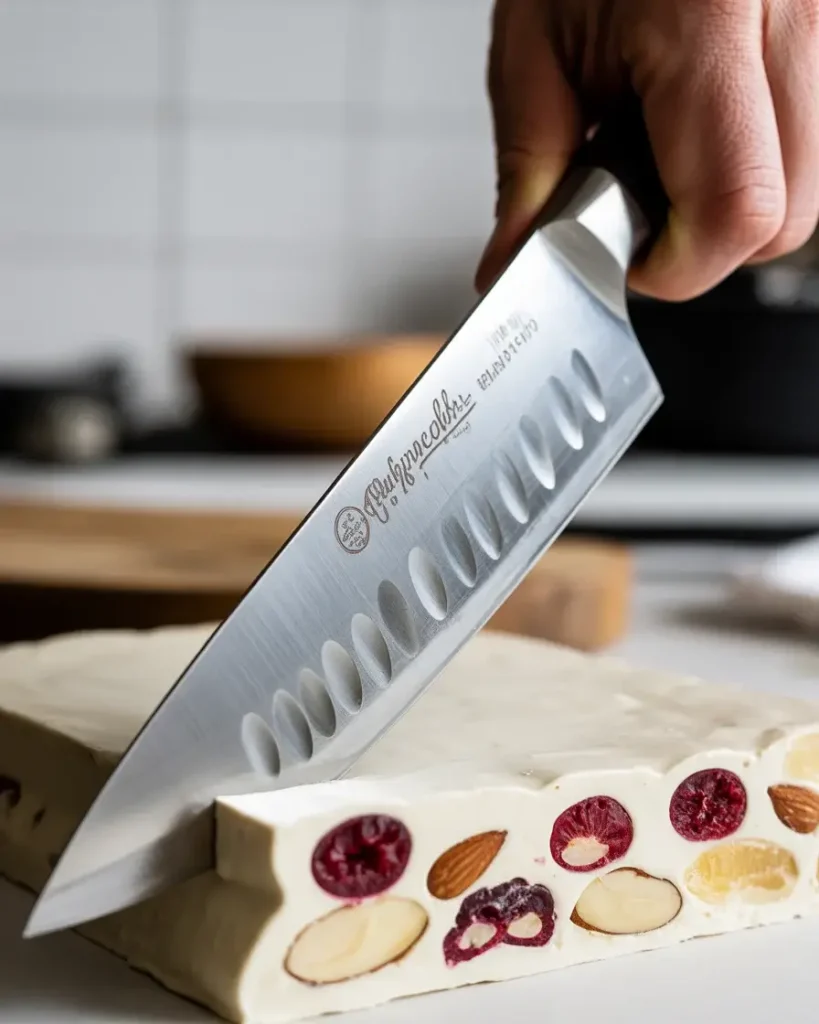
Oil your knife blade before each cut and use a sharp chef’s knife with a smooth rocking motion. Wipe the blade clean and re-oil it every 3-4 cuts for consistently clean edges.
I tested this against other methods like dental floss and kitchen shears. While dental floss works, it’s tedious for multiple pieces and creates slightly compressed edges. Kitchen shears stick terribly no matter how much you oil them.
Let the nougat sit at room temperature for at least 4 hours before cutting. I tried cutting after just 2 hours once, and the blade dragged through the soft center, creating ragged edges and squashed pieces.
Score the surface lightly with the knife first to mark your cutting lines, then apply firm downward pressure in one smooth motion. Don’t saw back and forth or you’ll tear the delicate structure and pull out nuts.
Do I Really Need a Candy Thermometer?
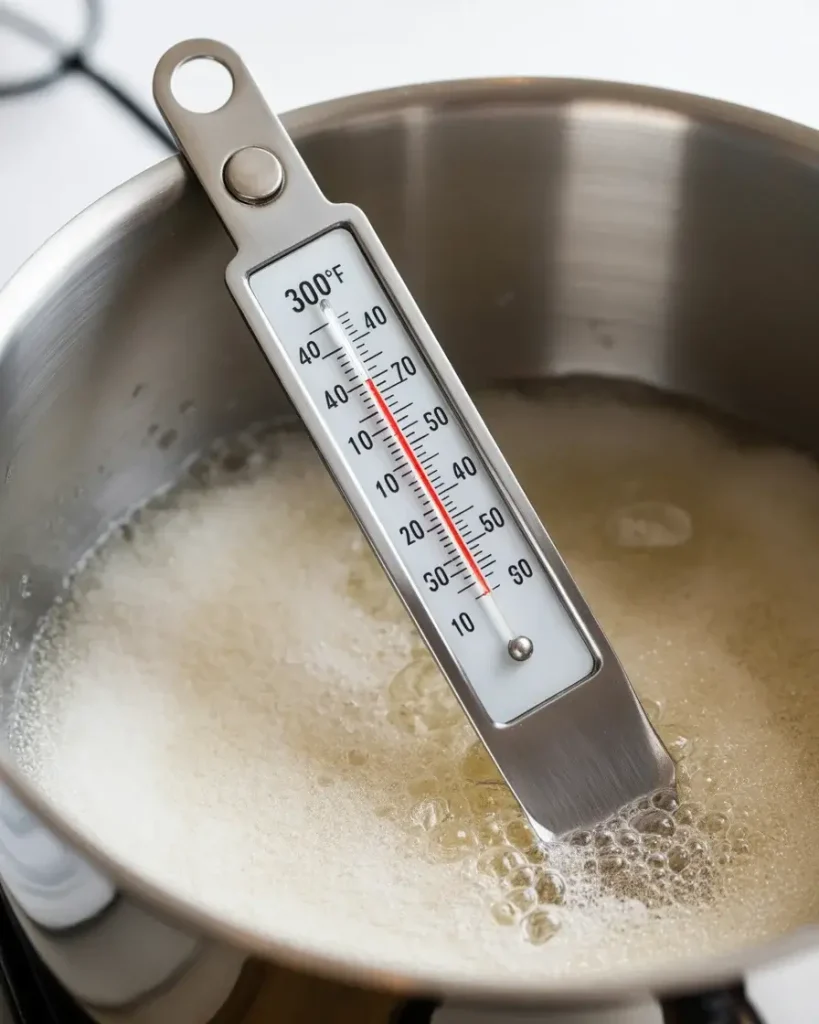
Yes, a candy thermometer is absolutely essential for successful nougat. There’s no reliable visual cue or alternative method that indicates when sugar syrup reaches exactly 300°F.
I attempted the cold water test method on my second batch, dropping syrup into ice water to check the stage. It was so inconsistent that my nougat never set properly. The few degrees of difference between firm ball and hard crack stages completely changes the final texture.
Digital instant-read thermometers don’t work well for candy making because they’re not designed to clip onto pans and monitor temperature continuously. You need a dedicated candy or deep-fry thermometer that stays in the pot.
Invest $15-25 in a quality candy thermometer with clear degree markings from 200-400°F. I use mine for marshmallows, caramels, brittles, and toffee too, so it’s earned its place in my kitchen drawer dozens of times over.
Frequently Asked Questions
Q: Can I make nougat without corn syrup?
A: Corn syrup prevents crystallization and creates the smooth texture nougat needs. I tested honey and maple syrup as substitutes, but both crystallized and created grainy nougat. Light corn syrup is essential for this recipe.
Q: Why did my nougat turn brown instead of staying white?
A: Your sugar syrup cooked beyond 300°F into caramel territory. Watch the thermometer closely after 280°F because temperature rises quickly in the final stages. Remove from heat immediately at 300°F.
Q: Can I double this recipe?
A: I don’t recommend doubling the batch in one pot because it’s difficult to reach the correct temperature evenly with that much syrup. Make two separate batches instead, which takes about 90 minutes total including cleanup.