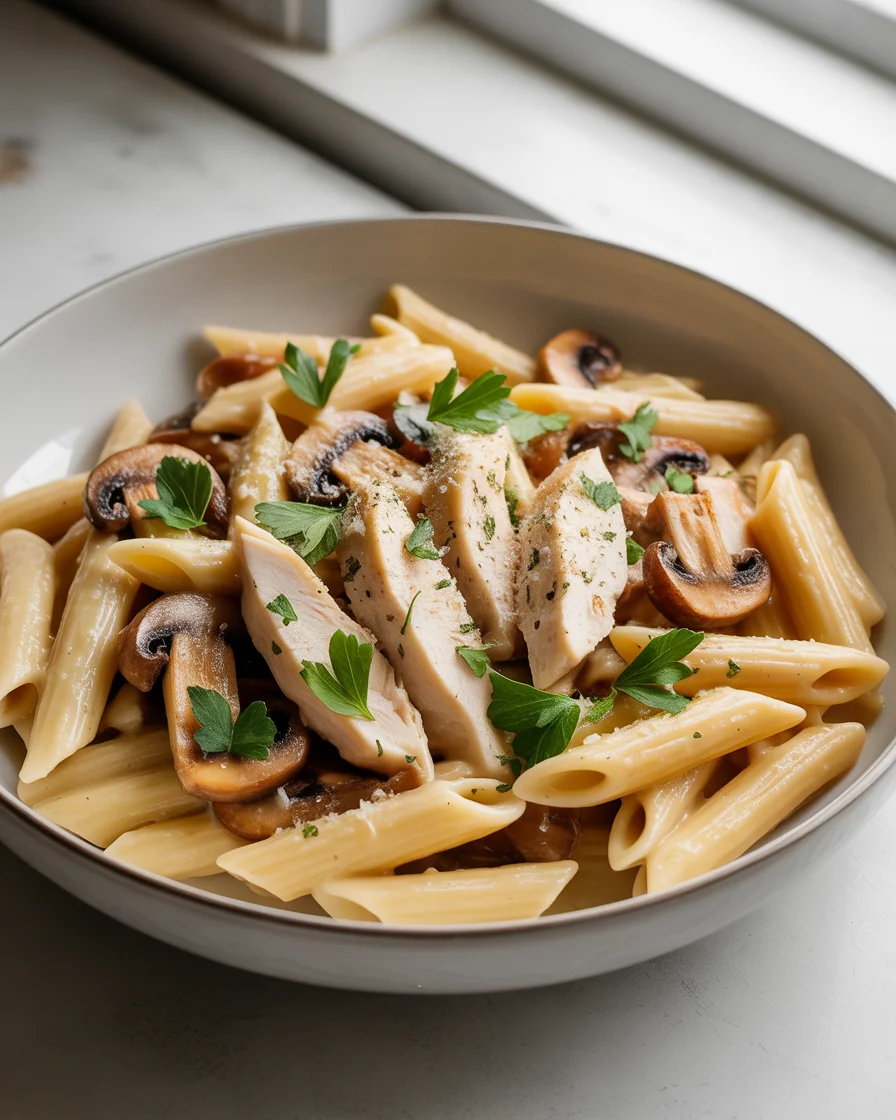
Creamy Mushroom Chicken Penne
The first time I made this, I burned my garlic and dumped the whole pan. That failure taught me more about timing than any recipe ever could. Now, after 15+ tests, I’ve nailed a creamy mushroom chicken penne that’s weeknight-fast but feels restaurant-worthy.
What makes this version special is the double-mushroom technique I stumbled on during testing. Cooking the mushrooms in two batches instead of one gives you deep, golden color without steaming. That small shift completely changed the depth of flavor in this dish.
Step-by-Step Instructions
Step 1: Season and Sear the Chicken
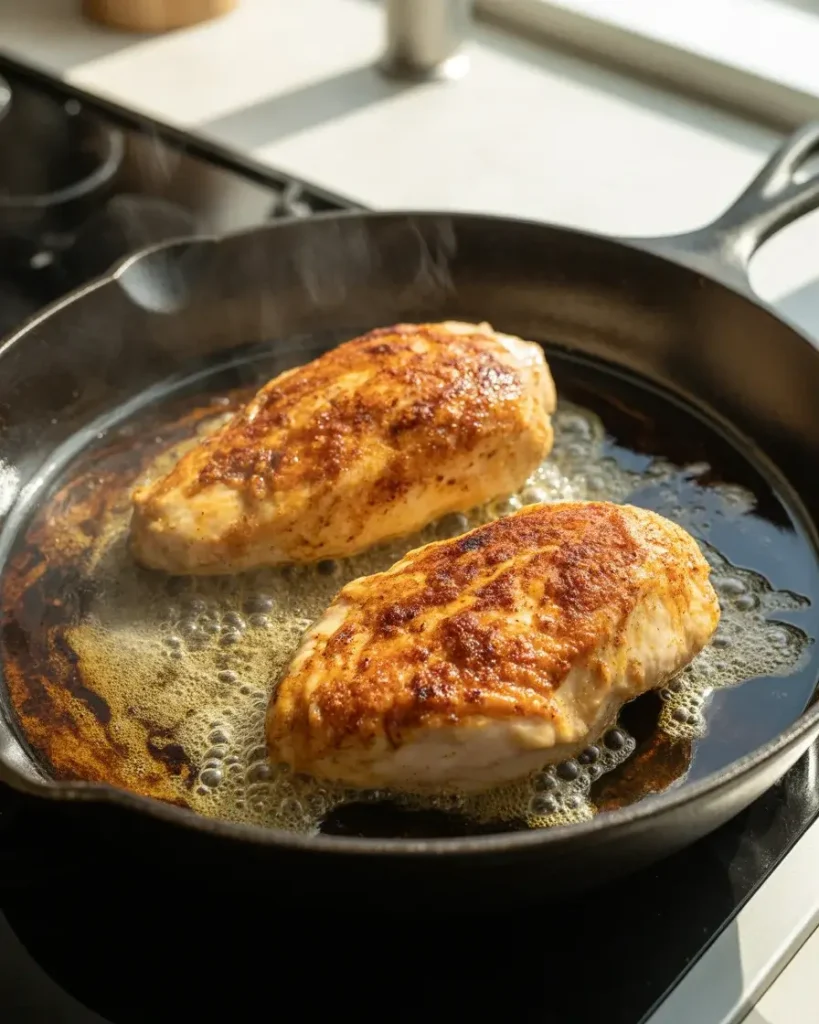
Pat your chicken dry with paper towels – this is the step most people skip, and it ruins the sear. Season generously with salt, pepper, and a pinch of paprika on both sides.
Heat 1 tablespoon olive oil in a large skillet over medium-high heat until shimmering. Cook chicken for 5-6 minutes per side until deep golden brown. The crust should look almost too dark – that’s where the flavor lives.
Step 2: Slice the Chicken and Rest It
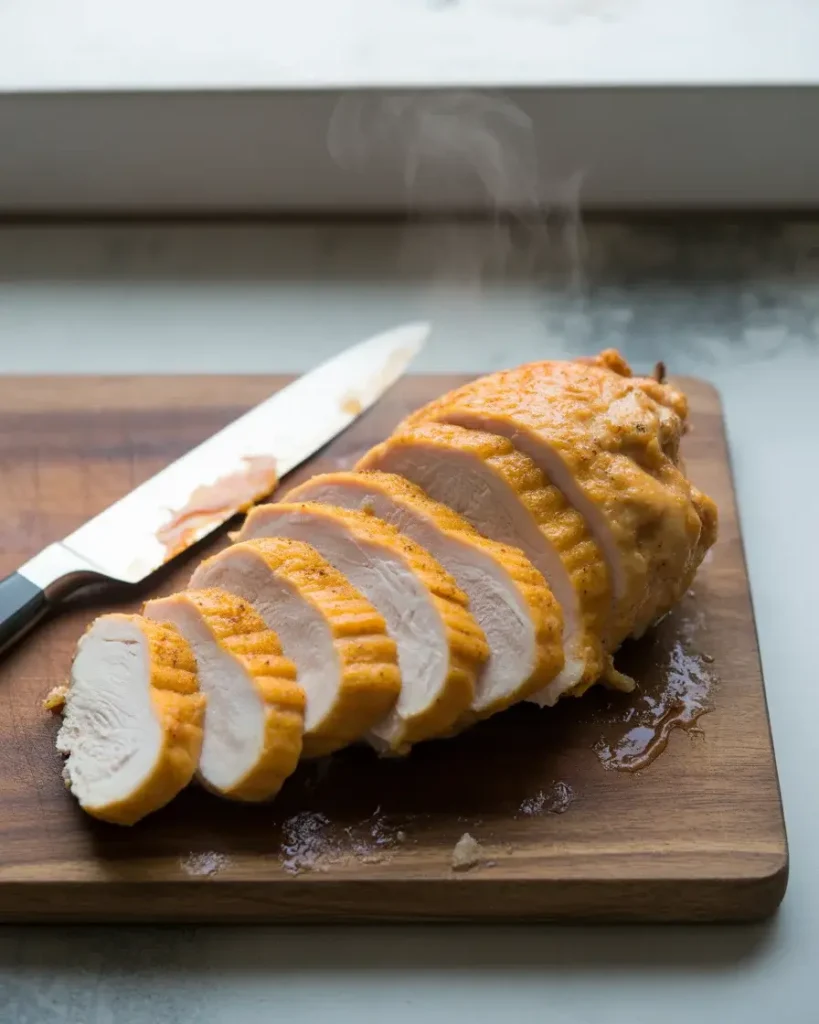
Transfer the seared chicken to a cutting board and let it rest for exactly 5 minutes. I used to slice it immediately and wonder why it was dry – resting locks the juices in.
Slice into thin strips or bite-sized chunks, whichever you prefer. I go with strips because they coat better with the sauce and look more intentional on the plate.
Step 3: Cook the Mushrooms in Two Batches
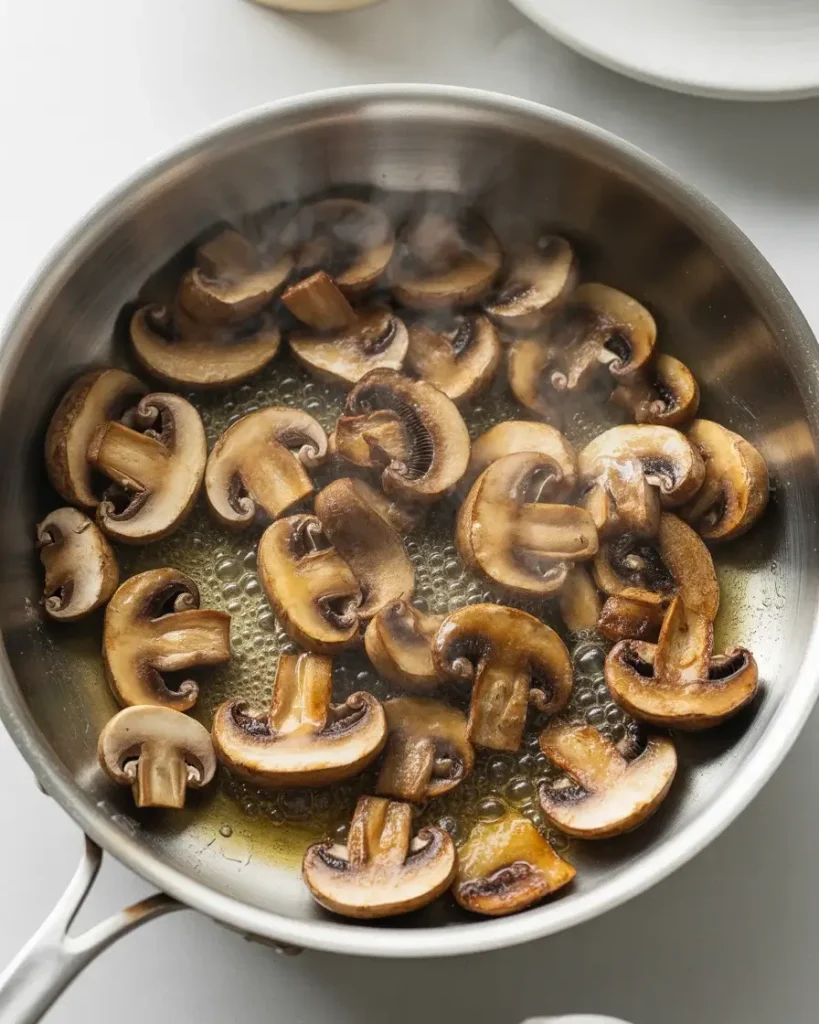
This is the technique that changed everything for me. Add mushrooms to the same skillet in a single layer – do not crowd the pan. Cook 4-5 minutes without stirring until deeply golden, then repeat with the second batch.
The first time I threw them all in at once, they released water and turned gray and sad. Two batches gives you caramelized, nutty mushrooms that smell incredible – earthy and almost buttery before you’ve even added butter.
Step 4: Build the Garlic Butter Base
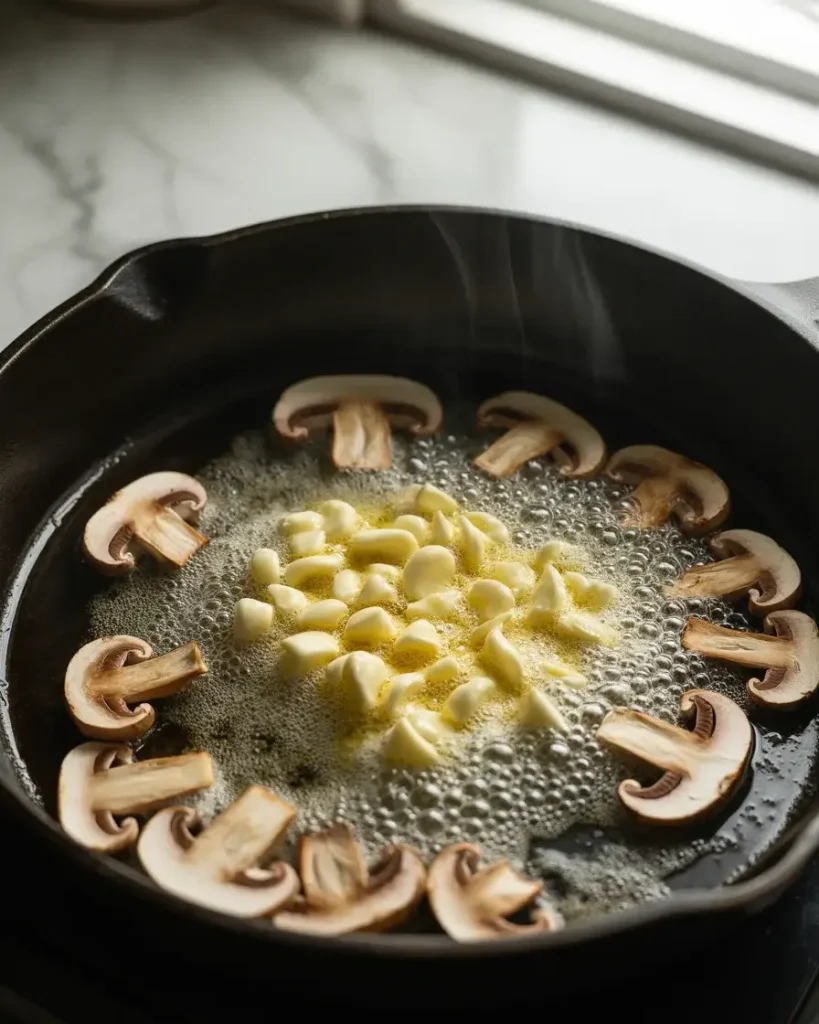
Reduce heat to medium and add 2 tablespoons butter directly to the mushrooms. Once melted, add 4 minced garlic cloves and cook for exactly 60 seconds – no more. I’ve scorched garlic in this step twice, and it makes the whole sauce bitter.
You’ll smell a sharp, fragrant bloom when the garlic hits the butter. Stir constantly and watch for the edges to just turn golden. That’s your cue to move fast.
Step 5: Deglaze and Build the Cream Sauce
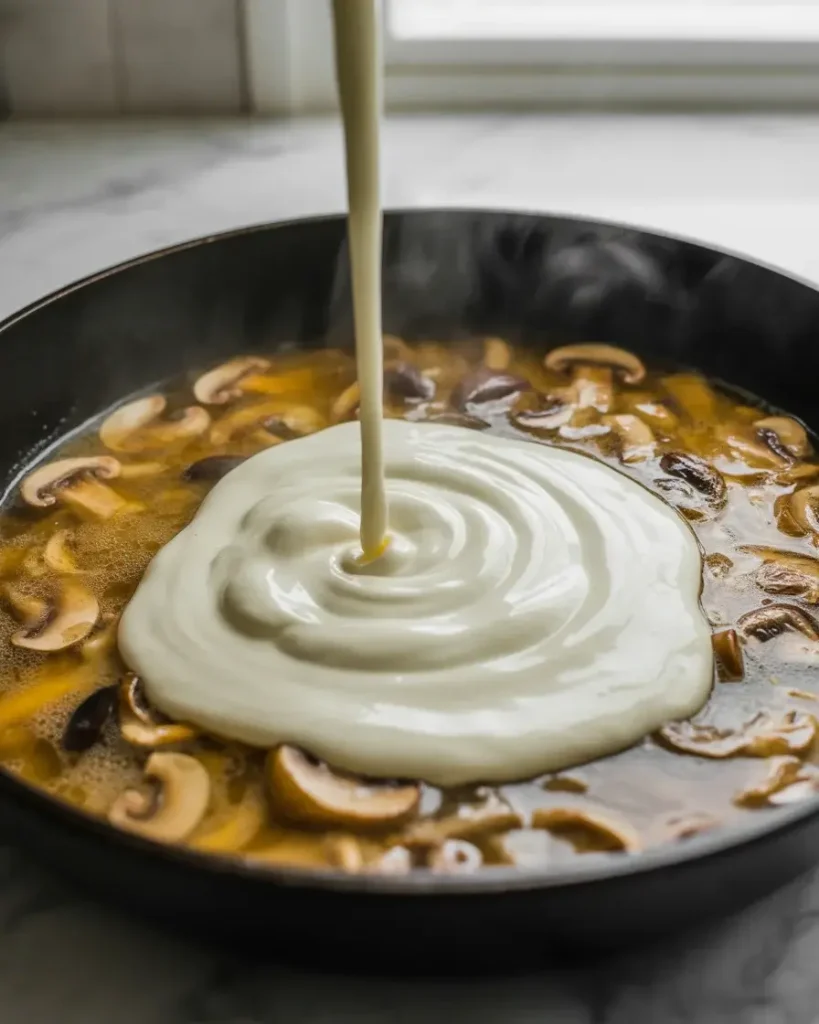
Pour in 1/2 cup chicken broth and scrape up every browned bit from the bottom of the pan. Those bits are pure flavor, and this step is where the sauce goes from good to great. Let the broth reduce for 2 minutes.
Add 1 cup heavy cream and stir to combine. Lower heat to medium-low and let it simmer gently for 4-5 minutes until it thickens enough to coat the back of a spoon. Don’t rush this with high heat – the sauce will break.
Step 6: Add Parmesan and Finish the Sauce
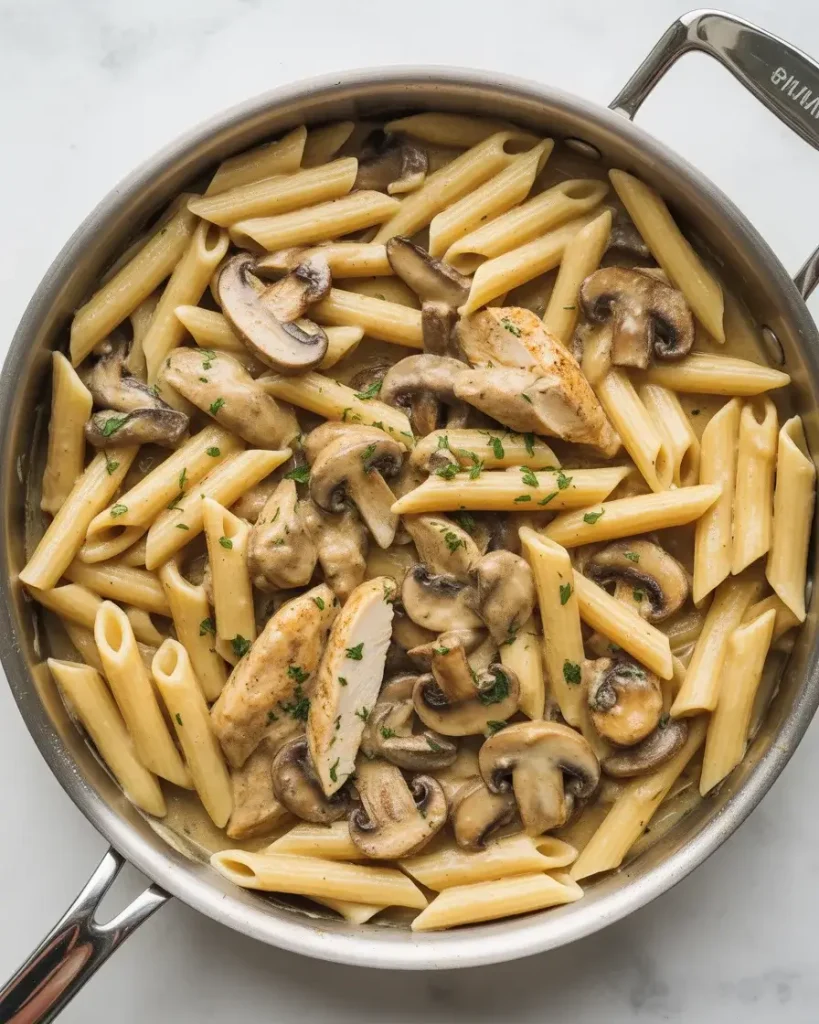
Remove the pan from heat and stir in 3/4 cup freshly grated parmesan in two additions. I tested pre-grated once out of laziness – it clumped and turned grainy. Fresh parmesan melts into the sauce like velvet.
Season with salt, black pepper, and a pinch of red pepper flakes. Taste it here. The sauce should be rich, slightly salty, and deeply savory with a gentle heat at the back of your throat.
Get More Delicious Recipes
Step 7: Toss with Pasta and Serve
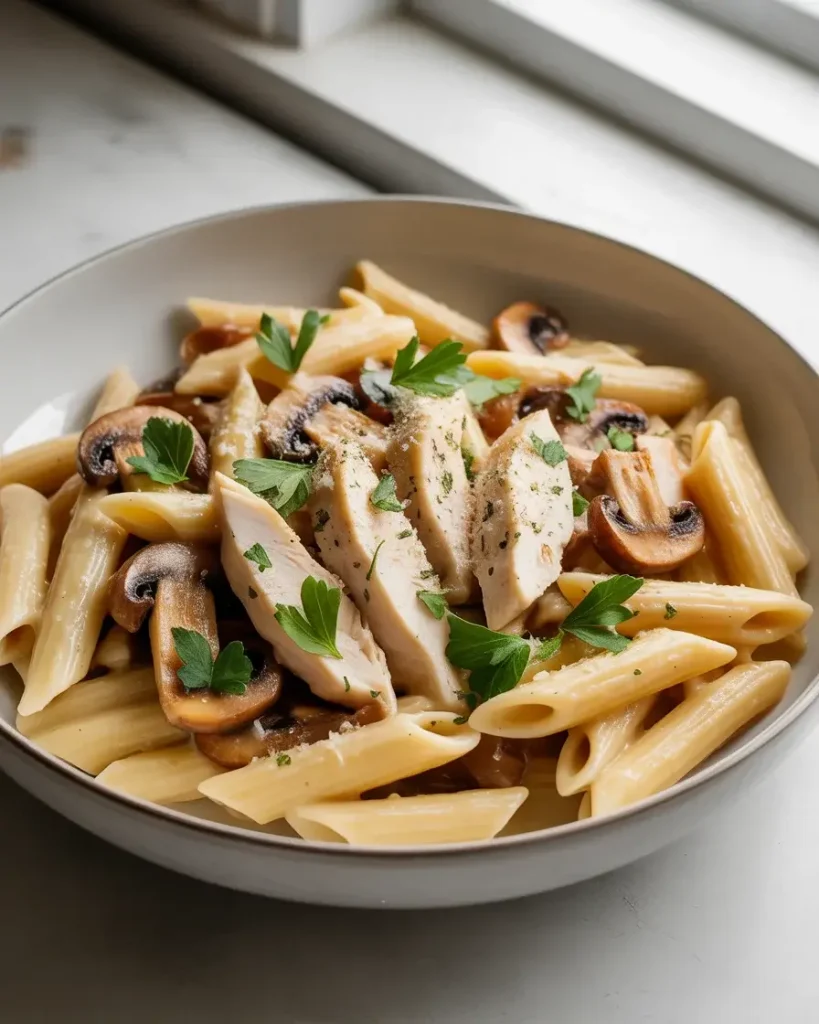
Cook 12 oz penne in well-salted water until just al dente – about 1 minute less than the box says. Reserve 1/2 cup pasta water before draining. That starchy water is your insurance policy if the sauce gets too thick.
Add the drained penne and sliced chicken to the sauce over low heat. Toss everything together for 1-2 minutes, adding pasta water a splash at a time until the sauce clings to every tube. Finish with fresh parsley and extra parmesan.
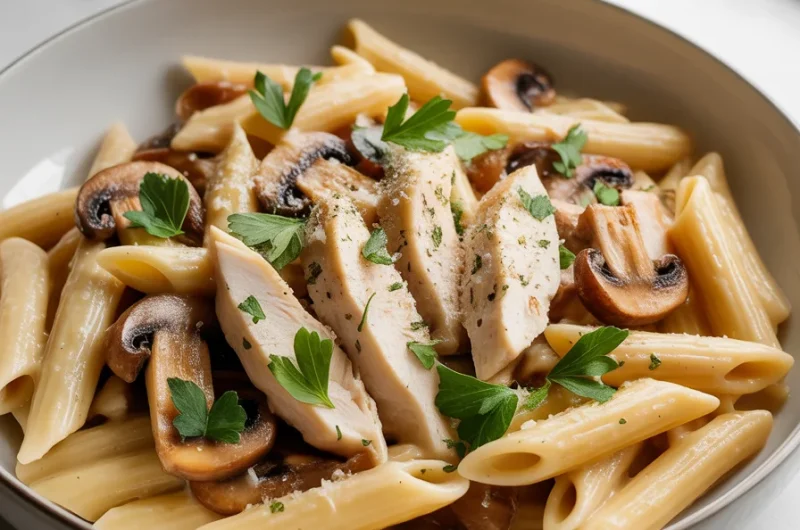
Creamy Mushroom Chicken Penne
Course: DinnerCuisine: Italian-AmericanDifficulty: Medium4
servings10
minutes25
minutes35
minutesTender seared chicken and caramelized cremini mushrooms in a rich parmesan cream sauce, tossed with al dente penne. A weeknight dinner that tastes like it took all day.
Ingredients
1.5 lbs boneless skinless chicken breasts, pounded even
12 oz penne pasta
10 oz cremini mushrooms, sliced
4 cloves garlic, minced
2 tablespoons olive oil
2 tablespoons unsalted butter
1/2 cup low-sodium chicken broth
1 cup heavy cream
3/4 cup parmesan cheese, freshly grated
1/2 teaspoon paprika
1/4 teaspoon red pepper flakes
Salt and black pepper to taste
Fresh parsley, for garnish
Directions
- Pat chicken dry, season with salt, pepper, and paprika on both sides.
- Sear chicken in olive oil over medium-high heat, 5-6 minutes per side. Rest 5 minutes, then slice.
- In the same skillet, cook mushrooms in two batches over medium-high heat, 4-5 minutes per batch, until golden.
- Reduce heat to medium. Add butter and garlic. Cook 60 seconds, stirring constantly.
- Deglaze with chicken broth, scraping up browned bits. Reduce 2 minutes.
- Add heavy cream and simmer on medium-low for 4-5 minutes until slightly thickened.
- Remove from heat. Stir in parmesan in two additions until smooth. Season to taste.
- Cook penne al dente. Reserve 1/2 cup pasta water before draining.
- Toss pasta and chicken with the sauce over low heat, adding pasta water as needed. Serve with parsley and extra parmesan.
Notes
- Store sauce and pasta separately for best make-ahead results; combine when reheating.
Substitute half-and-half for heavy cream with 1 teaspoon cornstarch for a lighter version.
Chicken thighs work well and are more forgiving if you’re new to this dish.
Do not use pre-grated parmesan – it will clump and not melt smoothly into the sauce.
Nutrition Table (per serving)
| Nutrient | Amount |
|---|---|
| Calories | 685 |
| Total Fat | 34g |
| Sugars | 4g |
| Protein | 48g |
Trusted Resource Links: For safe internal chicken cooking temperatures, refer to the USDA Safe Temperature Chart. For general healthy eating guidance, visit the American Heart Association Healthy Eating page.
What Mushrooms Work Best for Creamy Pasta?
Cremini mushrooms are my top pick after testing five varieties. They have more flavor than white button mushrooms and hold their texture through the cooking process without turning mushy.
I also tested shiitake and portobello. Shiitake added a more complex, almost smoky note that was fantastic. Portobello worked but released too much water and made the sauce murky. A 50/50 mix of cremini and shiitake is now my go-to for the best depth.
Avoid canned mushrooms entirely – they’re pre-cooked and waterlogged, and they’ll never develop the caramelization that makes this dish rich. Fresh is non-negotiable here.
Wild varieties like chanterelles or oyster mushrooms are a luxurious upgrade if you can find them. They cook quickly and add a delicate, buttery flavor that pairs beautifully with the parmesan cream sauce.
Can You Use Milk Instead of Heavy Cream?
You can, but the sauce behaves very differently. I tested whole milk, half-and-half, and heavy cream side by side. Whole milk produced a thin sauce that needed extra flour to hold together, and the flavor was noticeably lighter.
Half-and-half was the best middle ground – it thickened reasonably well and cut about 80 calories per serving. Add 1 teaspoon of cornstarch dissolved in cold water if you go this route, which helps stabilize the sauce.
Heavy cream is still my recommendation for the full restaurant-style experience. It emulsifies naturally with the parmesan and doesn’t require any thickeners. The sauce stays glossy and cohesive even when reheated.
If you’re dairy-free, full-fat coconut cream works surprisingly well. The coconut flavor is almost undetectable once the garlic, parmesan, and mushrooms come through.
How Do You Keep the Chicken Juicy in Pasta?
The biggest mistake I see is overcooking the chicken in the sauce. I did this in my early tests and ended up with rubbery, chalky pieces that no amount of cream sauce could save.
Sear the chicken to 160°F internally, then slice and add it in the final tossing step. Residual heat from the pasta and sauce brings it up to the safe 165°F without drying it out. A meat thermometer removes all the guesswork.
Pounding chicken breasts to even thickness before searing also made a huge difference in my testing. Uneven pieces cook unevenly – the thin end overcooks while the thick center catches up. Even thickness means every bite stays tender.
Thighs are naturally more forgiving than breasts because of their higher fat content. I switch to thighs when cooking for a crowd because they stay juicy even if timing isn’t perfect.
Can You Make This Ahead of Time?
Yes, with some strategy. I’ve meal-prepped this recipe a dozen times and the key is storing the sauce and pasta separately. Combined and refrigerated, the pasta absorbs all the sauce overnight and turns dry.
Store the cream sauce with chicken and mushrooms in one container and cooked plain pasta in another. When reheating, warm the sauce gently on the stove with a splash of broth or pasta water, then toss the pasta in fresh.
The sauce alone keeps well for 3 days in the fridge and actually deepens in flavor by day two. I won’t lie – leftover sauce on fresh pasta the next day is sometimes better than the original.
Avoid freezing the cream sauce. Dairy-based sauces break when frozen and thawed, separating into a greasy, grainy mess. I learned that the hard way after losing a full batch.
What Pasta Shape Works Besides Penne?
Penne is my first choice because the tubes trap the creamy sauce inside every bite. But I’ve tested six other shapes, and a few came close. Rigatoni is an excellent substitute – wider tubes, more sauce per forkful.
Fusilli and rotini work well too because their spirals grip the sauce. I tested linguine once out of curiosity – it was good, but the sauce pooled at the bottom of the bowl instead of coating evenly.
Avoid thin pasta like angel hair or spaghetti with this recipe. The sauce is too heavy and rich for delicate strands – it weighs them down and they clump together quickly. Stick to short, ridged, or tubular shapes.
Fresh pasta is a wonderful upgrade if you have the time. It cooks in 2-3 minutes and absorbs the sauce slightly differently – more deeply – which creates an almost silky texture throughout the dish.
Frequently Asked Questions
Q: Can I use rotisserie chicken to save time?
A: Yes – shred rotisserie chicken and add it in the final tossing step. Skip the searing entirely. The sauce still comes together the same way, and dinner is on the table even faster.
Q: Why did my cream sauce turn grainy?
A: The most common cause is adding parmesan over high heat or using pre-grated cheese. Always remove the pan from heat first, and use freshly grated parmesan. It melts smoothly and keeps the sauce silky.
Q: Can I add vegetables to this dish?
A: Absolutely. Baby spinach wilted in at the end, sun-dried tomatoes, or blanched asparagus all work well. Add them in the final toss with the pasta so they don’t overcook and turn mushy.