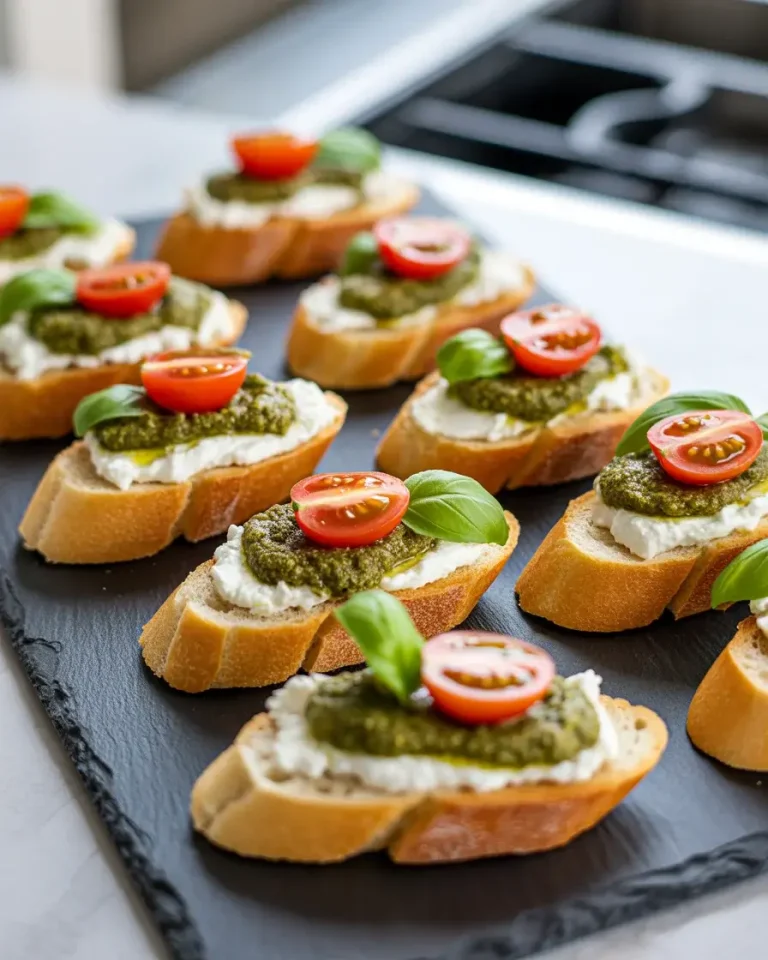

Whipped Ricotta Crostini
The first time I made whipped ricotta crostini for a dinner party, I almost didn’t serve them because they looked “too simple.” That was a mistake I never repeated. One bite in, my guests were asking for the recipe before they even sat down.
What makes these special is the texture contrast: silky, airy whipped ricotta against a deeply golden, crunchy crostini. I’ve tested this over 15 times to nail the right balance of toppings, salt, and bread thickness.
Step-by-Step Instructions
Step 1: Slice and Prep the Bread
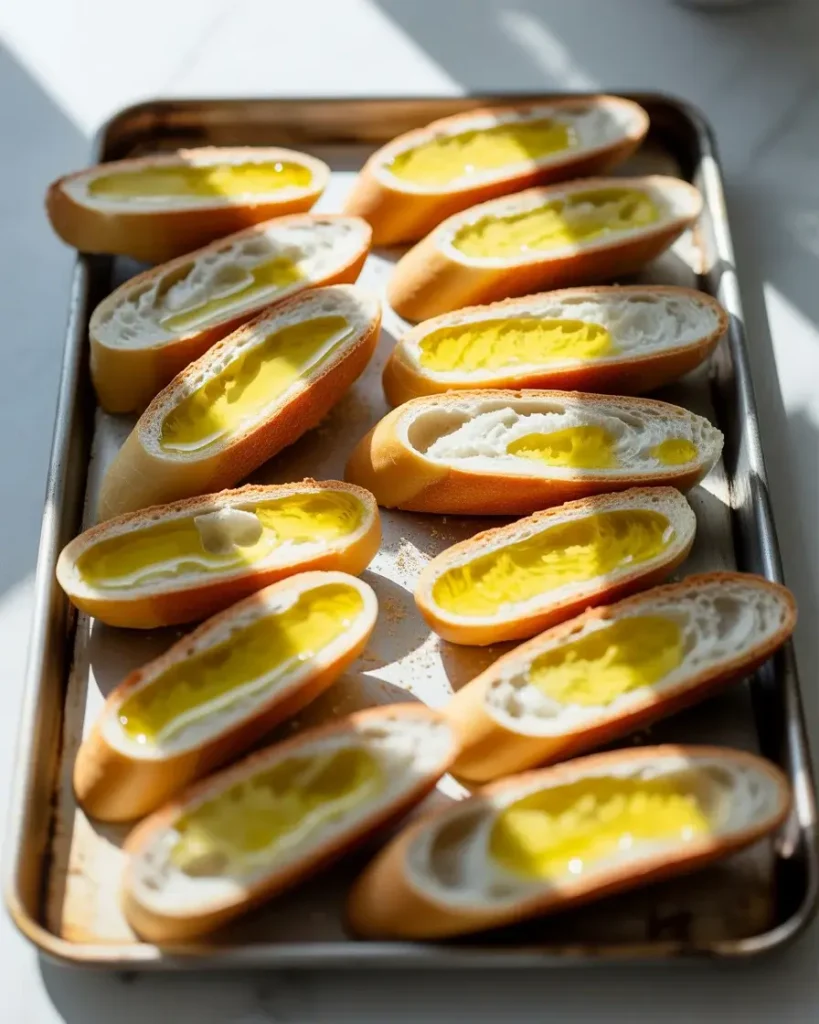
Cut your baguette into 1/2-inch slices at a slight diagonal. I tested thicknesses from 1/4 inch to 3/4 inch, and 1/2 inch is the sweet spot. Too thin and the crostini snaps apart under the ricotta; too thick and you lose the crunch-to-topping ratio.
Lay the slices flat on a baking sheet in a single layer. Brush each piece generously with good olive oil on both sides. Don’t skip the bottom side, because that’s what gives you that deep golden crunch underneath.
Step 2: Toast the Crostini
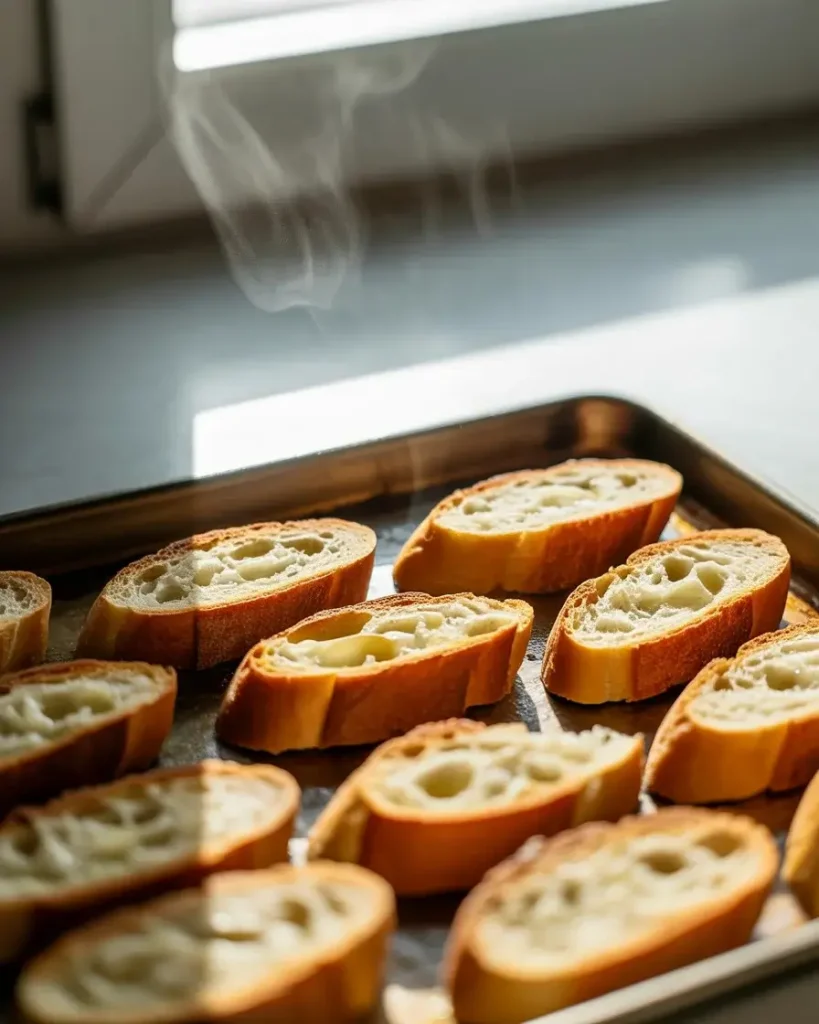
Bake at 375°F for 10 to 12 minutes, flipping once at the 6-minute mark. You’re looking for a deep golden color, not just pale blonde. I burned my first batch at 400°F chasing speed, and the edges went bitter.
The crostini should sound hollow when you tap them lightly. That tap test was my biggest discovery after testing this recipe repeatedly. It’s a better cue than color alone, especially with ovens that run hot.
Step 3: Whip the Ricotta
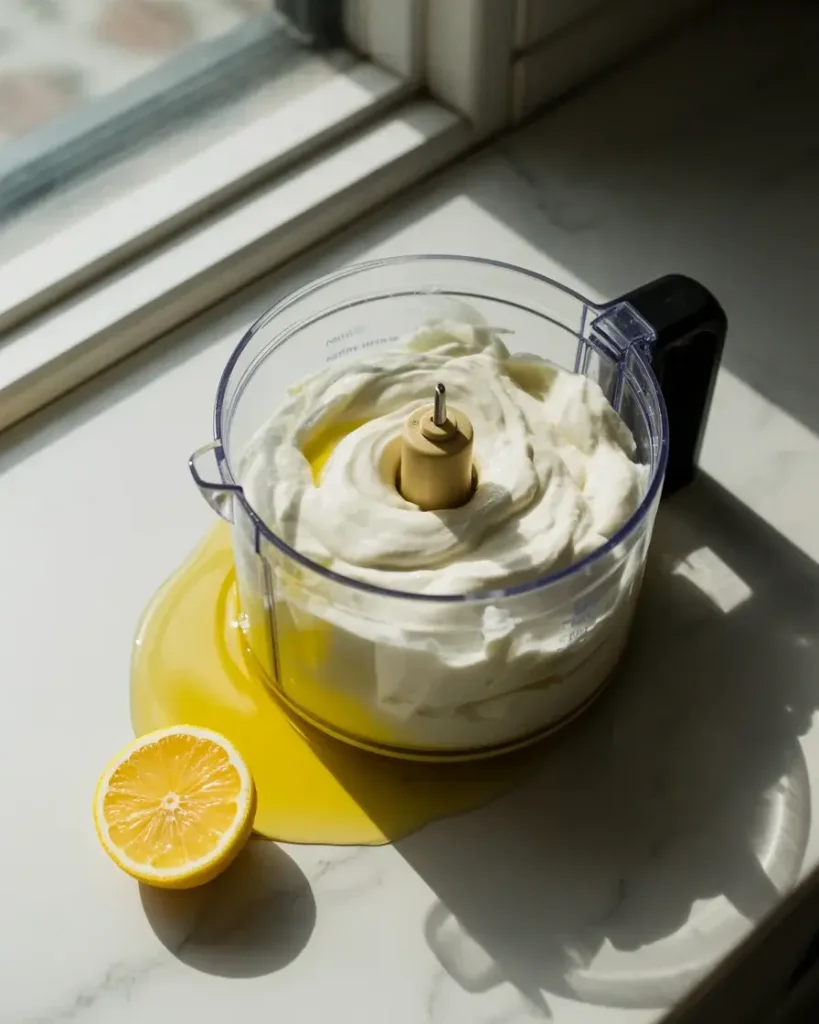
Add 1 cup of whole milk ricotta to a food processor with 2 tablespoons of olive oil, 1/4 teaspoon of salt, and a squeeze of fresh lemon juice. Process for 90 full seconds. I know that sounds long, but stopping at 30 or 45 seconds leaves the ricotta grainy.
After 90 seconds, the texture transforms into something cloud-like and spreadable. I also tested whipping by hand with a fork, and it never gets as smooth. The food processor is non-negotiable for that silky finish.
Discover Delicious Appetizers
Step 4: Spread the Whipped Ricotta
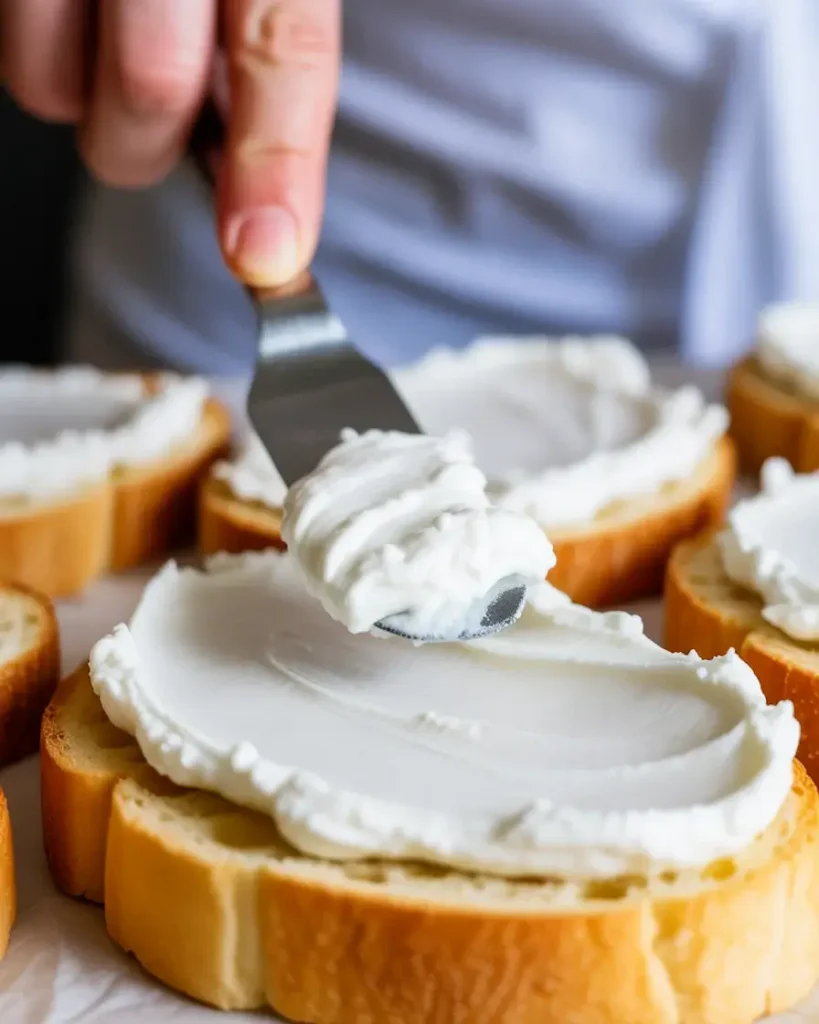
Use an offset spatula or the back of a spoon to spread a generous layer of whipped ricotta onto each crostini. About 1 tablespoon per slice works well for a 1/2-inch crostini. Spread it edge to edge so every bite gets full coverage.
Apply the ricotta while the crostini are still slightly warm. I noticed through testing that warm bread absorbs just enough of the ricotta’s moisture to create a better bond between the two layers, without making the crostini soggy.
Step 5: Add Toppings and Finish

This is where the crostini go from good to unforgettable. My go-to combination is a drizzle of honey, fresh thyme leaves, cracked black pepper, and a pinch of flaky sea salt. The sweet-salty contrast makes people think you trained at a restaurant.
For savory variations, I’ve tested roasted cherry tomatoes, thinly sliced prosciutto, and fig jam with walnuts. All worked beautifully, but the honey and thyme version gets the most requests at every gathering. Add toppings right before serving so nothing wilts.

Whipped Ricotta Crostini
Course: AppetizersCuisine: Italian-AmericanDifficulty: Easy24
8
minutes12
20
minutesSilky whipped ricotta piled onto golden toasted baguette slices with honey, fresh thyme, and flaky sea salt. Ready in 20 minutes and impressive every time.
Ingredients
1 French baguette, sliced 1/2 inch thick diagonally
1 cup whole milk ricotta
3 tablespoons extra virgin olive oil, divided
1 tablespoon fresh lemon juice
1/4 teaspoon kosher salt
2 tablespoons honey
Fresh thyme leaves, for garnish
Cracked black pepper, to taste
Flaky sea salt, for finishing
Directions
- Preheat oven to 375°F and line a baking sheet with parchment.
- Brush baguette slices on both sides with olive oil and arrange in a single layer.
- Toast for 10 to 12 minutes, flipping at 6 minutes, until deep golden and crisp.
- Add ricotta, remaining olive oil, lemon juice, and salt to a food processor. Blend for 90 seconds until silky.
- Spread 1 tablespoon of whipped ricotta onto each warm crostini edge to edge.
- Drizzle with honey, scatter fresh thyme, add cracked pepper and flaky sea salt, and serve immediately.
Notes
- Store whipped ricotta in an airtight container in the refrigerator for up to 2 days.
Swap honey for fig jam or balsamic glaze for a different flavor profile.
Toast crostini up to 8 hours ahead and store uncovered at room temperature.
Nutrition Table (per serving, 2 crostini)
| Nutrient | Amount |
|---|---|
| Calories | 145 |
| Total Fat | 7g |
| Sugars | 3g |
| Protein | 5g |
Trusted Resource Links:
For more on safe food handling when working with dairy-based spreads, visit the FDA Safe Food Handling Guide. For nutritional information on ricotta and dairy, the Mayo Clinic Nutrition Guide is a reliable reference.
What Type of Bread Works Best for Crostini?
A French baguette is the gold standard for crostini. The tight, even crumb toasts uniformly and gives you that ideal snap without crumbling when you bite. I tested sourdough, ciabatta, and Italian bread over multiple rounds.
Ciabatta was too porous and absorbed the ricotta too quickly. Sourdough worked but had an overpowering tang that competed with the toppings. The baguette let the whipped ricotta take center stage every single time.
If you can’t find a baguette, a French bread loaf sliced thinly is the next best option. Avoid sliced sandwich bread entirely since it has too much moisture and turns rubbery during toasting rather than crisping up properly.
Can You Make Whipped Ricotta Crostini Ahead of Time?
You can prep the components separately up to 24 hours in advance, but don’t assemble until right before serving. The whipped ricotta stores beautifully in an airtight container in the refrigerator for up to 2 days.
The crostini can be toasted ahead and stored uncovered at room temperature for up to 8 hours. I tried storing them in a sealed bag overnight, and they turned soft and chewy by morning.
Assemble within 15 minutes of serving for the best texture. I set everything out separately when hosting and let guests build their own, which also solved my soggy crostini problem at longer parties.
What’s the Best Ricotta to Use?
Always use whole milk ricotta, never part-skim. I tested both side by side across 5 batches, and part-skim produced a thin, watery result that separated slightly after whipping. Whole milk ricotta holds its emulsification beautifully.
Brands like Calabro or BelGioioso whip up noticeably smoother than store-brand options. If your ricotta looks wet in the container, drain it in a fine mesh strainer for 15 minutes before whipping. Extra moisture is the number one reason whipped ricotta turns out loose.
For the richest flavor, let the ricotta sit at room temperature for 20 minutes before processing. Cold ricotta from the fridge takes longer to reach that silky consistency, and I’ve seen people give up too early because of it.
How Do You Keep Crostini from Getting Soggy?
Three things prevent soggy crostini: proper toasting, oil on both sides, and last-minute assembly. I skipped the bottom oil brush once and had soft, sad crostini within 20 minutes of plating.
Toasting to a true golden brown, not just light tan, creates a moisture barrier that holds up under wet toppings like ricotta. Underbaked crostini look done on top but stay soft in the center, which causes them to collapse quickly.
If you’re serving outdoors or at a buffet, spread the ricotta at the last possible moment. A light brush of olive oil on the top of each finished crostini also adds a subtle extra barrier without affecting flavor.
Can You Use Flavored Ricotta Variations?
Absolutely, and this is one of my favorite things to experiment with. I’ve stirred roasted garlic, lemon zest, fresh basil, and even a pinch of red pepper flakes into the base ricotta before whipping. Each variation pairs differently with toppings.
Roasted garlic ricotta with sliced cherry tomatoes and basil is stunning in summer. Lemon zest ricotta pairs perfectly with smoked salmon and capers for a brunch spread. I found that one additional flavor addition is enough since the whipping already amplifies everything.
Keep bold additions to 1 teaspoon quantities when testing a new combination. Going heavier can overwhelm the mild, creamy base that makes whipped ricotta crostini so versatile and crowd-pleasing.
Frequently Asked Questions
Q: Can I make whipped ricotta crostini without a food processor?
A: A hand mixer or immersion blender works well. Whip on medium-high for about 2 minutes until the ricotta is smooth and airy. A fork alone won’t get you the same silky finish.
Q: How many crostini does one baguette make?
A: One standard baguette yields around 24 to 28 slices at 1/2-inch thickness. Plan for 3 to 4 crostini per person as an appetizer portion for a casual gathering.
Can I add garlic flavor to whipped ricotta crostini?
A: Yes, rub a raw garlic clove directly on the warm crostini right after toasting. It melts into the bread and adds a subtle, savory depth without overpowering the creamy ricotta.