Pesto Ricotta Crostini
The first time I made pesto ricotta crostini for a dinner party, I accidentally used too much lemon in the ricotta and thought I’d ruined everything. Turns out that bright acidity was exactly what the creamy cheese needed to hold up against the bold, herby pesto. It completely changed how I build this recipe.
Now after testing it 15+ times for everything from casual weeknights to holiday boards, this is my go-to appetizer. The toasted bread stays crisp, the ricotta spreads like a dream, and the pesto brings it all together in one perfect bite.
Step-by-Step Instructions
Step 1: Slice and Prep the Baguette
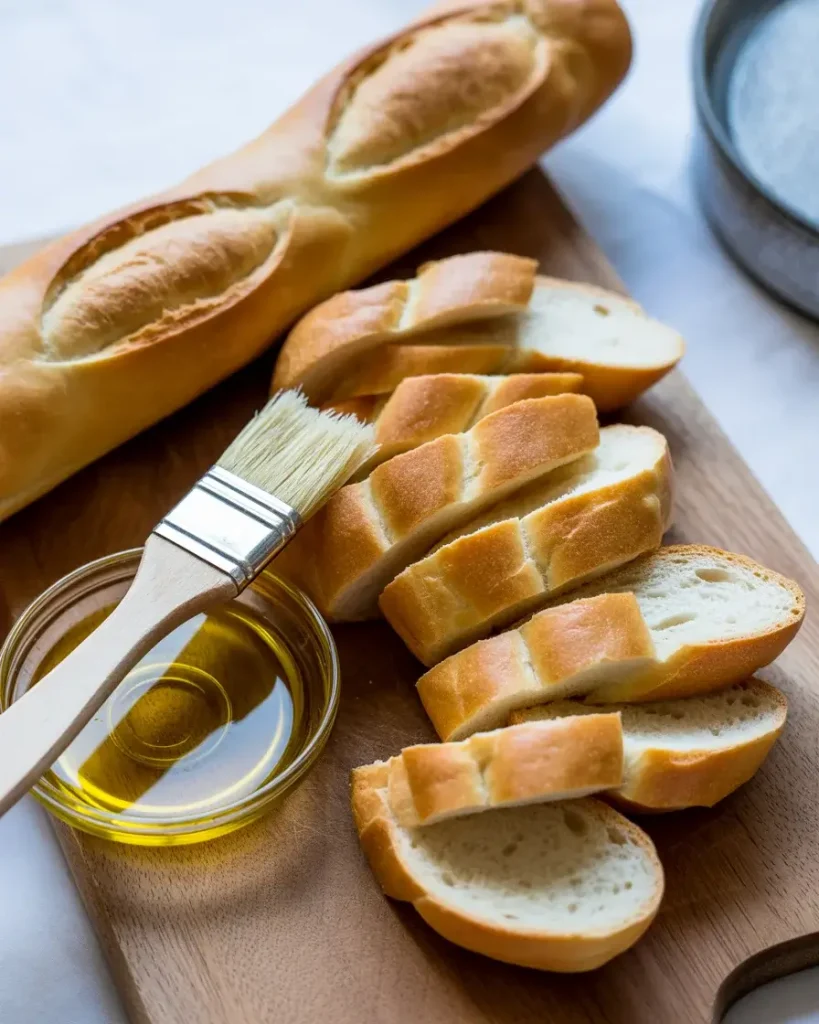
Cut a French baguette into 1/2-inch slices on a slight diagonal. I’ve tested thicker cuts and they always turn out too bready, throwing off the topping-to-bread ratio. Aim for about 20 even slices.
Brush each slice lightly with olive oil on both sides. Don’t skip the bottom side. I made that mistake my first three batches and the undersides came out pale and soft instead of golden and crisp.
Step 2: Toast the Bread to Golden Perfection
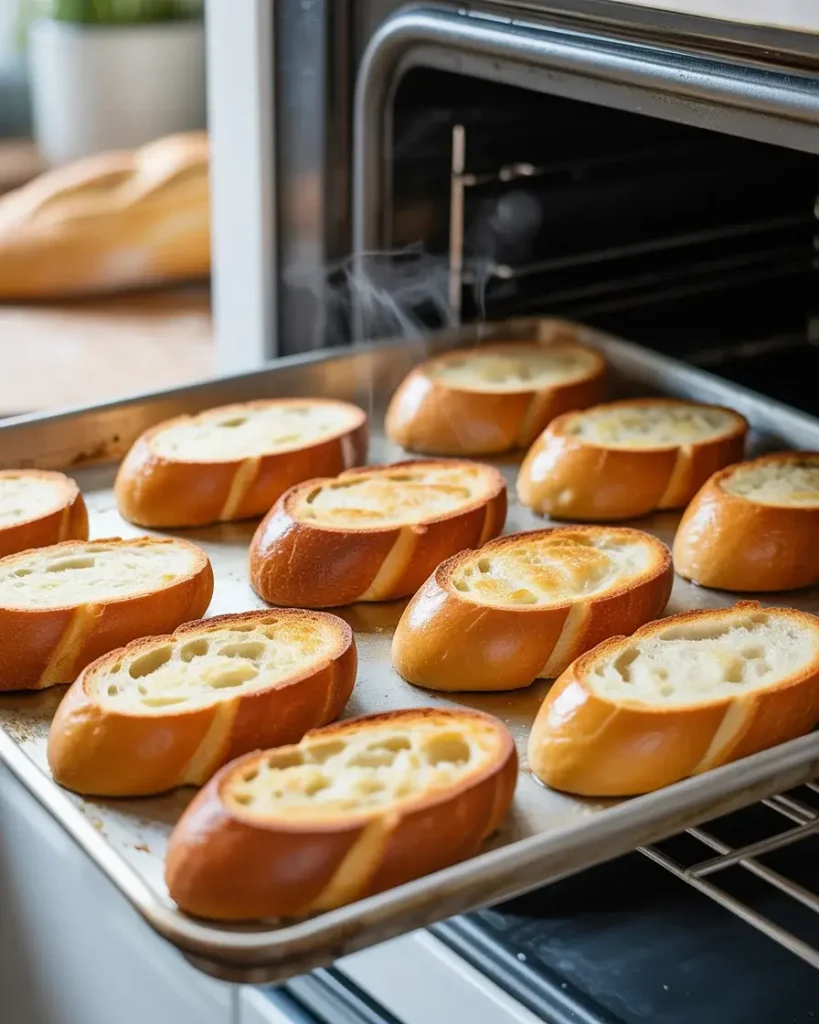
Arrange the slices on a baking sheet and toast at 400°F for 8-10 minutes, flipping once at the 5-minute mark. You’re looking for deep golden edges with a slight give in the center when you press them.
My first batch, I left them in 12 minutes and they turned rock hard by the time the party started. Pull them out when they look just a shade lighter than you want. They crisp up more as they cool.
Step 3: Make the Lemon Ricotta Base
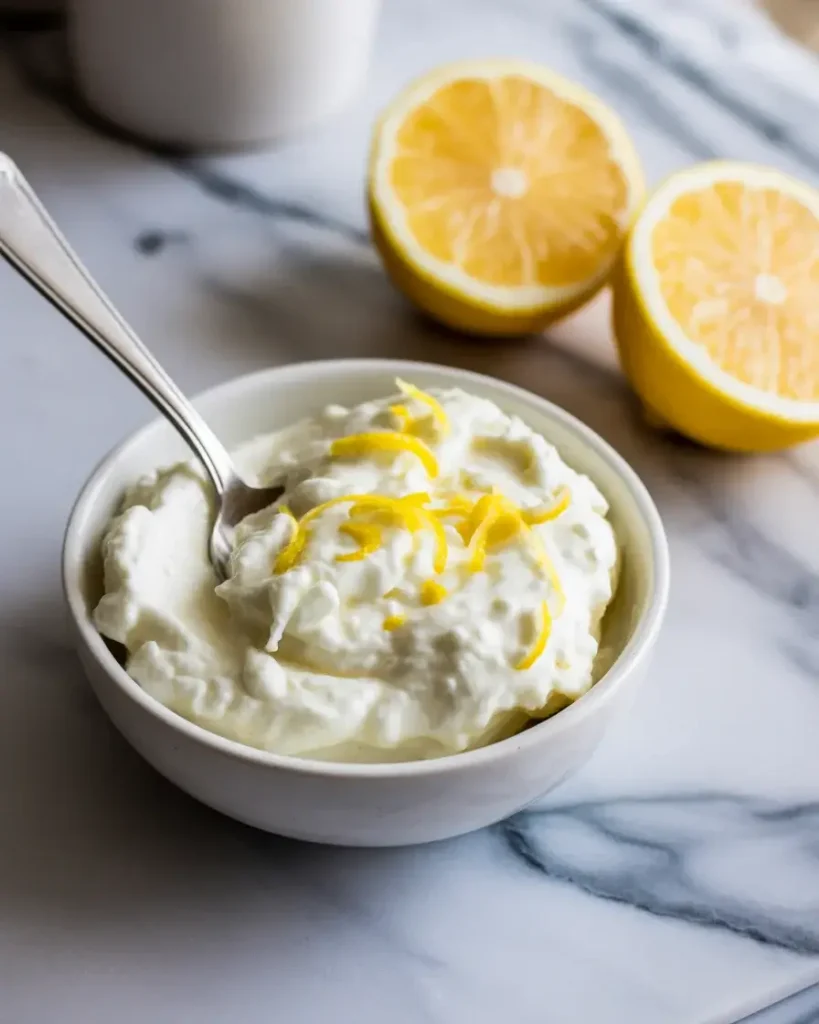
In a bowl, combine 1 cup whole-milk ricotta, 1 tablespoon lemon juice, 1 teaspoon lemon zest, and a pinch of salt. Stir until smooth and fluffy. Whole-milk ricotta is non-negotiable here. I tried part-skim twice and it was watery and flat-tasting.
The lemon zest adds a fragrance that lemon juice alone can’t replicate. After testing both, I always use both. It takes 30 extra seconds and makes a real difference.
Step 4: Assemble the Crostini
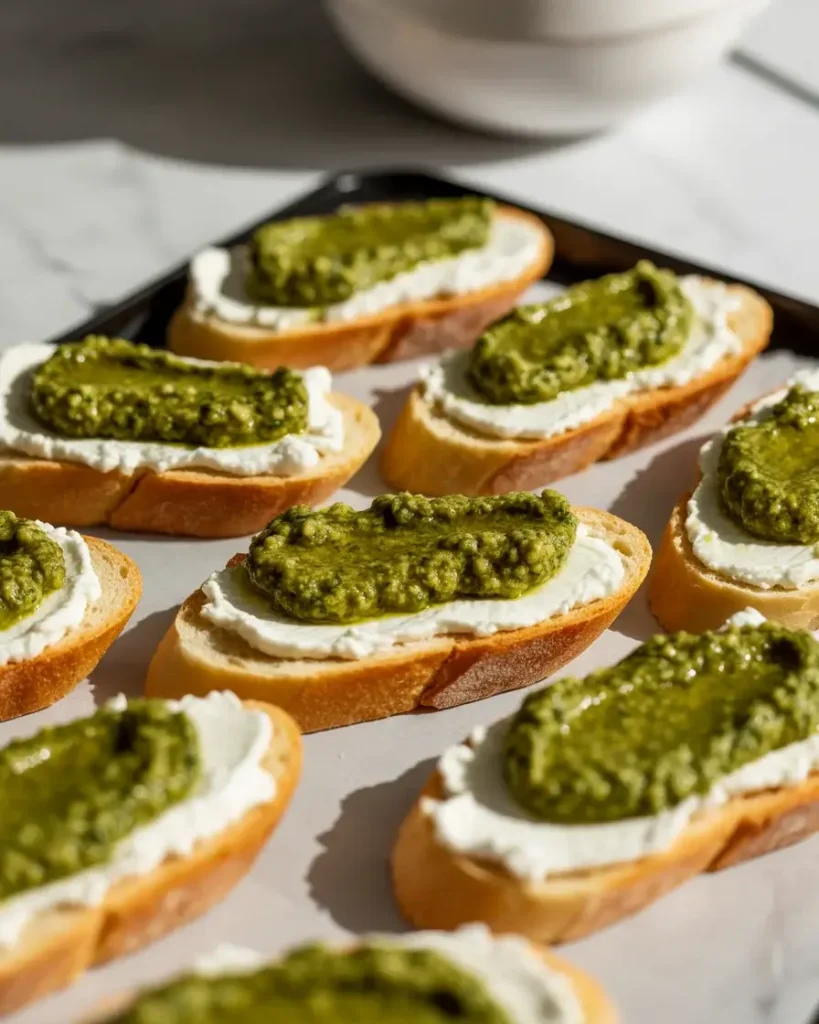
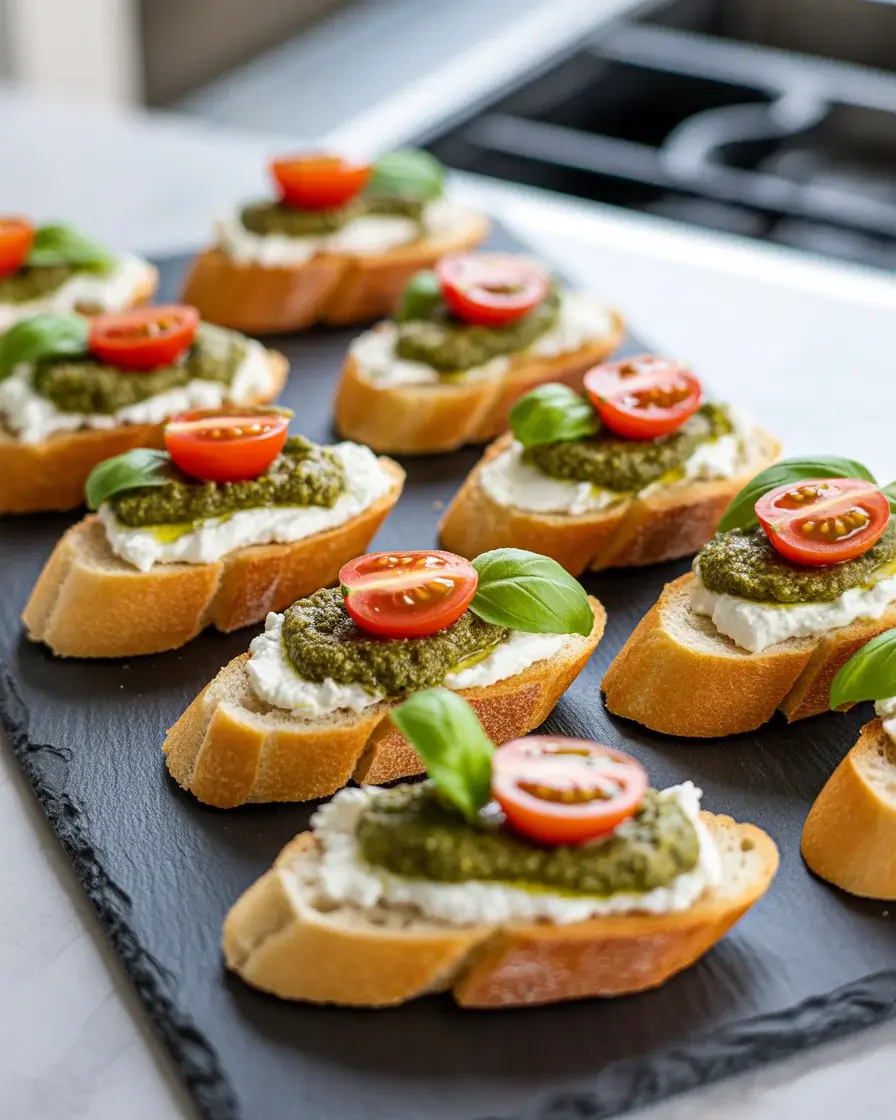
Spread a generous layer of lemon ricotta onto each toasted crostini, about 1 tablespoon per slice. Then add a small dollop of pesto right in the center. I use about 1/2 teaspoon of pesto per piece so the ricotta still shows around the edges.
Don’t spread the pesto edge to edge. Keeping it in the center lets the two layers contrast visually and gives every bite a layered flavor instead of everything blending together.
Discover Delicious Appetizers
Step 5: Add Toppings and Garnish
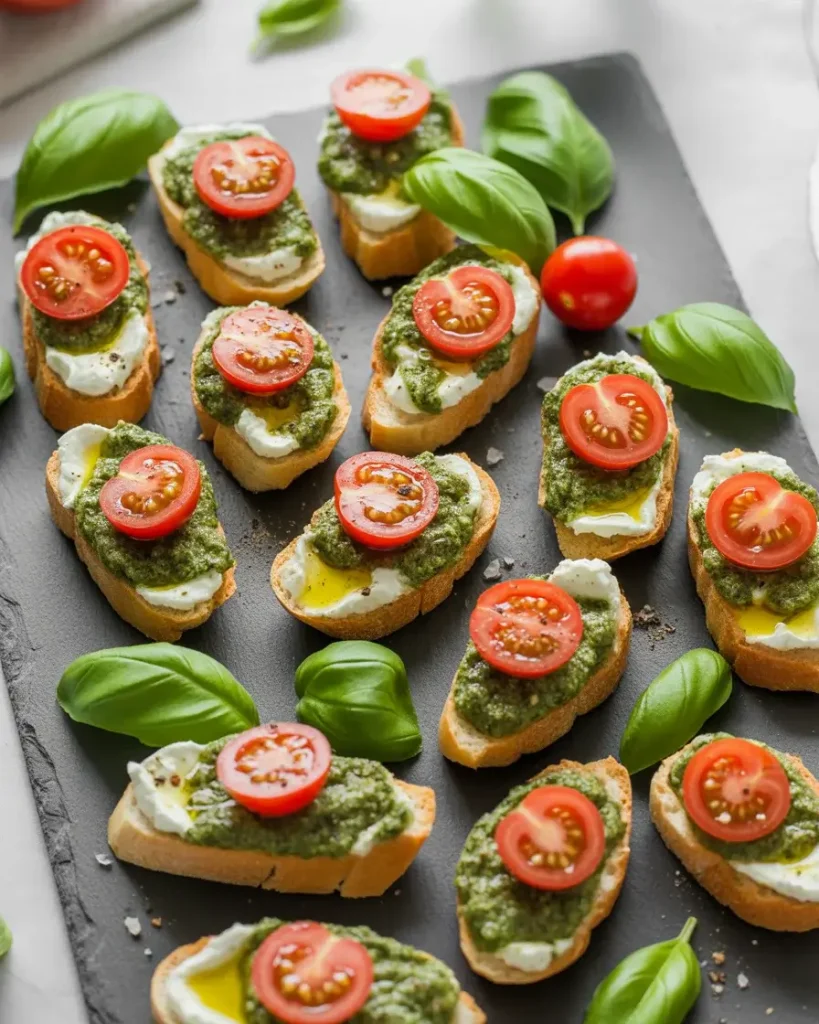
Top each crostini with a halved cherry tomato, a small basil leaf, and a light crack of black pepper. I’ve also tested sun-dried tomatoes and thinly sliced prosciutto as alternatives. Both work, but the fresh cherry tomato keeps it bright and lets the pesto ricotta stay as the star.
Finish with a drizzle of good olive oil right before serving. I tried adding it during assembly, and it made the bread soggy within 10 minutes.
Pesto Ricotta Crostini
Course: AppetizersCuisine: Italian-AmericanDifficulty: Easy4
10
minutes10
20
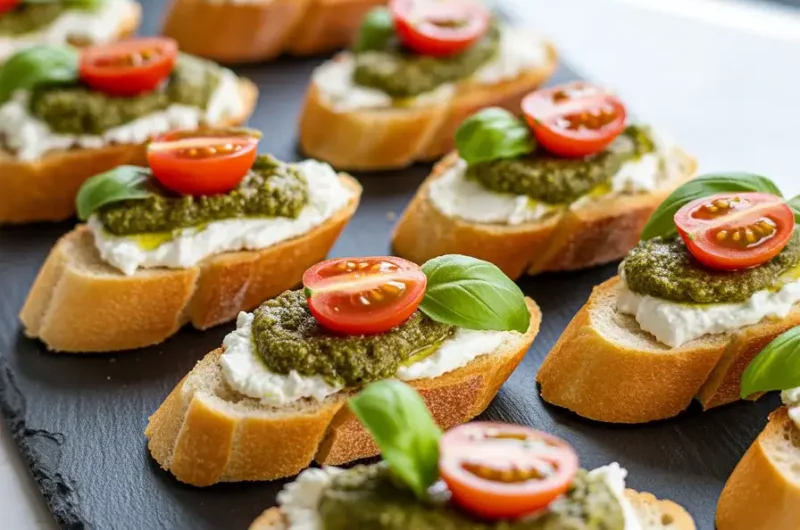
minutesCreamy lemon ricotta and vibrant basil pesto piled onto crispy toasted baguette rounds. A 20-minute appetizer that looks stunning and tastes even better.
Ingredients
1 French baguette, sliced diagonally into 1/2-inch rounds (about 20 slices)
3 tablespoons olive oil, plus extra for drizzling
1 cup whole-milk ricotta
1 tablespoon fresh lemon juice
1 teaspoon lemon zest
1/4 teaspoon salt
1/3 cup basil pesto (store-bought or homemade)
10 cherry tomatoes, halved
Fresh basil leaves for garnish
Cracked black pepper to taste
Directions
- Preheat oven to 400°F. Slice baguette into 1/2-inch diagonal rounds and brush both sides with olive oil.
- Arrange slices on a baking sheet and toast 8-10 minutes, flipping once at 5 minutes, until deeply golden.
- In a small bowl, mix ricotta, lemon juice, lemon zest, and salt until smooth.
- Spread about 1 tablespoon of lemon ricotta onto each cooled crostini.
- Add 1/2 teaspoon of pesto to the center of each piece.
- Top with a halved cherry tomato and a fresh basil leaf.
- Drizzle with olive oil and crack fresh black pepper over the top just before serving.
Notes
- Store toasted crostini uncovered at room temperature up to 2 hours before assembling.
Ricotta mixture keeps in the fridge for up to 3 days in an airtight container.
Substitute cherry tomatoes with thinly sliced prosciutto or sun-dried tomatoes for a variation.
Use stale baguette for even crispier results.
Nutrition Table (per serving, 2 crostini)
| Nutrient | Amount |
|---|---|
| Calories | 145 |
| Total Fat | 8g |
| Sugars | 1g |
| Protein | 5g |
Trusted Resource Links:
For food safety when handling dairy-based toppings, refer to the FDA Safe Food Handling Guide. For nutrition information on ricotta and olive oil, visit the Mayo Clinic Nutrition Guide.
What Type of Bread Works Best for Crostini?
A classic French baguette gives the best results. It toasts evenly, has the right crust-to-crumb ratio, and holds toppings without getting soggy fast.
I’ve tested sourdough, ciabatta, and Italian bread. Sourdough works well if you like a tangy base. Ciabatta is too airy and doesn’t support the toppings as cleanly.
Baguette sliced at 1/2 inch and toasted at 400°F gives you that satisfying crunch you hear when you bite in. Slicing too thin leads to cracking, too thick leads to chewiness. After 15+ batches, 1/2 inch is the sweet spot every time.
Stale baguette actually toasts more evenly than fresh. I started buying my baguette a day ahead on purpose.
Can You Make Pesto Ricotta Crostini Ahead of Time?
You can prep all the components up to 24 hours ahead, but assemble right before serving. Toasted bread left uncovered stays crisp for about 2 hours at room temperature.
Store the ricotta mixture and pesto separately in airtight containers in the fridge. I assembled a full tray 2 hours before a party once, and by the time guests arrived the bread had softened from the moisture in the cheese.
Toasting the bread slightly darker than usual gives you extra insurance if you know you’ll be assembling 20-30 minutes before serving. It adds about 2 extra minutes at 400°F.
Set out your toppings in small bowls so you can garnish quickly right before guests arrive.
What Kind of Pesto Should You Use?
Store-bought basil pesto works perfectly fine here. I’ve used both jarred and homemade across 15+ tests. The difference is noticeable but not dramatic when paired with the lemon ricotta.
If using jarred pesto, Rao’s and Barilla both performed well in my testing. Avoid very oily jarred pestos as they can bleed into the ricotta and make the crostini look messy.
Homemade pesto with pine nuts gives a richer, more textured topping. If you have 10 minutes, blending fresh basil, garlic, parmesan, pine nuts, and olive oil in a food processor gives you noticeably better color and flavor.
Sun-dried tomato pesto is a great variation if you want something bolder and slightly sweeter for a holiday appetizer spread.
How Do You Keep Crostini from Getting Soggy?
Three things matter: toast hot, assemble late, and drizzle last. Toast at 400°F until deeply golden. Assemble no more than 20 minutes before serving. Add the olive oil drizzle right at the table.
I learned this the hard way at a holiday party where I assembled everything an hour early. By serving time, the bread had completely lost its crunch. It was still delicious but the texture was off.
A thin layer of ricotta acts as a moisture barrier between the pesto and the bread, which buys you a bit more time than spreading pesto directly. That’s another reason why building in layers matters.
If you’re serving at an outdoor event, assemble directly on the serving board and bring the garnishes separately.
Frequently Asked Questions
Q: Can I use store-bought pesto for pesto ricotta crostini?
A: Yes, absolutely. Store-bought basil pesto works great here. Rao’s and Barilla are my top picks. Just avoid extra-oily varieties that can bleed into the ricotta.
Q: How far in advance can I prep pesto ricotta crostini?
A: Toast the bread and mix the ricotta up to 24 hours ahead. Keep them separate and assemble within 20 minutes of serving to keep the bread crispy.
Q: Can I serve pesto ricotta crostini at room temperature?
A: Yes, these are best served at room temperature. The ricotta softens slightly as it warms, which actually improves the spreadability and flavor balance with the pesto.