French Coconut Pie
The first time I made French coconut pie, I pulled it out of the oven too early and ended up with a runny center. After testing it 15+ times, I finally nailed the exact bake time and texture that makes this pie absolutely worth every minute.
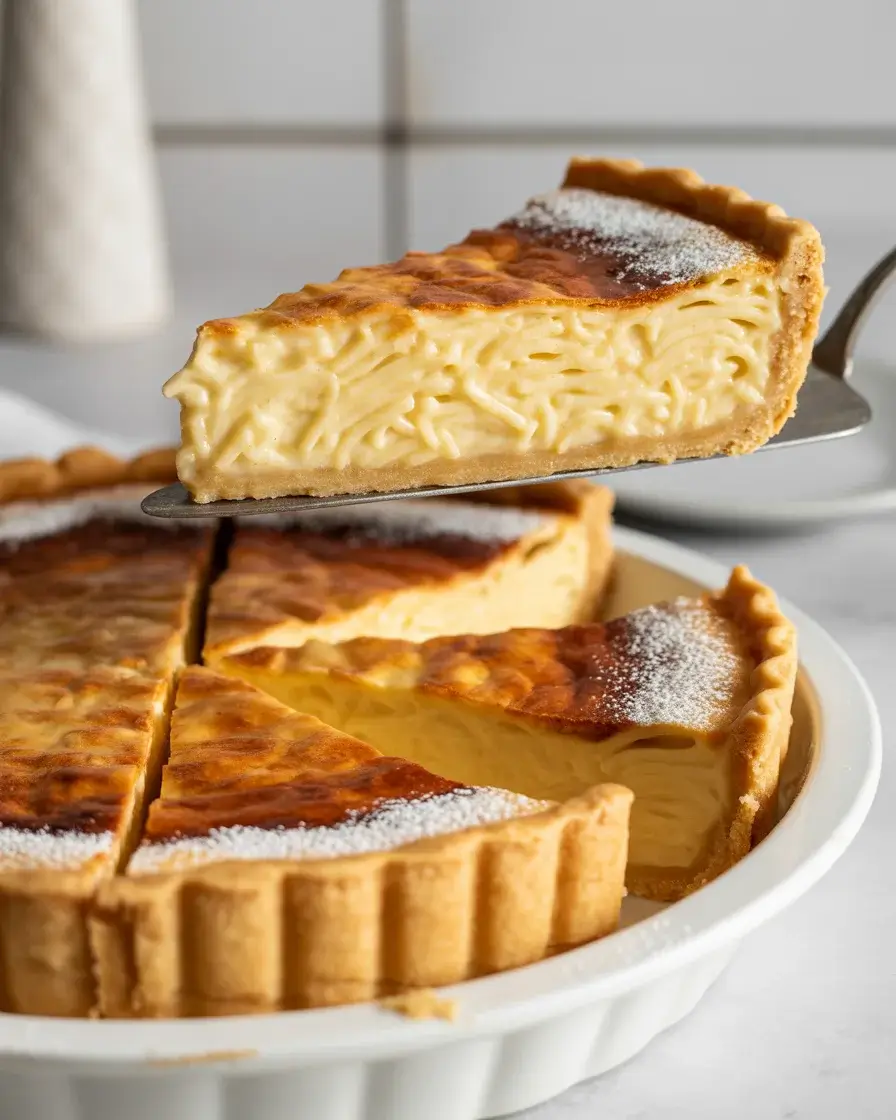
What you get is a buttery, custardy filling loaded with sweet shredded coconut, all nestled in a flaky pie crust. It is simple enough for weeknights but impressive enough to bring to any gathering.
Step-by-Step Instructions
Step 1: Prep Your Pie Crust
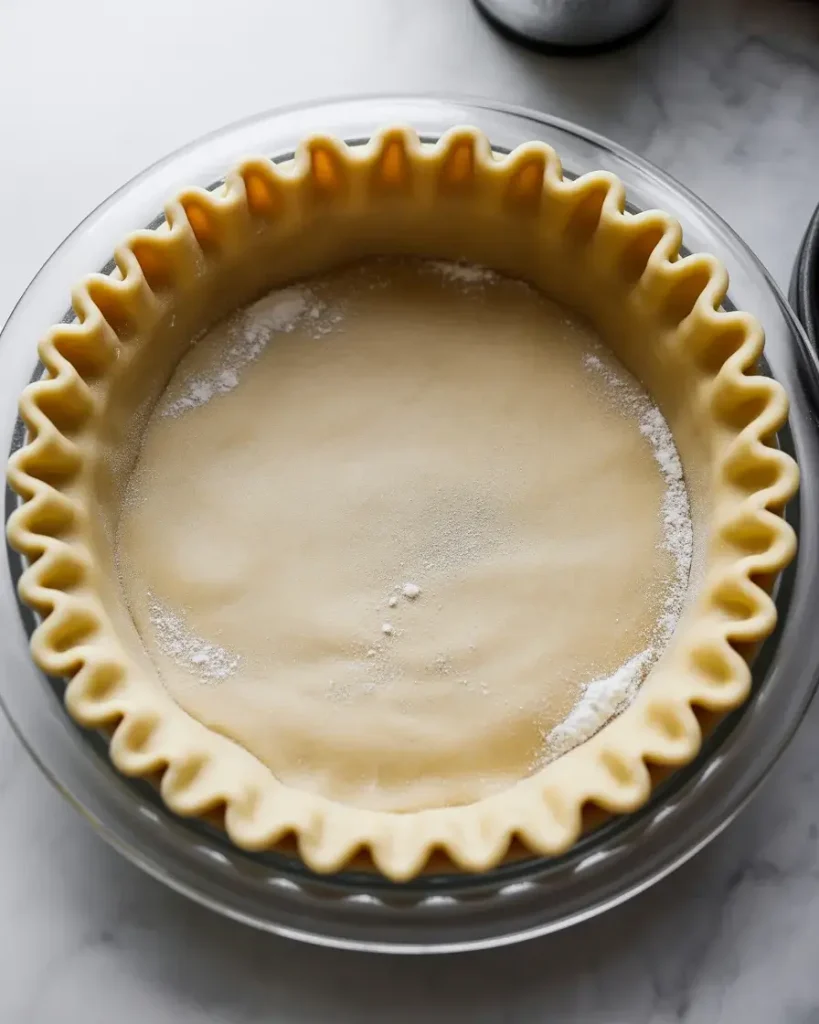
Use a 9-inch unbaked pie shell, either homemade or store-bought. Press it firmly into your pie dish and crimp the edges so they hold their shape at 350°F.
I tested both deep-dish and standard crusts. The standard 9-inch gives the best custard-to-crust ratio. Deep-dish left too much jiggly center that never fully set.
Step 2: Melt the Butter
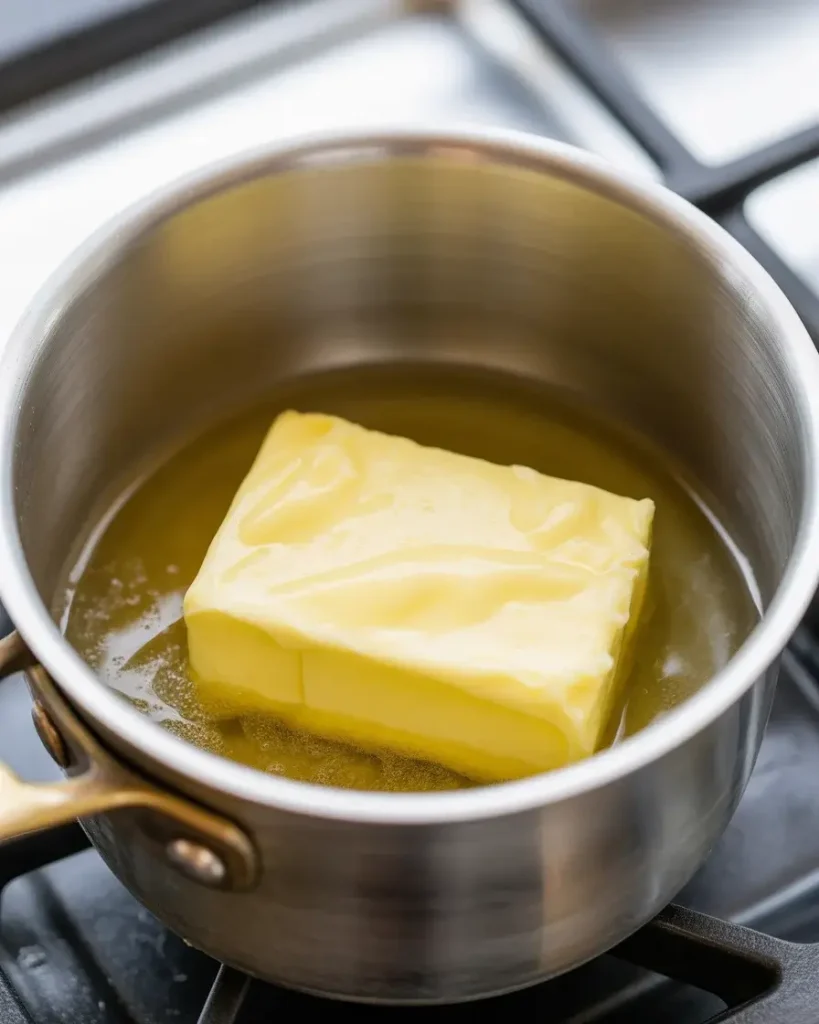
Melt 1/2 cup of unsalted butter completely in a small saucepan over low heat. You want it fully liquid, not browned. The moment it smells nutty, you have gone too far.
I learned this the hard way on batch seven. Browned butter changed the flavor profile dramatically and overpowered the delicate coconut. Clear, golden melted butter is what you need here.
Image Prompt: Unsalted butter melting slowly in a small silver saucepan over a low flame, fully liquid and golden yellow with no browning, light steam rising, photographed in natural light with a clean kitchen background, close-up shot, sharp focus on the smooth melted butter surface, ultra-realistic food photography, professional recipe blog quality
Image Caption: Butter melting gently to clear golden liquid without browning
Step 3: Mix the Custard Base
Whisk together 1 1/2 cups of granulated sugar, 3 large eggs, and 2 tablespoons of all-purpose flour in a large bowl until smooth and pale yellow. This takes about 2 minutes of steady whisking.
The flour is not optional. I tried skipping it on batch four and the filling sank in the center. Just 2 tablespoons makes the custard hold its structure beautifully without tasting starchy.
Step 4: Add Butter and Milk
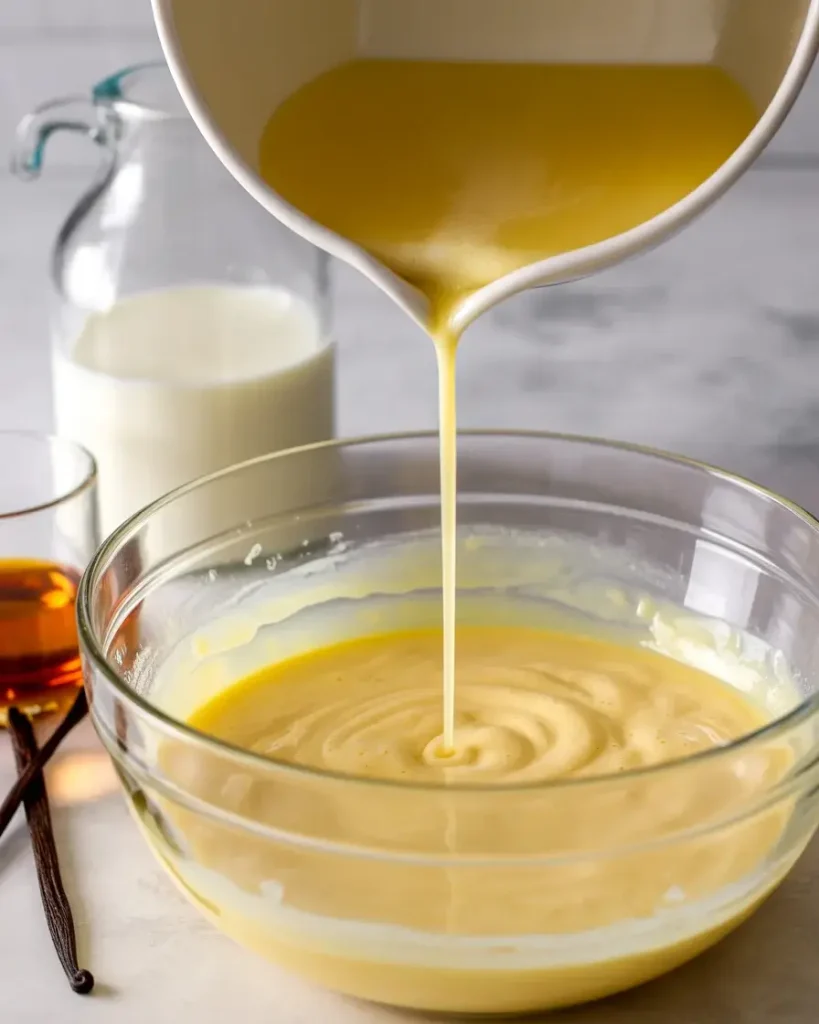
Pour the melted butter and 1 cup of whole milk into your egg mixture slowly while whisking constantly. Add 1 teaspoon of vanilla extract. The batter should look silky and thin at this stage.
I tested whole milk versus evaporated milk across 6 batches. Whole milk keeps the filling light and smooth. Evaporated milk made it slightly too dense and rich, masking the coconut flavor.
Step 5: Fold in the Coconut
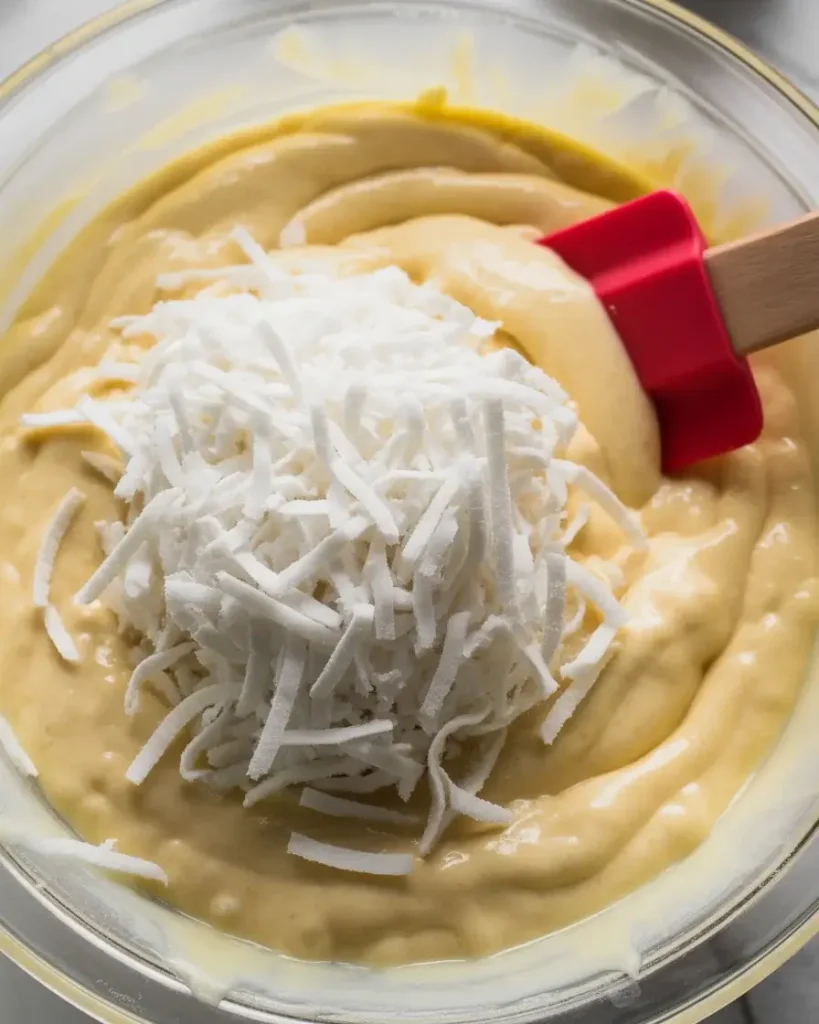
Stir in 1 1/3 cups of sweetened shredded coconut using a rubber spatula. Mix until every strand is evenly coated in the custard. You should see thick ribbons of coconut throughout.
Do not use unsweetened coconut here. I tested both, and unsweetened gave a flat, bland result. The sweetened version caramelizes slightly on top during baking, creating that signature golden crust.
Step 6: Pour and Bake
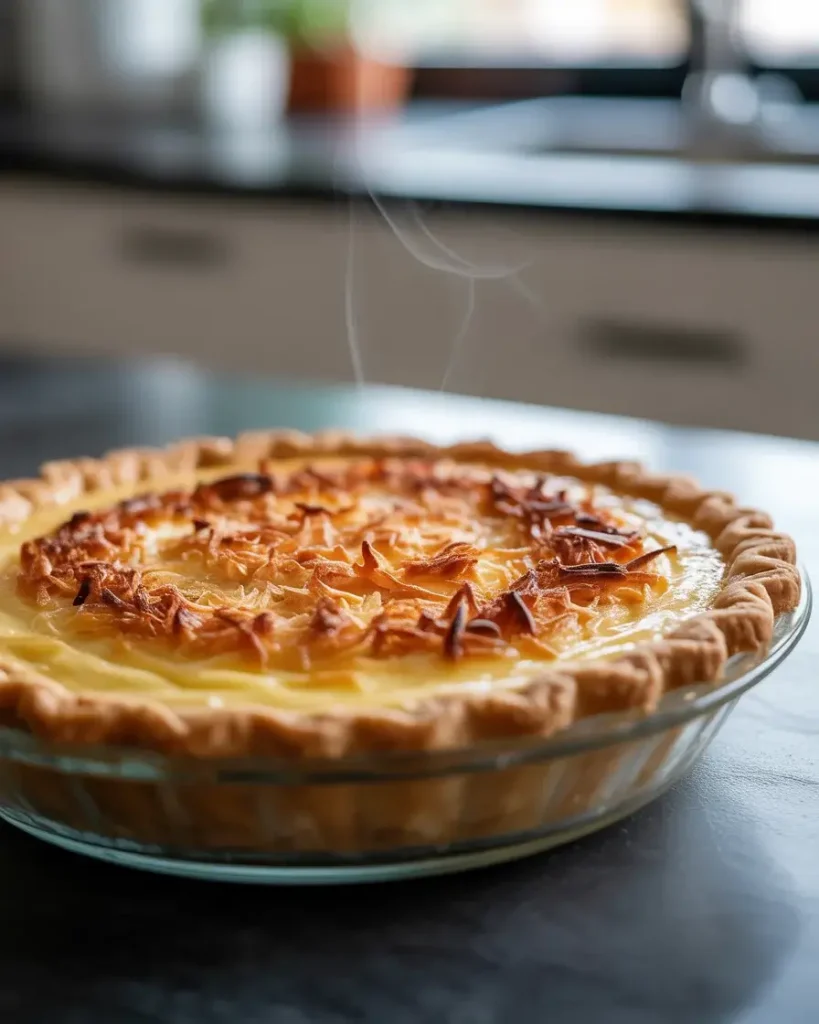
Pour the filling into your unbaked pie shell and bake at 350°F for 45 to 50 minutes. The top should turn deep golden brown and the center should barely jiggle when you shake the pan.
My biggest early failure was pulling the pie at 40 minutes because the top looked done. The center was completely liquid inside. Give it the full 45 to 50 minutes. A slight wobble is fine; a full wave means 5 more minutes.
Step 7: Cool Before Slicing
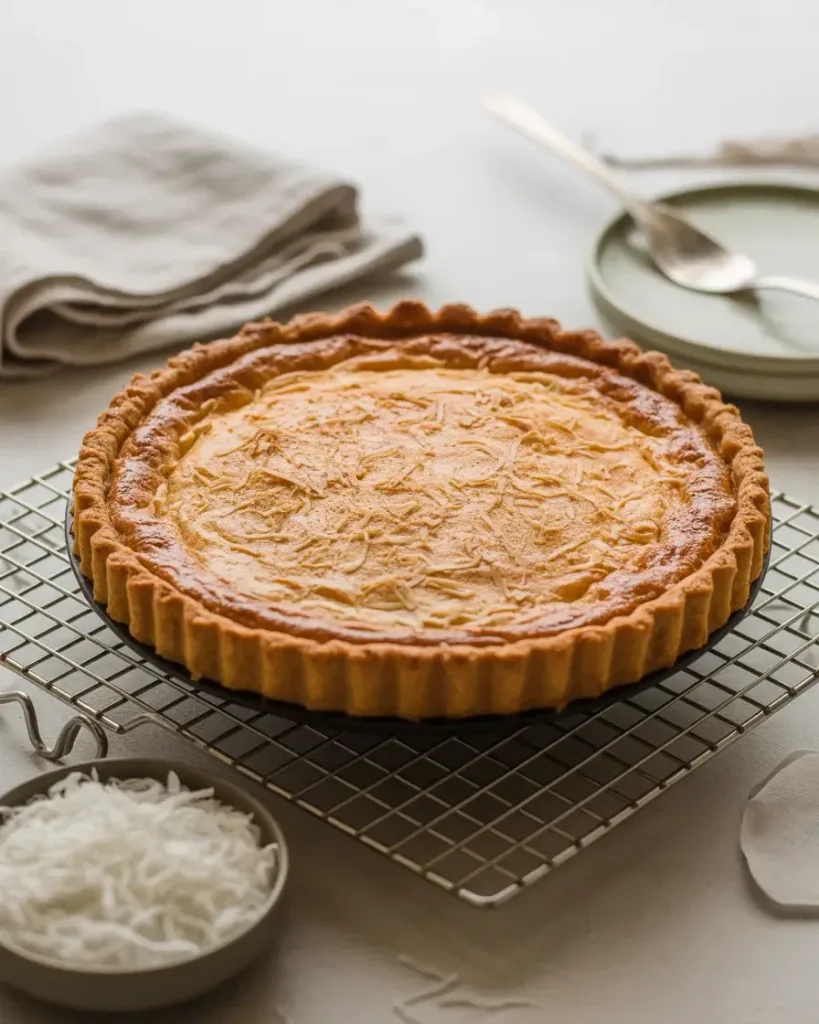
Let the pie rest on a wire rack for at least 1 hour before slicing. The custard needs this time to fully set. If you cut it at 20 minutes, it will slide right off the spatula.
I tested serving it warm versus fully cooled. Both work, but at room temperature the custard holds a clean slice. Warm slices are softer and more custardy. For presentation, wait the full hour.
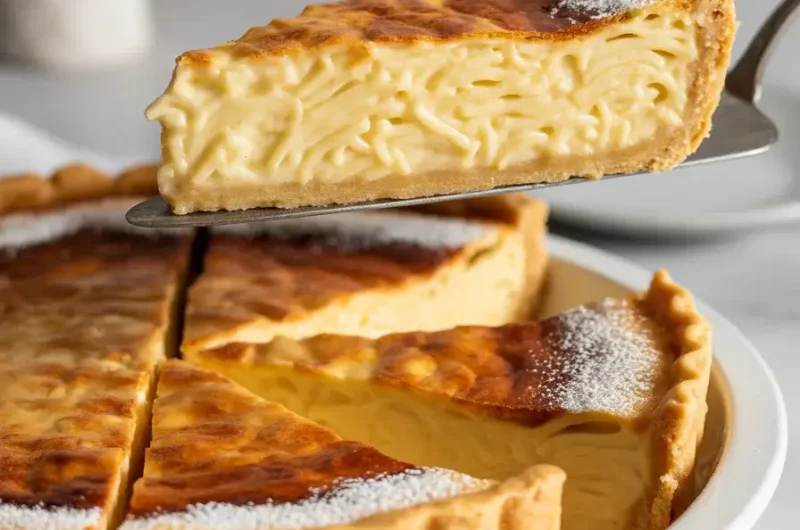
French Coconut Pie
Course: DinnerCuisine: American SouthernDifficulty: Easy4
servings10
minutes50
minutes1
hourA classic Southern baked custard pie with sweetened shredded coconut and a golden caramelized top. Simple ingredients, incredible flavor, and perfect for any occasion.
Ingredients
1 unbaked 9-inch pie shell
1/2 cup unsalted butter, melted
1 1/2 cups granulated sugar
3 large eggs
2 tablespoons all-purpose flour
1 cup whole milk
1 teaspoon vanilla extract
1 1/3 cups sweetened shredded coconut
Directions
- Preheat oven to 350°F. Place unbaked pie shell in a 9-inch pie dish and crimp edges.
- Melt butter in a small saucepan over low heat until fully liquid and golden. Set aside.
- Whisk sugar, eggs, and flour in a large bowl until pale and smooth, about 2 minutes.
- Slowly whisk in melted butter, whole milk, and vanilla extract until fully combined.
- Fold in shredded coconut using a rubber spatula until evenly distributed.
- Pour filling into unbaked pie shell and bake at 350°F for 45 to 50 minutes until golden.
- Cool on a wire rack for at least 1 hour before slicing and serving.
Notes
- Store covered at room temperature for 24 hours or refrigerated for up to 4 days.
Substitute sweetened flaked coconut in a pinch, but shredded gives the best texture.
Bake the day before for cleaner slices. The custard sets more firmly overnight.
Freeze whole or sliced for up to 2 months, wrapped tightly in plastic and foil.
Nutrition Table (per serving)
| Nutrient | Amount |
|---|---|
| Calories | 410 |
| Total Fat | 21g |
| Sugars | 38g |
| Protein | 5g |
Trusted Resource Links: For food safety guidance on egg-based custard pies, refer to the USDA Safe Temperature Chart and FDA Safe Food Handling guidelines.
What Makes French Coconut Pie Different From Regular Coconut Pie?
French coconut pie uses a poured custard filling made with eggs, butter, milk, and sugar baked directly in an unbaked shell. Regular coconut cream pie uses a pre-cooked pudding filling poured into a pre-baked crust.
The baked custard version has a denser, chewier texture. The coconut becomes slightly caramelized on top, which you simply cannot get with a no-bake filling. It is an old Southern recipe with a texture all its own.
I tested both side by side. The French custard version held up far better at room temperature and had a richer, more satisfying chew. The cream pie style was softer but needed refrigeration within an hour.
The key difference is also in the crust preparation. Baking an unbaked shell with a liquid custard creates a bottom crust that steams slightly, giving you a thicker, more substantial base than a blind-baked shell.
Can You Make French Coconut Pie Ahead of Time?
Yes, you can bake this pie up to 2 days ahead and store it covered at room temperature for 24 hours, or refrigerated for up to 4 days. The texture actually improves slightly after overnight rest.
I tested same-day versus next-day and the overnight pie had a more cohesive, sliceable custard. Same-day was slightly softer. If you are serving for a gathering, baking the day before is actually ideal.
Reheat individual slices in a 300°F oven for 8 to 10 minutes if you prefer it warm. Microwaving works but tends to soften the crust. The oven keeps the bottom crust from going soggy.
Why Did My Coconut Pie Come Out Runny?
A runny center almost always means underbaking. The custard needs the full 45 to 50 minutes at 350°F to coagulate the eggs properly. Pulling it early is the number one mistake I see.
Check that your oven temperature is accurate. I discovered my oven ran 15 degrees cool after testing with a thermometer. What read 350°F was actually 335°F, which added nearly 10 extra minutes to my bake time.
The other cause is too much liquid. Measure your milk precisely at 1 cup. I once used a generous pour that was closer to 1 1/4 cups, and the center never fully set. Precision matters here.
If your pie is already baked and still runny, return it to the oven at 325°F for 10 to 15 minute intervals, checking each time. It is recoverable in most cases if caught early.
What Type of Coconut Works Best in This Pie?
Sweetened shredded coconut is the best choice for this recipe. The added sugar helps the top caramelize during baking and balances the custard without needing to adjust other sweetness levels.
I tested three varieties: sweetened shredded, sweetened flaked, and unsweetened shredded. Sweetened shredded gave the most even texture throughout. Flaked coconut was too chunky and created air pockets in the custard.
Unsweetened coconut made the pie taste flat and required an extra 2 to 3 tablespoons of sugar to compensate. If unsweetened is all you have, add 2 extra tablespoons of sugar to the batter and it works fine.
Can You Freeze French Coconut Pie?
French coconut pie freezes well for up to 2 months. Bake and cool it completely, then wrap tightly in plastic wrap followed by aluminum foil before freezing. Thaw overnight in the refrigerator before serving.
I froze two test pies and thawed them at different rates. Room temperature thawing for 2 hours caused slight condensation on the top crust. Overnight refrigerator thawing kept the texture closest to fresh-baked.
Slice the pie before freezing if you plan to take out individual portions. Wrap each slice separately for easy grab-and-go use. Frozen slices thaw in about 45 minutes at room temperature.
Frequently Asked Questions
Q: Can I use a store-bought pie crust for French coconut pie?
A: Yes, store-bought works perfectly fine. Use an unbaked refrigerated crust and press it into a standard 9-inch dish. Crimp the edges before adding the filling so they hold their shape during baking.
Q: How do I know when French coconut pie is done baking?
A: The top should be deep golden brown and the center should have only a slight wobble when you gently shake the pan. A full wave means it needs 5 more minutes. Do not rely on the top color alone.
Q: Can I make French coconut pie without flour?
A: The flour helps the custard set and hold structure. You can substitute 1 tablespoon of cornstarch as a direct swap. Skipping it entirely risks a sunken, runny center even after the full bake time.