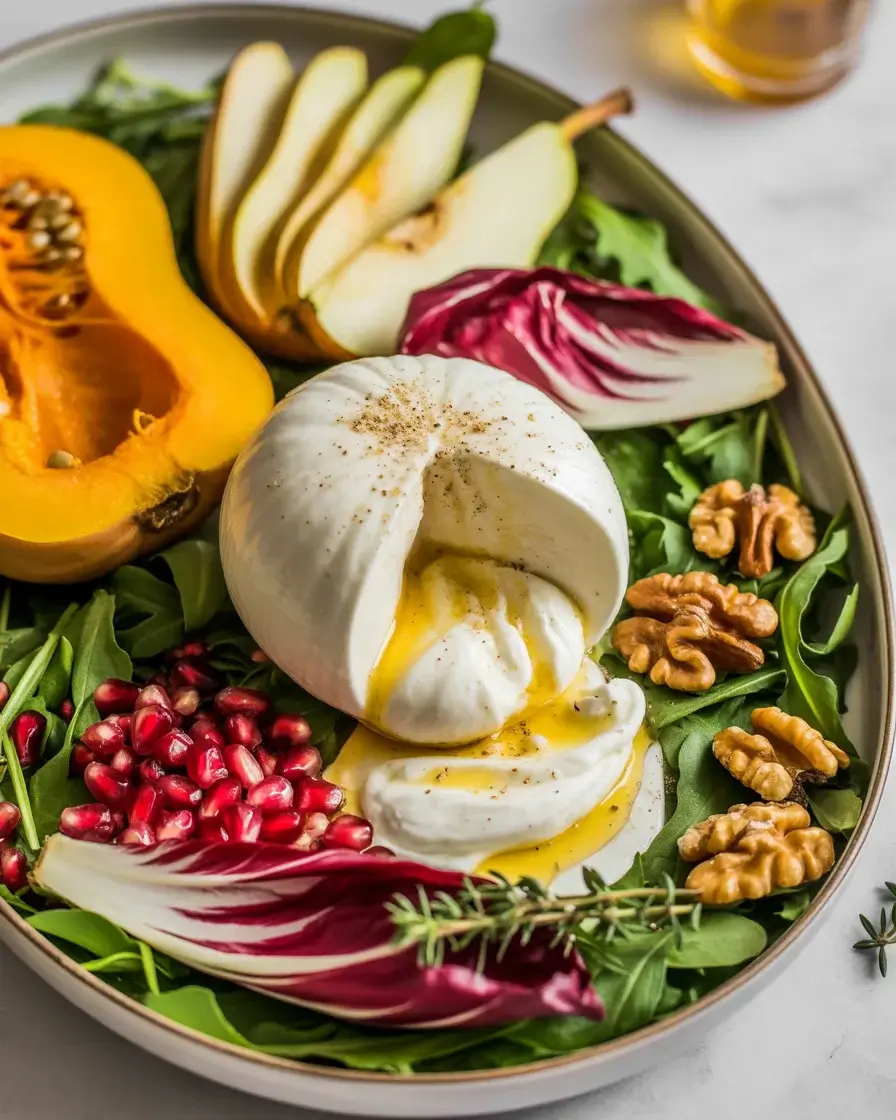
Autumn Burrata Salad
The first time I made this salad, I skipped roasting the squash and just tossed it in raw – huge mistake. The texture was wrong, the flavors were flat, and I nearly gave up on the whole thing. That one failure taught me that this salad lives or dies by how you handle each component.
Now, after testing it 15+ times, I can tell you exactly what makes it sing. Warm roasted squash against cold, creamy burrata creates a temperature contrast that makes every bite genuinely exciting. It is the kind of salad people ask you to bring to every fall gathering.
Step-by-Step Instructions
Step 1: Roast the Butternut Squash
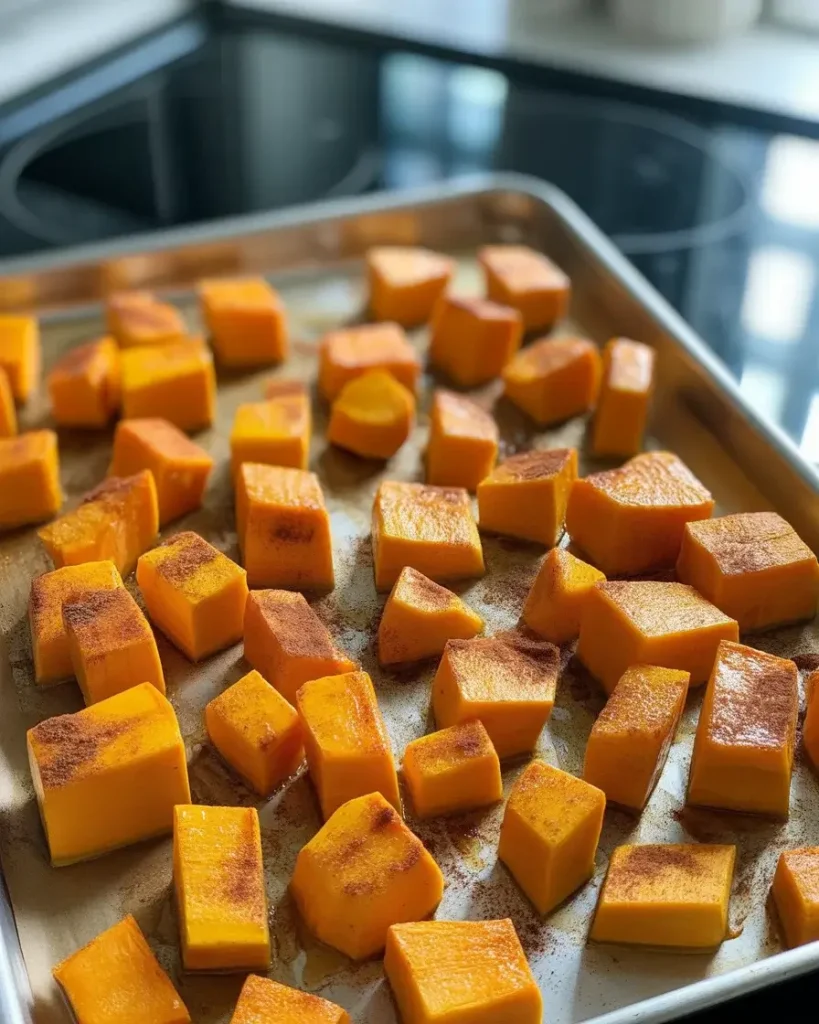
Preheat your oven to 425°F and toss 2 cups of cubed butternut squash with 2 tablespoons of olive oil, 1/2 teaspoon of cinnamon, and a generous pinch of salt. Spread it in a single layer on a sheet pan – crowding causes steaming, not roasting.
Roast for 22-25 minutes, flipping once at the halfway mark. You are looking for deep golden-brown caramelized edges and a fork-tender center. The smell of warm cinnamon and caramel will tell you it is ready before your timer goes off.
Step 2: Make the Candied Walnuts
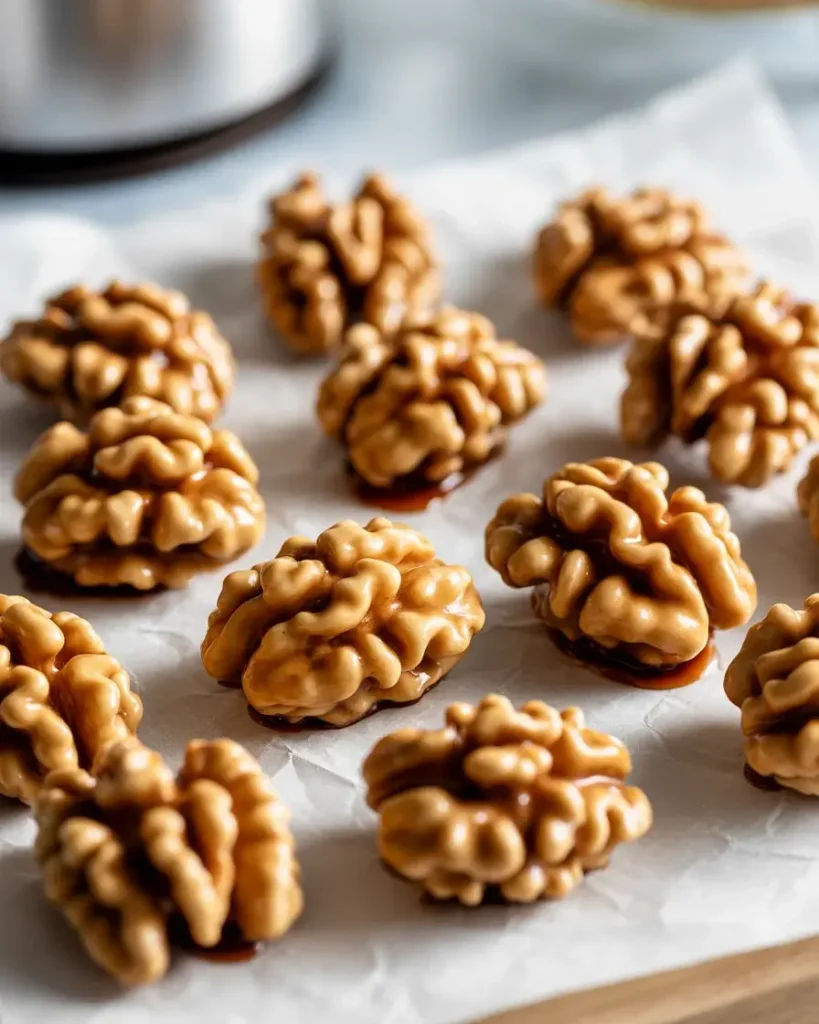
Add 1/2 cup of walnut halves to a dry skillet over medium heat. After 2 minutes, drizzle in 1 tablespoon of maple syrup and stir constantly – this moves fast and will burn if you walk away.
In about 90 seconds, the syrup will bubble, coat every walnut, and smell like toasted maple candy. Pour them immediately onto a piece of parchment paper and let them cool for at least 5 minutes. I burned three batches before I learned to pull them off heat the second they smell done.
Step 3: Prep the Pear and Greens
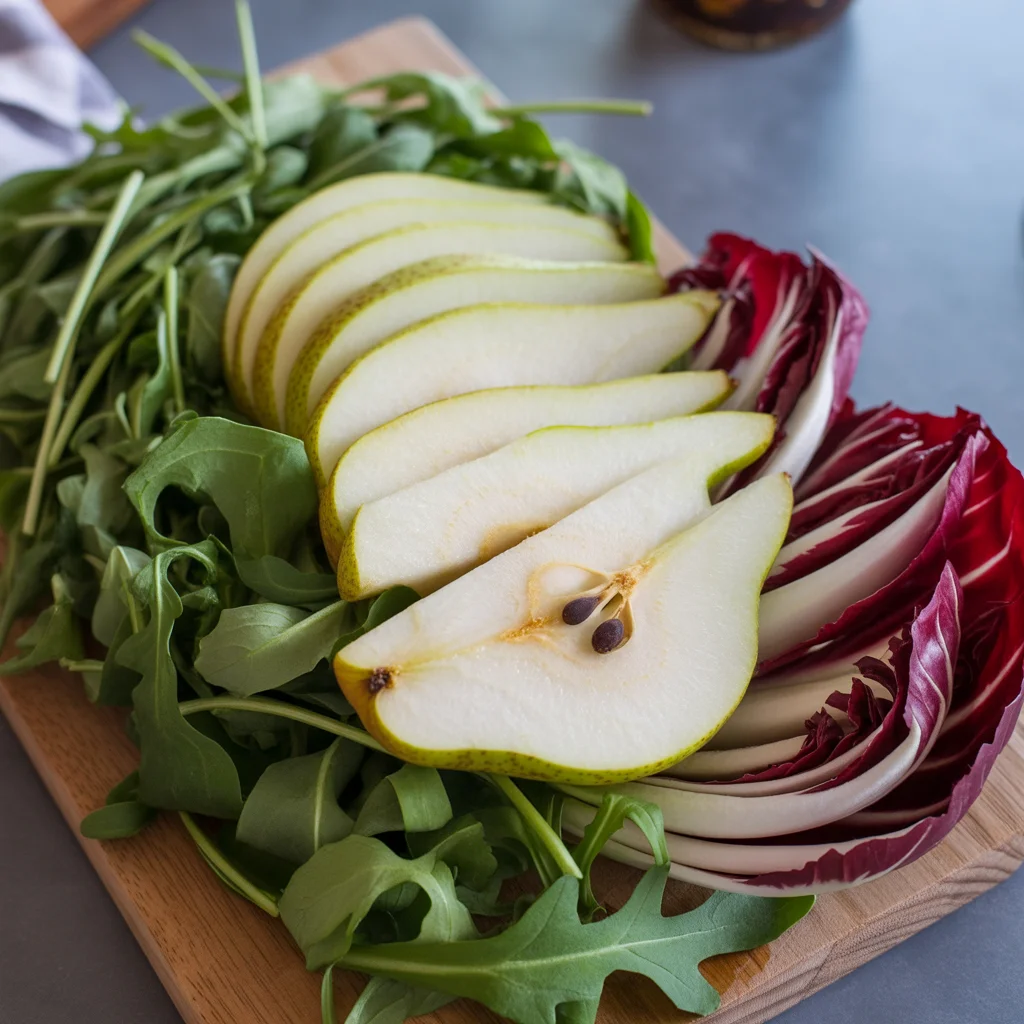
Thinly slice one ripe but firm Bosc pear – softer varieties like Bartlett turn mushy before you finish assembling. Aim for 1/8-inch slices so they fan out beautifully. Toss 4 cups of arugula and 1 cup of radicchio with just a tiny drizzle of olive oil to barely coat the leaves.
Do not dress the greens heavily yet. I tested fully dressed greens against barely-coated ones and the lightly oiled version holds up far better under the warm squash without wilting in 30 seconds.
Step 4: Whisk the Honey-Dijon Dressing
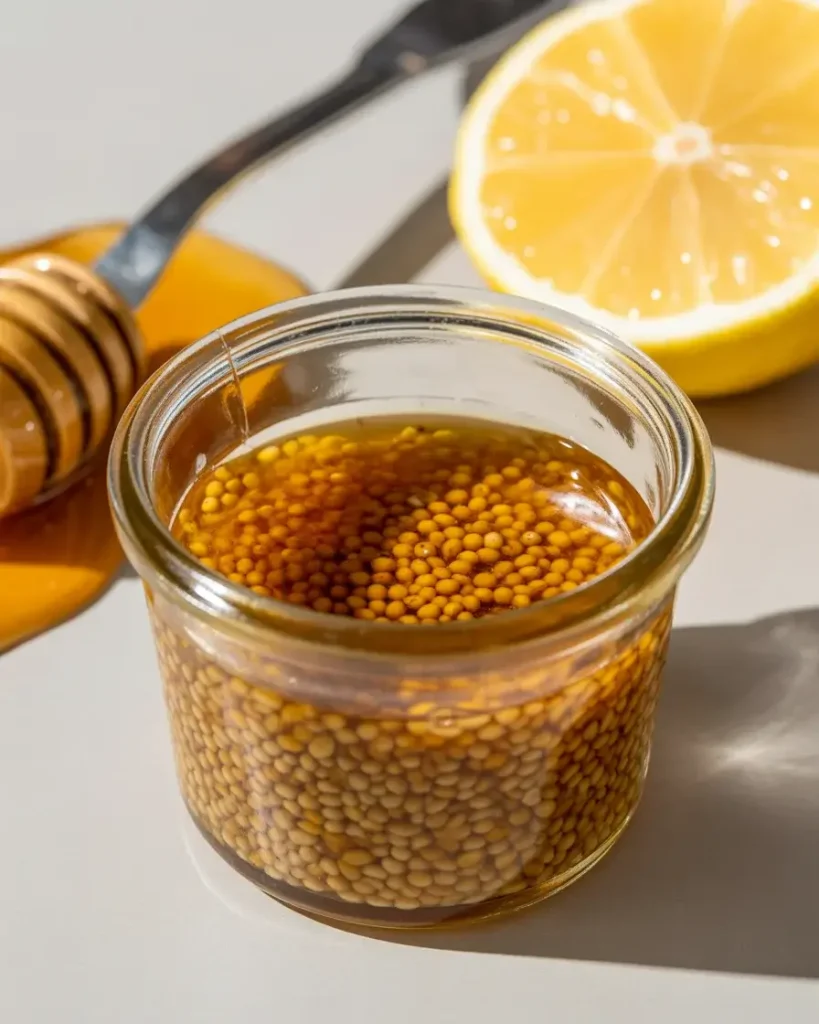
Combine 3 tablespoons of good olive oil, 1 tablespoon of apple cider vinegar, 1 teaspoon of whole-grain Dijon mustard, and 1 teaspoon of honey in a small jar. Season with salt and black pepper, then shake or whisk until emulsified.
I tested this dressing with balsamic, red wine vinegar, and apple cider vinegar side by side. Apple cider vinegar wins every time – it has a brightness that mirrors the pear without overpowering the delicate burrata. Taste it and adjust the honey if your pear is very ripe.
More Delicious Salads to Try:
Step 5: Assemble the Salad
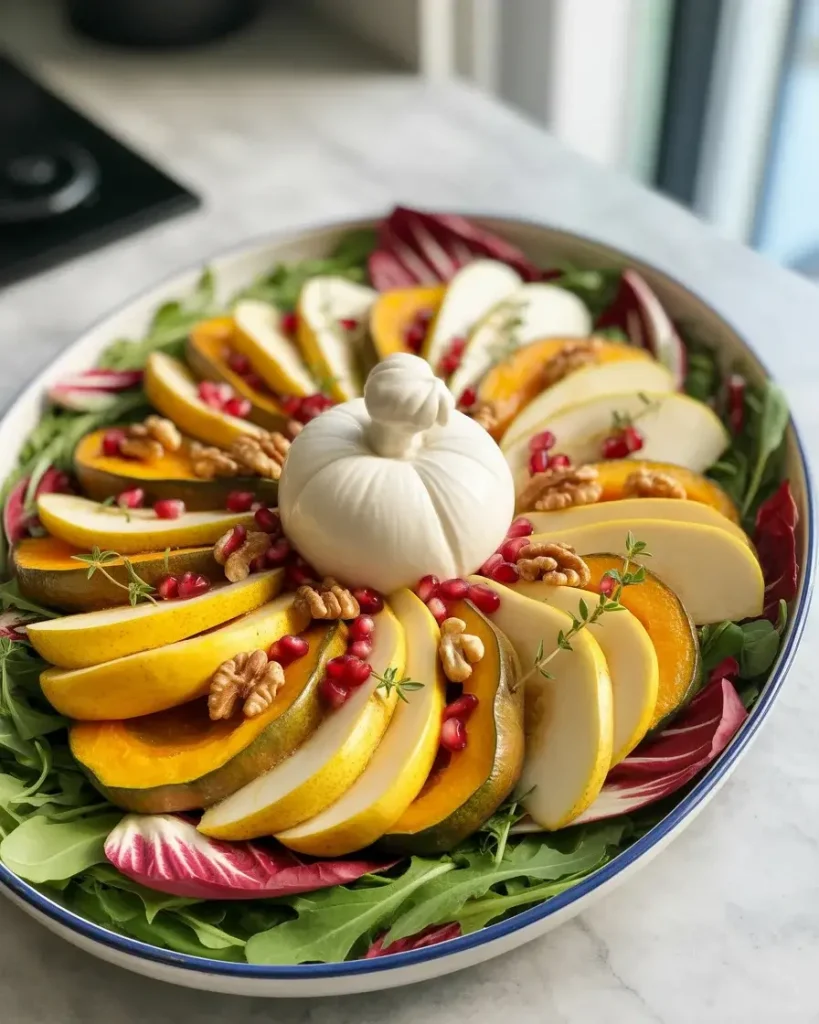
Spread the lightly oiled greens across a large serving platter. Arrange the warm roasted squash across the greens so the heat slightly wilts the arugula underneath – this is intentional and delicious. Fan the pear slices across one side.
Place one 8-ounce ball of fresh burrata directly in the center. Do not cut it yet. Scatter the candied walnuts, a handful of pomegranate seeds, and a few fresh thyme leaves over everything. The colors at this stage – deep orange, ivory white, ruby red, dark green – are genuinely stunning.
Step 6: Dress and Serve Immediately
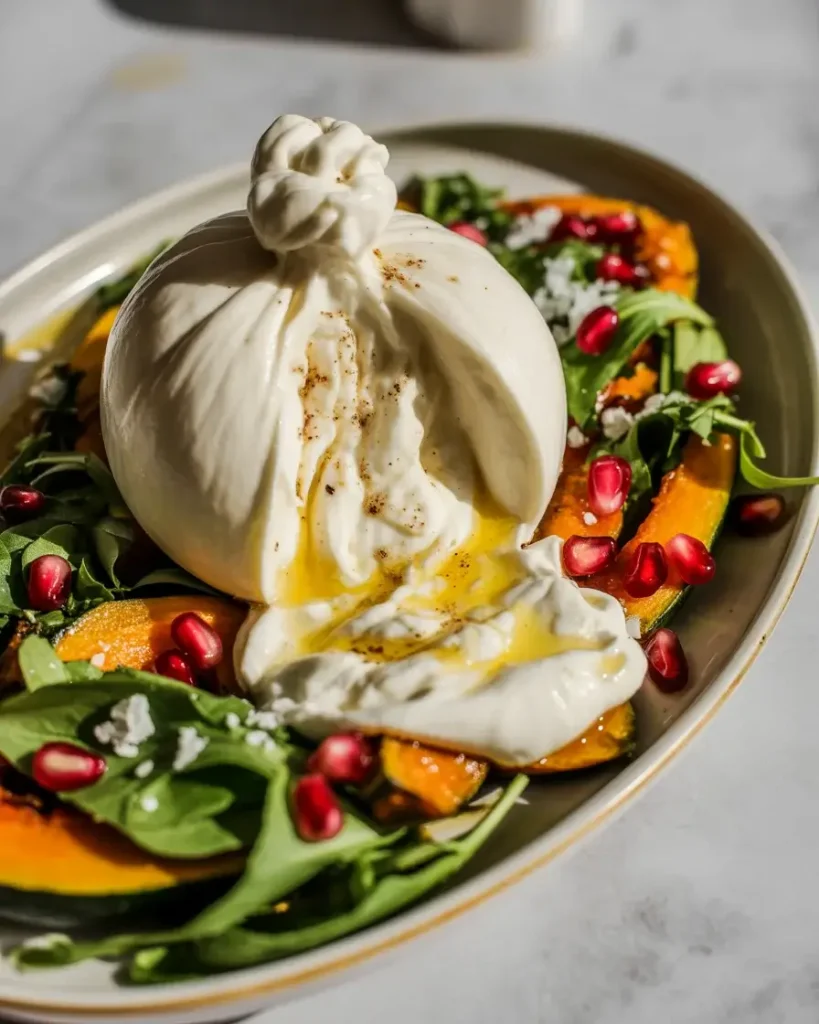
Drizzle the honey-Dijon dressing all over the salad, finishing with a few extra drops directly onto the burrata. Then break open the burrata right at the table so the creamy stracciatella interior spills out over everything.
Finish with a pinch of flaky sea salt over the burrata and a crack of black pepper. Serve within 5 minutes of dressing – I once let a dressed salad sit for 15 minutes at a dinner party and the greens gave up entirely. This one does not wait.
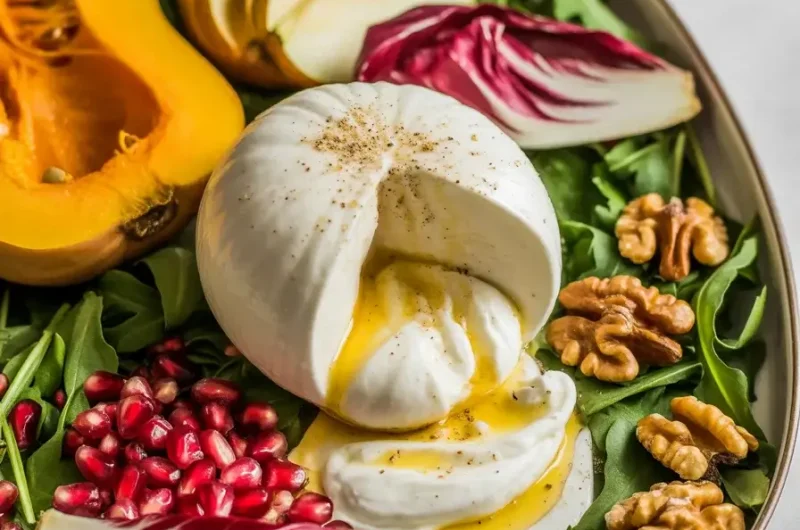
Autumn Burrata Salad
Course: SaladsCuisine: AmericanDifficulty: Easy4
10
minutes25
minutes35
minutesA stunning fall salad with roasted butternut squash, creamy burrata, candied walnuts, fresh pear, and pomegranate seeds tossed in honey-Dijon dressing. Ready in 30 minutes.
Ingredients
2 cups butternut squash, peeled and cubed
2 tablespoons olive oil (for squash)
1/2 teaspoon ground cinnamon
Salt and black pepper to taste
1 ball (8 oz) fresh burrata cheese
4 cups fresh arugula
1 cup radicchio, torn
1 Bosc pear, thinly sliced
1/2 cup walnut halves
1 tablespoon maple syrup
1/3 cup pomegranate seeds
Fresh thyme leaves for garnish
Flaky sea salt for finishing
- Dressing
3 tablespoons olive oil
1 tablespoon apple cider vinegar
1 teaspoon whole-grain Dijon mustard
1 teaspoon honey
Salt and pepper to taste
Directions
- Preheat oven to 425°F. Toss squash with olive oil, cinnamon, salt, and pepper. Roast 22-25 minutes until caramelized, flipping once.
- Toast walnuts in a dry skillet over medium heat for 2 minutes. Add maple syrup and stir 90 seconds until coated. Cool on parchment.
- Slice pear thinly and toss with a squeeze of lemon juice to prevent browning.
- Whisk all dressing ingredients together until emulsified.
- Lightly toss arugula and radicchio with a drizzle of olive oil and spread on a serving platter.
- Arrange warm squash over greens, then fan pear slices to one side.
- Place burrata in the center. Scatter walnuts, pomegranate seeds, and thyme.
- Drizzle with honey-Dijon dressing, add flaky sea salt, and break burrata open at the table. Serve immediately.
Notes
- Store all components separately in airtight containers for up to 24 hours before assembling.
Swap butternut squash for roasted delicata squash if available – no peeling required.
Use Bartlett pear only if very firm; Bosc holds its texture better.
Leftover dressed salad does not store well – only dress what you plan to eat.
Nutrition Table (per serving)
| Nutrient | Amount |
|---|---|
| Calories | 420 |
| Total Fat | 32g |
| Sugars | 14g |
| Protein | 11g |
.Trusted Resource Links: For guidance on safe handling of fresh cheeses like burrata, visit the FDA Safe Food Handling guide. For the nutritional benefits of nuts and healthy fats in recipes like this one, see the American Heart Association Healthy Eating resource.
What Pairs Best with Autumn Burrata Salad?
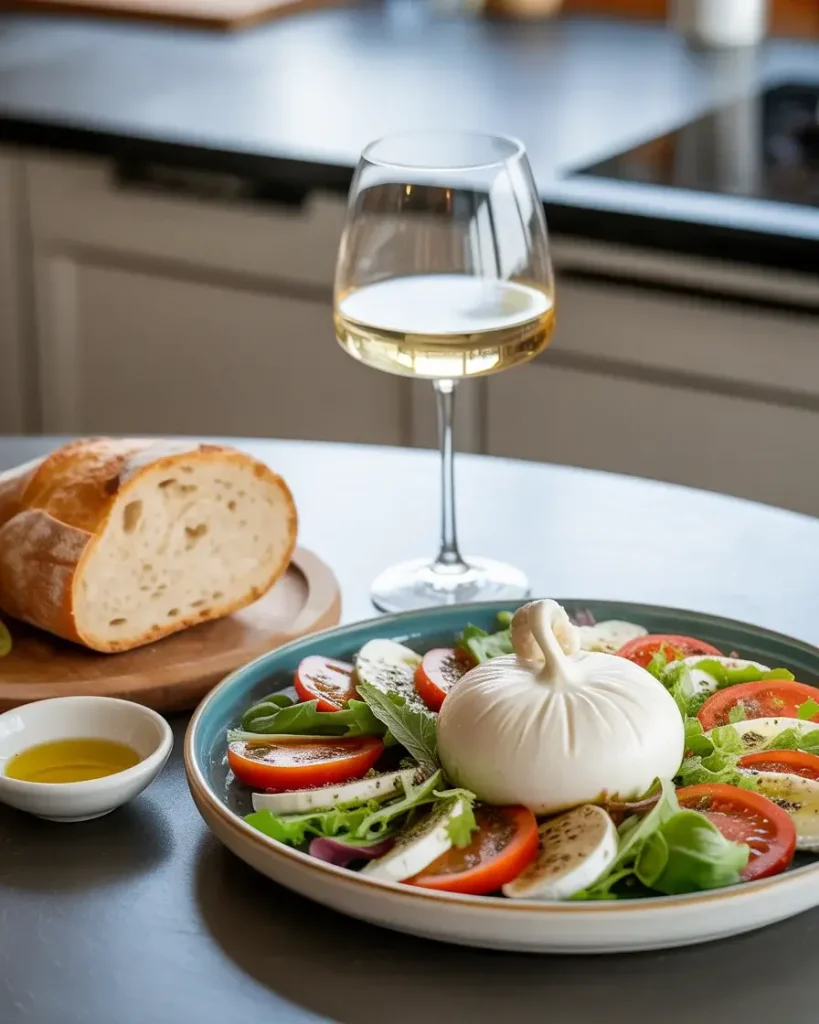
This salad works as a standalone light lunch or a starter before a heartier fall dinner. Serve it alongside a crusty sourdough loaf – the bread is perfect for scooping up the burrata and dressing pooled at the bottom of the platter.
For a dinner pairing, I tested it next to roasted chicken, pork tenderloin, and a simple pasta. The pork tenderloin with apple glaze was the clear winner – the apple echoes the pear and the richness of the meat balances the salad’s acidity.
If you are serving this at a dinner party, a dry Riesling or an unoaked Chardonnay pairs beautifully. Both wines have the fruit-forward brightness that mirrors the pear without competing with the creamy burrata.
Can You Make Autumn Burrata Salad Ahead of Time?
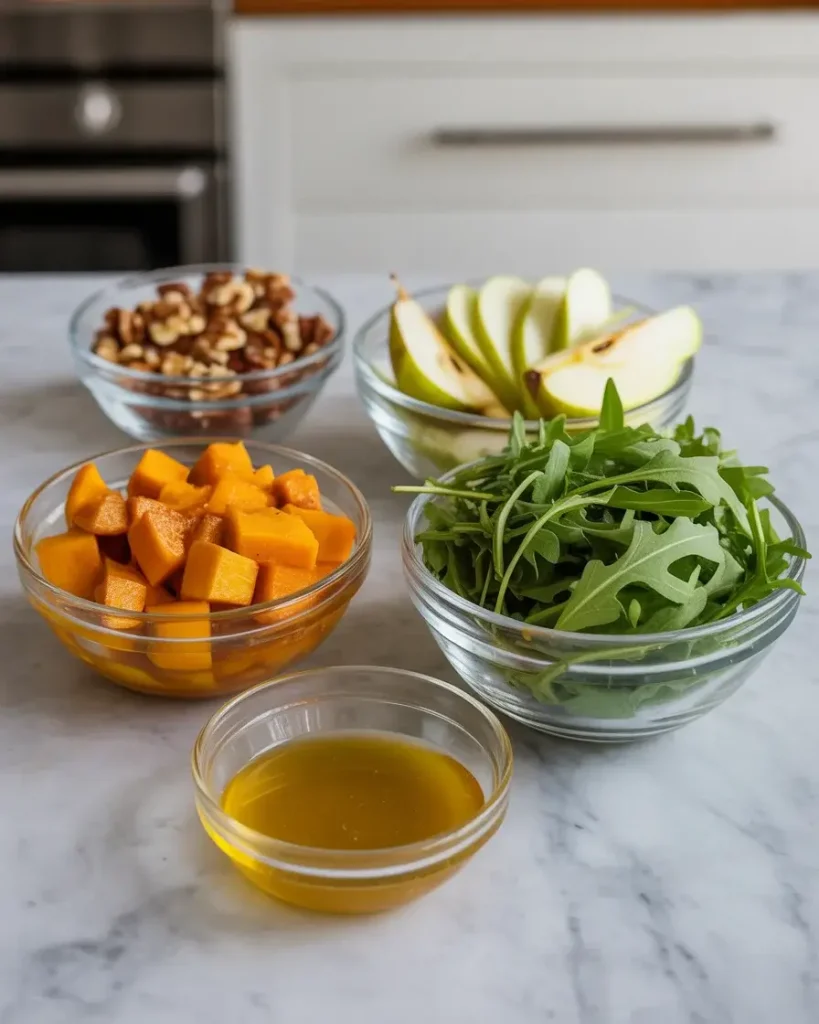
You can prep every component up to 24 hours ahead, but do not assemble until just before serving. Store the roasted squash, candied walnuts, pear slices, and dressing separately in airtight containers in the refrigerator.
The pear slices will brown if exposed to air – toss them with a squeeze of lemon juice and they will stay pale and fresh overnight.
Assemble and dress the salad within 10 minutes of serving. Burrata is always added fresh and cold from the refrigerator – never freeze it or use it more than 2 days past its package date. The texture turns grainy and watery, which I learned the hard way at a dinner for eight people.
What Type of Burrata Works Best?
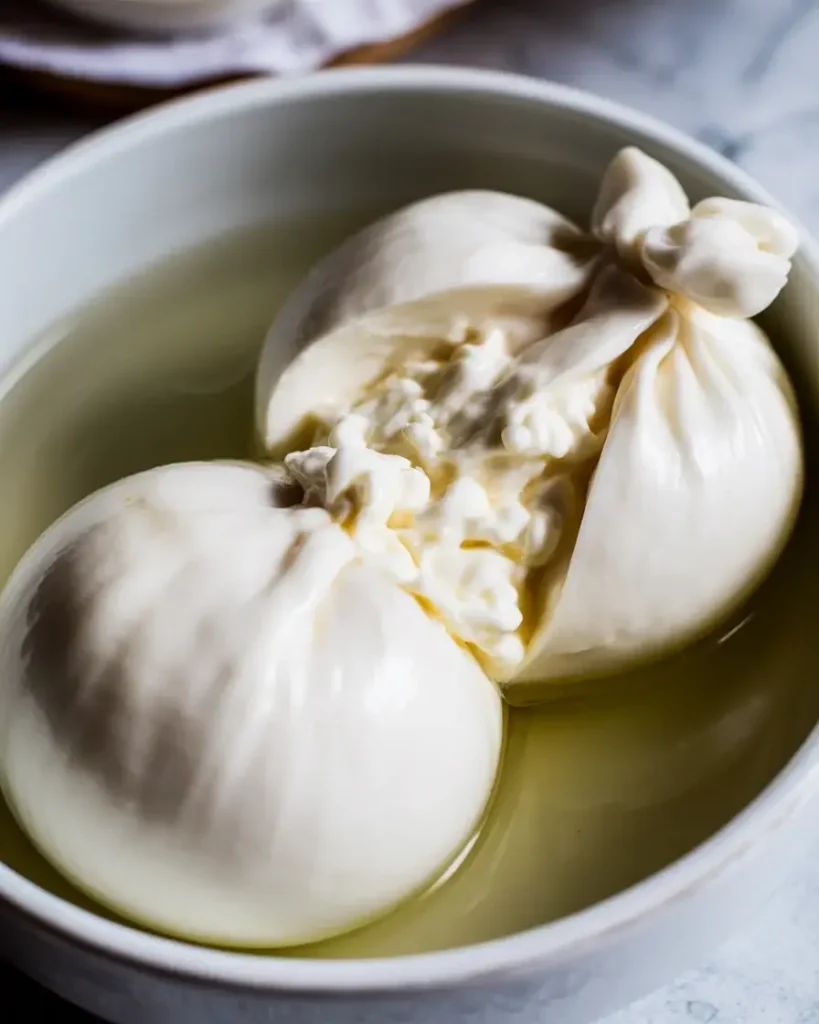
Fresh burrata from an Italian deli or a quality grocery store cheese counter is always better than the shelf-stable packaged kind. Look for burrata packed in water or whey with a purchase date within the last 2-3 days.
The outer shell should feel firm when you pick up the ball, and the interior stracciatella should be loose and creamy – not stiff.
I tested imported Italian burrata against domestically made versions from three different brands. The domestic versions from artisan cheesemakers were nearly identical to the imported ones at about half the price. The key is freshness, not origin. One thing I never do: use leftover burrata from the day before. Once broken, it weeps liquid and the texture is gone within a few hours.
How Do You Keep the Salad from Getting Soggy?
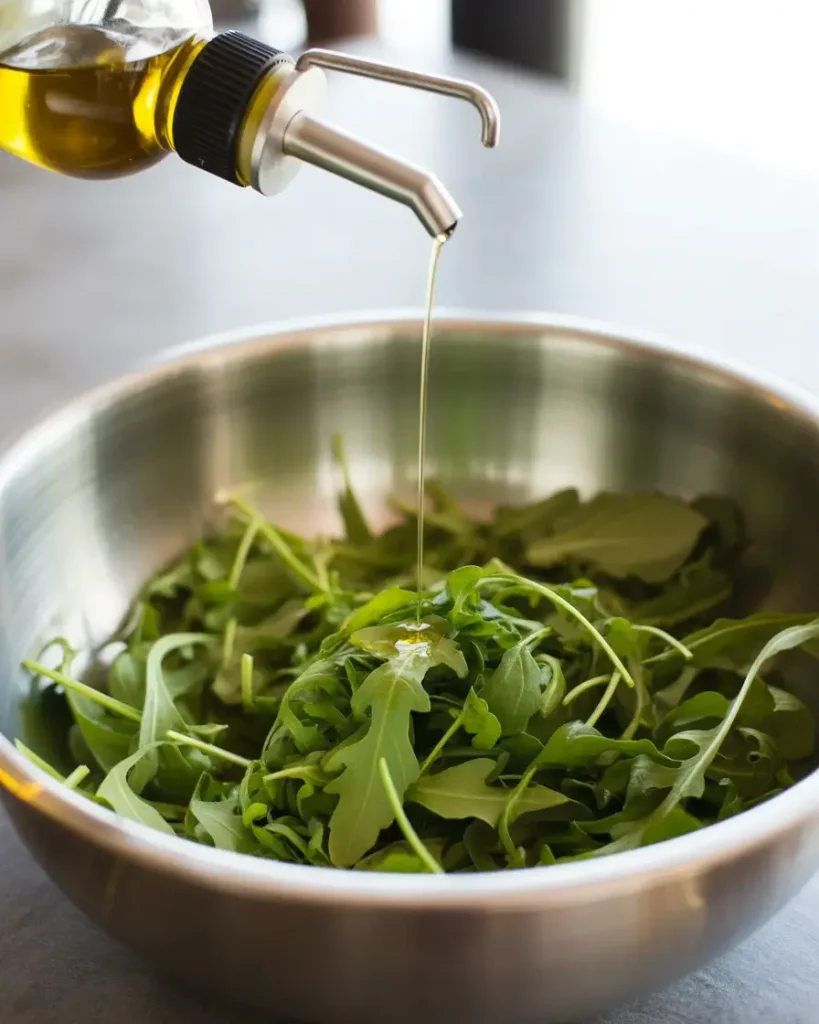
The biggest soggy-salad mistake is dressing the greens too early or adding warm squash to already-dressed greens. I ruined the first four versions of this recipe this way – it looked beautiful going together and was a wilted mess by the time it hit the table.
The fix is a two-step approach: lightly coat the greens with plain olive oil first, then add the dressing only at the very end.
The olive oil creates a light barrier on the leaves that slows down wilting significantly. Adding warm squash to bare-oiled greens gives you that intentional slight wilt without full collapse. Then the acidic dressing goes on last, right before you break the burrata. Serve within 5 minutes and the texture stays perfect all the way through the meal.
Frequently Asked Questions
Q: Can I use mozzarella instead of burrata?
A: Fresh mozzarella works as a substitute but the experience is different. Burrata’s creamy interior is what makes this salad special – mozzarella will be firmer and less dramatic when broken open.
Q: What can I use instead of pomegranate seeds?
A: Dried cranberries or fresh halved grapes work well. Both add the same sweet-tart pop and jewel-like color. Use about 1/3 cup of either as a direct swap.
Q: Is this salad good for meal prep?
A: Prep all components separately up to 24 hours ahead and refrigerate. Never pre-dress or pre-assemble – the greens wilt fast. Add burrata fresh right before serving, never in advance.