
Lemon Lavender Glazed Donuts
These homemade lemon lavender donuts are soft, fluffy, and bursting with bright citrus flavor and floral notes. They’re baked, not fried, making them lighter than traditional donuts while still incredibly tender.
The delicate lavender pairs beautifully with fresh lemon zest and juice, creating an elegant breakfast treat or afternoon snack. A sweet lemon glaze adds the perfect finishing touch to these bakery-style donuts you can make at home.
Why You’ll Love This Recipe
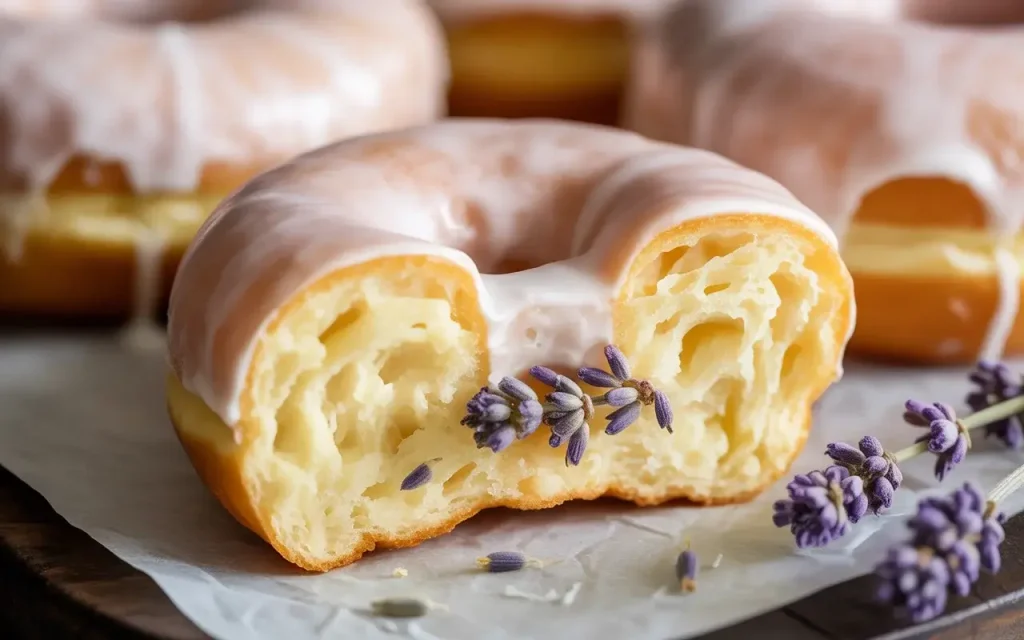
These baked donuts come together in under 30 minutes with simple ingredients you likely have on hand. The flavor combination feels sophisticated yet approachable, perfect for special brunches or weekend baking.
The recipe uses dried culinary lavender, which infuses the batter with subtle floral notes without overwhelming the bright lemon flavor. Each bite is moist, cake-like, and perfectly balanced.
Read More: Funfetti Dip – Colorful Party Dessert Dip
Key Ingredients
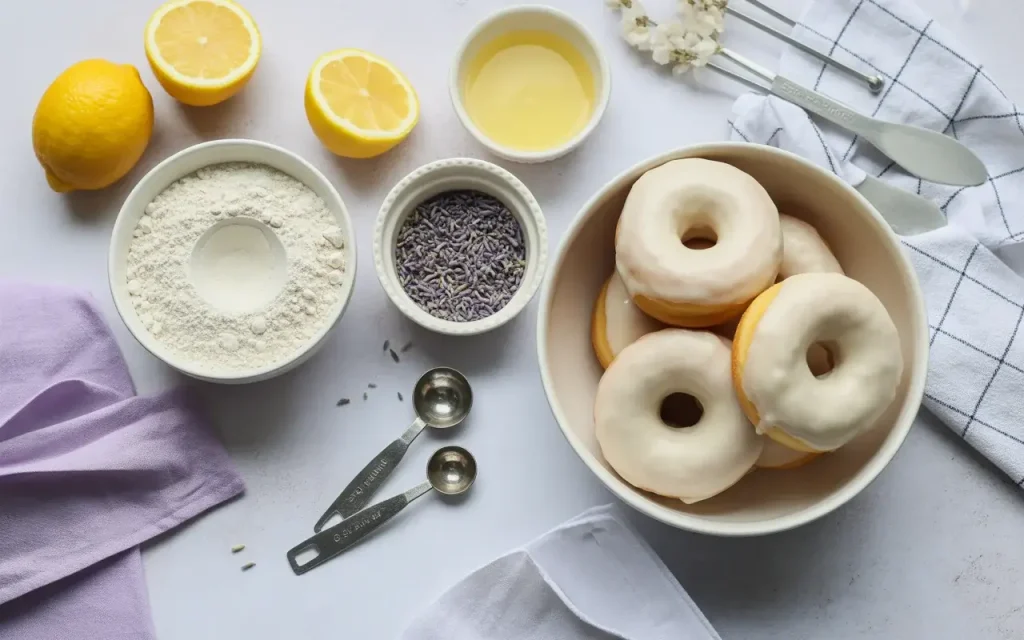
For the donuts:
For the glaze:
Equipment You’ll Need
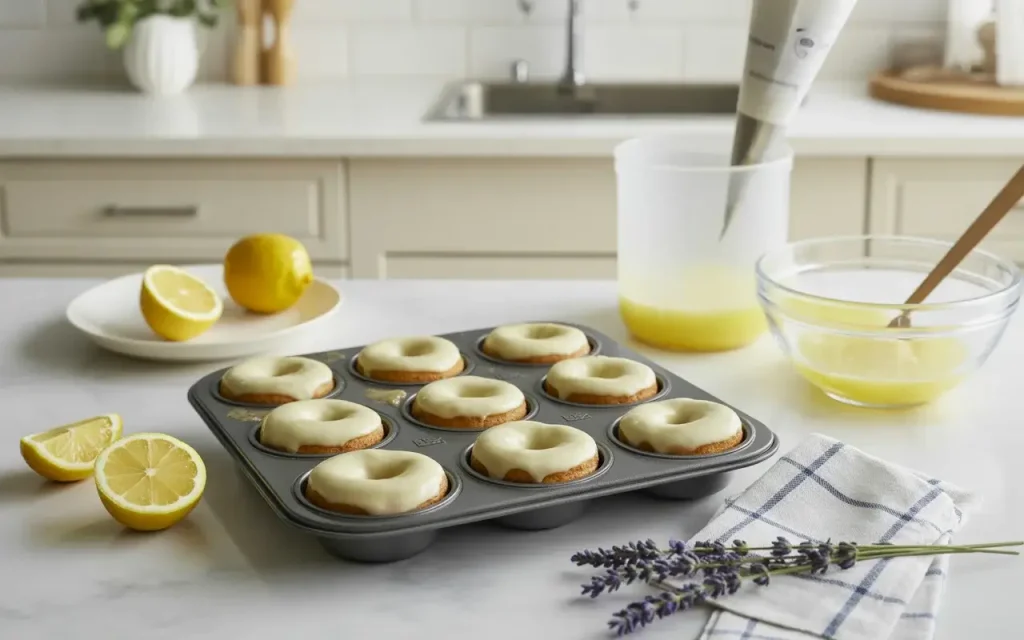
A standard donut pan with 6 cavities is essential for baking these donuts. Silicone or non-stick metal pans both work beautifully and ensure easy release.
You’ll also need basic mixing bowls, a whisk, and measuring cups. A small grinder or mortar and pestle helps finely crush the lavender buds for even distribution throughout the batter.

Lemon Lavender Glazed Donuts
Course: DessertCuisine: AmericanDifficulty: Easy6
15
minutes12
minutes27
minutesSoft, baked donuts infused with bright lemon and delicate lavender, topped with a sweet citrus glaze. Perfect for brunch or a special breakfast treat.
Ingredients
- For the Donuts
1 cup all-purpose flour
1/2 cup granulated sugar
1 teaspoon baking powder
1/4 teaspoon baking soda
1/4 teaspoon salt
1 tablespoon dried culinary lavender, finely ground
Zest of 1 large lemon
1/2 cup buttermilk, room temperature
1 large egg, room temperature
3 tablespoons unsalted butter, melted and cooled
2 tablespoons fresh lemon juice
1/2 teaspoon vanilla extract
- For the Glaze
1 cup powdered sugar
2 to 3 tablespoons fresh lemon juice
1/8 teaspoon lavender extract (optional)
Directions
- Preheat oven to 350°F. Grease a 6-cavity donut pan thoroughly.
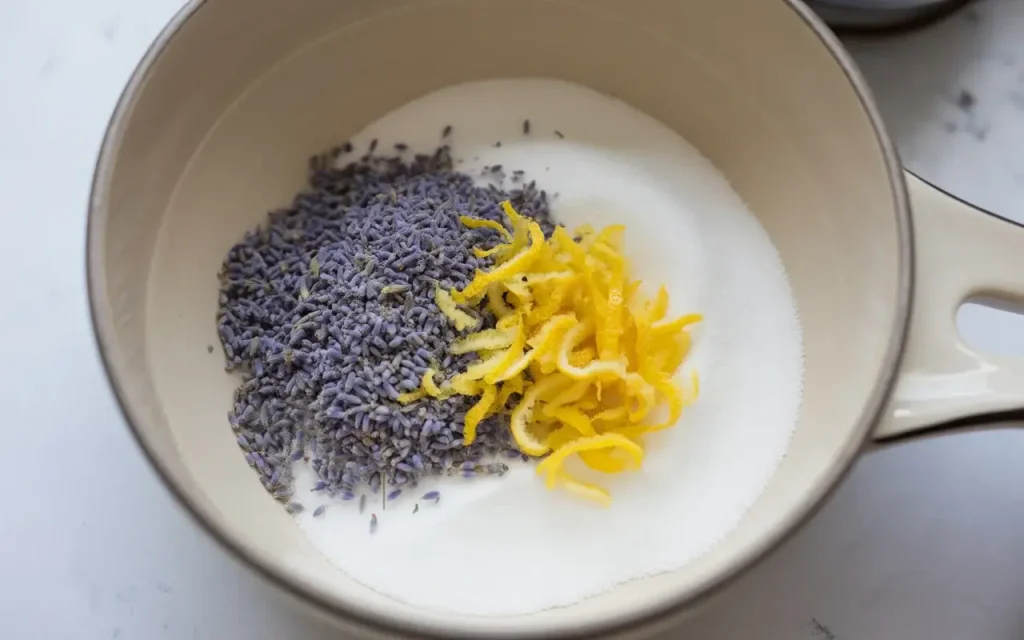
- Finely grind lavender buds. Rub together with sugar and lemon zest.
- Whisk buttermilk, egg, melted butter, lemon juice, and vanilla in a bowl.
- In a large bowl, combine flour, baking powder, baking soda, salt, and lavender-sugar mixture.
- Pour wet ingredients into dry ingredients. Fold gently until just combined.
- Pipe or spoon batter into prepared pan, filling each cavity two-thirds full.
- Bake 10 to 12 minutes until tops spring back when touched. Cool 5 minutes in pan, then transfer to wire rack.
- Whisk together powdered sugar, lemon juice, and lavender extract for glaze.
- Dip cooled donuts into glaze. Let set 15 minutes before serving.
Notes
- Storage: Keep in an airtight container at room temperature for up to 2 days. Glaze may soften slightly over time.
Lavender: Use only culinary-grade lavender. Grind finely to avoid bitter, chewy bits. Start with less if you’re new to cooking with lavender.
No Buttermilk? Mix 1/2 cup milk with 1/2 tablespoon lemon juice or vinegar. Let sit 5 minutes before using.
Make Ahead: Bake donuts the night before, store unglazed in an airtight container, and glaze the morning of serving.
Nutrition Information (Per Donut)
| Nutrient | Amount |
|---|---|
| Calories | 245 |
| Total Fat | 7g |
| Sugars | 28g |
| Protein | 4g |
Step-by-Step Instructions
Step 1: Prepare Your Pan and Infuse the Lavender
Start by preheating your oven to 350°F and generously greasing your donut pan with non-stick spray or butter. Make sure to coat every crevice to ensure the donuts release cleanly after baking.
Crush your dried lavender buds using a mortar and pestle or spice grinder until finely ground. This step is crucial because whole lavender buds can taste bitter and create an unpleasant texture. You want the lavender to be almost powder-like so it infuses evenly into the batter without any chunky pieces.
Mix the ground lavender with your sugar and lemon zest in a small bowl, rubbing them together with your fingertips. This releases the essential oils from both the lavender and lemon, creating a fragrant mixture that will perfume your entire donut. Let this sit while you prepare the other ingredients so the flavors have time to meld together.
Step 2: Mix the Wet Ingredients
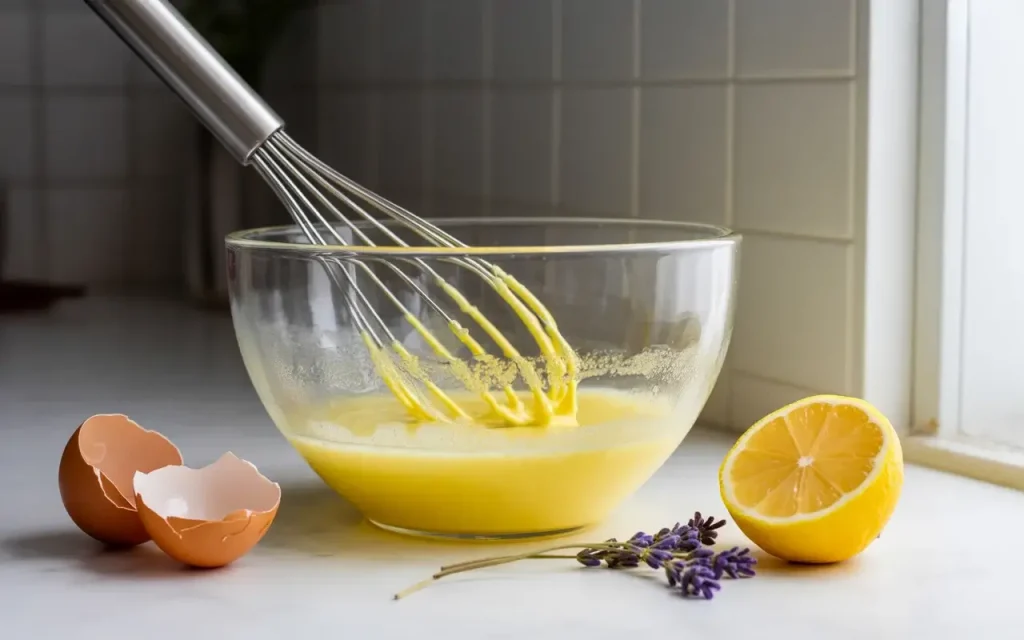
In a medium mixing bowl, whisk together the buttermilk, melted butter, egg, vanilla extract, and fresh lemon juice until completely smooth. The mixture should be pale yellow and slightly frothy from whisking, with no streaks of egg visible.
Make sure your melted butter has cooled to room temperature before adding it to prevent the egg from cooking. The buttermilk provides tanginess and helps create an incredibly tender crumb, while the lemon juice amplifies the citrus flavor throughout the donut.
Whisk vigorously for about 30 seconds to ensure everything is fully emulsified. You want a cohesive liquid mixture where the butter doesn’t separate out. This creates the foundation for moist, evenly textured donuts that aren’t dry or crumbly.
Step 3: Combine Dry Ingredients and Mix the Batter
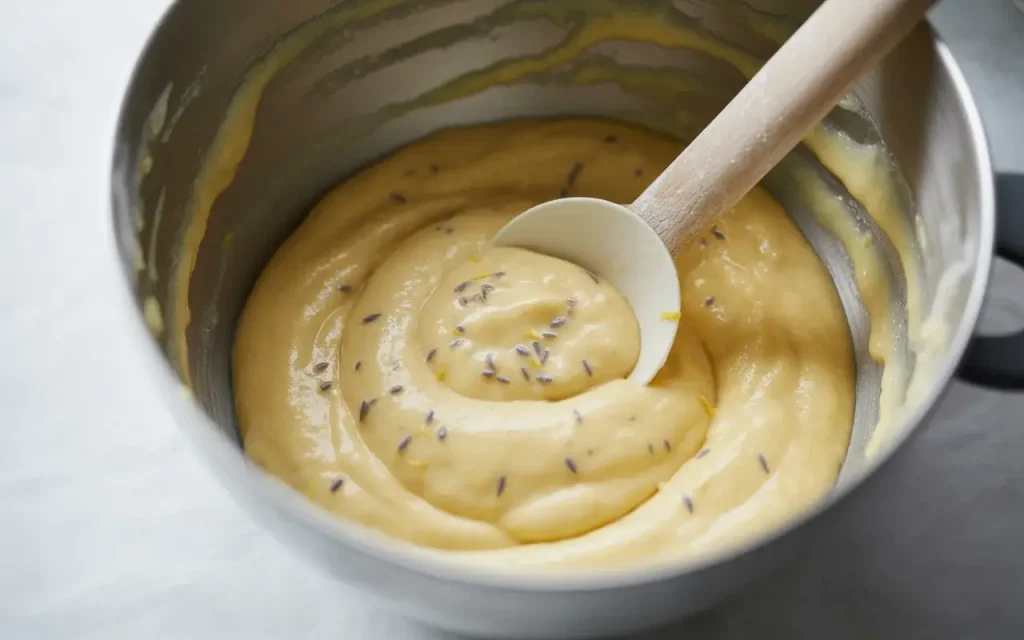
In a separate large bowl, whisk together the flour, baking powder, baking soda, and salt until evenly distributed. Add your lavender-lemon-sugar mixture to the dry ingredients and whisk again to ensure the lavender is distributed throughout the flour.
Create a well in the center of the dry ingredients and pour in all of your wet ingredients at once. Using a rubber spatula or wooden spoon, gently fold the mixture together using broad strokes from the bottom of the bowl upward. Stop mixing as soon as no dry flour pockets remain visible.
The batter should be thick but pourable, similar to a muffin batter consistency. Overmixing develops too much gluten and results in tough, dense donuts instead of light and tender ones. A few small lumps are perfectly fine and will bake out. The batter will be fragrant with lemon and lavender at this stage.
Step 4: Fill the Pan and Bake
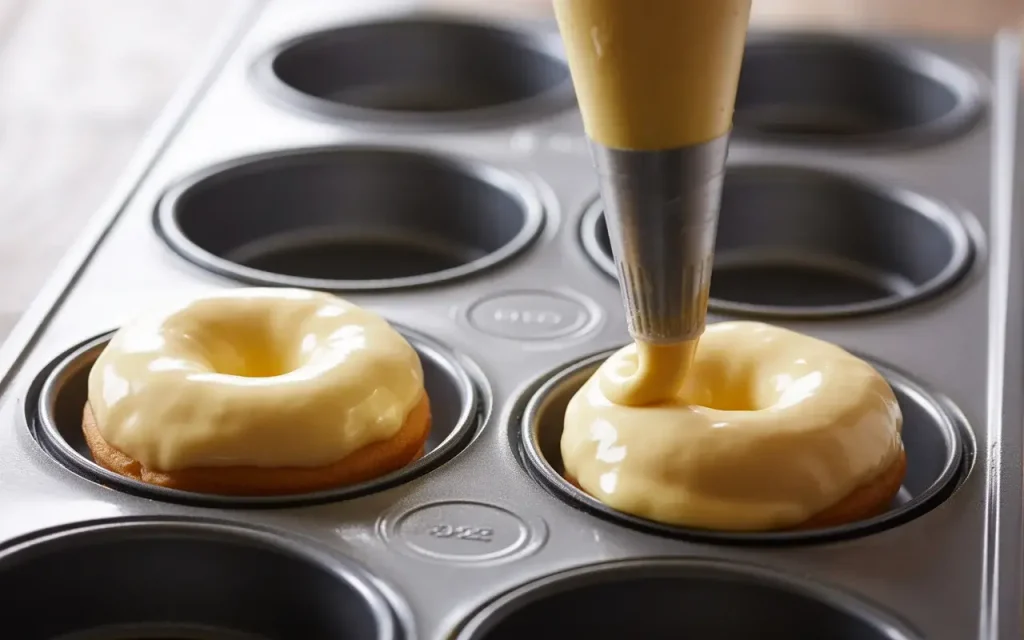
Transfer your batter to a piping bag or a large zip-top bag with one corner snipped off for easy, mess-free filling. Pipe the batter into each donut cavity, filling them about two-thirds full, leaving room for the donuts to rise during baking.
If you don’t have a piping bag, you can use two spoons to carefully portion the batter, but piping gives you much more control and cleaner results. Make sure the batter is distributed evenly among all the cavities so your donuts bake uniformly and are all the same size.
Bake for 10 to 12 minutes, until the tops spring back when lightly touched and a toothpick inserted comes out clean or with just a few moist crumbs. The edges should be just starting to turn golden, and the centers should look set, not wet or shiny. Let them cool in the pan for 5 minutes before carefully inverting onto a wire rack to cool completely before glazing.
Step 5: Make the Glaze and Finish
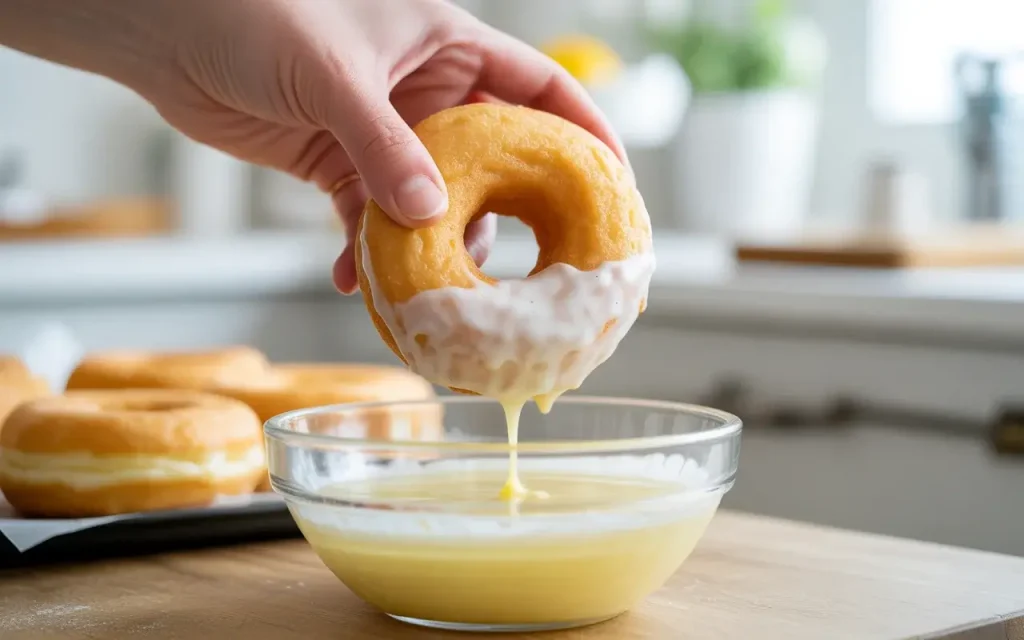
While the donuts cool completely, whisk together powdered sugar, fresh lemon juice, and a tiny drop of lavender extract if using in a shallow bowl. The glaze should be thick enough to coat the back of a spoon but still fluid enough to drip slowly. Add lemon juice a teaspoon at a time if it’s too thick, or more powdered sugar if too thin.
Once the donuts are completely cool to the touch, dip the top of each donut into the glaze, letting the excess drip off before turning right-side up. The glaze will set slightly as it sits, creating a beautiful glossy finish. If desired, immediately sprinkle with a tiny pinch of dried lavender buds or lemon zest while the glaze is still wet for decoration.
Place glazed donuts on a wire rack set over parchment paper to catch any drips. The glaze will set within 15 to 20 minutes, creating a smooth coating that’s slightly tacky but not wet. These are best enjoyed the same day but can be stored in an airtight container for up to two days at room temperature.
Frequently Asked Questions
Can I use fresh lavender instead of dried?
Dried culinary lavender is recommended because fresh lavender has a much stronger, sometimes soapy flavor. If using fresh, reduce the amount by half and ensure it’s pesticide-free.
Why are my donuts dense instead of fluffy?
Overmixing the batter develops too much gluten, resulting in tough donuts. Fold the wet and dry ingredients together just until no flour streaks remain. Also ensure your baking powder is fresh and active.
Can I make these in a mini donut pan?
Yes, this recipe makes approximately 12 mini donuts. Reduce the baking time to 6 to 8 minutes and watch closely to avoid overbaking.