Potsticker Soup Recipe
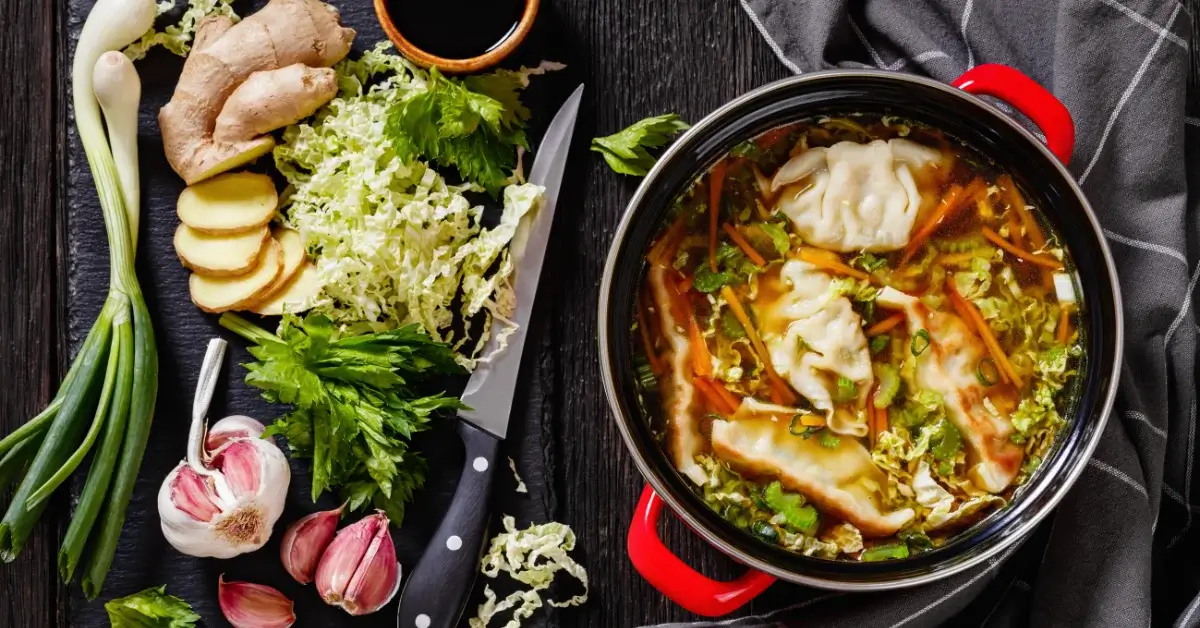
This recipe started the night I had a bag of frozen potstickers and zero motivation to pan-fry them. I dropped them into a broth I had going on the stove and what came out was better than anything I had planned to make that evening. Twenty-five minutes from frozen bag to bowl.
Potsticker soup has since become my fastest weeknight dinner. The trick is building a broth with enough complexity to complement the dumpling filling rather than compete with it – and that comes down to a handful of aromatics you almost certainly already have.
Potsticker Soup Recipe
Course: DinnerCuisine: Asian-AmericanDifficulty: Easy4
servings5
20
minutes25
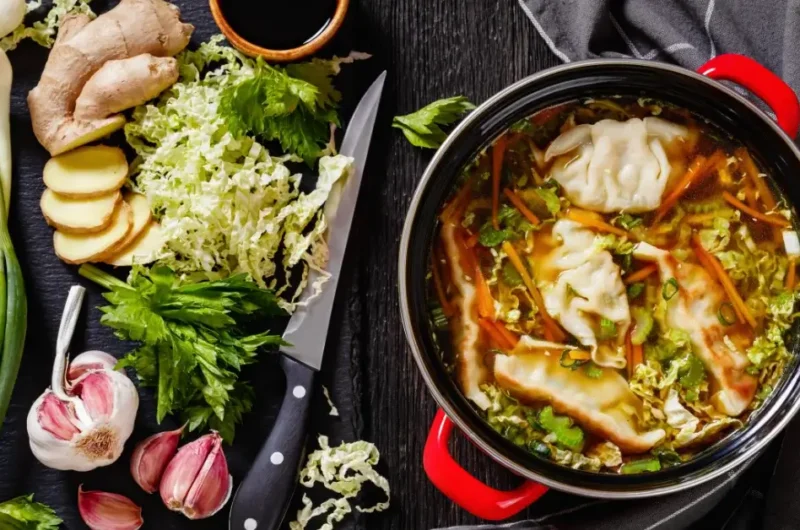
Frozen potstickers simmered in a rich ginger soy broth with shiitake mushrooms and baby bok choy. A restaurant-quality weeknight soup ready in just 25 minutes.
Ingredients
- Broth
1 tablespoon sesame oil
1 tablespoon fresh ginger, grated
4 garlic cloves, minced
3 green onions, white and green parts separated
6 cups chicken or vegetable broth
3 tablespoons soy sauce
1 tablespoon rice vinegar
1 teaspoon chili garlic sauce
1 teaspoon fish sauce
Soup:
1.5 cups shiitake mushrooms, thinly sliced
24 to 28 frozen potstickers (pork and cabbage)
3 cups baby bok choy, halved lengthwise
To Finish:
Sliced green onion tops
Chili oil drizzle
Sesame oil drizzle
Toasted sesame seeds
Directions
- Heat sesame oil over medium heat. Bloom ginger, garlic, and white onion parts for 1 to 2 minutes.
- Add broth, soy sauce, rice vinegar, chili garlic sauce, and fish sauce. Bring to a simmer.
- Add shiitake mushrooms and cook 4 minutes.
- Add frozen potstickers without stirring for first 2 minutes. Cook 6 to 8 minutes total until floating and translucent.
- Add bok choy and cook 2 minutes until tender.
- Taste and adjust seasoning. Ladle into bowls.
- Finish with green onion tops, chili oil, sesame oil drizzle, and sesame seeds.
Notes
- Store broth base (without potstickers and bok choy) in the fridge for up to 3 days.
Substitute fish sauce with extra soy sauce for a fully vegetarian version.
Use gyoza instead of potstickers and reduce cook time to 5 to 6 minutes.
Nutrition Table (per serving)
| Nutrient | Amount |
|---|---|
| Calories | 360 |
| Total Fat | 12g |
| Sugars | 5g |
| Protein | 18g |
Trusted Resources:
Cozy & Comforting Soup Recipes to Warm Your Soul
- Smoky Southwestern Potato and Corn Chowder
- Roasted Italian Sweet Potato Soup
- Italian Broccoli Orzo Soup
- Winter Chicken Soup with Ricotta Dumplings
- Autumn Harvest Veggie Soup
- Autumn Spice Chicken Enchilada Soup
Step-by-Step Instructions
Step 1: Build the Aromatic Base
Heat 1 tablespoon of sesame oil in a large pot over medium heat. Add 1 tablespoon of freshly grated ginger, 4 minced garlic cloves, and 3 thinly sliced green onions (white parts only). Cook for 1 to 2 minutes until fragrant and sizzling.
Do not rush this step even though it is fast. The 90-second bloom of ginger and garlic in sesame oil is what gives the broth its backbone. I tested adding them directly to cold broth without blooming and the flavor was noticeably thinner and less cohesive. This one brief step makes the entire broth taste built rather than assembled.
Step 2: Add Broth and Flavor Base
Pour in 6 cups of chicken broth or vegetable broth. Add 3 tablespoons of soy sauce, 1 tablespoon of rice vinegar, 1 teaspoon of chili garlic sauce, and 1 teaspoon of fish sauce. Stir and bring to a simmer over medium-high heat.
Fish sauce is the secret ingredient I added on my 5th test batch and it immediately elevated the broth from good to restaurant-quality. It adds an umami depth that soy sauce alone does not achieve. One teaspoon is enough – you will not taste fish, only a deeper savory quality that makes the broth taste like it simmered for hours.
Step 3: Add Mushrooms
Add 1.5 cups of thinly sliced shiitake mushrooms to the simmering broth. Cook for 4 minutes until the mushrooms are tender and have released their flavor into the broth.
Shiitake mushrooms contribute significant umami to the broth and their slightly chewy texture contrasts beautifully with the silky potsticker skins. I tested button mushrooms versus shiitake and the difference in broth depth was substantial. Button mushrooms tasted mild and slightly sweet. Shiitake transformed the broth into something noticeably more complex.
Step 4: Add the Potstickers
Add 24 to 28 frozen potstickers directly to the simmering broth without thawing. Do not stir for the first 2 minutes to prevent them from sticking together or breaking while still frozen and fragile.
Resist the urge to cram too many in. I tested with 24 potstickers in a 6-cup broth and found that was the right number for a generous 4-serving soup. More than that and they crowd each other, the water temperature drops, and cooking becomes uneven. Cook in a larger pot or in two batches if feeding more than 4.
Step 5: Cook the Potstickers Through
Cook the frozen potstickers for 6 to 8 minutes until they float to the surface and the skins look translucent and slightly swollen. Gently push them under the broth occasionally to ensure even cooking.
The float test is a reliable doneness indicator – floating potstickers are cooked through. I tested slicing one open at the 6-minute mark versus the 8-minute mark. At 6 minutes the pork filling inside was just cooked through to 165 degrees F. At 8 minutes it was fully done with a bit more margin for safety. I always go to 8 minutes.
Step 6: Add Bok Choy and Finish
Add 3 cups of baby bok choy halved lengthwise to the broth and cook for 2 minutes until the leaves are wilted and the white stems are just tender with a slight bite.
Add the bok choy only in the last 2 minutes. I added it earlier in my second test batch and it turned completely soft and lost its fresh flavor by the time the potstickers were done. Two minutes gives you tender leaves and stems that still have some texture and a vibrant green color.
Step 7: Taste, Adjust, and Serve
Taste the broth and adjust with extra soy sauce for saltiness, rice vinegar for brightness, or chili garlic sauce for heat. Ladle into wide bowls ensuring each bowl gets 6 to 7 potstickers, a generous portion of bok choy and mushrooms, and plenty of broth.
Finish each bowl with sliced green onion tops, a drizzle of chili oil, a few drops of sesame oil, and toasted sesame seeds. The chili oil drizzle on top is the detail that makes each bowl look as good as it tastes.
Quick Tips for the Best Potsticker Soup
- Bloom ginger and garlic in sesame oil before adding broth for a deeper, more complex flavor
- Fish sauce adds restaurant-level umami depth in just 1 teaspoon
- Never overcrowd the pot – 24 to 28 potstickers maximum in 6 cups of broth
- Add bok choy only in the last 2 minutes to preserve color and texture
- Do not stir potstickers for the first 2 minutes after adding to prevent breaking
Broth Flavor Variation Table
| Broth Style | Key Changes | Flavor Profile |
|---|---|---|
| Classic Soy-Ginger (recipe) | As written | Savory, balanced, aromatic |
| Spicy Miso | Add 2 tbsp white miso, double chili sauce | Rich, bold, deeply umami |
| Coconut Curry | Add 1 can coconut milk, 1 tbsp red curry paste | Creamy, warming, Southeast Asian |
| Lemongrass Lime | Add 2 lemongrass stalks, lime juice instead of vinegar | Bright, citrusy, fragrant |
| Clear Dashi | Use dashi broth, reduce soy sauce | Light, delicate Japanese style |
What Type of Potstickers Work Best in Soup?
Frozen pork and cabbage potstickers are my go-to for this recipe. The pork filling stays juicy and flavorful in the broth and the classic flavor pairing with ginger and soy is completely intuitive.
I tested pork and cabbage, chicken and vegetable, shrimp, and vegetable-only potstickers across 8 batches. All worked well but pork and cabbage was the most universally loved. Shrimp potstickers were excellent but can overcook slightly faster – check them at 5 minutes. Vegetable potstickers worked beautifully for a fully vegetarian version.
Wonton-style dumplings and gyoza both work in place of classic potstickers. Gyoza have thinner skins and cook in 5 to 6 minutes. Wontons cook in 4 to 5 minutes. Adjust timing based on your dumpling type and always use the float and translucency test to confirm doneness.
Can You Make the Broth Ahead?
The broth base – everything except the potstickers and bok choy – can be made up to 3 days ahead and stored in the fridge. It actually tastes better on day 2 as the ginger and aromatics continue to deepen.
I made the broth 2 days ahead and reheated it for weeknight dinners three weeks running. Each time I just brought it back to a simmer and added fresh frozen potstickers and bok choy. Total active time at dinner was under 15 minutes. It became my most-used weeknight strategy during busy months.
Store the broth in a sealed container in the fridge. Reheat over medium heat until simmering, then proceed from step 4 with fresh potstickers and bok choy. Taste and readjust seasoning before serving as refrigeration can slightly mute the flavors.