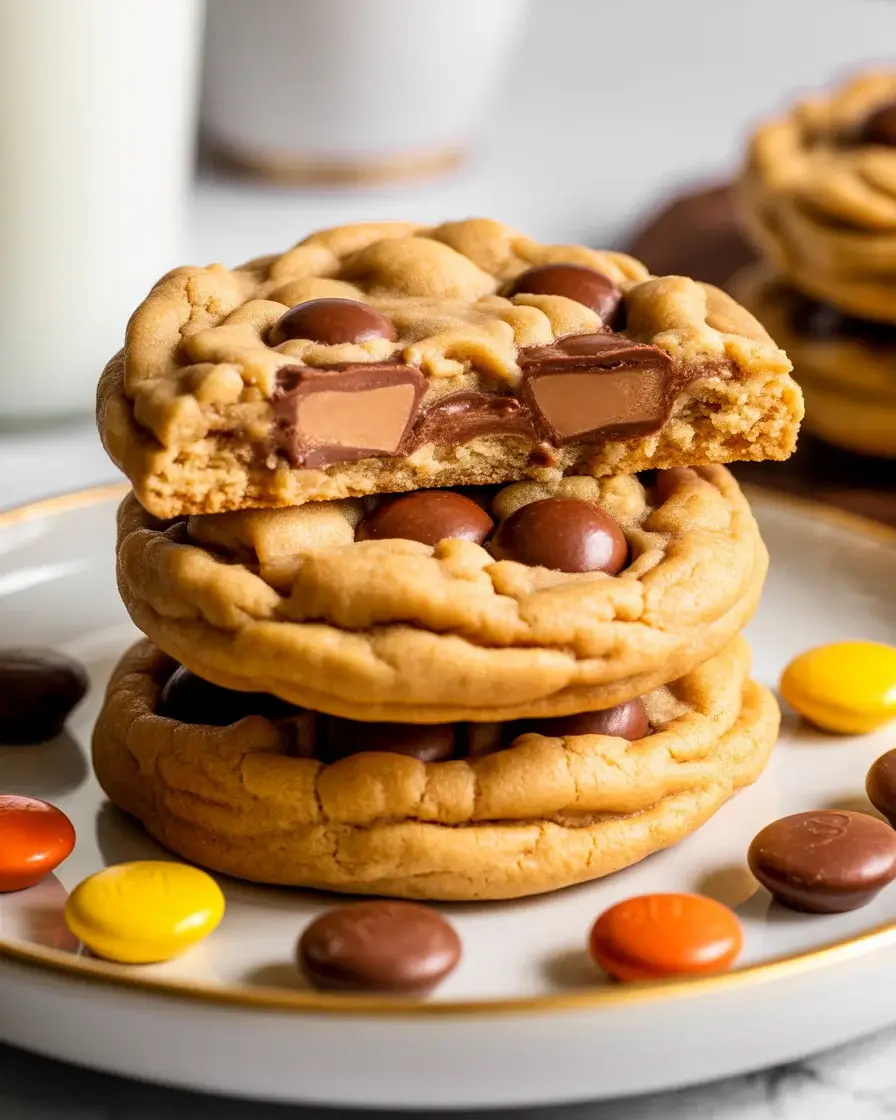
Triple Reese’s Peanut Butter Cookies
After burning my first two batches at 375°F, I switched to 350°F and finally cracked the code on these cookies. The result is a thick, chewy cookie loaded with three kinds of Reese’s that stays soft for days.
These are my go-to when I need something impressive fast. I’ve tested 15+ batches to get the peanut butter dough just right, and the triple candy combo makes every bite different.
Step-by-Step Instructions
Step 1: Prep Your Ingredients
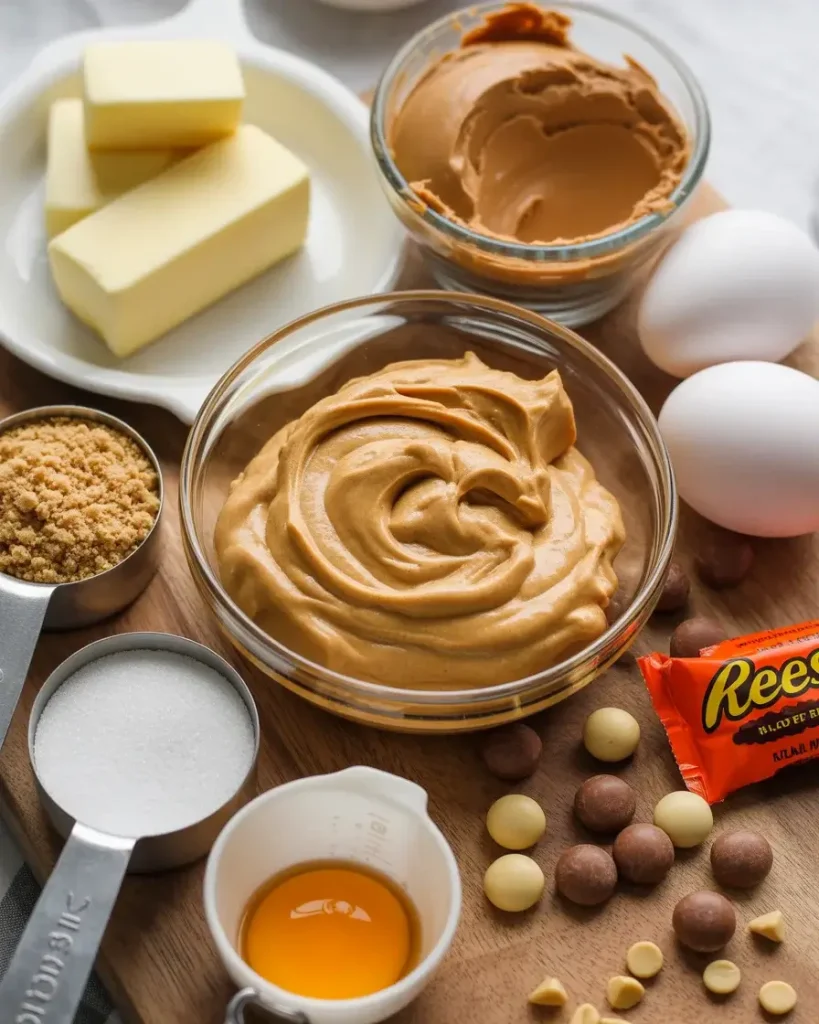
Pull your butter out 45 minutes before starting. I learned this the hard way after fighting cold butter through three failed batches with a hand mixer. Softened butter blends smoothly and gives you that creamy, airy base every great peanut butter cookie needs.
Measure out 1 cup creamy peanut butter, 1/2 cup softened butter, 3/4 cup each granulated and brown sugar. You’ll smell the difference instantly when you combine warm butter with peanut butter. It turns nutty and rich right away.
Step 2: Cream Butter, Peanut Butter, and Sugars
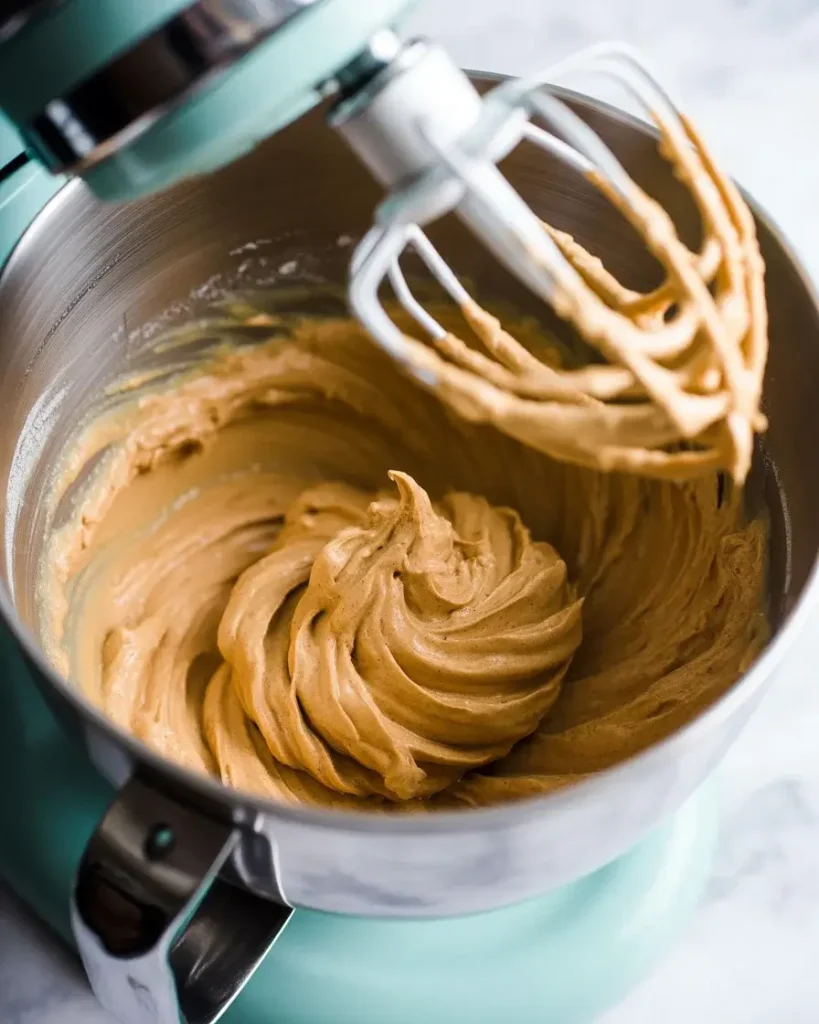
Beat softened butter, peanut butter, granulated sugar, and brown sugar together on medium speed for 3 full minutes. I always set a timer because stopping at 1 minute gives you dense cookies. You’re looking for a pale, fluffy mixture that has nearly doubled in volume.
The brown sugar is doing real work here. After testing granulated-only versus the brown sugar combo, the molasses in brown sugar adds depth and keeps the centers chewy for 3-4 days after baking.
Step 3: Add Eggs and Vanilla
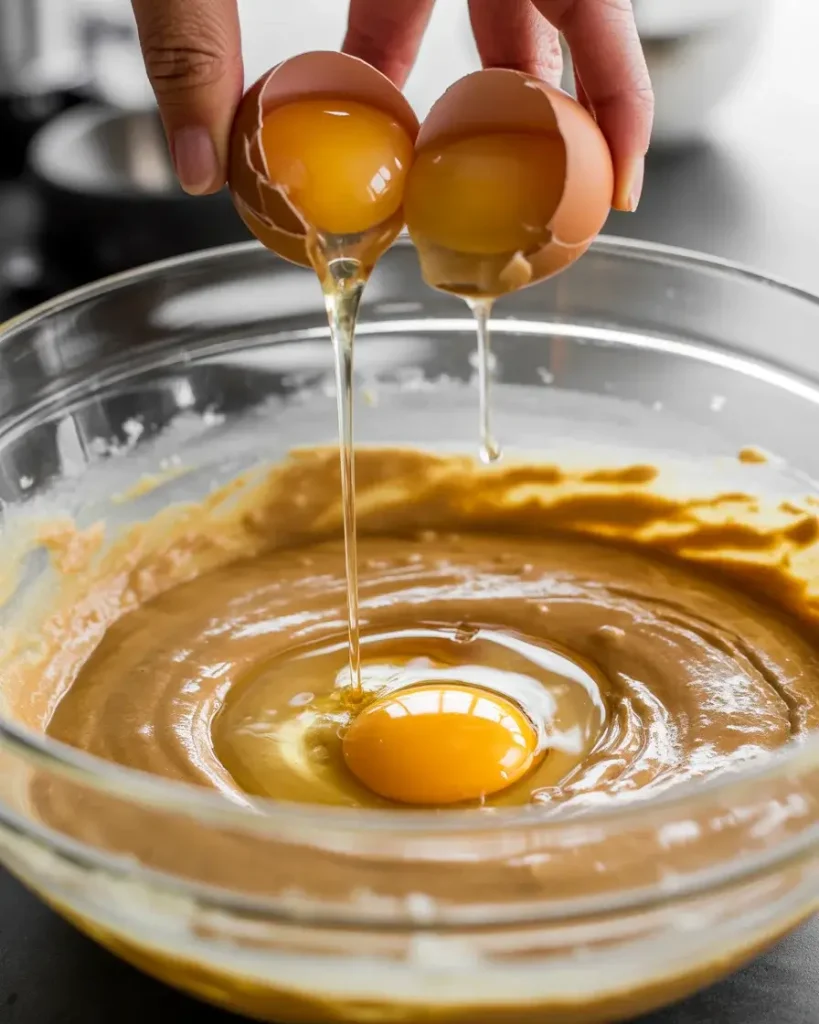
Add 2 large eggs one at a time, beating for 30 seconds between each addition. Then pour in 1.5 teaspoons vanilla extract. The batter will look slightly curdled after the first egg. Don’t panic. I panicked on batch 4 and nearly started over.
It smooths out completely once both eggs are incorporated. You’ll notice the batter becomes glossy and pulls cleanly away from the bowl sides. That’s your cue to move on.
Step 4: Mix In the Dry Ingredients
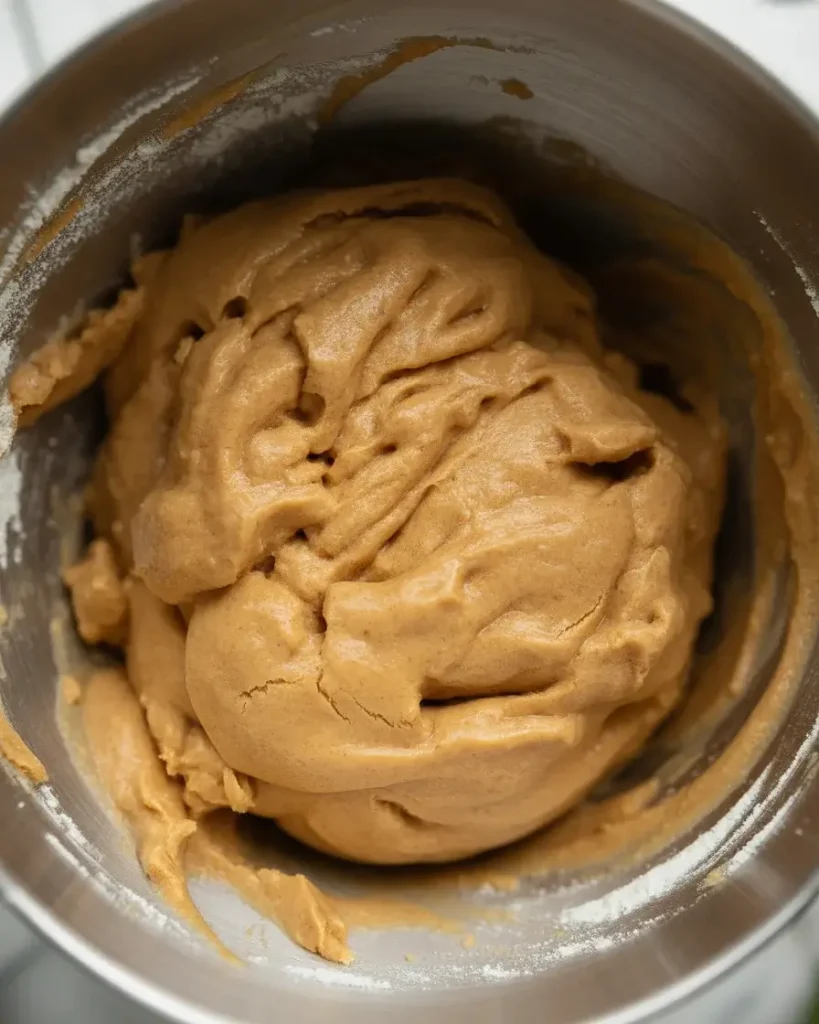
Whisk together 2 cups all-purpose flour, 1 teaspoon baking soda, and 1/2 teaspoon salt in a separate bowl. Add to the peanut butter mixture and mix on low just until no white streaks remain. Overmixing here is what made batch 7 turn out tough and cakey.
Stop the mixer the moment the flour disappears. The dough will feel thick and slightly sticky. That’s exactly right. If it feels too soft, chill it for 20 minutes before loading in your mix-ins.
Explore Homemade Cookie Recipes
Step 5: Fold In the Triple Reese’s Mix-Ins
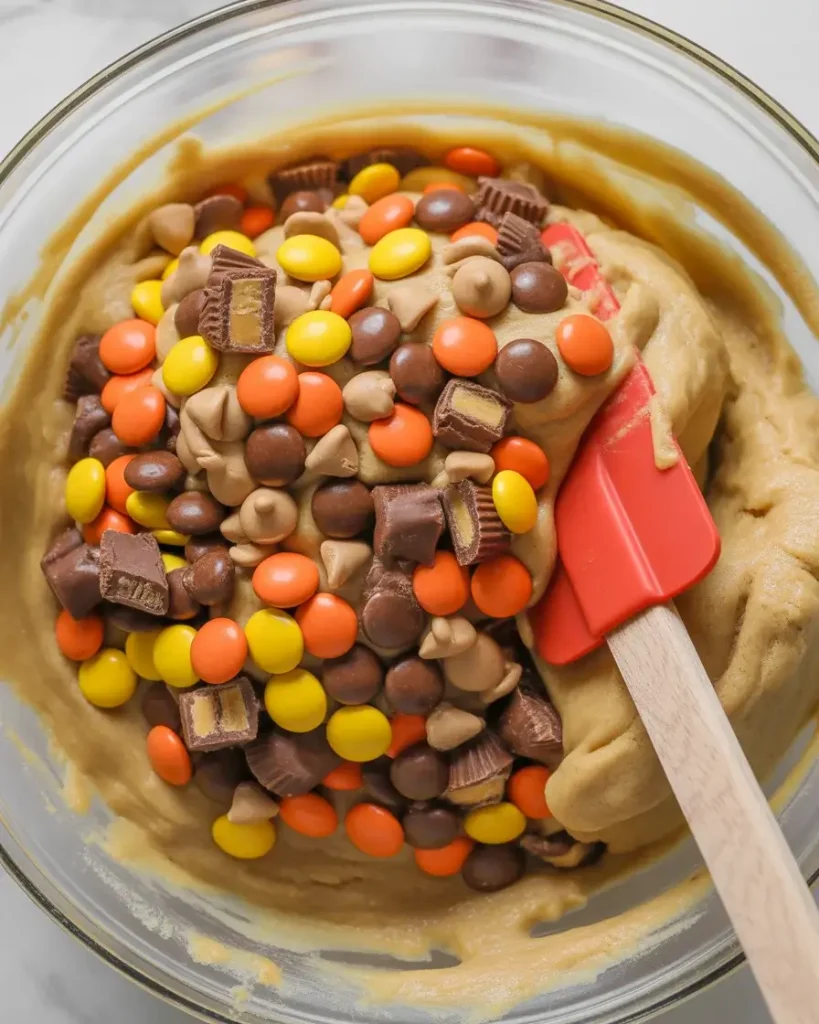
This is the step I look forward to most. Add 3/4 cup Reese’s Pieces, 3/4 cup peanut butter chips, and 1 cup roughly chopped Reese’s Peanut Butter Cups. Fold everything in with a rubber spatula rather than the mixer. You’ll hear the Reese’s Pieces clicking against the bowl.
I tested mixer folding versus hand folding across 5 batches. The mixer breaks the Reese’s cups into powder. Hand folding keeps gorgeous visible chunks throughout every single cookie.
Step 6: Scoop and Chill
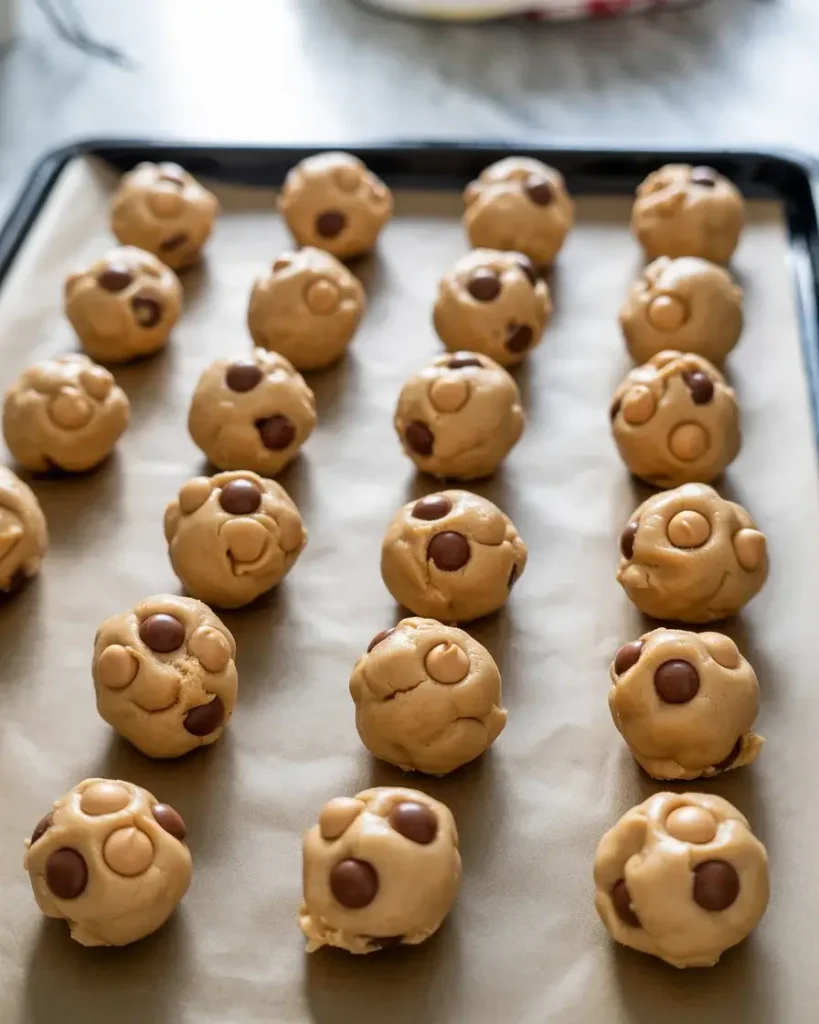
Scoop dough into 2-tablespoon balls using a cookie scoop and place them on a parchment-lined baking sheet. Refrigerate for 30 minutes minimum. I skipped chilling once on batch 9, thinking it was optional. The cookies spread flat as pancakes and merged together.
Cold dough holds its height and creates that thick, bakery-style look. While the dough chills, preheat your oven to 350°F. You’ll want the oven fully preheated before the first tray goes in.
Step 7: Bake to Golden Perfection

Bake at 350°F for 10-12 minutes. The edges should look set and lightly golden, but the centers will still look underdone and slightly shiny. Pull them out at that point. I’ve learned to trust this and not add the extra 2 minutes that feels necessary.
The residual heat from the pan finishes the centers perfectly as they cool. Let cookies rest on the baking sheet for 8 minutes before transferring. Moving them too early caused 3 broken cookies in one batch alone.

Triple Reese’s Peanut Butter Cookies
Course: DessertCuisine: AmericanDifficulty: Easy24
servings15
minutes42
minutes57
minutesThick, chewy peanut butter cookies loaded with Reese’s Pieces, peanut butter chips, and chopped Reese’s cups. Ready in under 45 minutes.
Ingredients
1 cup creamy peanut butter (Jif or Skippy recommended)
1/2 cup unsalted butter, softened
3/4 cup granulated sugar
3/4 cup brown sugar, packed
2 large eggs
1.5 teaspoons vanilla extract
2 cups all-purpose flour
1 teaspoon baking soda
1/2 teaspoon salt
3/4 cup Reese’s Pieces
3/4 cup peanut butter chips
1 cup Reese’s Peanut Butter Cups, roughly chopped
Directions
- Pull butter out 45 minutes early to soften fully at room temperature.
- Beat butter, peanut butter, granulated sugar, and brown sugar together for 3 minutes until pale and fluffy.
- Add eggs one at a time, beating 30 seconds each, then mix in vanilla.
- Whisk flour, baking soda, and salt together, then mix into dough on low just until combined.
- Fold in Reese’s Pieces, peanut butter chips, and chopped Reese’s cups by hand with a spatula.
- Scoop 2-tablespoon dough balls onto a parchment-lined baking sheet and refrigerate 30 minutes.
- Bake at 350°F for 10-12 minutes until edges are set and golden. Cool on pan for 8 minutes.
Notes
- Store in an airtight container at room temperature for up to 4 days.
Freeze unbaked dough balls up to 3 months; bake from frozen at 350°F for 13-14 minutes.
Use commercial creamy peanut butter only; natural peanut butter creates oily, loose dough.
Do not overbake; centers will look underdone when you pull them out, which is correct.
Nutrition Table (per serving)
| Nutrient | Amount |
|---|---|
| Calories | 285 |
| Total Fat | 14g |
| Sugars | 22g |
| Protein | 5g |
Trusted Resource Links
For food safety when baking with eggs and dairy, refer to the FDA Safe Food Handling guide. For nutritional guidance on desserts and balanced eating, visit the American Heart Association Healthy Eating resource.
What Makes These Cookies Stay Soft for Days?
The combination of brown sugar and creamy peanut butter is what locks in moisture. Brown sugar is hygroscopic, meaning it actively draws moisture from the air and keeps cookies soft longer than granulated sugar alone.
I tested storing batches in an airtight container versus a plate covered with plastic wrap. The airtight container batch stayed soft and chewy for 4 full days. The plate batch started drying out after just 36 hours.
Adding a slice of white bread to your storage container is an old trick, but I’ve confirmed it works. The cookies absorb moisture from the bread and stay perfectly soft. Replace the bread slice after day 2 and your cookies stay fresh up to 5 days.
Can You Freeze Triple Reese’s Peanut Butter Cookie Dough?
Yes, and I actually prefer baking from frozen dough. Scoop the dough balls, freeze them solid on a baking sheet for 1 hour, then transfer to a zip-lock bag. They keep perfectly for up to 3 months.
Bake frozen dough balls at 350°F for 13-14 minutes without thawing. I’ve done this comparison across 6 batches. The frozen dough cookies came out slightly thicker than room temperature dough because the butter melts slower in the oven.
This makes these cookies genuinely ideal for entertaining. I keep a bag in the freezer and bake exactly as many as I need. You never have to commit to a full batch when guests arrive unexpectedly.
Why Does My Peanut Butter Cookie Dough Feel Too Soft?
Warm butter or warm peanut butter is almost always the culprit. If your kitchen is above 75°F or your peanut butter was stored near a warm stove, the fat content turns the dough greasy and loose.
I ruined batch 5 this exact way in July. The dough was shiny and sticky instead of smooth and pliable. The fix is simple: refrigerate the mixed dough for 30 minutes before scooping.
Natural peanut butter also causes this. The separated oils in natural peanut butter create a softer, oilier dough. Stick with commercial creamy peanut butter like Jif or Skippy for the most consistent texture across every single batch.
How Many Reese’s Mix-Ins Should You Actually Use?
Three types sounds like a lot, but the ratio matters. I use 3/4 cup Reese’s Pieces, 3/4 cup peanut butter chips, and 1 cup chopped Reese’s cups per batch of 24 cookies. That’s roughly 2.5 cups total mix-ins.
Going beyond 3 cups caused structural problems in batch 11. The dough couldn’t hold all the candy, and cookies crumbled when lifted off the pan. The dough needs enough structure to bind everything together.
Chopping Reese’s cups into quarters instead of halves distributes them more evenly. I tested both sizes across multiple batches. Quarters gave every single cookie visible pieces, while halves created some cookies with no cup pieces at all.
Should You Press a Fork Pattern Into Peanut Butter Cookies?
The classic crosshatch is a traditional peanut butter cookie marker, but I skip it for this recipe. Pressing down flattens the dough and removes that thick, bakery-style height that makes these cookies special.
The chill time and slightly lower oven temperature at 350°F do the work the fork traditionally does. Chilled dough spreads slowly and evenly on its own without needing mechanical help to flatten.
If you love the look of the crosshatch, press very gently with just the heel of your palm instead of a fork. That gives you a slight press without losing the height. I tested this on a half-sheet and the palm-pressed cookies were noticeably thicker than fork-pressed ones.
Frequently Asked Questions
Q: Can I use crunchy peanut butter instead of creamy?
A: You can, but the texture changes noticeably. Crunchy peanut butter adds extra crunch that competes with the Reese’s pieces. Creamy gives you a smoother, more consistent base that lets the mix-ins be the star.
Q: Why did my cookies spread too flat?
A: Skipping the chill step is the number one cause. Warm dough spreads fast in a hot oven before the structure sets. Chilling for 30 minutes firms up the butter and keeps cookies thick and tall.
Q: Can I substitute Reese’s Pieces with Mu0026amp;Ms?
A: Yes, plain or peanut Mu0026amp;Ms work as a direct swap. The flavor shifts slightly since you lose that extra peanut butter punch from Reese’s Pieces. The color becomes more festive, which makes them great for holidays.