Tuscan Ribollita Soup Recipe: Hearty Italian Bread Soup
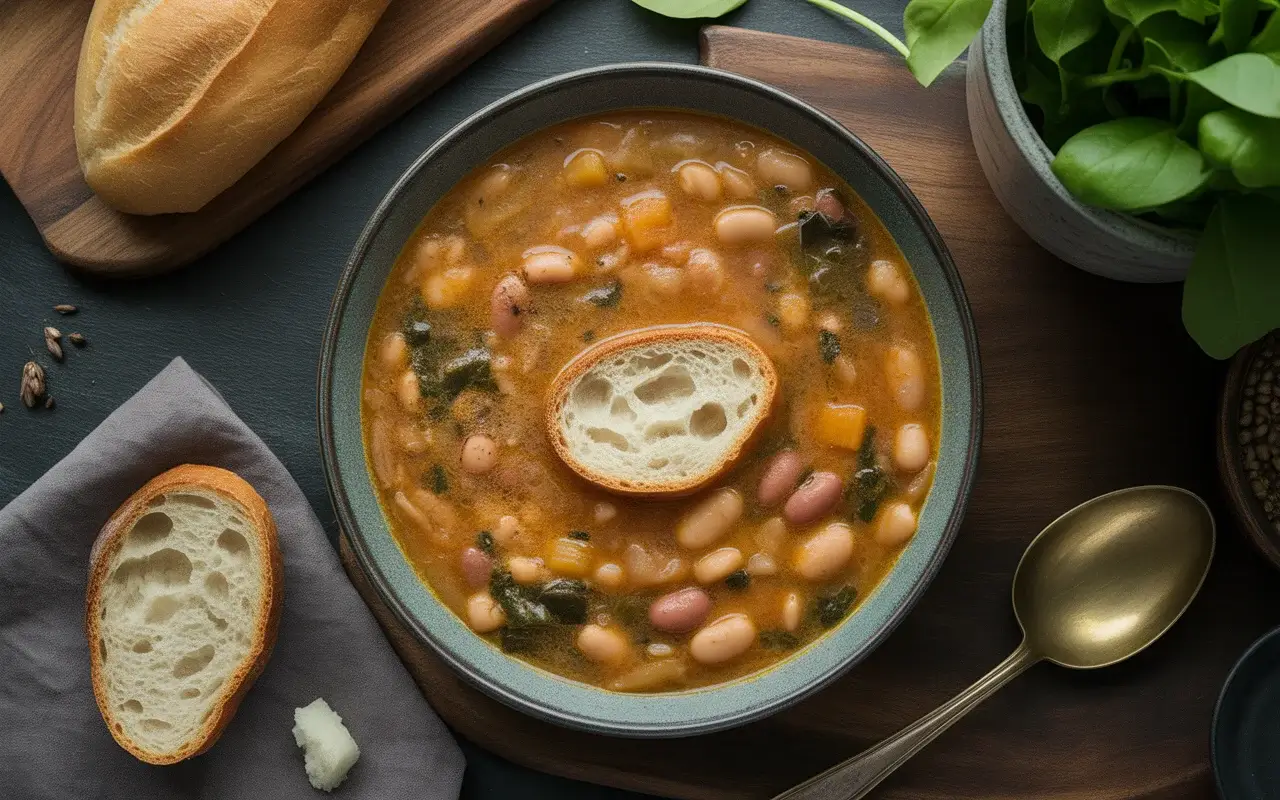
Tuscan ribollita soup transforms day-old bread and simple vegetables into a thick, comforting bowl of Italian comfort food. Perfect for cold evenings, this peasant dish celebrates rustic flavors and waste-free cooking.
Ribollita means “reboiled” in Italian, and this soup tastes even better the next day. The bread soaks up all the rich tomato broth, creating a stew-like consistency that’s both filling and nourishing.
What Is Ribollita?
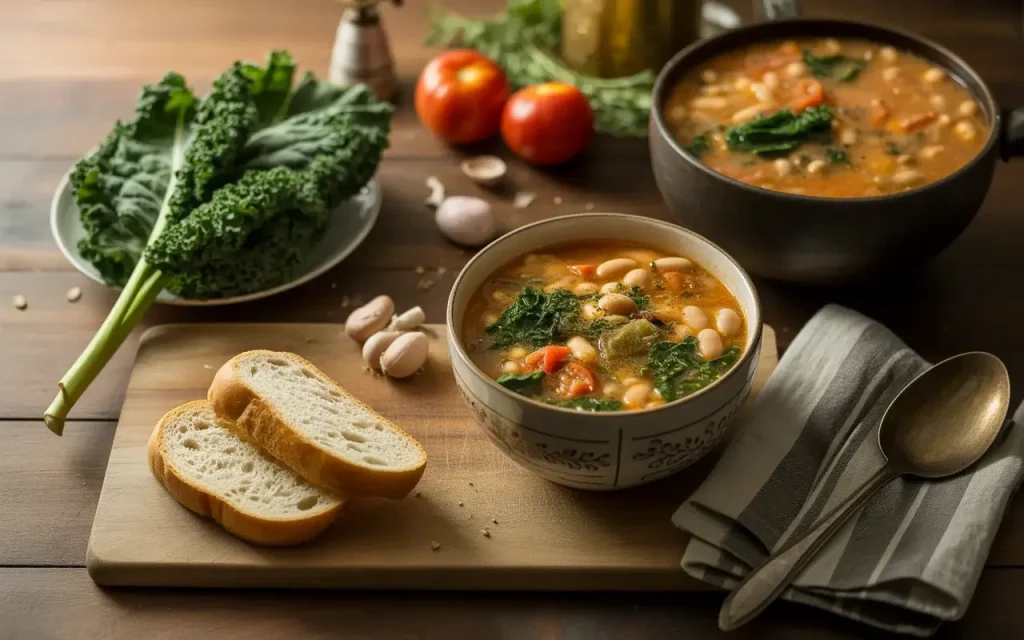
Ribollita is a classic Tuscan soup born from cucina povera, the Italian tradition of peasant cooking. Farmers would combine leftover vegetables, beans, and stale bread to create this hearty one-pot meal.
Unlike minestrone, ribollita is intentionally thick and bread-heavy. The longer it sits, the more the bread breaks down, creating an almost porridge-like texture that defines this beloved dish.
Traditional recipes vary by household, but kale, cannellini beans, and tomatoes form the foundation. Each family adds their own touch, making every ribollita uniquely personal.
Read More: Mexican Corn Chicken Soup (Caldo de Pollo con Elote)
Why You’ll Love This Recipe
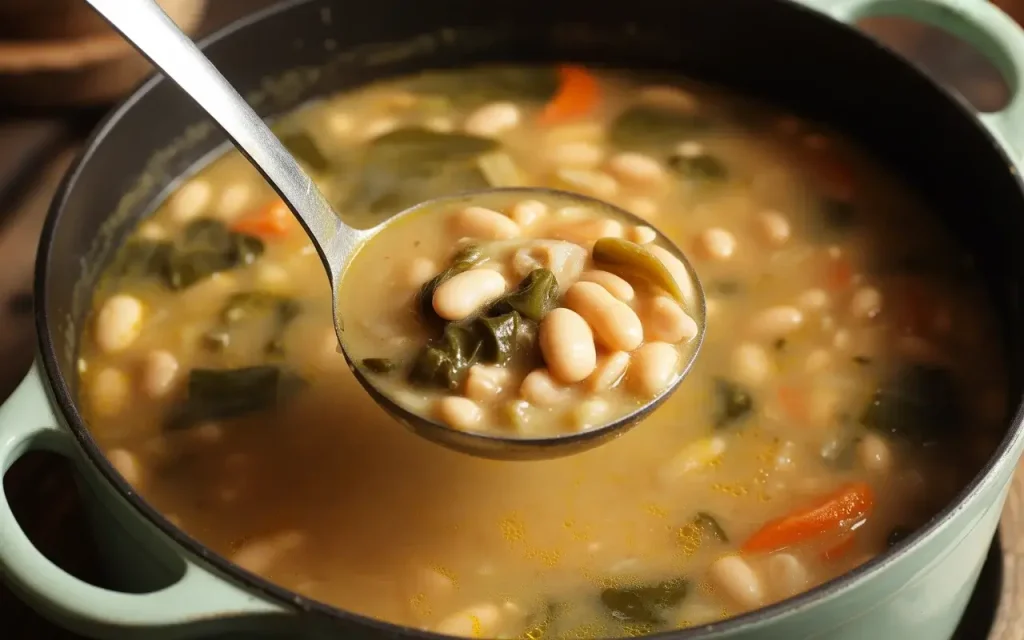
This ribollita soup recipe delivers authentic Tuscan flavors without requiring specialty ingredients. Everything you need is likely already in your pantry or easily found at any grocery store.
The soup gets better with time, making it ideal for meal prep. Make a big batch on Sunday and enjoy increasingly flavorful bowls throughout the week.
It’s incredibly forgiving and adaptable. Swap vegetables based on what’s in season, use any sturdy bread, and adjust the consistency to your preference.
Key Ingredients
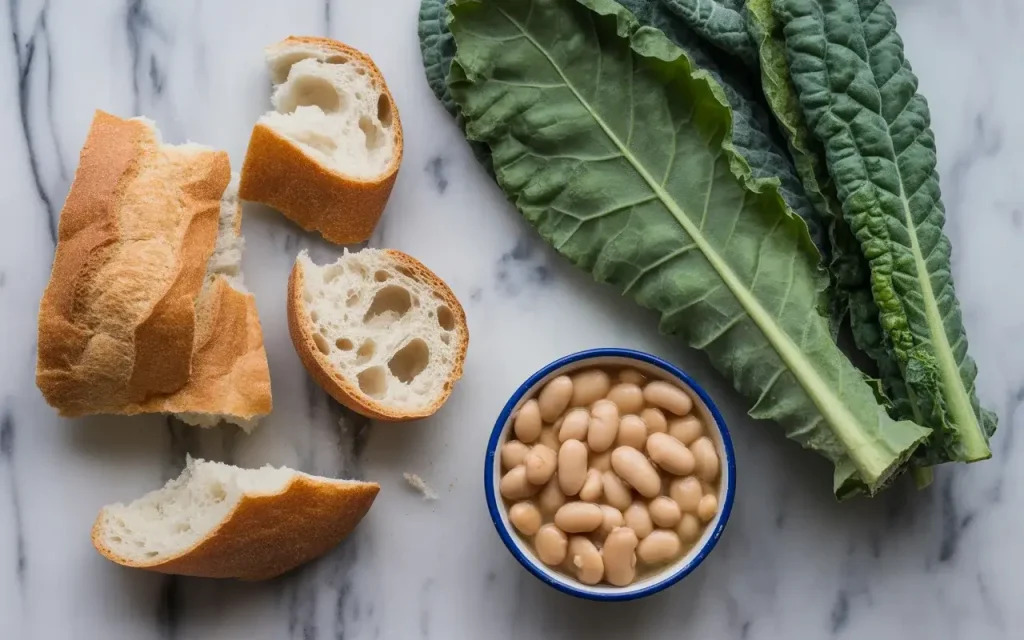
Stale bread is essential for authentic texture. Day-old crusty Italian or sourdough works best, as it absorbs liquid without turning to mush.
Cannellini beans provide protein and creaminess. Use dried beans for the most traditional approach, or canned for convenience without sacrificing flavor.
Lacinato kale (also called Tuscan kale or cavolo nero) is traditional, but curly kale works too. The dark leafy greens add earthiness and nutrients to every spoonful.
Soffritto base of onion, carrot, and celery builds the flavor foundation. Take time to sauté these aromatics properly for depth and sweetness.
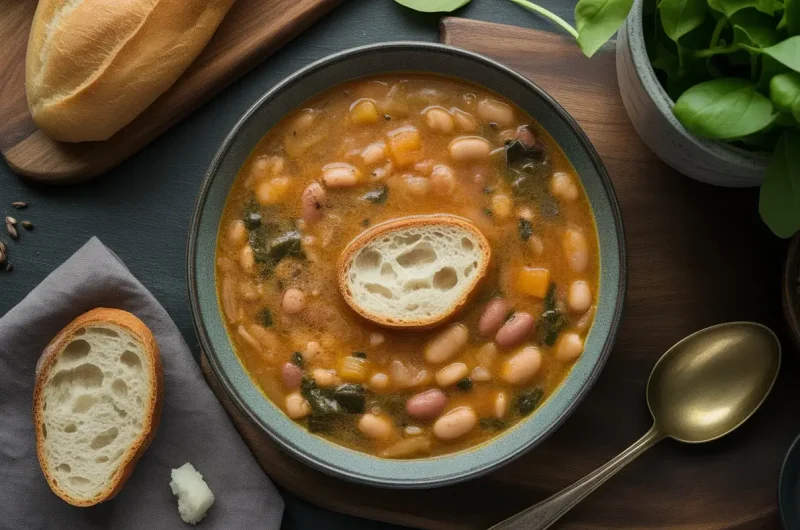
Tuscan Ribollita Soup Recipe: Hearty Italian Bread Soup
Course: Dinner, LunchCuisine: ItalianDifficulty: Easy6
20
minutes1
1
hour20
minutesA hearty, rustic Italian bread soup loaded with beans, kale, and vegetables in a rich tomato broth. This traditional Tuscan ribollita gets even better the next day.
Ingredients
1/4 cup extra virgin olive oil, plus more for drizzling
1 large onion, diced
2 medium carrots, diced
2 celery stalks, diced
4 garlic cloves, minced
2 tablespoons tomato paste
1 can (28 oz) crushed tomatoes
6 cups vegetable broth
2 cans (15 oz each) cannellini beans, drained and rinsed
1 bunch lacinato kale (about 8 oz), stems removed and leaves chopped
4 cups stale crusty bread, torn into chunks
1 teaspoon salt, plus more to taste
1/2 teaspoon black pepper
1/4 teaspoon red pepper flakes
Parmesan cheese for serving (optional)
Directions
- Heat olive oil in a large Dutch oven over medium heat. Add onion, carrot, and celery. Cook 8 to 10 minutes until softened.
- Add garlic and cook 1 minute. Stir in tomato paste and cook 2 minutes.
- Add crushed tomatoes, broth, salt, pepper, and red pepper flakes. Bring to a boil, then reduce to simmer.
- Add beans and kale. Simmer 20 to 25 minutes until kale is tender.
- Stir in bread chunks and simmer 10 to 15 minutes, stirring occasionally, until soup thickens.
- Remove from heat and let rest 10 minutes. Serve drizzled with olive oil and Parmesan if desired.
Notes
- Storage: Refrigerate in an airtight container for up to 5 days. The soup thickens as it sits; add broth when reheating.
Make Ahead: This soup tastes better the next day. Make it 1 to 2 days in advance and reheat gently.
Substitutions: Use any sturdy bread (sourdough, ciabatta, French bread). Swap kale for Swiss chard or spinach. Use chicken broth instead of vegetable broth.
Freezing: Freeze for up to 3 months, though the bread texture may change slightly when thawed.
Nutrition (Per Serving)
| Nutrient | Amount |
|---|---|
| Calories | 285 |
| Total Fat | 11g |
| Sugars | 8g |
| Protein | 11g |
Step-by-Step Instructions
Step 1: Prepare the Soffritto
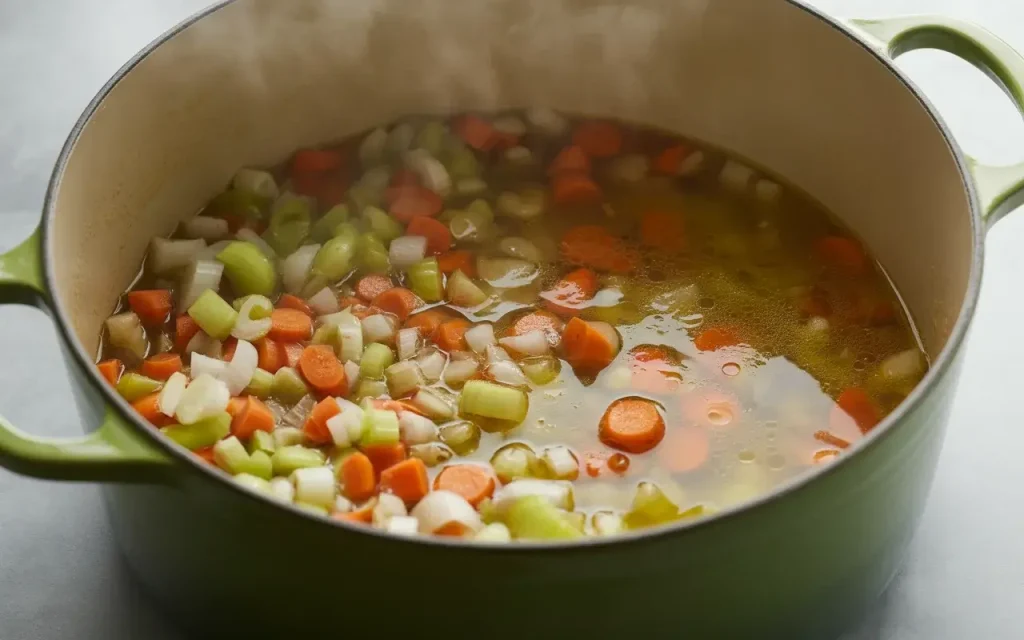
Heat olive oil in a large Dutch oven or heavy-bottomed pot over medium heat. Add finely diced onion, carrot, and celery, stirring occasionally until the vegetables soften and become fragrant, about 8 to 10 minutes.
The vegetables should turn translucent and slightly golden at the edges. This is your flavor base, so don’t rush this step. The sweetness from properly caramelized aromatics makes all the difference in the final soup.
Add minced garlic and cook for another minute until fragrant but not browned. If the garlic burns, it will taste bitter, so keep the heat moderate and stir frequently.
Step 2: Build the Tomato Base
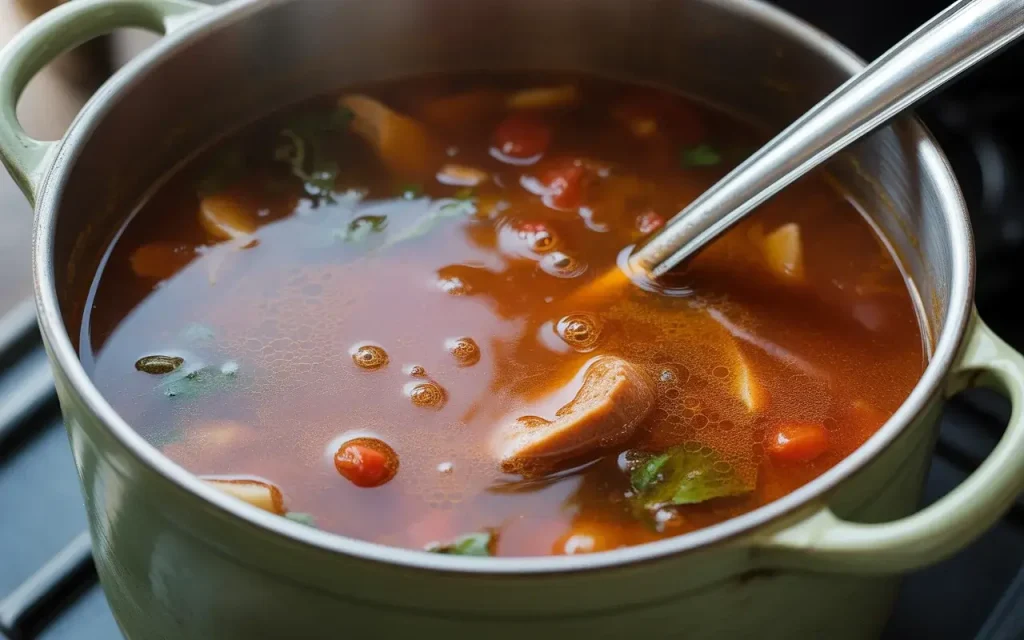
Stir in tomato paste and cook for 2 minutes, stirring constantly to coat the vegetables. This step caramelizes the tomato paste and removes any raw, metallic taste.
Add canned crushed tomatoes and vegetable broth, then season with salt, black pepper, and a pinch of red pepper flakes. The liquid should cover the vegetables by about an inch.
Bring the mixture to a gentle boil, then reduce heat to maintain a steady simmer. The tomatoes will break down and create a rich, savory broth that forms the heart of your ribollita.
Step 3: Add Beans and Greens
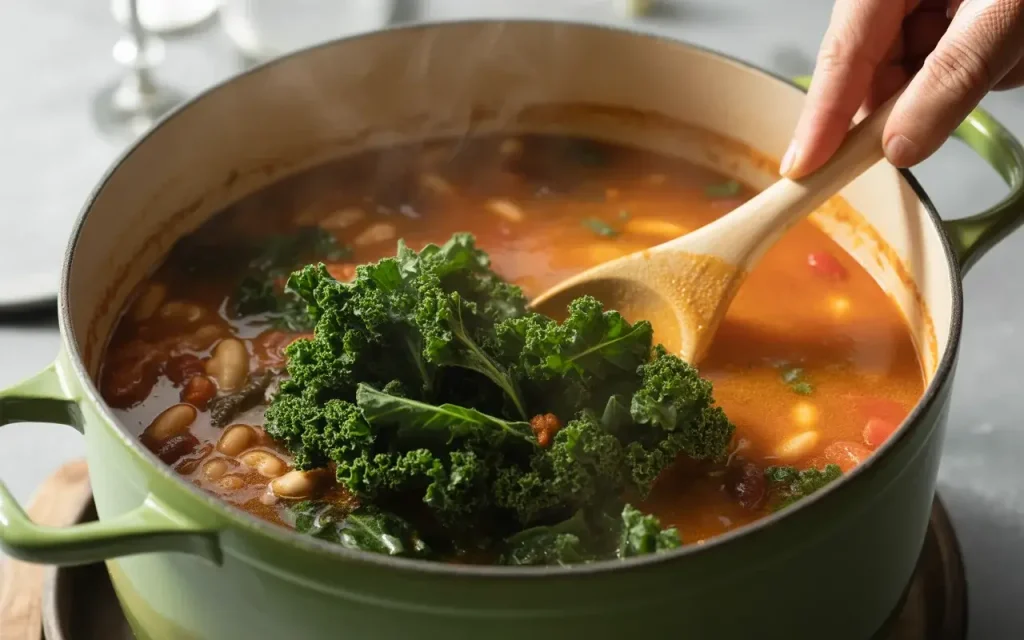
Add the cannellini beans to the pot, along with any bean cooking liquid if using homemade. The starchy liquid helps thicken the soup naturally.
Strip the kale leaves from their tough stems and roughly chop them. Add the kale to the pot in batches, stirring to wilt each addition before adding more.
Let everything simmer together for 20 to 25 minutes until the kale is completely tender and the flavors meld. The soup should smell aromatic and rich, with the greens turning a deep, dark color.
Step 4: Incorporate the Bread
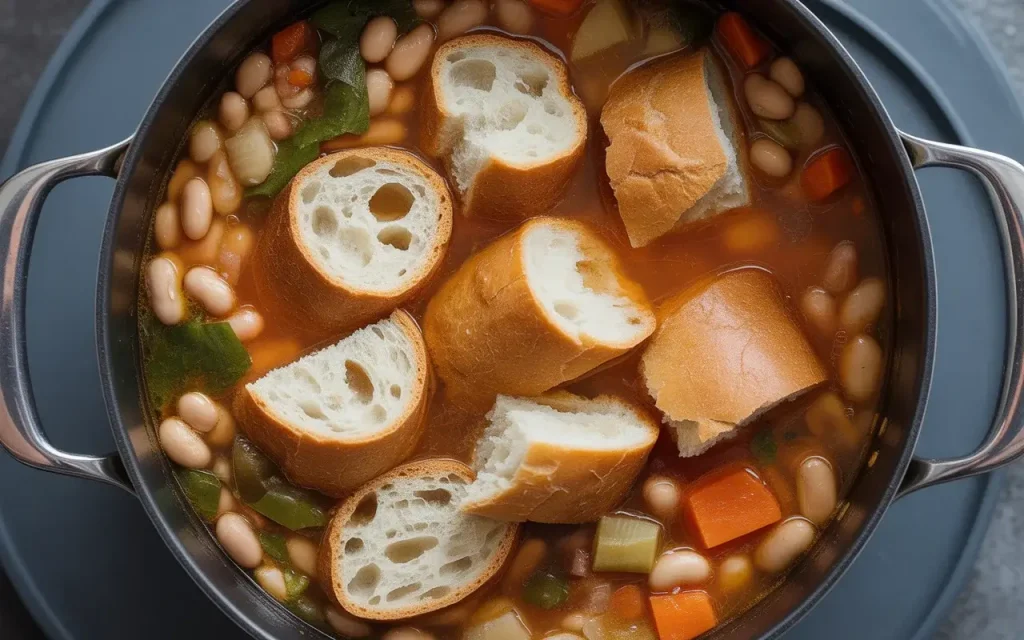
Tear or cut the stale bread into rough chunks, about 1 to 2 inches in size. The irregular pieces create better texture than uniform cubes.
Stir the bread into the soup, pushing it down so it’s mostly submerged in the liquid. At first, it will float, but as it absorbs the broth, it will sink and soften.
Continue simmering for 10 to 15 minutes, stirring occasionally to break up the bread. The soup should thicken considerably, taking on an almost stew-like consistency as the bread dissolves.
Step 5: Final Seasoning and Rest
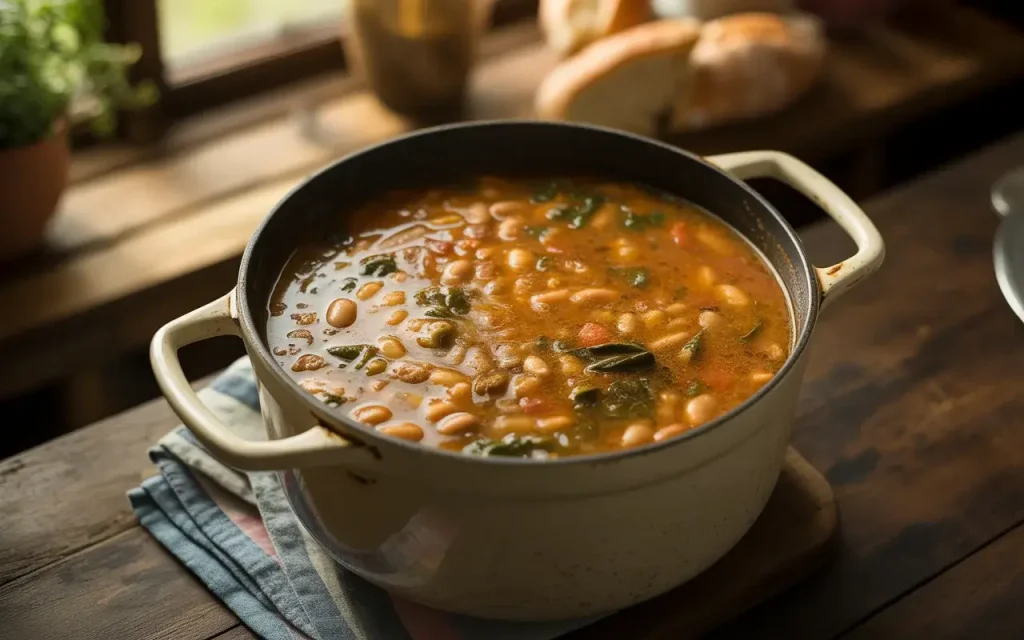
Taste the ribollita and adjust seasoning with additional salt and pepper as needed. The bread will absorb quite a bit of salt, so it often needs more than you’d expect.
Remove the pot from heat and let it rest for at least 10 minutes before serving. This resting period allows the flavors to deepen and the bread to fully absorb the liquid.
For the most authentic experience, refrigerate the soup overnight and reheat it the next day. True to its name, ribollita is traditionally “reboiled” and tastes even better after the flavors marry overnight.
Step 6: Serve and Garnish
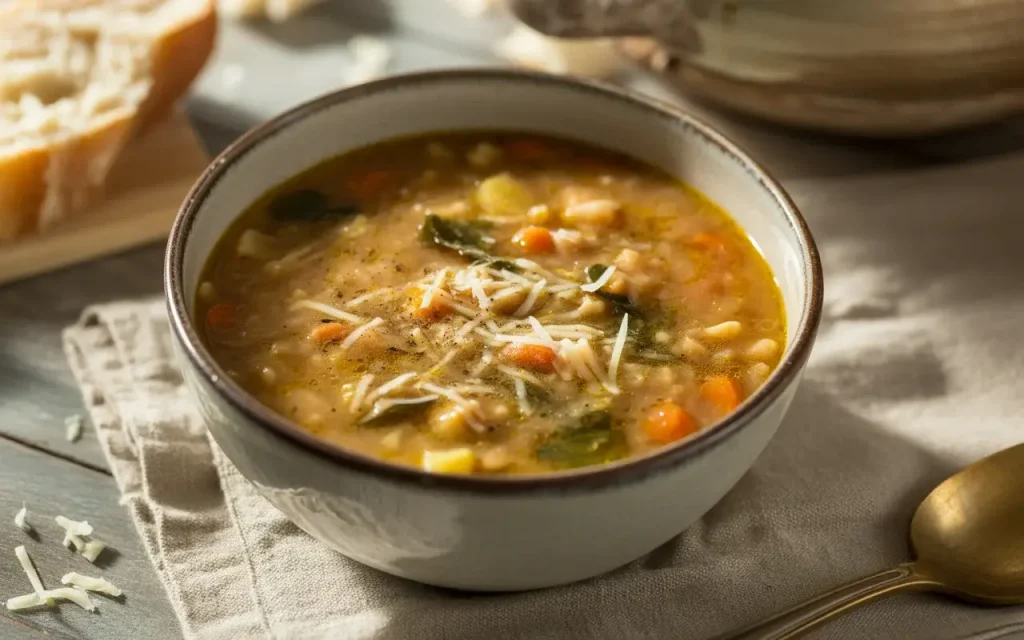
Ladle the thick soup into wide, shallow bowls. The consistency should be somewhere between a soup and a stew, thick enough that a spoon stands upright.
Drizzle each serving generously with your best extra virgin olive oil. The fruity, peppery oil is traditional and adds a luxurious finish to this humble dish.
Finish with freshly grated Parmesan cheese if desired, though many traditional versions skip the cheese. Serve with additional crusty bread on the side for dipping.
Frequently Asked Questions
Can I use fresh bread instead of stale?
Fresh bread works but becomes mushy quickly. For best results, tear fresh bread into chunks and toast it in a 300°F oven for 10 minutes before adding to the soup.
What’s the difference between ribollita and minestrone?
Minestrone is a lighter vegetable soup, while ribollita is intentionally thick and bread-heavy. Ribollita also traditionally features kale and is reboiled the next day.
How thick should ribollita be?
The consistency should be between soup and stew. A spoon should nearly stand upright in it. If too thick, add more broth; if too thin, simmer longer or add more bread.