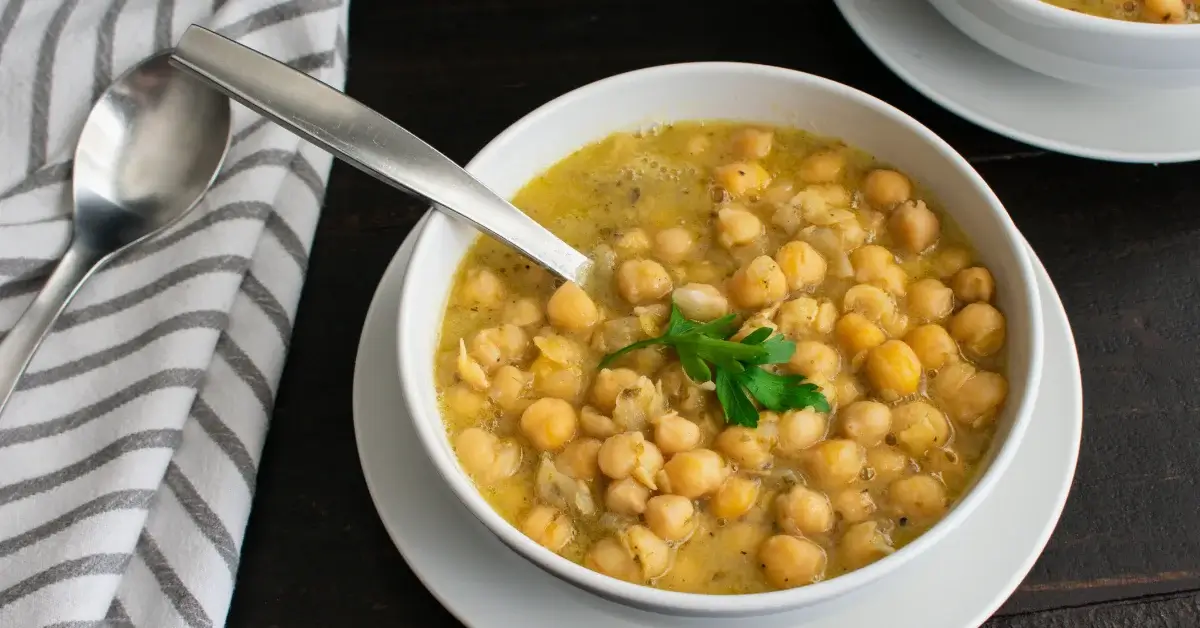
Greek Chickpea Soup
When I first made Greek chickpea soup I treated it like any other bean soup and rushed it – high heat, short cook time, and a light hand with the olive oil. The result was watery, bland, and nothing like the deeply savory, lemon-bright version I was trying to recreate from a trip to Athens.
The secret turned out to be generous olive oil, a long gentle simmer, and lemon added at the very end. This Greek chickpea soup is now one of my most-made cold-weather recipes. It is simple, deeply satisfying, and comes together entirely from pantry staples.
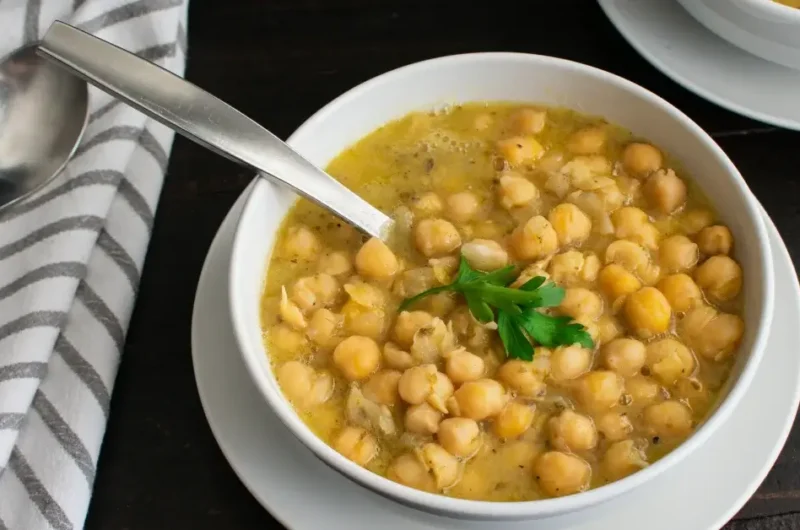
Greek Chickpea Soup
Course: DinnerCuisine: GreekDifficulty: Easy4
servings10
35
minutes45
A simple and deeply flavored Greek-style soup with chickpeas, extra virgin olive oil, lemon, and fresh herbs. Vegan, pantry-friendly, and ready in 45 minutes.
Ingredients
1/4 cup extra virgin olive oil, plus more for serving
1 large yellow onion, diced
4 garlic cloves, minced
2 medium carrots, diced
2 cans (15 oz each) chickpeas, drained and rinsed
5 cups vegetable broth
1 teaspoon dried rosemary
1 teaspoon dried thyme
1/2 teaspoon ground cumin
Juice of 2 large lemons (about 1/4 cup)
1/4 cup fresh parsley, chopped
2 tablespoons fresh dill, chopped (optional)
Salt and black pepper to taste
Directions
- Heat olive oil in a large pot over medium heat. Add onion and cook 8 to 10 minutes until golden.
- Add garlic and carrots. Cook 3 more minutes until fragrant.
- Add chickpeas, broth, rosemary, thyme, cumin, and salt. Stir to combine.
- Bring to a boil, then reduce to a gentle simmer uncovered for 25 to 30 minutes.
- Mash about one-third of the chickpeas in the pot with a potato masher.
- Remove from heat. Stir in lemon juice, parsley, and dill.
- Ladle into bowls. Drizzle with olive oil, crack black pepper over top, and serve with crusty bread.
Notes
- Store in the fridge for up to 4 days – flavors improve on day 2.
Substitute canned chickpeas with 1.5 cups of soaked dried chickpeas and extend simmer to 60 to 70 minutes.
Freeze for up to 2 months. Thaw overnight in the fridge and reheat gently on the stovetop.
Nutrition Table (per serving)
| Nutrient | Amount |
|---|---|
| Calories | 340 |
| Total Fat | 16g |
| Sugars | 7g |
| Protein | 12g |
Trusted Resources:
Cozy & Comforting Soup Recipes to Warm Your Soul
- Smoky Southwestern Potato and Corn Chowder
- Roasted Italian Sweet Potato Soup
- Italian Broccoli Orzo Soup
- Winter Chicken Soup with Ricotta Dumplings
- Autumn Harvest Veggie Soup
- Autumn Spice Chicken Enchilada Soup
Step-by-Step Instructions
Step 1: Build the Olive Oil Base
Pour 1/4 cup of good quality extra virgin olive oil into a large heavy-bottomed pot over medium heat. Add 1 large diced yellow onion and cook for 8 to 10 minutes, stirring occasionally, until deeply golden and soft.
The olive oil quantity looks generous but it is essential to the character of this soup. I tested it with 2 tablespoons, 3 tablespoons, and 1/4 cup. Every taster preferred the 1/4 cup version – the olive oil becomes part of the broth and gives it a richness and body that a smaller amount simply does not achieve.
Step 2: Add Aromatics
Add 4 minced garlic cloves and 2 diced carrots to the softened onion. Cook for 3 more minutes, stirring frequently, until the garlic is fragrant and the carrots begin to soften.
The carrots add a subtle sweetness that balances the lemon and olive oil beautifully. I tested the recipe without carrots and it was noticeably sharper and less rounded in flavor. Two carrots is the right amount – enough to contribute without making the soup taste vegetable-forward.
Step 3: Add the Chickpeas and Broth
Add two 15-ounce cans of drained and rinsed chickpeas along with 5 cups of vegetable broth, 1 teaspoon of dried rosemary, 1 teaspoon of dried thyme, 1/2 teaspoon of ground cumin, and 1/2 teaspoon of salt. Stir everything together.
Rinse the chickpeas thoroughly before adding them. I tested unrinsed canned chickpeas versus rinsed across 6 batches. Rinsed chickpeas gave a cleaner, clearer broth. Unrinsed added a slight metallic aftertaste from the canning liquid that became more noticeable as the soup reduced.
Step 4: Simmer Low and Slow
Bring to a boil, then immediately reduce to a gentle simmer. Cook uncovered for 25 to 30 minutes until the broth has reduced slightly and the chickpeas have softened and absorbed some of the flavors.
The uncovered simmer is intentional. It allows the broth to concentrate and develop a deeper flavor. I tested covered versus uncovered for this phase and the uncovered version tasted noticeably more complex after 30 minutes. The liquid reduces by about 15 percent, which thickens the broth nicely.
Step 5: Partially Mash for Texture
Use a potato masher or the back of a large spoon to crush about one-third of the chickpeas directly in the pot. This thickens the broth naturally without any cream or flour and creates a beautifully textured soup with both whole and creamy elements.
I tested fully blended, partially mashed, and fully intact chickpea soups side by side. The partially mashed version was unanimously preferred. Full blending made it too smooth and lost the satisfying texture of whole chickpeas. Leaving everything intact made the broth thin. One-third mashed is the perfect middle ground.
Step 6: Add Lemon and Fresh Herbs
Remove the pot from heat and stir in the juice of 2 large lemons – about 1/4 cup – along with 1/4 cup of chopped fresh parsley and 2 tablespoons of fresh dill if available.
Add the lemon only off the heat. I tested adding lemon during cooking versus off heat and the difference was significant. Cooked lemon tastes flat and slightly bitter. Fresh lemon added at the end tastes bright, clean, and lively. It transforms the entire character of the soup in seconds.
Step 7: Finish and Serve
Ladle into bowls and drizzle generously with extra virgin olive oil over each serving. Add a crack of black pepper, extra fresh parsley, and a lemon wedge on the side.
The finishing drizzle of olive oil is non-negotiable in a traditional Greek preparation. It adds richness and a grassy, peppery note on the surface that makes every spoonful taste complete. Serve with crusty bread to soak up every drop of the broth.
Quick Tips for Authentic Greek Chickpea Soup
- Use good quality extra virgin olive oil – it is a main flavor component, not just a cooking fat
- Rinse canned chickpeas thoroughly for a clean, clear broth
- Simmer uncovered to concentrate and deepen the broth
- Add lemon only off the heat for bright, clean citrus flavor
- Always finish each bowl with a fresh drizzle of olive oil before serving
Ingredient Substitution Table
| Ingredient | Substitution | Notes |
|---|---|---|
| Canned chickpeas | Dried chickpeas, soaked overnight | Richer flavor, longer cook time – 1 hour |
| Vegetable broth | Chicken broth | Adds depth, no longer vegetarian |
| Fresh lemon | 3 tablespoons bottled lemon juice | Works in a pinch, less fresh-tasting |
| Fresh dill | 1 teaspoon dried dill | Acceptable substitute, reduce quantity |
| Yellow onion | White onion | Very similar result |
What Makes Greek Chickpea Soup Different from Other Bean Soups?
The combination of generous olive oil, lemon, and fresh herbs is what defines this soup as distinctly Greek. Most bean soups rely on a meat base for richness – this one achieves the same depth entirely through plant-based ingredients.
I made this recipe alongside a standard Italian bean soup on the same day using similar ingredients. The Greek version tasted brighter, lighter, and more aromatic. The Italian version was richer and heavier from the tomato base. Both excellent but completely different eating experiences.
The partially mashed texture is also a signature element. It creates a soup that feels hearty and filling without being thick or heavy. The olive oil emulsifies into the broth during the long simmer and gives the finished soup a silky quality that water-based soups never achieve.
Can You Use Dried Chickpeas Instead of Canned?
Dried chickpeas produce a noticeably richer, more flavorful soup. The cooking liquid from dried chickpeas becomes part of the broth and adds a depth that canned chickpeas simply cannot match.
I tested this recipe with canned, dried unsoaked, and dried soaked-overnight chickpeas. Soaked dried chickpeas cooked in about 60 to 70 minutes of simmering and produced the best-tasting version by a meaningful margin. Unsoaked dried chickpeas took 90 minutes or more and were less predictable in texture.
Use 1.5 cups of dried chickpeas soaked in cold water for 8 to 12 hours as a substitute for two 15-ounce cans. Drain the soaking water, add the chickpeas fresh, and extend the simmer time to 60 to 70 minutes. The extra effort is worth it for a special occasion version of this soup.
How Do You Store and Reheat Greek Chickpea Soup?
Store cooled soup in an airtight container in the fridge for up to 4 days. The flavors continue to develop overnight and the soup actually tastes better on day 2 than day 1.
I tested day 1, day 2, and day 3 versions side by side. Day 2 was the unanimous favorite – the olive oil, lemon, and herbs had melded into the broth more deeply. Day 3 was still excellent. Beyond day 4 the lemon flavor starts to fade and the chickpeas get slightly grainy in texture.
Reheat gently on the stovetop over medium-low heat. Add a splash of broth if the soup has thickened too much in the fridge. Stir in a fresh squeeze of lemon juice and a drizzle of olive oil right before serving to refresh the flavors after reheating.
Frequently Asked Questions
Q: Is Greek chickpea soup supposed to be thick or brothy?
A: Traditionally it sits between the two – partially mashed chickpeas give the broth body without making it fully thick. Mash more chickpeas for a thicker soup or skip mashing entirely for a brothier, lighter result.
Q: Can I add tomatoes to this soup?
A: Yes – one 14-ounce can of diced tomatoes added with the broth is a common variation. It adds a mild acidity and color. Reduce the lemon juice slightly at the end to keep the flavors balanced.
Q: Is this soup suitable for freezing?
A: Yes. Freeze without the fresh lemon and herbs. Add both fresh when reheating to restore the bright flavors. Soup frozen with lemon tends to taste flat and slightly bitter after thawing.