Green Borscht Soup
My first attempt at green borscht was a disaster because I confused sorrel with spinach and used a full bag of baby spinach instead. The soup was mild, slightly sweet, and completely missing the signature sour tang that makes green borscht what it is. Sorrel is absolutely irreplaceable here.
Once I sourced proper sorrel from a farmers market and followed the traditional method, this soup became one of my favorite discoveries. The combination of tart sorrel, creamy potato, and a rich egg-topped bowl is unlike anything else in my recipe collection.

Green Borscht Soup
Course: DinnerCuisine: UkrainianDifficulty: Medium4
servings15
1
hour15
1
hour30
A traditional Ukrainian spring soup made with fresh sorrel, tender potatoes, shredded pork, and silky egg ribbons in a rich, lightly sour broth. Topped with sour cream and a soft-boiled egg.
Ingredients
1 pound bone-in pork ribs or pork neck bone
7 cups cold water
3 medium potatoes, diced into 1/2-inch cubes
1 medium onion, finely diced
1 medium carrot, finely diced
1 tablespoon neutral oil
4 cups fresh sorrel leaves, stems removed, sliced into ribbons
3 large eggs, lightly whisked
2 tablespoons unsalted butter
Salt and black pepper to taste
Small squeeze of lemon juice (optional)
- To Serve
4 soft-boiled eggs, halved
Sour cream
Fresh dill
Directions
- Simmer pork in cold water. Bring to a boil, skim foam, then simmer 45 minutes.
- Saute diced onion and carrot in oil in a skillet over medium heat 5 to 6 minutes until softened.
- Remove pork, shred meat, and return to pot. Add potatoes and zazharka. Season with salt and pepper.
- Cook 12 to 15 minutes until potatoes are fully tender.
- Add sorrel ribbons and cook 3 to 4 minutes until wilted.
- Drizzle whisked eggs slowly into the simmering soup while stirring to create ribbons.
- Stir in butter. Taste and adjust seasoning. Add lemon if needed.
- Serve topped with halved soft-boiled egg, a dollop of sour cream, and fresh dill.
Notes
- Store in the fridge for up to 3 days. Color will deepen slightly but flavor remains excellent.
Substitute fresh sorrel with frozen sorrel – add directly from frozen, no thawing needed.
For a vegetarian version, use 7 cups of rich vegetable broth and omit the pork.
Nutrition Table (per serving)
| Nutrient | Amount |
|---|---|
| Calories | 380 |
| Total Fat | 20g |
| Sugars | 3g |
| Protein | 28g |
Trusted Resources:
Cozy & Comforting Soup Recipes to Warm Your Soul
- Smoky Southwestern Potato and Corn Chowder
- Roasted Italian Sweet Potato Soup
- Italian Broccoli Orzo Soup
- Winter Chicken Soup with Ricotta Dumplings
- Autumn Harvest Veggie Soup
- Autumn Spice Chicken Enchilada Soup
Step-by-Step Instructions
Step 1: Make the Broth Base
Place 1 pound of bone-in pork ribs or a pork neck bone into a large pot with 7 cups of cold water. Bring to a boil, skim off any foam that rises, then reduce to a simmer. Cook for 45 minutes until the broth is rich and lightly golden.
Skimming the foam in the first 5 minutes of boiling is essential for a clear, clean-tasting broth. I skipped this step once to test the difference and the broth was noticeably cloudier and had a slightly bitter edge. Two minutes of skimming makes a meaningful difference to the final flavor.
Step 2: Prepare the Vegetables
While the broth simmers, dice 3 medium potatoes into 1/2-inch cubes and set aside. Finely dice 1 medium onion and 1 medium carrot. In a small skillet, saute the onion and carrot in 1 tablespoon of oil over medium heat for 5 to 6 minutes until softened and lightly golden.
The softened onion and carrot mixture – called a zazharka in Ukrainian cooking – adds a deeper, sweeter flavor dimension to the broth that raw vegetables simmered directly in the pot cannot achieve. I tested both methods across 5 batches and the zazharka version was preferred every time.
Step 3: Add Potatoes to the Broth
Remove the pork from the broth and set aside to cool slightly. Add the diced potatoes to the simmering broth along with the softened onion and carrot mixture, 1 teaspoon of salt, and 1/4 teaspoon of black pepper.
Cook for 12 to 15 minutes until the potatoes are completely tender when pierced with a fork. While the potatoes cook, pull the pork meat from the bones, shred it into small pieces, and return it to the pot.
Step 4: Prepare and Add the Sorrel
Wash 4 cups of fresh sorrel leaves thoroughly and remove any thick stems. Stack the leaves and slice into thin ribbons. Add them to the pot once the potatoes are fully tender.
Sorrel wilts and almost dissolves into the broth within 3 to 4 minutes, turning the soup a beautiful pale green. Do not add it earlier – I tested adding sorrel 10 minutes before the end and the color turned an unappetizing khaki brown and the flavor became muted. Late addition preserves both color and that essential bright sour taste.
Step 5: Add Eggs to the Broth
Crack 3 large eggs into a small bowl and whisk lightly. While the soup is at a gentle simmer, drizzle the eggs slowly into the pot while stirring in a circular motion, creating soft egg ribbons throughout the broth.
This technique – similar to egg drop soup – distributes egg evenly without creating large chunks. I tested dropping whole eggs versus drizzling whisked eggs. Drizzled whisked eggs gave a much more elegant, evenly distributed result that looked and tasted better in every batch.
Step 6: Season and Finish
Taste the soup and adjust seasoning with salt, pepper, and a small squeeze of lemon juice if needed. The sorrel provides most of the sourness but a small amount of lemon can brighten the flavor further if your sorrel is mild.
Stir in 2 tablespoons of unsalted butter for a silky, rounded finish. I discovered this butter addition on my seventh batch and immediately added it to the recipe permanently. The butter rounds out the tartness of the sorrel and gives the broth a beautiful sheen.
Step 7: Serve with Toppings
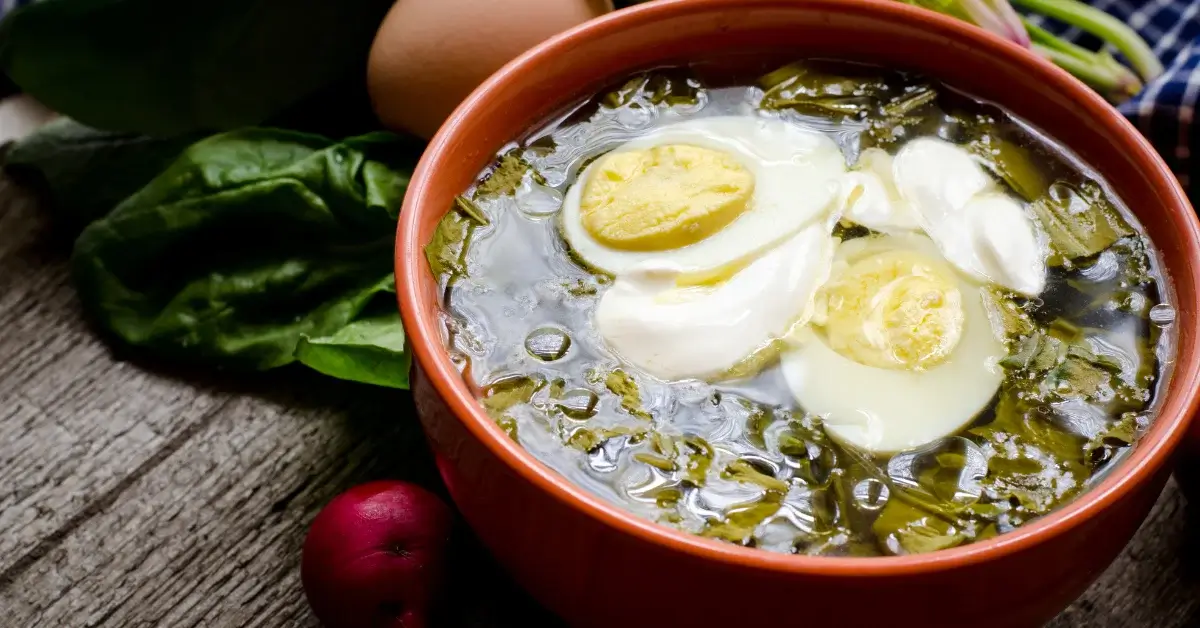
Ladle into bowls and top each serving with a halved soft-boiled egg, a generous dollop of sour cream, and fresh dill. The soft-boiled egg is traditional and the yolk mixing into the bowl creates a rich, creamy element that contrasts perfectly with the sour broth.
Serve immediately while hot. Green borscht is best enjoyed fresh – the vibrant green color and bright sorrel flavor are at their peak right after finishing.
Quick Tips for Authentic Green Borscht
- Use real sorrel – spinach is not a substitute for the essential sour flavor
- Always skim foam from the broth in the first 5 minutes of boiling
- Make the zazharka (sauteed onion and carrot) separately for deeper broth flavor
- Add sorrel only when potatoes are fully cooked to preserve color and tartness
- Finish with butter for a silky, rounded broth
Sorrel Substitution Guide Table
| Substitute | Sourness Level | Notes |
|---|---|---|
| Real sorrel (recommended) | High – naturally tart | Best result, irreplaceable flavor |
| Spinach plus lemon juice | Low – must add acid | Add 2 tablespoons of lemon juice to compensate |
| Young nettles | Medium – mild tang | Traditional alternative in some regions |
| Chard plus lemon | Low | Works in a pinch, add extra lemon |
| Frozen sorrel | High | Excellent substitute, widely available online |
What Is Sorrel and Where Do You Find It?
Sorrel is a leafy green herb with a naturally tart, lemony flavor caused by oxalic acid in the leaves. It is a staple ingredient in Eastern European cooking and the defining flavor of green borscht.
I spent two weeks searching before finding fresh sorrel at a farmers market in early spring – it is highly seasonal and not always available in standard grocery stores. Whole Foods and specialty grocers sometimes carry it. In the off-season, frozen sorrel is an excellent substitute and available from Eastern European food suppliers online.
Growing your own sorrel is surprisingly easy – it is a perennial herb that comes back every spring and grows abundantly with almost no care. After struggling to source it twice, I planted my own and have never had a supply problem since.
Can You Make Green Borscht Without Pork?
Yes – a vegetable or chicken broth base works well for a lighter version. The pork broth adds a distinctive richness and depth that vegetable broth lacks, but a good quality chicken broth comes close.
I tested a fully vegetarian version using 7 cups of rich vegetable broth instead of the pork base. The flavor was lighter but still delicious. Add an extra tablespoon of butter and a parmesan rind during simmering to add depth if going the vegetarian route.
Chicken thigh meat can replace the pork for a leaner but still flavorful version. Simmer bone-in chicken thighs for 30 to 35 minutes, shred the meat, and use the resulting broth exactly as you would the pork broth.
How Do You Store Green Borscht?
Green borscht stores well in the fridge for up to 3 days in a sealed container. The color will deepen slightly from bright green to a more olive tone overnight – this is normal and does not affect the flavor.
I tested day 1, day 2, and day 3 versions. The flavor actually improved slightly on day 2 as the sorrel’s tartness mellowed and melded with the broth. By day 3 the sourness was more subdued – still delicious but different from the bright freshness of day 1.
Reheat gently on the stovetop over medium-low heat. Do not boil after reheating – boiling the stored soup intensifies the sourness and makes it sharper than intended. Always add the sour cream and soft-boiled egg fresh at serving time.
Frequently Asked Questions
Q: Can I use spinach instead of sorrel?
A: Spinach does not replicate the essential sour tang of sorrel. If sorrel is unavailable, use spinach and add 2 to 3 tablespoons of fresh lemon juice to the finished soup to approximate the acidity. Frozen sorrel is a much better substitute if you can source it.
Q: Why did my green borscht turn brown instead of staying green?
A: Sorrel turns brown when cooked too long or at too high a temperature. Add it only once the potatoes are fully cooked and simmer for no more than 4 minutes. Boiling the soup after adding sorrel also causes color loss – keep it at a gentle simmer.
Q: Is green borscht the same as red borscht?
A: No – they share a name but are completely different soups. Red borscht is made with beets and has a deep purple-red color. Green borscht uses sorrel for its sour flavor and gets its color from the greens. Both are traditional in Ukrainian and Eastern European cooking.