Best Gothic Kitchen Ideas for a Unique Home Style
Gothic kitchens are making a stunning comeback in modern interior design, blending medieval elegance with contemporary functionality. This dramatic style transforms the heart of your home into a space that feels both mysterious and sophisticated. Whether you’re drawn to dark color palettes, ornate details, or Victorian inspired elements, gothic kitchen design offers endless possibilities for creating a truly unique cooking space. From black cabinetry to wrought iron fixtures, these design choices can turn an ordinary kitchen into an extraordinary statement room. Let’s explore the best gothic kitchen ideas that will help you achieve this captivating aesthetic while maintaining practicality for everyday use.
Understanding Gothic Kitchen Design Elements
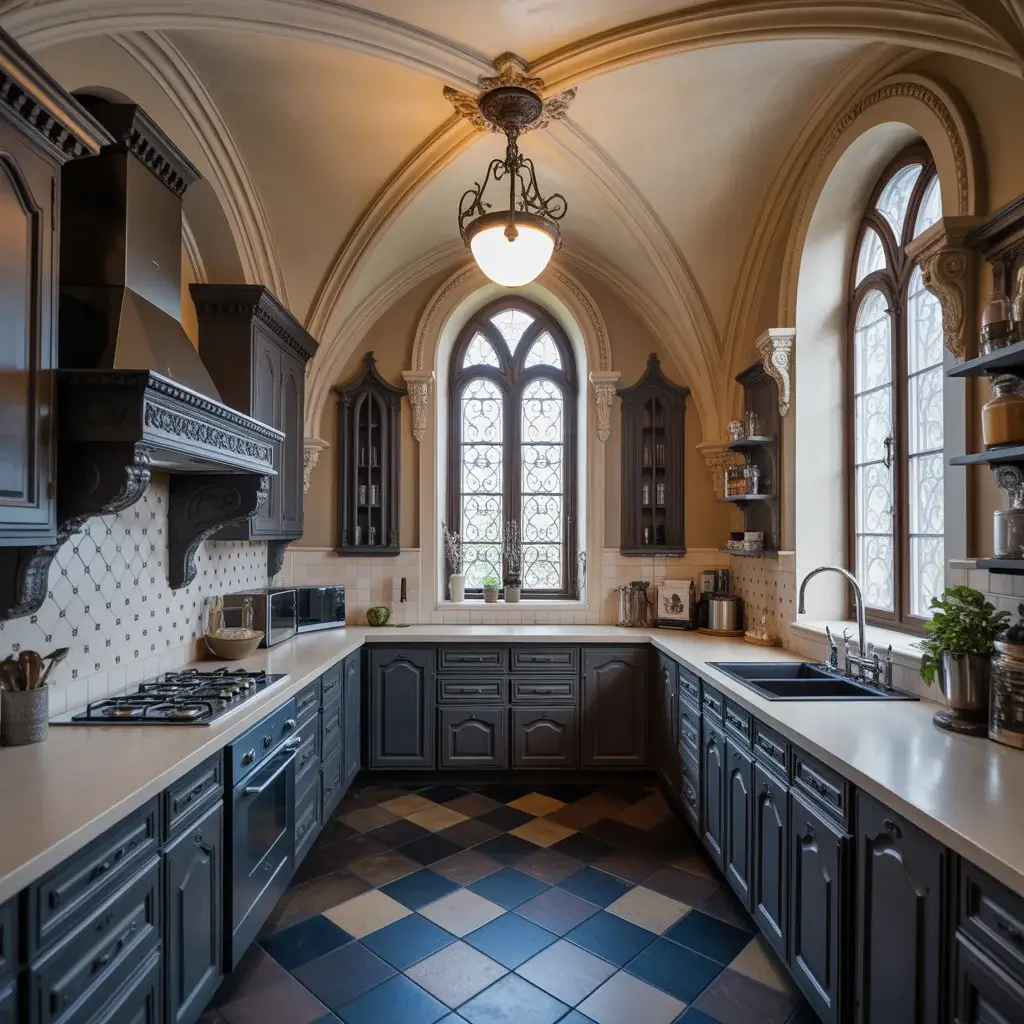
Gothic kitchen design draws inspiration from medieval architecture and Victorian era aesthetics. The style emphasizes dramatic contrasts, rich textures, and ornamental details that create visual impact. Dark color schemes dominate this design approach, but they’re balanced with strategic lighting and metallic accents. Gothic kitchens incorporate architectural features like arched doorways, exposed beams, and decorative moldings. Understanding these foundational elements helps you create a cohesive look throughout your space.
Dark Color Schemes That Define Gothic Style
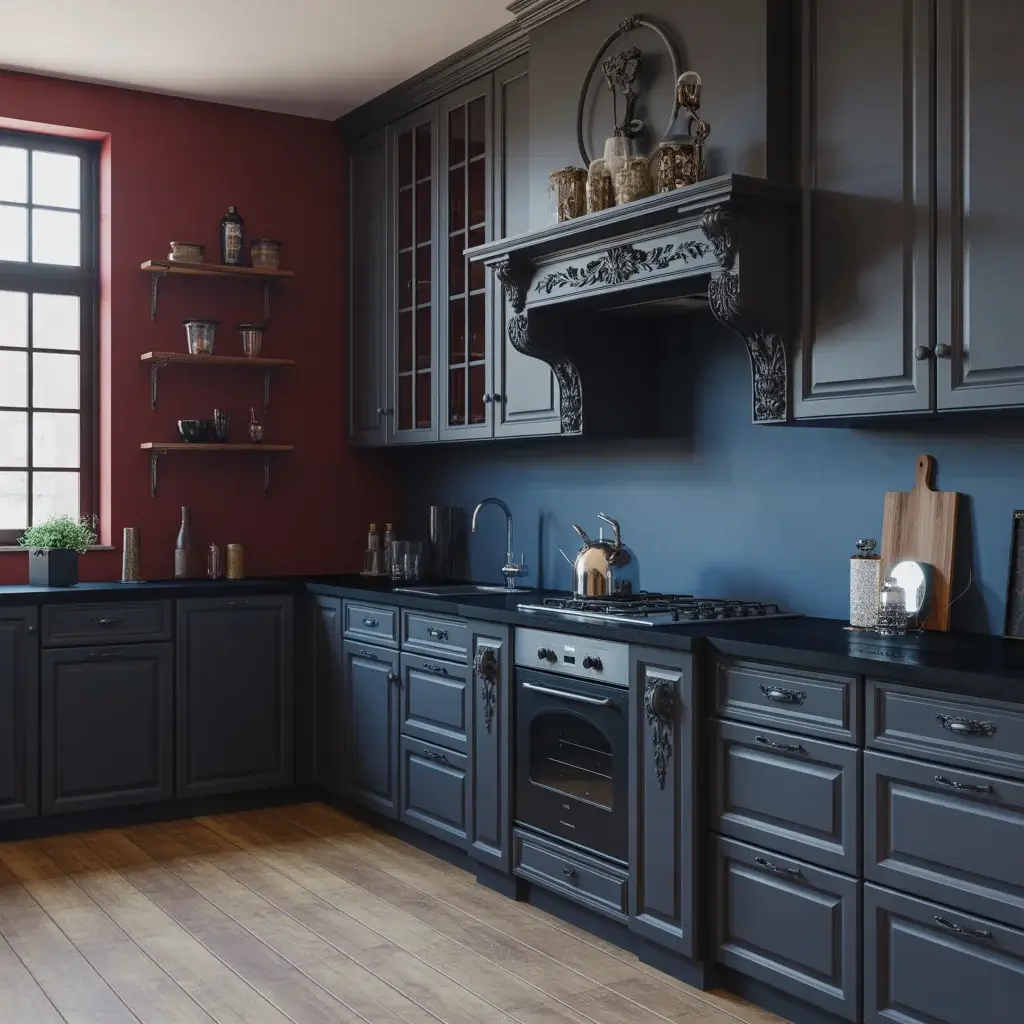
Black is the signature color in gothic kitchen design, often used for cabinetry and walls. Deep charcoal, midnight blue, and rich burgundy serve as excellent alternatives to pure black. These dark hues create the moody atmosphere essential to gothic aesthetics. Pairing dark colors with lighter countertops or backsplashes prevents the space from feeling too heavy. Matte finishes work better than glossy ones for achieving an authentic gothic look.
Consider using black stained wood for cabinets rather than painted surfaces for added depth. Dark grout lines between tiles enhance the dramatic effect of your backsplash. Ceiling treatments in deep colors can make the space feel more intimate and cozy. Balance is crucial when working with dark palettes to maintain functionality in your kitchen.
Read More Kitchen Ideas: Spring Kitchen Island Ideas to Refresh Your Home
Gothic Kitchen Cabinets and Storage Solutions
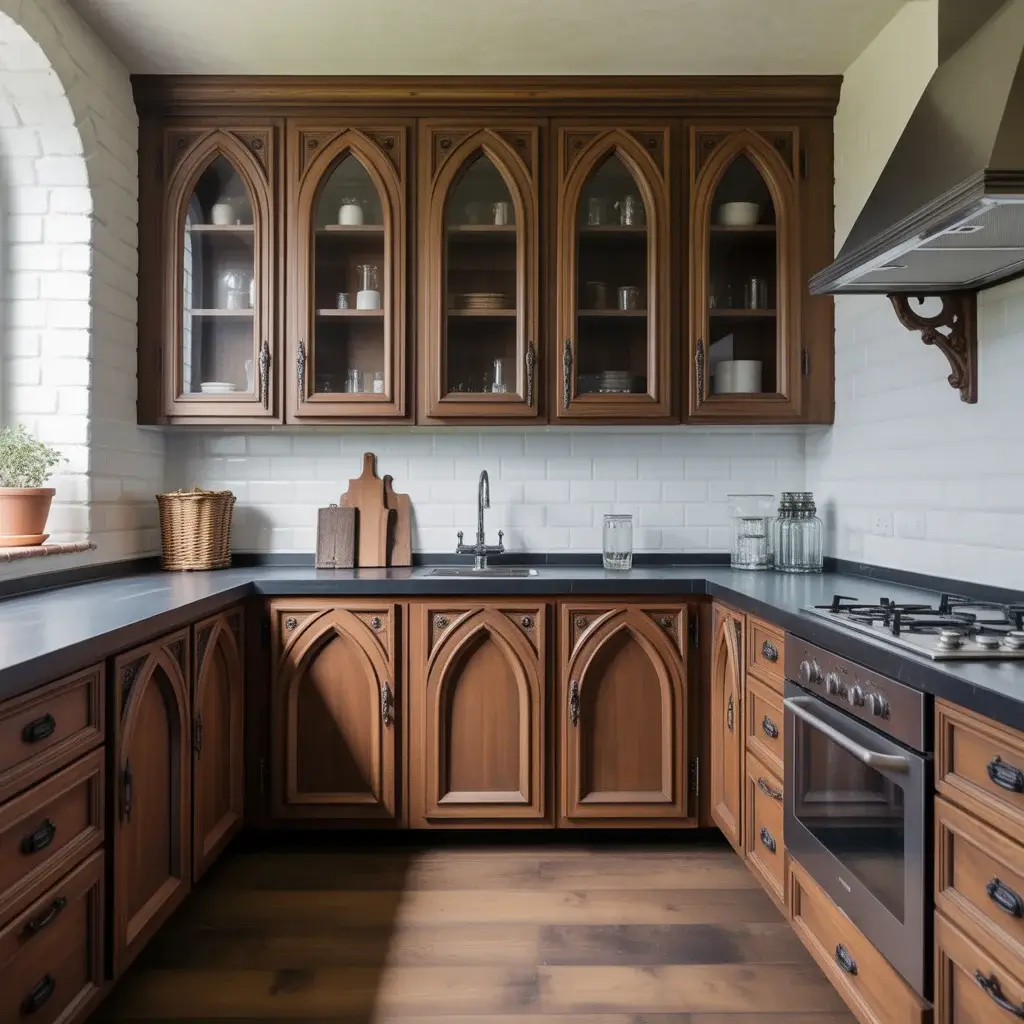
Cathedral style cabinet doors with pointed arch details are quintessentially gothic. Raised panel cabinets in dark wood or black paint create substantial visual weight. Ornate hardware featuring wrought iron, antique brass, or blackened steel completes the look. Glass front cabinets with decorative mullions allow you to display gothic inspired dishware.
Open shelving made from reclaimed wood adds rustic medieval charm to your kitchen. Consider installing cabinets with carved details or gothic tracery patterns. Tall cabinets that reach the ceiling emphasize vertical lines characteristic of gothic architecture. Storage solutions should be both beautiful and functional in a gothic kitchen design.
Dramatic Lighting Fixtures for Gothic Kitchens
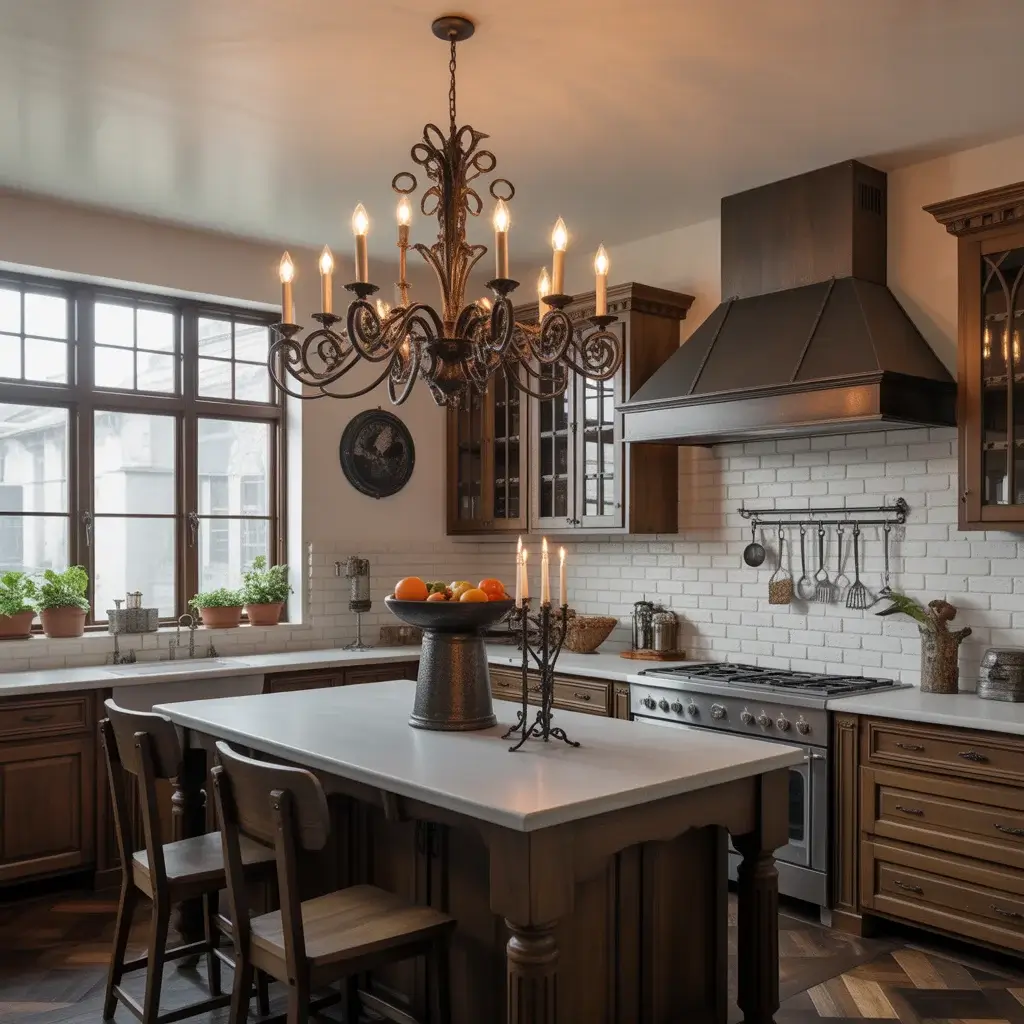
Wrought iron chandeliers serve as stunning focal points in gothic kitchens. Black metal pendant lights with Edison bulbs create an industrial gothic vibe. Wall sconces resembling medieval torches add authentic period character. Candelabra style fixtures bring elegant drama to dining areas within the kitchen.
Under cabinet lighting in warm tones prevents the space from feeling too dark. Statement lighting should feature intricate metalwork and dramatic silhouettes. Consider fixtures with crystal accents for a romantic gothic aesthetic. Dimmer switches allow you to adjust the mood and functionality of your lighting.
Countertops and Backsplash Ideas
Dark granite or soapstone countertops complement gothic cabinetry beautifully. White or light gray marble creates dramatic contrast against dark cabinets. Black quartz offers a practical, low maintenance option for busy kitchens. Butcher block countertops in dark walnut add warmth to the space.
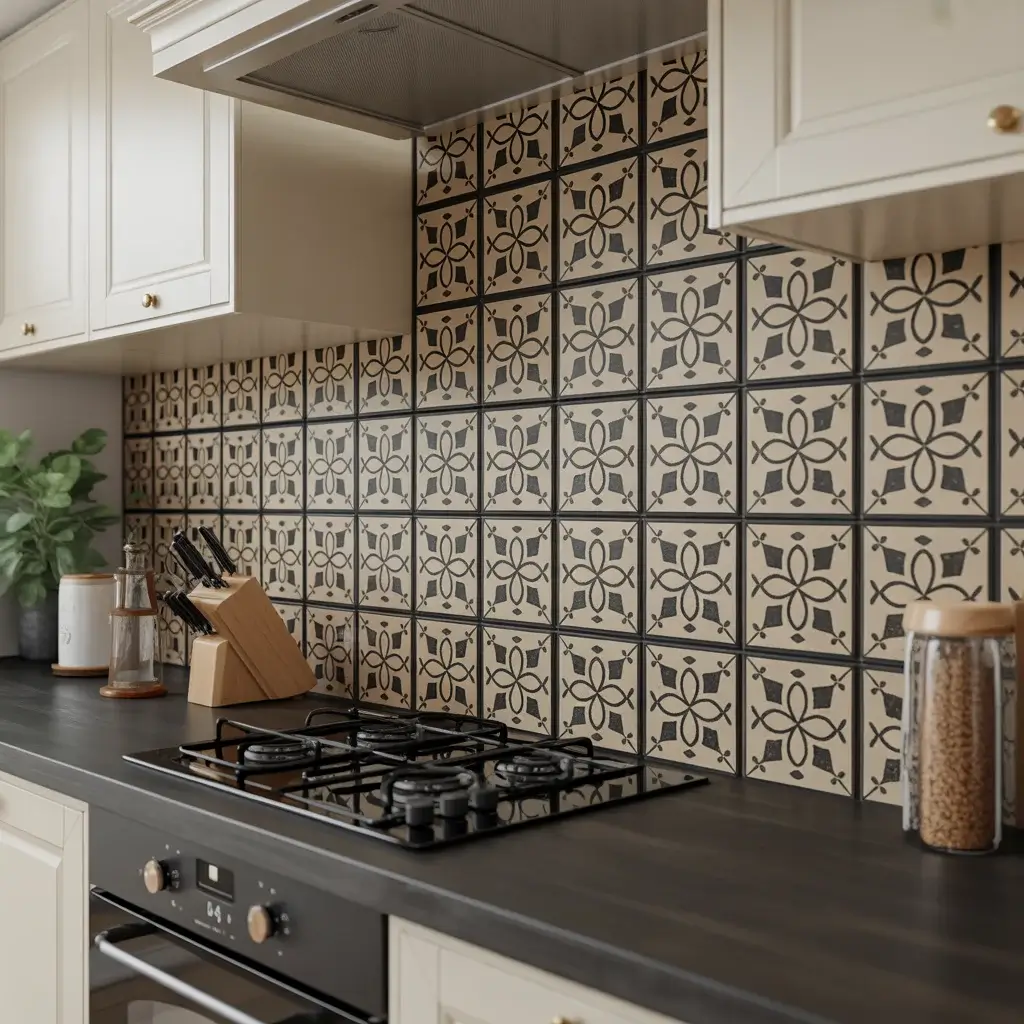
Subway tiles in black or deep charcoal make excellent backsplash choices. Ornate patterned tiles with Victorian or medieval motifs enhance the gothic theme. Brick backsplashes painted black create an industrial gothic atmosphere. Metallic tile accents in copper or bronze add luxurious touches.
Flooring Options for Gothic Kitchen Spaces
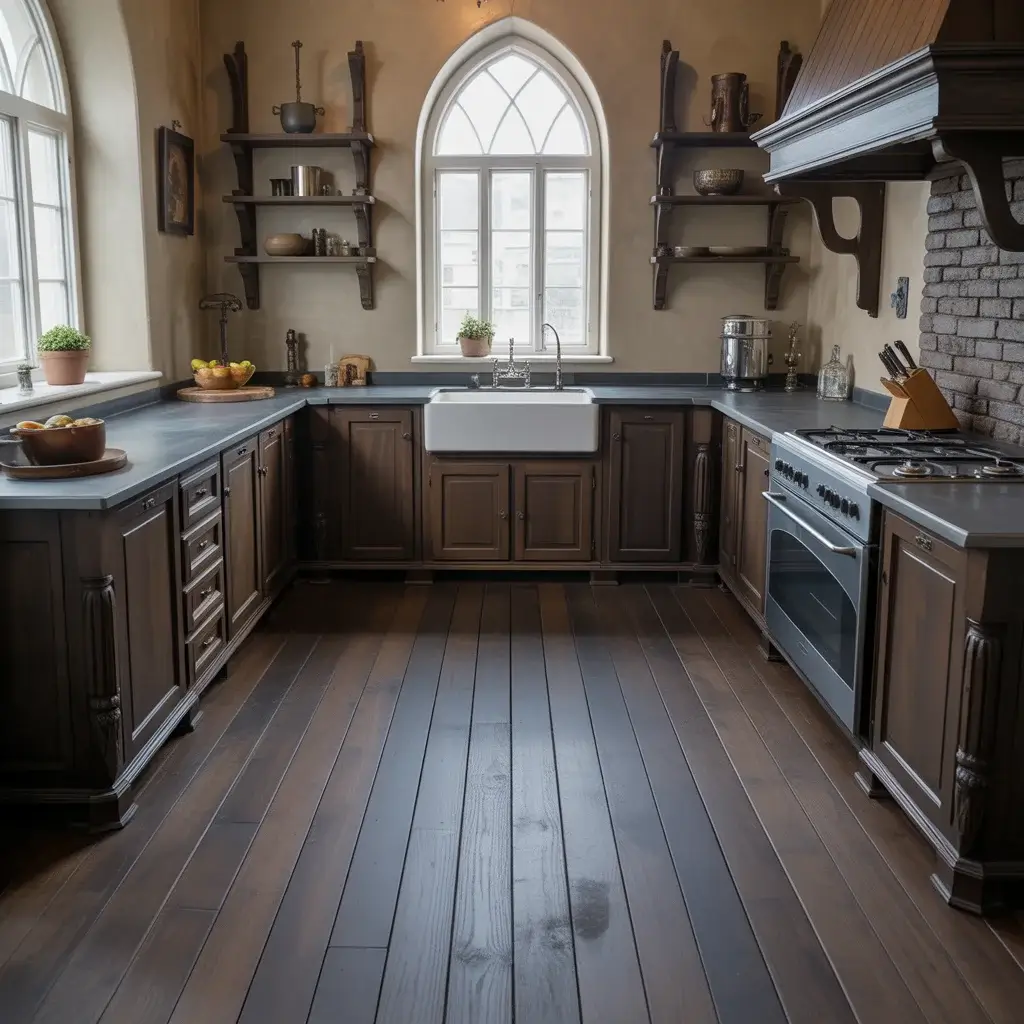
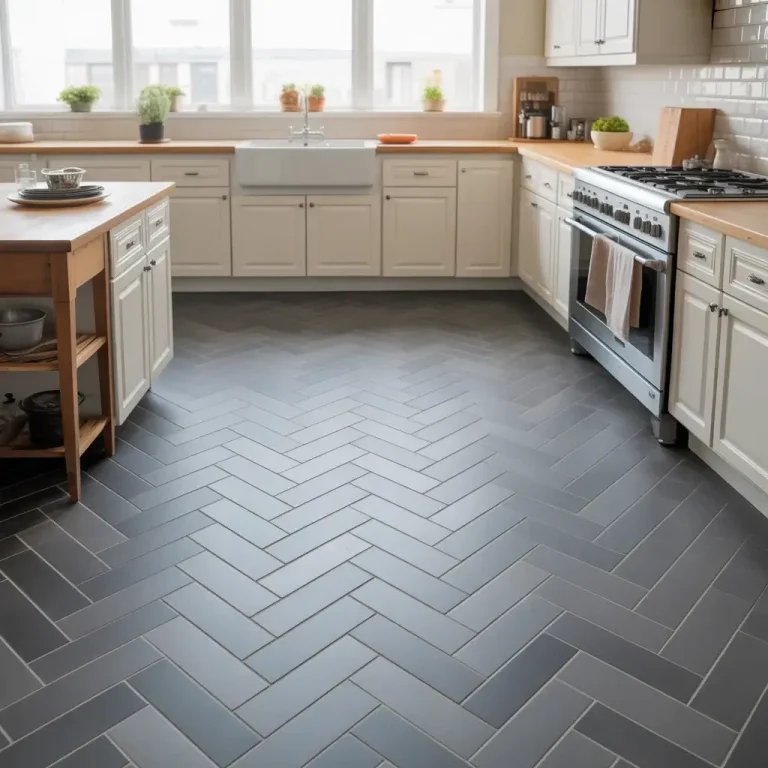
Wide plank hardwood floors in dark stains establish a gothic foundation. Black and white checkered tile creates classic Victorian gothic style. Slate or stone flooring adds medieval castle ambiance. Distressed wood floors contribute rustic gothic character.
Matte finish floors work better than high gloss for authentic gothic aesthetics. Consider hexagonal tiles in black or charcoal for a unique look. Area rugs with damask or baroque patterns soften hard flooring surfaces. Your flooring choice should be durable enough for high traffic kitchen use.
Gothic Kitchen Islands and Dining Areas
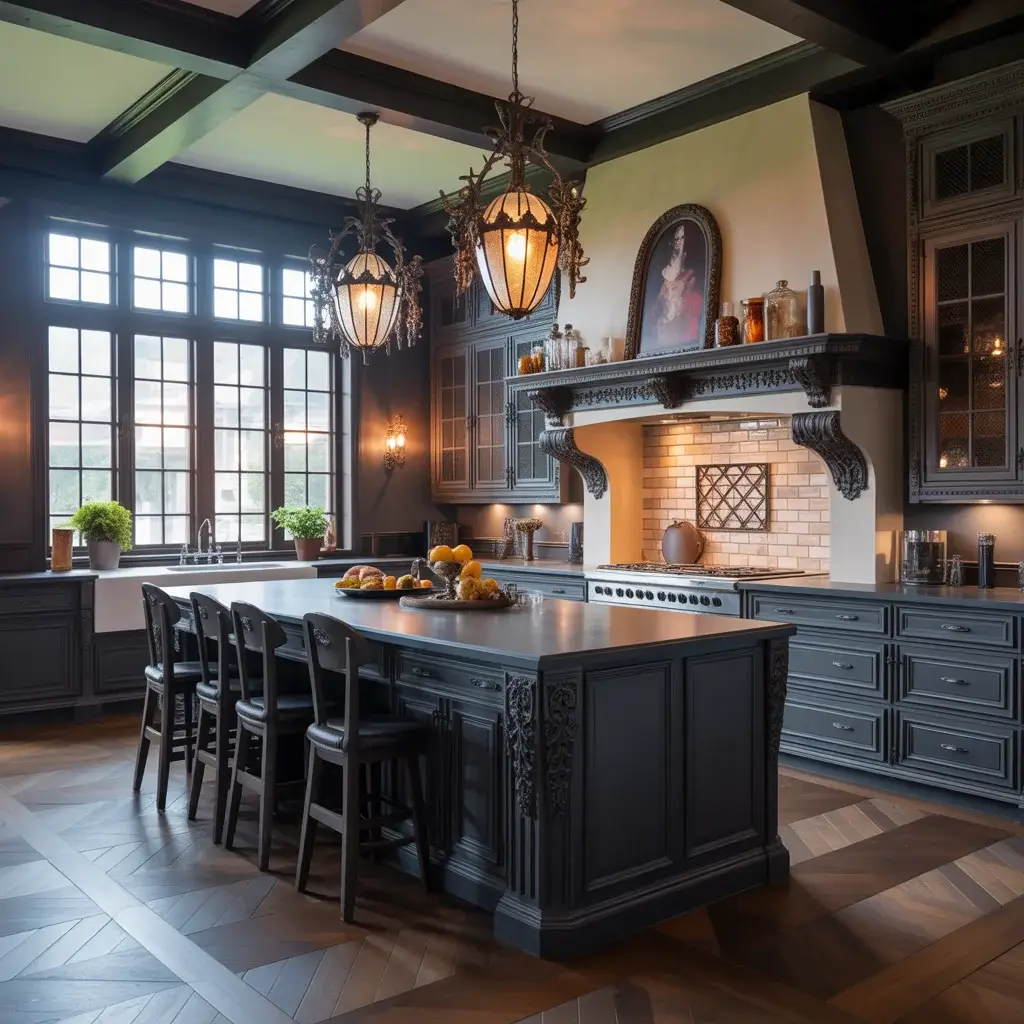
A substantial kitchen island in black or dark wood serves as a dramatic centerpiece. Ornate corbels and decorative brackets add architectural interest to island supports. Waterfall edge countertops in contrasting materials create striking visual appeal. Bar stools with wrought iron frames and dark upholstery complete the look.
Built in wine racks or glass storage showcase your collection with gothic flair. Consider adding a prep sink with an ornate bridge faucet to your island. Pendant lights hung at varying heights above the island add dimension. Your island should be both a functional workspace and a design statement.
Decorative Elements and Accessories
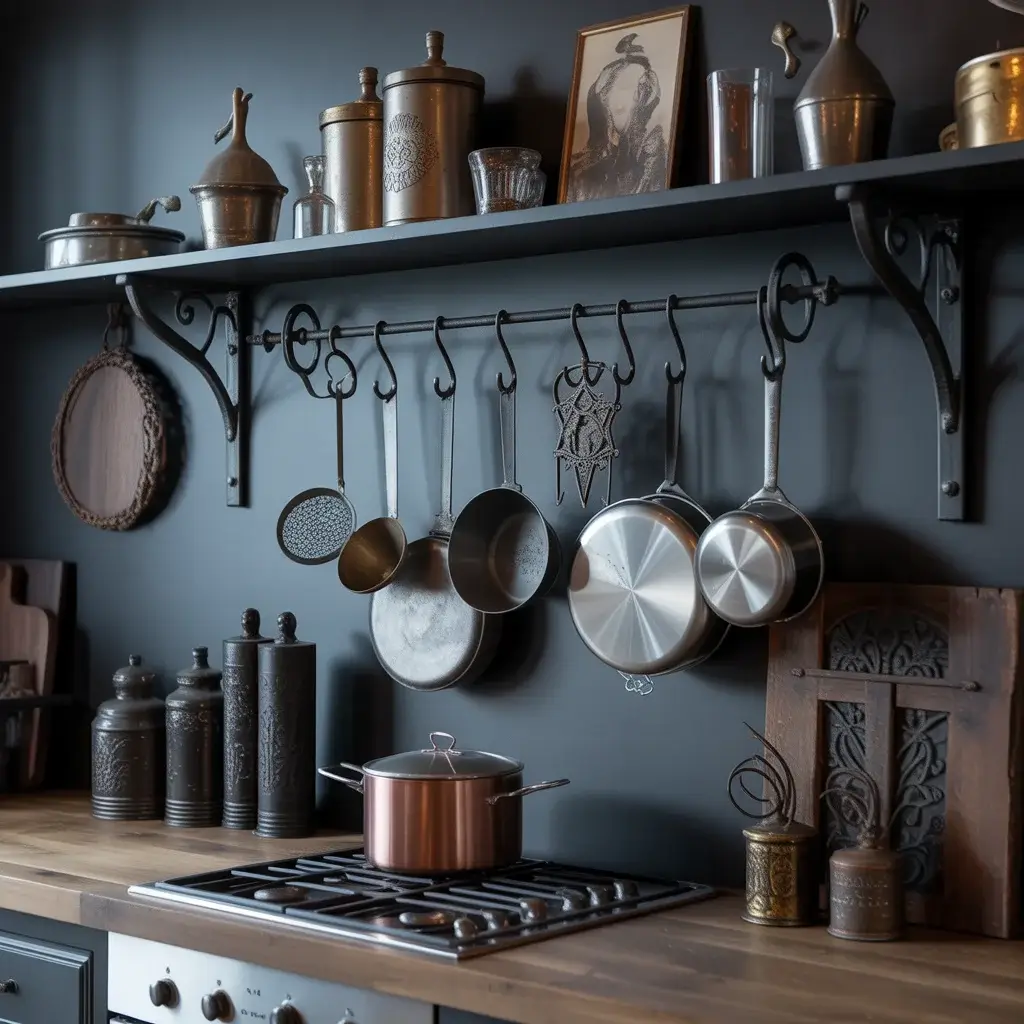
Wrought iron pot racks display cookware while enhancing the gothic aesthetic. Vintage inspired canisters and containers in dark metals organize essentials stylishly. Gothic arched mirrors or artwork create focal points on available wall space. Candelabras and candle holders add romantic ambiance to countertops.
Decorative plates with dark florals or Victorian patterns work well in open shelving. Skulls, ravens, or botanical specimens in glass cloches make conversation pieces. Vintage scales, mortars, and pestles contribute apothecary inspired touches. Keep accessories curated and intentional to avoid clutter.
Window Treatments for Gothic Kitchens
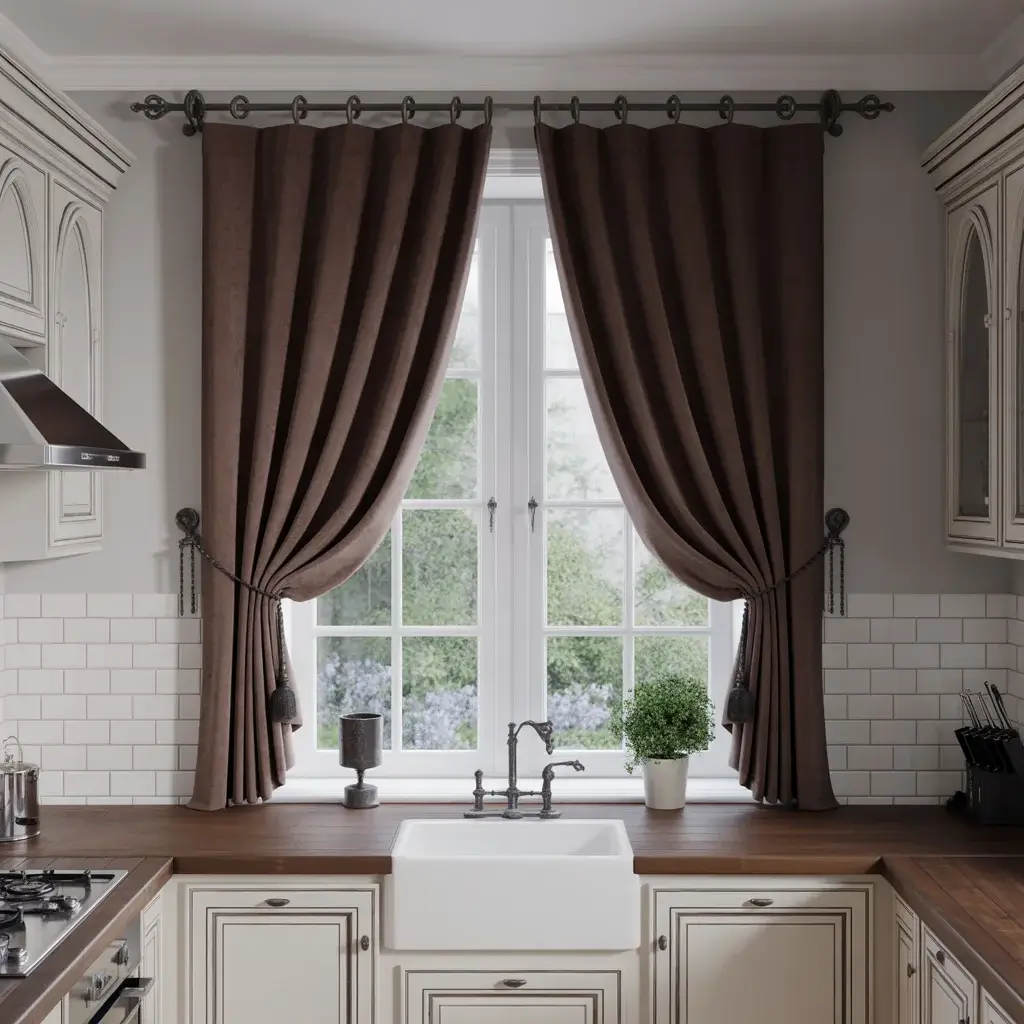
Heavy velvet curtains in burgundy, black, or deep purple frame windows dramatically. Wrought iron curtain rods with ornate finials complete the gothic look. Lace curtains layered under heavier drapes add Victorian romantic touches. Roman shades in dark fabrics provide a more streamlined modern gothic option.
Stained glass window inserts introduce color and artistic detail to your kitchen. Black plantation shutters offer privacy while maintaining the dark aesthetic. Window treatments should allow natural light while contributing to the overall design. Consider how your window coverings look from both inside and outside.
Modern Gothic Kitchen Appliances
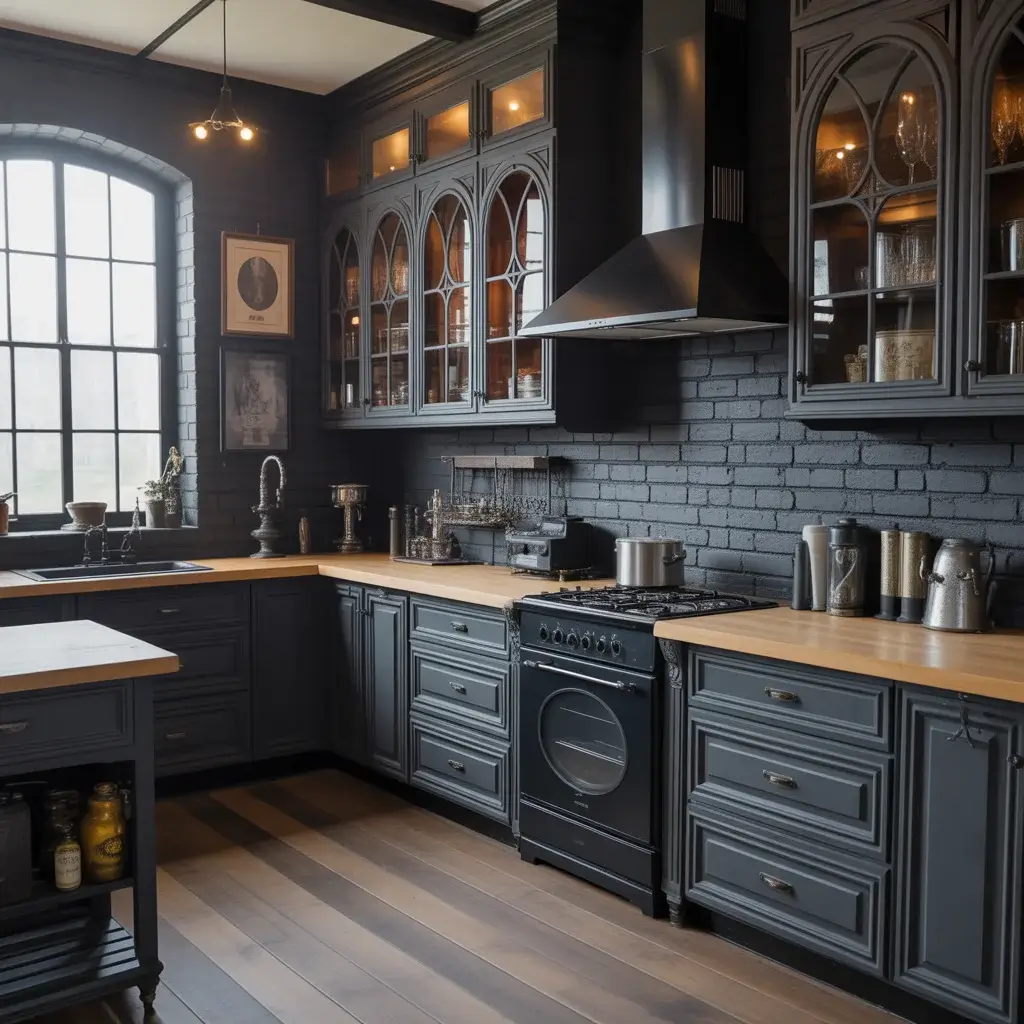
Stainless steel appliances work surprisingly well in gothic kitchens when balanced properly. Black stainless steel or matte black appliances blend seamlessly with dark cabinetry. Vintage style ranges with ornate details become statement pieces. Panel ready appliances hidden behind gothic cabinet fronts maintain design continuity.
Consider a farmhouse sink in black fireclay or dark soapstone. Ornate faucets in oil rubbed bronze or matte black complete the sink area. Modern appliances with retro styling bridge the gap between function and aesthetics. Your appliances should enhance rather than detract from your gothic design.
Creating Balance in Gothic Kitchen Design
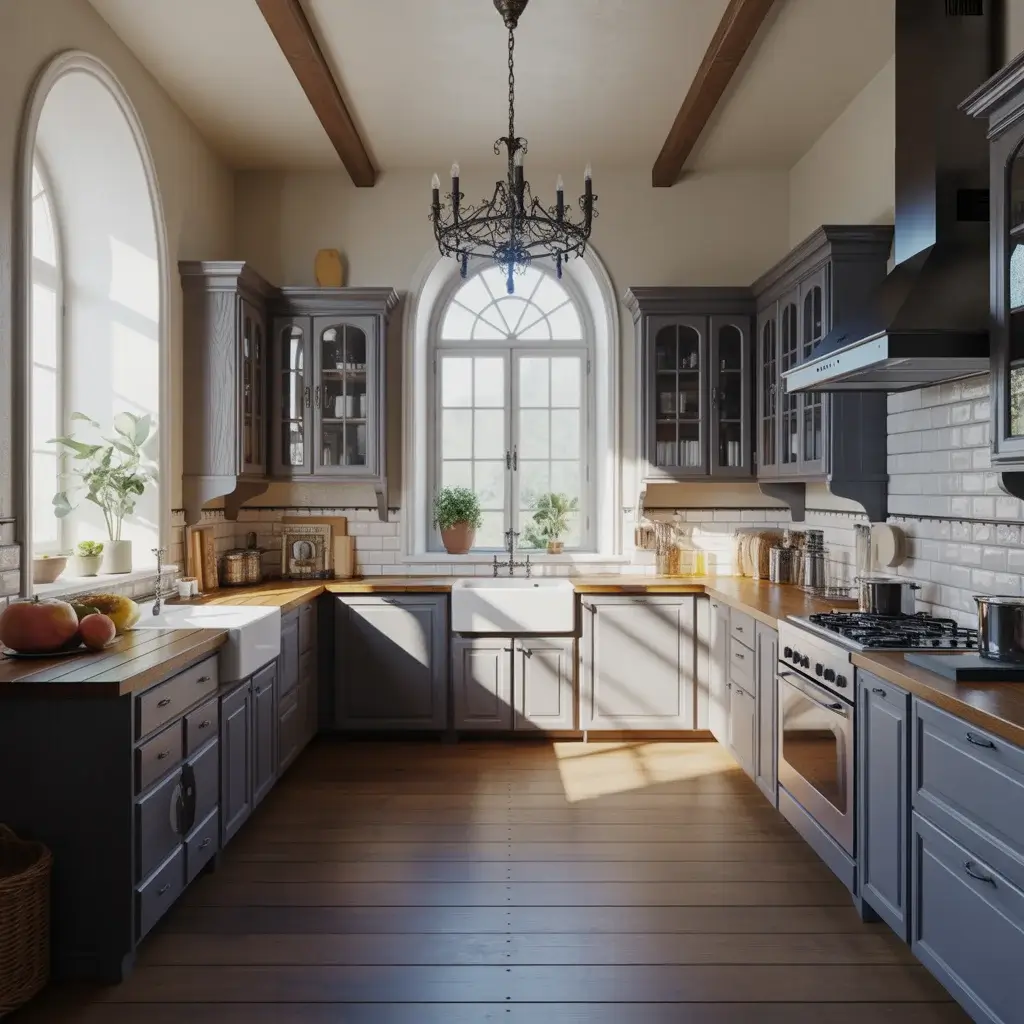
While dark elements dominate, strategic use of lighter tones prevents overwhelming heaviness. Natural light from windows or skylights is essential in gothic kitchens. Metallic accents in silver, brass, or copper add reflective surfaces that brighten the space. White or cream colored ceilings help maintain adequate light reflection.
Mix textures like smooth cabinets with rough stone or distressed wood for visual interest. Leave some negative space on walls and counters to let design elements breathe. Incorporate living plants in dark pots to add life and freshness. Balance makes your gothic kitchen inviting rather than oppressive.
Conclusion
Gothic kitchen design offers a bold alternative to conventional styles, creating spaces that are both dramatic and deeply personal. By incorporating dark color palettes, ornate details, and medieval inspired elements, you can transform your kitchen into a unique statement room. The key to successful gothic kitchen design lies in balancing dramatic aesthetics with practical functionality and adequate lighting. Whether you choose to embrace full gothic grandeur or incorporate subtle gothic touches, this style allows for creative expression while maintaining a functional cooking space.
Ready to transform your kitchen into a gothic masterpiece? Start by identifying which elements resonate most with your personal style, then gradually incorporate them into your space. Explore more unique home design ideas on our website to find inspiration for every room in your home.
Frequently Asked Questions
What colors work best in a gothic kitchen?
Black, deep charcoal, midnight blue, burgundy, and dark purple are ideal primary colors for gothic kitchens. These should be balanced with lighter countertops, metallic accents, or white ceilings to prevent the space from feeling too dark. Incorporating natural wood tones in medium to dark stains adds warmth while maintaining the gothic aesthetic.
Are gothic kitchens practical for everyday use?
Absolutely. Gothic kitchens combine dramatic aesthetics with full functionality when properly designed. Modern appliances, adequate lighting, and practical storage solutions ensure your kitchen works efficiently for daily cooking and meal preparation. The key is balancing style with functionality during the planning phase.
How much does it cost to create a gothic kitchen?
Gothic kitchen costs vary widely depending on the scope of renovation and materials chosen. A budget friendly update using paint, new hardware, and accessories might cost between two thousand to five thousand dollars. A complete renovation with custom cabinetry and high end finishes could range from twenty thousand to sixty thousand dollars or more.
Can I incorporate gothic style in a small kitchen?
Yes, gothic design adapts well to small spaces when approached thoughtfully. Focus on key elements like dark cabinetry, ornate lighting, and select decorative pieces rather than overwhelming the space. Using reflective surfaces, adequate lighting, and avoiding clutter helps small gothic kitchens feel spacious and functional.
What lighting is essential for a gothic kitchen?
Layered lighting is crucial in gothic kitchens to balance dark surfaces. Combine statement fixtures like wrought iron chandeliers with practical under cabinet lighting and recessed ceiling lights. Include dimmer switches to adjust ambiance and ensure adequate task lighting for food preparation areas.