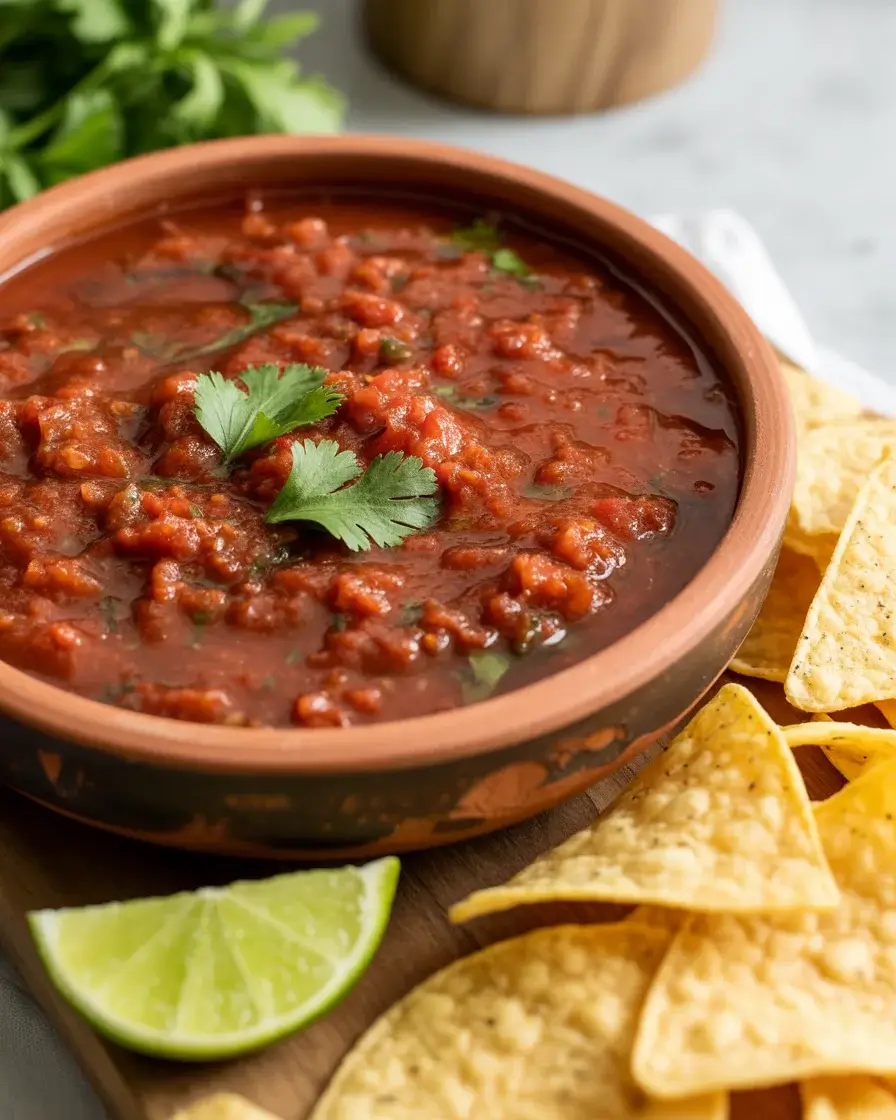
Bold Smoky Fire Roasted Salsa
The first time I tried charring tomatoes directly over a gas flame, I burned an entire batch black and nearly gave up. After about 15 test batches, I finally cracked the timing and heat control that gives this salsa its signature deep, smoky flavor without bitterness.
This recipe takes about 25 minutes start to finish and works equally well on a gas burner, broiler, or grill. The fire roasting transforms ordinary roma tomatoes into something rich, complex, and completely addictive.
Step-by-Step Instructions
Step 1: Prep Your Vegetables for Roasting
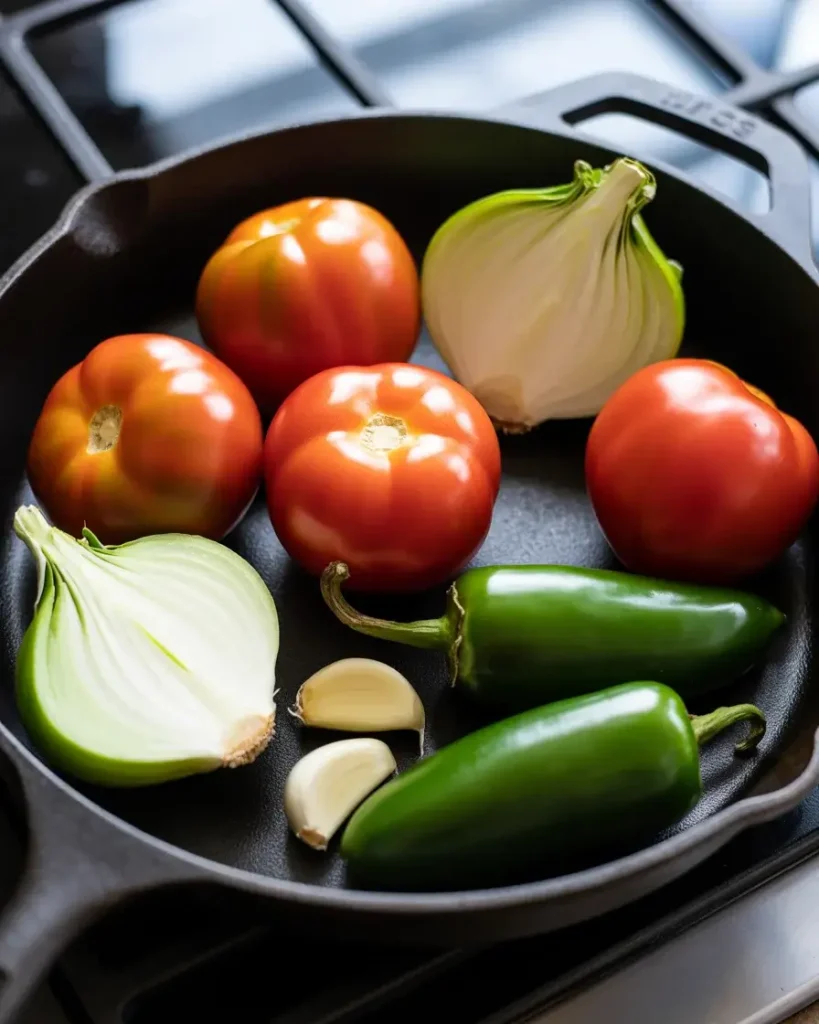
Place 6 roma tomatoes, 2 unpeeled garlic cloves, 1 white onion (halved), and 2 jalapeños on a dry cast iron skillet or directly on a gas grate. You want everything bone dry before it hits the heat – moisture is the enemy of good char.
I tested this with oiled vegetables once and got steaming instead of charring. Dry surfaces are what create that deep, blistered crust you’re looking for.
Step 2: Char the Tomatoes and Peppers
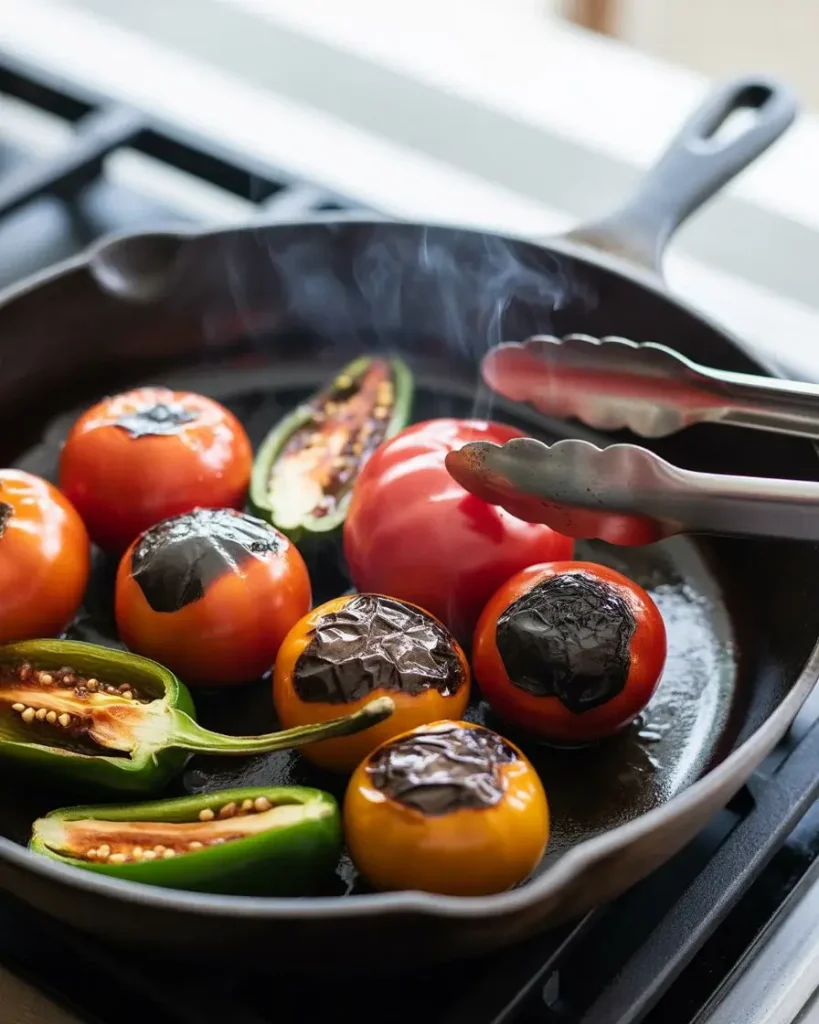
Roast over high heat for 8-10 minutes, turning every 2-3 minutes with tongs. You’re looking for blackened patches covering at least 40-50% of each tomato’s surface. You’ll hear a steady sizzle and smell that gorgeous smoky char building up.
Don’t rush this step. I once pulled the tomatoes too early at 5 minutes and the salsa tasted flat and watery. The deep blistering is where all the flavor lives.
Step 3: Roast the Onion and Garlic
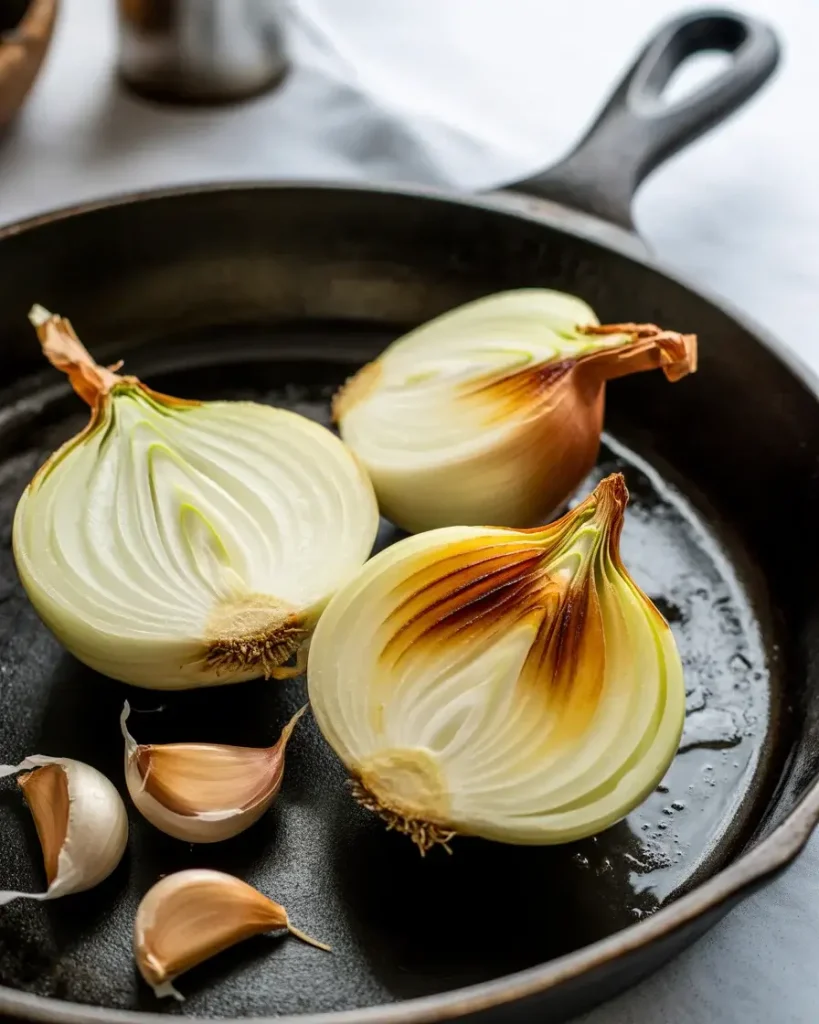
The onion halves need 6-8 minutes per side until deeply caramelized and golden brown at the edges. The garlic stays in its skin the whole time – this steams the inside while charring the outside, making it buttery and sweet.
I tested peeled garlic once and it burned to a bitter crisp in under 3 minutes. The skin is non-negotiable protection here.
Step 4: Cool and Peel
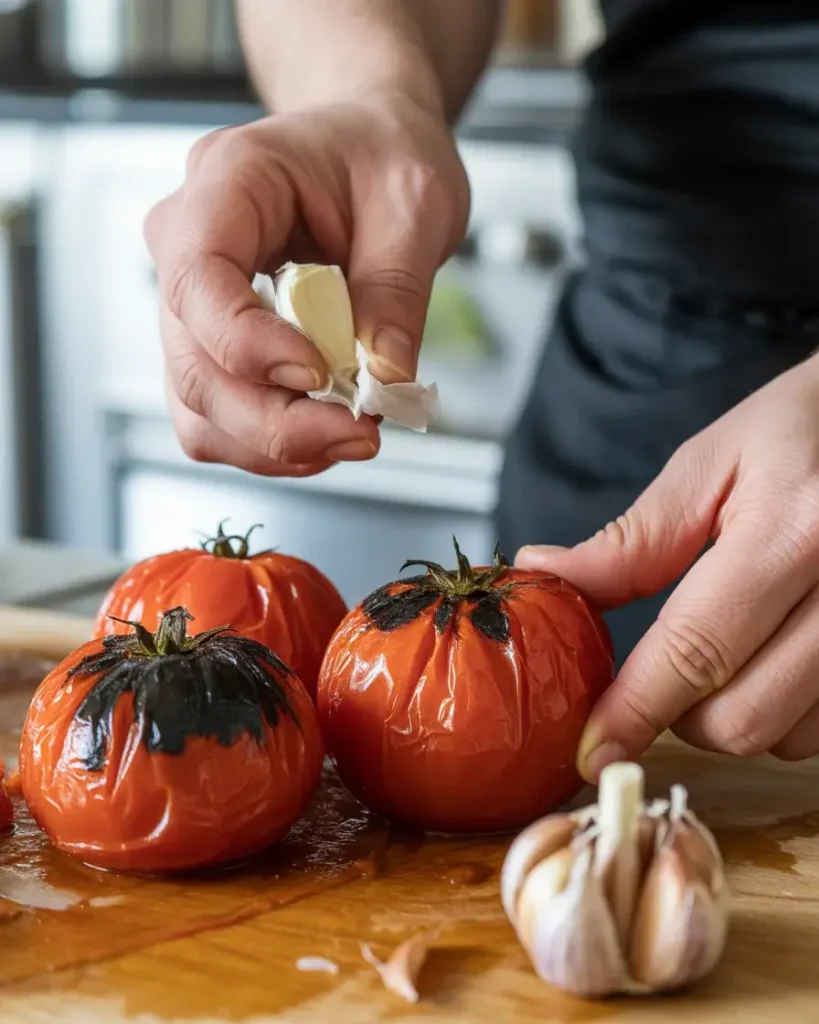
Let everything rest on a cutting board for 5-7 minutes. The tomatoes will be soft enough to peel with your fingers – the skin slides right off. Squeeze the garlic cloves directly out of their papery skin.
Keep the blackened bits on the tomatoes. I used to wipe them off thinking they’d taste bitter, but after testing both ways, keeping the char is what makes the smoky flavor truly pronounced.
Step 5: Blend to Your Preferred Texture
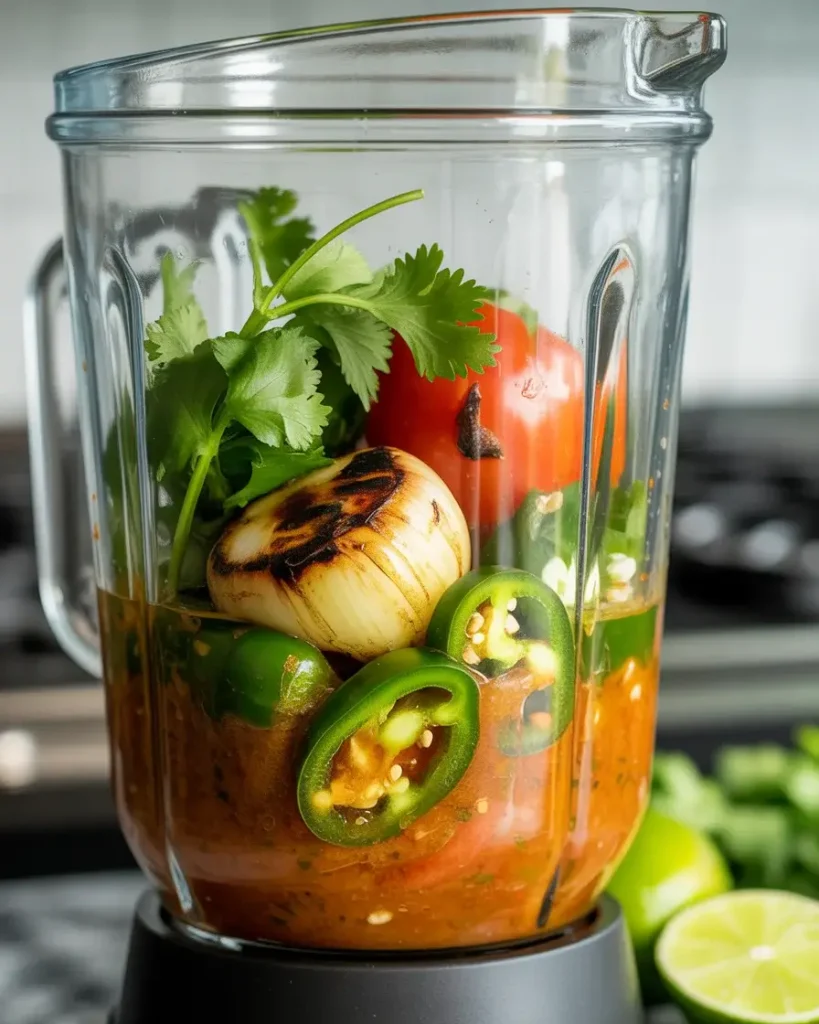
Add all roasted vegetables to a blender or food processor with 1 teaspoon salt, 1/2 teaspoon cumin, juice of 1 lime, and a small handful of fresh cilantro. Pulse 8-10 times for chunky salsa or blend 20 seconds for smoother.
The smell at this point is incredible – smoky, tangy, and garlicky all at once. I strongly prefer a blender over a food processor here because it gives better control over final texture.
Get More Holiday Recipes
Step 6: Taste, Adjust, and Rest
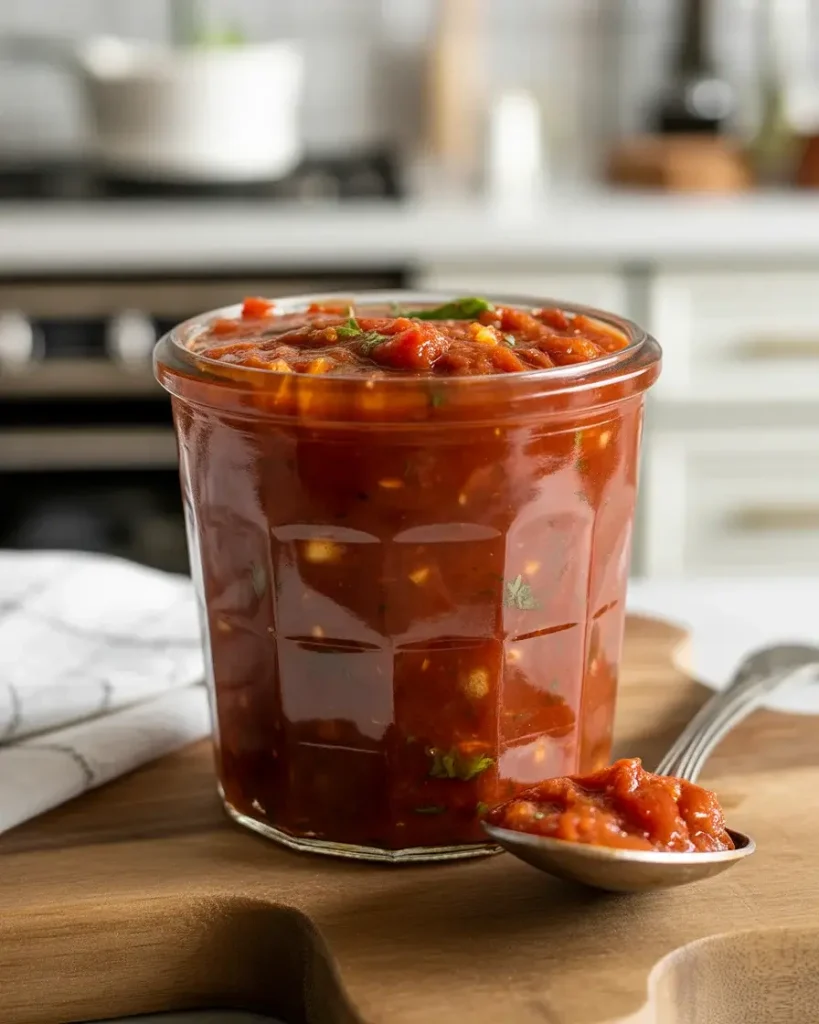
Taste the salsa and adjust salt and lime juice in small increments – I usually add another 1/4 teaspoon salt and a squeeze more lime. Then let it sit for at least 15 minutes before serving.
This resting step makes a real difference. Right after blending it tastes bright and slightly sharp. After 15-20 minutes the smokiness deepens and the flavors round out beautifully.
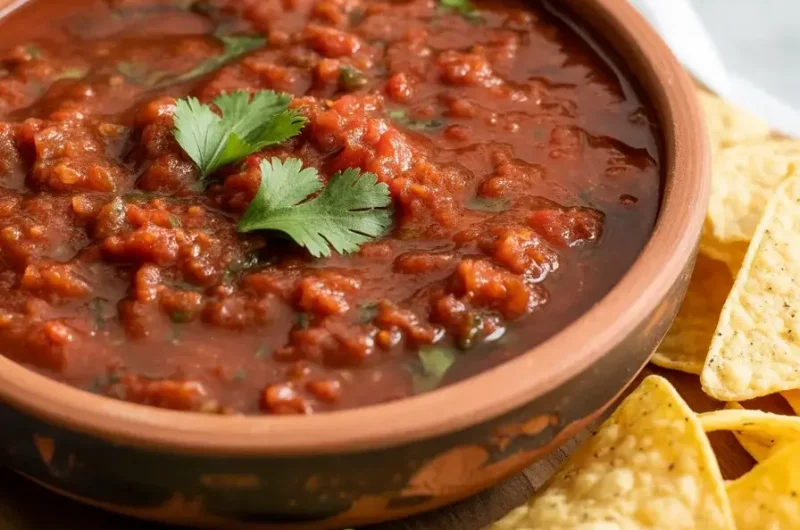
Bold Smoky Fire Roasted Salsa
Course: CondimentCuisine: Mexican, AmericanDifficulty: Easy2
5
minutes20
minutes25
minutesDeep charred tomatoes, jalapeños, and garlic blended into a bold, smoky salsa with real fire-roasted flavor in under 30 minutes.
Ingredients
6 roma tomatoes
2 jalapeños
1 medium white onion, halved
2 garlic cloves, unpeeled
1 teaspoon salt
1/2 teaspoon ground cumin
Juice of 1 lime
Small handful fresh cilantro (about 1/4 cup loosely packed)
Directions
- Place tomatoes, jalapeños, onion halves, and unpeeled garlic on a dry cast iron skillet over high heat.
- Roast tomatoes and jalapeños 8-10 minutes, turning every 2-3 minutes until 40-50% charred.
- Roast onion 6-8 minutes per side until caramelized and golden. Remove garlic when skin is darkened.
- Cool everything on a cutting board for 5-7 minutes, then peel tomatoes and squeeze garlic from skin.
- Add all roasted vegetables to blender with salt, cumin, lime juice, and cilantro.
- Pulse 8-10 times for chunky or blend 20 seconds for smooth.
- Taste, adjust salt and lime, and rest 15 minutes before serving.
Notes
- Storage: Refrigerate in a sealed glass jar for up to 5 days.
Make-ahead: Flavor improves significantly after 24 hours in the fridge.
Heat control: Remove jalapeño seeds for mild, keep seeds for spicy.
Freezing: Freeze in portioned containers for up to 3 months.
Nutrition Table (per serving)
| Nutrient | Amount |
|---|---|
| Calories | 22 |
| Total Fat | 0.3g |
| Sugars | 3g |
| Protein | 1g |
Trusted Resource Links: For safe food handling when preparing fresh produce, visit FDA Safe Food Handling. For nutrition information on tomatoes and fresh vegetables, see the Mayo Clinic Nutrition Guide.
What’s the Best Way to Get Deep Smoky Flavor Without a Gas Burner?
The broiler is your best alternative and works nearly as well. Position your rack 4 inches from the broiler element and cook vegetables for 10-12 minutes, flipping once at the halfway point.
I tested broiler versus gas flame across 6 batches. The gas flame gives slightly more intense char on contact points, but the broiler produces more even all-around charring.
If you have a grill, that’s actually my second favorite method. Place vegetables directly on the grates over high heat for a true wood-fire smokiness. A kitchen torch works for garlic and small peppers in a pinch.
No matter the method, the goal is the same: at least 40% of each surface should be visibly blackened before you pull the vegetables off the heat.
How Do You Control the Heat Level in Fire Roasted Salsa?
Jalapeño seeds and membranes carry most of the heat. Removing them before roasting gives a mild to medium result, while leaving them in creates a genuinely spicy salsa.
I once made a batch for a party leaving all seeds in and it cleared the table. Now I remove seeds from half the jalapeños for a balanced medium heat that most people enjoy.
For serious heat, swap one jalapeño for a serrano pepper. For mild salsa, use one jalapeño with seeds fully removed and consider adding half a poblano for body and mild pepper flavor without the burn.
Always taste your raw jalapeño before using it – heat levels vary wildly from pepper to pepper, and a quick taste tells you exactly what you’re working with.
Can You Make Fire Roasted Salsa Ahead of Time?
Yes, and it actually tastes better the next day. The smoky and acidic flavors continue developing in the fridge for up to 24 hours, making day-two salsa noticeably more complex.
Store it in a sealed glass jar or airtight container for up to 5 days in the refrigerator. I tested plastic containers versus glass and glass genuinely preserves the fresh flavor better over multiple days.
For longer storage, this salsa freezes surprisingly well for up to 3 months. Freeze in small portioned containers so you can thaw only what you need. Texture softens slightly after freezing but the flavor stays bold.
Stir well before serving after refrigerating, as some liquid separation is completely normal and not a sign anything has gone wrong.
What’s the Difference Between Fresh Salsa and Fire Roasted Salsa?
Fresh salsa (pico de gallo) uses raw diced vegetables for a bright, crunchy, very acidic result. Fire roasted salsa uses charred vegetables for a deeper, sweeter, smokier flavor with a softer blended texture.
Neither is better – they serve different purposes. I use fresh salsa on tacos where I want brightness and crunch, and fire roasted salsa as a dip or sauce where I want bold depth.
Fire roasted also has a longer fridge life because the roasting reduces moisture content. Fresh pico de gallo gets watery and loses texture within about 24 hours.
The roasting process also mellows garlic and onion from sharp and pungent to sweet and complex – a transformation that genuinely changes what the salsa can do as an ingredient.
Frequently Asked Questions
Q: Can I use canned fire roasted tomatoes instead of fresh?
A: Yes, canned fire roasted tomatoes work well and save time. Drain about half the liquid before blending. The flavor is good but slightly less intense than fresh-charred tomatoes.
Q: Do I need a blender or can I use a molcajete?
A: A molcajete (stone mortar) makes excellent rustic salsa with incredible texture. Grind ingredients by hand in small batches. It takes about 10 minutes but the result is authentically chunky and deeply flavored.
Q: Why does my salsa taste watery after blending?
A: Over-blending breaks down the tomatoes and releases excess liquid. Pulse rather than blend continuously, and drain any pooled liquid from roasted tomatoes on the cutting board before adding them to the blender.