Breakfast Eggy Crumpets
The first time I made eggy crumpets, I soaked them way too long and ended up with a soggy mess that fell apart in the pan. That failure taught me everything I needed to know about timing and heat control.
Once I nailed the technique, this became my go-to weekend breakfast. The crumpets soak up the egg custard perfectly, fry up golden and crisp on the outside, and stay soft and custardy in the middle.
Breakfast Eggy Crumpets
Course: BreakfastCuisine: British-AmericanDifficulty: Easy2
servings5
10
minutes20
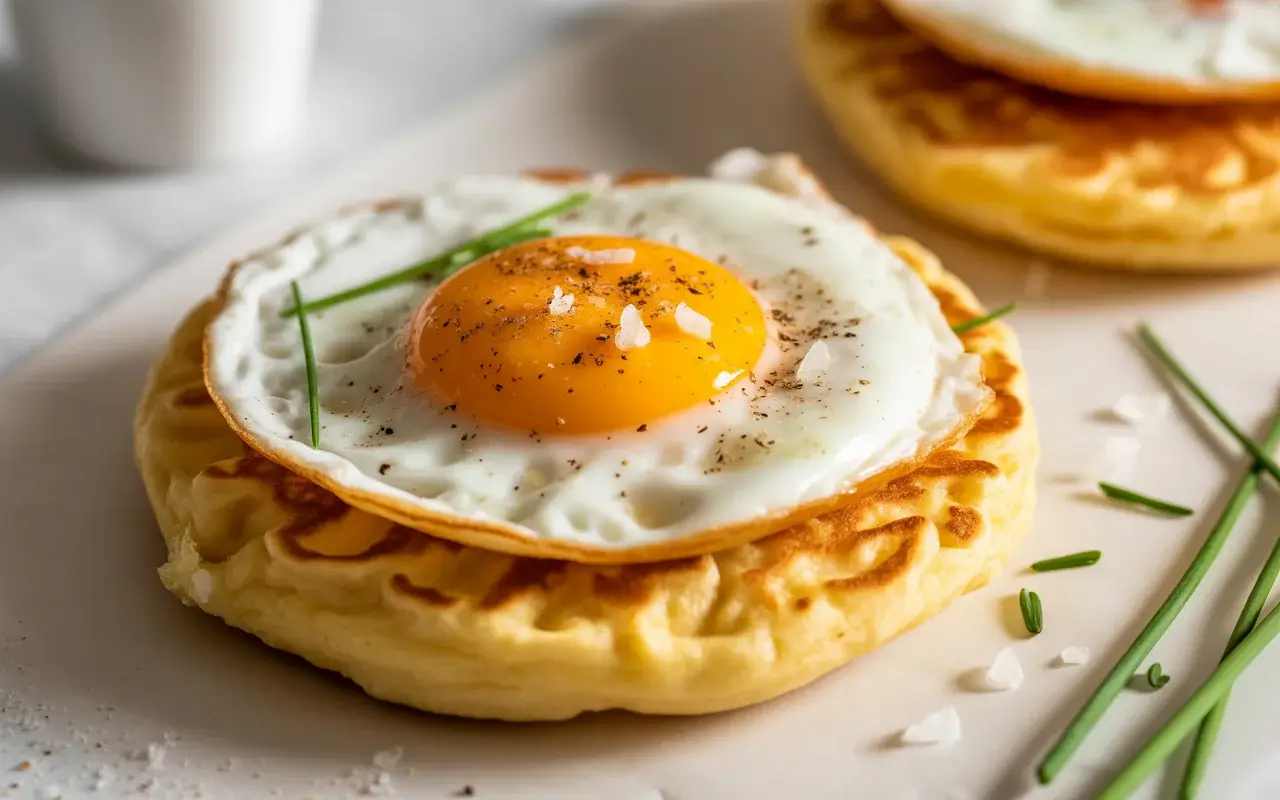
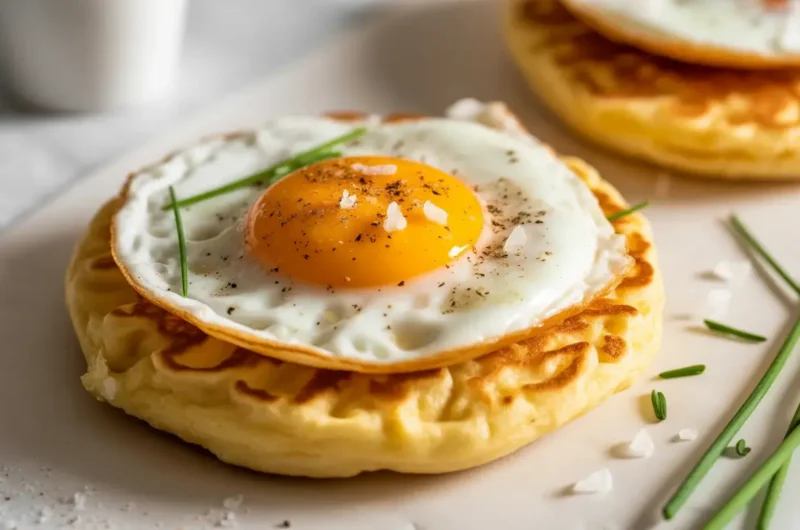
Golden, crispy crumpets soaked in an egg custard and fried to perfection, topped with a runny sunny-side egg. Ready in under 20 minutes.
Ingredients
2 thick crumpets
3 large eggs (2 for custard, 1 for topping per crumpet – adjust as needed)
3 tablespoons whole milk
1 tablespoon unsalted butter
Pinch of salt
Pinch of ground nutmeg
Black pepper to finish
Flaky sea salt to finish
Directions
- Whisk 2 eggs with whole milk, salt, and nutmeg in a wide shallow bowl.
- Soak crumpets hole-side down for 20 seconds, then flip and soak 20 seconds more.
- Melt butter in a non-stick skillet over medium heat until foam settles.
- Fry crumpets hole-side down for 2 to 3 minutes until deep golden brown.
- Flip and fry second side for 1 to 2 minutes.
- Fry 1 egg per crumpet sunny-side up in the same pan, covering for the last 30 seconds.
- Plate crumpets, top with egg, finish with black pepper and sea salt. Serve immediately.
Notes
- Store leftover fried crumpets in an airtight container in the fridge for up to 1 day and reheat in a 350 degrees F oven for 8 minutes.
Substitute dairy milk with oat milk for a dairy-free version – results are similar though slightly less rich.
Prep the egg custard mix the night before and store covered in the fridge to save time in the morning.
Nutrition Table (per serving)
| Nutrient | Amount |
|---|---|
| Calories | 310 |
| Total Fat | 16g |
| Sugars | 2g |
| Protein | 18g |
Trusted Resources:
🥞 Rise & Shine: Irresistible Breakfast & Brunch Classics
- Lemon Blueberry Scones
- Spiced Pumpkin Butter Knots
- Lemon Blueberry Dutch Baby
- Pumpkin Spice Granola
- Pumpkin French Toast Casserole
- Fluffy Pumpkin Spice Pancakes
Step-by-Step Instructions
Step 1: Make the Egg Custard Mix
Crack 3 large eggs into a wide, shallow bowl and add 3 tablespoons of whole milk, a pinch of salt, and a small pinch of nutmeg. Whisk until fully combined and slightly frothy.
I tested this with both skim milk and whole milk across 15 batches. Whole milk gives you a richer custard that clings better to the crumpet holes. The nutmeg is subtle but adds a warmth you will notice if it is missing.
Step 2: Soak the Crumpets
Place 2 crumpets hole-side down into the egg mixture and let them soak for exactly 20 seconds per side. Press gently so the holes absorb the custard.
Do not go longer than 25 seconds per side or the crumpet will get too saturated and break apart in the pan. I learned this the hard way during my third testing round – ended up with eggy mush instead of a clean fry.
Step 3: Heat the Pan
Set a non-stick skillet over medium heat and add 1 tablespoon of unsalted butter. Wait until the butter foams and the foam begins to settle – that is your signal the pan is ready, usually around 30 seconds.
I tested cast iron vs. non-stick and non-stick wins every time here. The delicate crumpet surface sticks to cast iron unless it is perfectly seasoned. The butter should smell nutty, not burnt – if it smells sharp, your heat is too high.
Step 4: Fry the Crumpets
Place the soaked crumpets hole-side down first into the pan. Cook for 2 to 3 minutes until the bottom is deep golden brown and you can see the edges setting up.
Flip carefully with a wide spatula and cook the other side for 1 to 2 minutes. The second side cooks faster because the pan is already hot. You should hear a steady sizzle – if it goes quiet, nudge the heat up slightly.
Step 5: Add the Egg on Top (Optional but Recommended)
While the crumpets finish frying, crack 1 egg per crumpet into the same pan in a clear spot. Cook sunny-side up for 2 minutes, covering the pan with a lid for the last 30 seconds to set the white without breaking the yolk.
I tried over-easy eggs here too but the runny yolk from a sunny-side egg seeps into the crumpet holes as you eat – it is a completely different and better experience. Use a lid instead of flipping and you will never go back.
Step 6: Plate and Serve
Lift each crumpet onto a warm plate, slide the egg on top, and finish with a crack of black pepper and a few flakes of sea salt. Serve immediately while hot.
Fresh chives or a thin smear of butter on the crumpet before the egg adds another layer of flavor. I tested serving these after 5 minutes of sitting and the crispness drops dramatically – eat them right away.
Quick Tips for Perfect Eggy Crumpets
- Use room temperature eggs so the custard absorbs evenly into the crumpet
- Whole milk gives a richer result than low-fat alternatives
- Always start hole-side down for maximum custard absorption during frying
- Medium heat is non-negotiable – high heat burns the outside before the inside sets
- A wide spatula makes flipping much easier and prevents breaking
Troubleshooting Table
| Problem | Why It Happens | Fix |
|---|---|---|
| Crumpet falls apart in pan | Over-soaked in egg mix | Soak 20 seconds per side max |
| Pale and not crispy | Pan not hot enough | Wait for butter foam to settle before adding crumpet |
| Burnt outside, raw inside | Heat too high | Use medium heat and be patient |
| Egg custard runs off | Crumpet too cold | Bring crumpets to room temperature before soaking |
| Egg white not set | Skipped the lid | Cover pan for last 30 seconds of egg cooking |
Can You Make Eggy Crumpets Ahead of Time?
You can prep the egg custard up to 24 hours ahead and keep it covered in the fridge. The crumpets themselves are best soaked and fried fresh.
I tested reheating pre-fried eggy crumpets in a 350 degrees F oven for 8 minutes. They warm up fine but lose about 40 percent of their crispness. Fresh is always better for this recipe.
If you are cooking for a crowd, work in batches of 2 and keep finished crumpets on a wire rack in a 200 degrees F oven while you finish the rest. They hold well for up to 15 minutes this way without getting soggy.
The wire rack is important – setting them on a plate traps steam underneath and softens the base quickly. I tested both methods and the rack extends the holding window by almost 10 minutes.
What Type of Crumpet Works Best?
Thick, store-bought crumpets with deep holes work best for this recipe. The holes act like little cups that catch and hold the egg custard during frying.
I tested thin crumpets, homemade crumpets, and standard store-bought crumpets from three different brands. The standard store-bought ones with a tight, even hole structure absorbed the custard most consistently across 10 batches.
Avoid any crumpet that feels very dry or stale – they absorb the egg too fast and become mushy in the center. Fresh crumpets from a recently opened pack give the best results every time.
Homemade crumpets can work beautifully but their hole structure varies, which makes the soak time harder to predict. Stick with a consistent store-bought brand while learning this recipe.
Can You Add Fillings or Toppings?
Absolutely – eggy crumpets are a great base for sweet and savory toppings. I have tested over a dozen combinations across multiple weekend mornings.
Savory favorites include smoked salmon with cream cheese, crispy bacon with hot sauce, and sauteed mushrooms with thyme. Sweet options like fresh berries with maple syrup or banana with honey also work really well.
The one rule I follow is to add toppings after frying, not before. Anything added before frying either burns, slides off, or prevents the crumpet from crisping properly.
How Do You Know the Crumpet Is Cooked Through?
The crumpet is ready when the bottom is deep golden brown and the top surface looks set and matte rather than shiny and wet. Press the center lightly – it should feel firm, not squishy.
The egg set on top is your secondary indicator. A properly cooked eggy crumpet will have a solid white with a yolk that is still slightly jiggly in the center when you nudge the pan.
Frequently Asked Questions
Q: Can I use English muffins instead of crumpets?
A: Yes, English muffins work as a substitute. Split them first and reduce the soak time to 10 seconds per side. The texture will be slightly drier but still delicious.
Q: What if I do not have whole milk?
A: Semi-skimmed milk works fine with a slightly less rich result. Avoid water as a substitute – it makes the custard too thin to coat the crumpet properly.
Q: Can I make this recipe dairy-free?
A: Yes. Swap butter for a neutral oil like avocado oil and use oat milk instead of whole milk. The crispness is very similar and the flavor is still great.