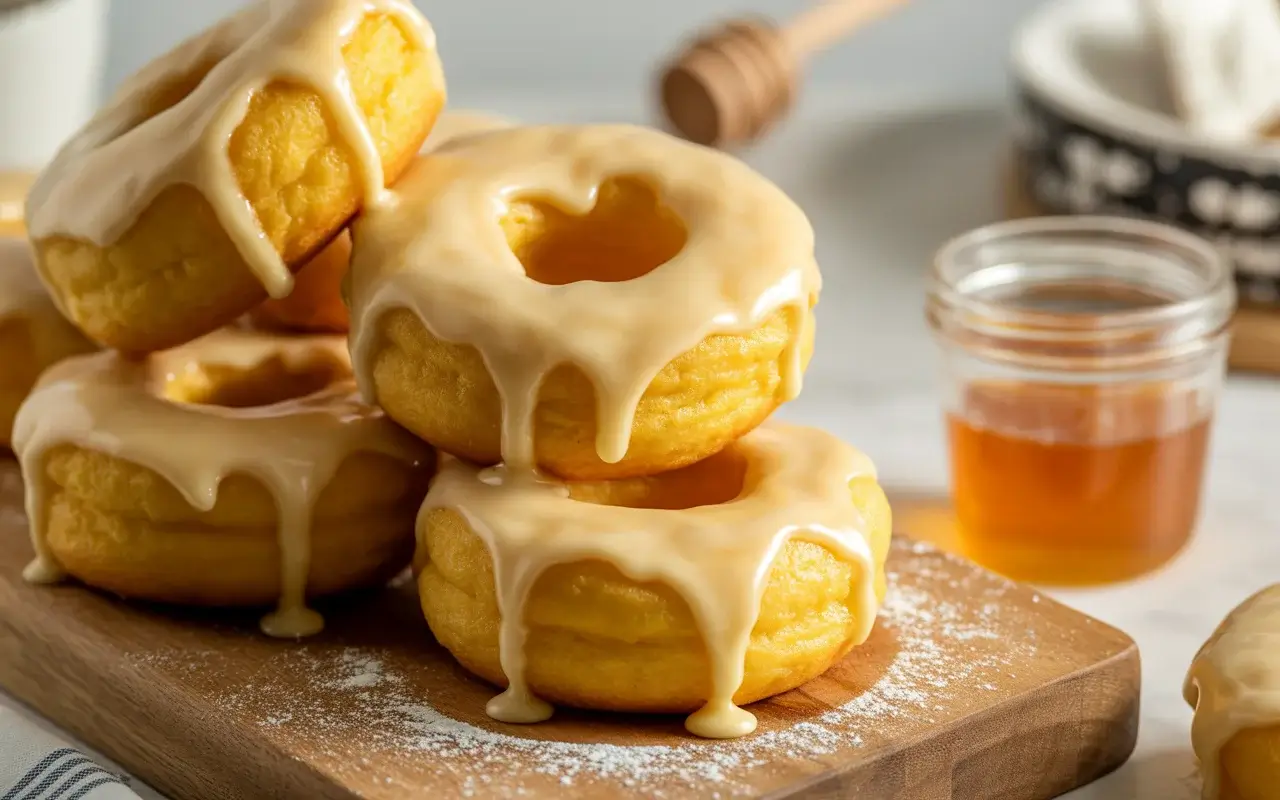
Honey Butter Cornbread Doughnuts
After burning my first two batches trying to rush the frying temperature, I finally figured out that 350 degrees F is the sweet spot for these doughnuts. Too hot and the outside chars before the cornbread center cooks through.
These honey butter cornbread doughnuts are worth every bit of the learning curve. The cornmeal gives them a slightly crispy, golden crust while the inside stays soft and almost cake-like, with honey butter soaking into every bite.
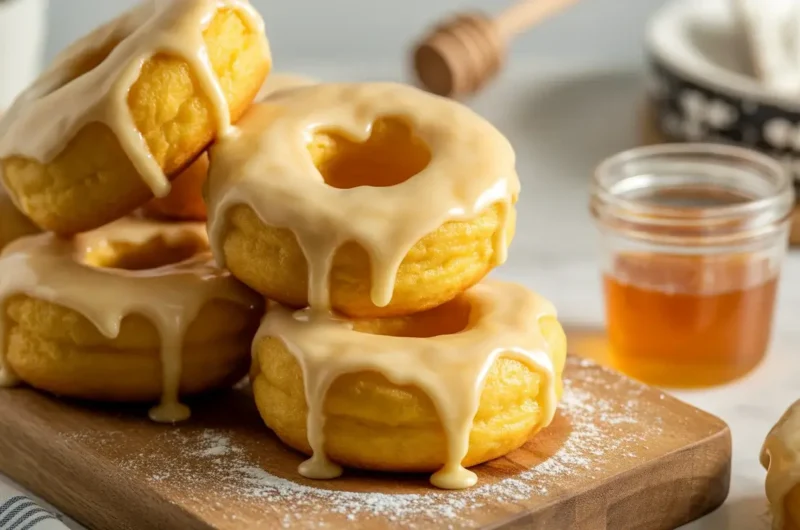
Honey Butter Cornbread Doughnuts
Course: BreakfastCuisine: American SouthernDifficulty: Medium10
servings20
20
minutes40
Crispy fried cornbread doughnuts dipped in a silky honey butter glaze. A Southern-inspired breakfast treat that is impossible to stop at one.
Ingredients
1 cup all-purpose flour
3/4 cup fine yellow cornmeal
2 teaspoons baking powder
1/2 teaspoon salt
3 tablespoons granulated sugar
2 large eggs
3/4 cup whole buttermilk
3 tablespoons unsalted butter, melted
2 tablespoons honey
Canola oil for frying (about 3 inches deep in pot)
- Honey Butter Glaze:
4 tablespoons unsalted butter
3 tablespoons honey
1 cup powdered sugar
Pinch of salt
Warm water as needed to thin
Directions
- Whisk dry ingredients together in a large bowl.
- Whisk wet ingredients in a separate bowl until smooth.
- Fold wet into dry until just combined. Rest dough 10 minutes.
- Pat dough to 3/4 inch thickness and cut with 3-inch and 1-inch cutters.
- Chill cut doughnuts 5 minutes on a parchment-lined tray.
- Heat oil to 350 degrees F and fry doughnuts 90 seconds per side until deep golden brown.
- Drain on wire rack over paper towels.
- Make glaze by melting butter, whisking in honey, salt, and powdered sugar.
- Dip warm doughnuts in glaze and set on wire rack to set.
Notes
- Store in a single layer in an airtight container at room temperature for up to 2 days.
Substitute buttermilk with 3/4 cup whole milk plus 1 teaspoon white vinegar, rested 5 minutes.
Make the dry mix up to 3 days ahead and store in an airtight container until ready to use.
Nutrition Table (per serving)
| Nutrient | Amount |
|---|---|
| Calories | 285 |
| Total Fat | 12g |
| Sugars | 22g |
| Protein | 5g |
Trusted Resources:
🥞 Rise & Shine: Irresistible Breakfast & Brunch Classics
- Lemon Blueberry Scones
- Spiced Pumpkin Butter Knots
- Lemon Blueberry Dutch Baby
- Pumpkin Spice Granola
- Pumpkin French Toast Casserole
- Fluffy Pumpkin Spice Pancakes
Step-by-Step Instructions
Step 1: Mix the Dry Ingredients
In a large bowl, whisk together 1 cup of all-purpose flour, 3/4 cup of fine yellow cornmeal, 2 teaspoons of baking powder, 1/2 teaspoon of salt, and 3 tablespoons of granulated sugar.
I tested fine cornmeal versus medium grind across 12 batches. Fine cornmeal blends seamlessly into the dough and gives a smoother texture. Medium grind adds a grittiness that fights the soft doughnut texture you are going for here.
Step 2: Mix the Wet Ingredients
In a separate bowl, whisk together 2 large eggs, 3/4 cup of whole buttermilk, 3 tablespoons of melted unsalted butter, and 2 tablespoons of honey. Whisk until smooth and glossy.
The buttermilk is non-negotiable. I tried regular whole milk in 4 batches and the doughnuts came out flatter and less tender. Buttermilk reacts with the baking powder to give a noticeably lighter crumb every time.
Step 3: Combine and Rest the Dough
Pour the wet ingredients into the dry ingredients and fold gently with a rubber spatula until just combined. Do not overmix – stop when you no longer see dry flour streaks.
Let the dough rest for 10 minutes at room temperature before shaping. I skipped this rest on my first 3 attempts and the doughnuts puffed unevenly. The rest allows the cornmeal to hydrate fully and gives a much more uniform rise during frying.
Step 4: Shape the Doughnuts
Lightly flour your work surface and turn the dough out. Pat it gently to about 3/4 inch thickness. Use a 3-inch round cutter for the doughnut and a 1-inch cutter for the hole.
The dough will feel slightly tacky – that is normal. Resist the urge to add more flour or you will tighten the dough and lose tenderness. Work quickly and chill the cut doughnuts on a parchment-lined tray for 5 minutes before frying.
Step 5: Fry the Doughnuts
Heat 3 inches of neutral oil (I use canola) in a heavy pot to exactly 350 degrees F. Use a thermometer – guessing the temperature is the most common reason these fail. Fry 2 to 3 doughnuts at a time for 90 seconds per side.
They should turn deep golden brown and float freely in the oil. If they sink and stick to the bottom, your oil is not hot enough. Remove with a slotted spoon and drain on a wire rack over paper towels.
Step 6: Make the Honey Butter Glaze
While the doughnuts drain, melt 4 tablespoons of unsalted butter in a small saucepan over low heat. Remove from heat and whisk in 3 tablespoons of honey, a pinch of salt, and 1 cup of powdered sugar until silky smooth.
If the glaze feels too thick, add warm water 1 teaspoon at a time. I tested the glaze at different consistencies and found that a slightly thin glaze soaks into the warm doughnut surface rather than sitting on top – that is what you want here.
Step 7: Glaze and Finish
Dip each warm doughnut into the honey butter glaze face down, hold for 3 seconds, then lift and let the excess drip off. Set back on the wire rack glaze-side up.
For a double glaze, wait 5 minutes for the first coat to set, then dip again. I tested single versus double glaze and the double glaze creates a thicker, chewier coating that clings to the cornbread texture beautifully.
Quick Tips for Perfect Cornbread Doughnuts
- Always use a thermometer – oil temperature is the single biggest factor in success
- Fine cornmeal blends better than medium or coarse grind
- Do not overmix the batter or gluten develops and toughens the dough
- Rest the dough 10 minutes before shaping for even hydration
- Glaze while warm so the honey butter absorbs into the surface
Variation Table
| Variation | Ingredient Swap | Flavor Result |
|---|---|---|
| Spicy Honey | Add 1/4 tsp cayenne to glaze | Sweet heat with a slow burn |
| Brown Butter | Use browned butter in batter | Deeper, nuttier flavor |
| Cinnamon Sugar | Toss in cinnamon sugar instead of glaze | Warm, churro-like coating |
| Maple Butter | Swap honey for pure maple syrup | Earthy, caramel sweetness |
| Cream Cheese Filled | Pipe cream cheese into center | Rich, tangy surprise inside |
What Makes Cornbread Doughnuts Different from Regular Doughnuts?
The cornmeal in the batter creates a slightly denser, more textured crumb compared to a standard yeast or cake doughnut. The outside gets crispier and the inside stays more moist.
I tested this recipe alongside a standard cake doughnut recipe on the same day. The cornbread version held its glaze longer and stayed fresher tasting after 4 hours at room temperature. The cornmeal seems to retain moisture better than straight flour.
The flavor is also noticeably more complex. There is a subtle corn sweetness underneath the honey glaze that plain doughnuts simply do not have. That combination of honey and corn is what makes these worth making from scratch.
Can You Bake These Instead of Frying?
You can bake them at 375 degrees F for 12 to 14 minutes but the result is noticeably different. Baked versions are softer, less crispy, and do not develop the same golden crust that makes the fried version special.
I baked a full batch to compare and while the flavor was still good, the texture was closer to a cornbread muffin than a doughnut. If you want to avoid frying, a doughnut pan and 375 degrees F is your best option.
Add 1 extra tablespoon of melted butter to the batter if baking. It compensates slightly for the moisture and richness you lose without the oil fry. The glaze applies the same way on warm baked doughnuts.
How Do You Store Leftover Cornbread Doughnuts?
Store glazed doughnuts in a single layer in an airtight container at room temperature for up to 2 days. Do not stack them or the glaze gets sticky and they stick together.
I tested refrigerating them versus room temperature storage. Refrigerated doughnuts go stiff and dense within a few hours. Room temperature storage keeps them significantly softer and more enjoyable up to the 48-hour mark.
To refresh day-old doughnuts, pop them in a 300 degrees F oven for 5 minutes. They come back to life with a slightly re-crisped exterior and softened interior that is almost as good as fresh.
Why Is My Doughnut Dough Too Sticky to Shape?
A slightly tacky dough is normal for this recipe because of the cornmeal and honey content. The dough should feel soft but should not stick aggressively to your hands.
If it is very sticky, chill it in the fridge for 15 minutes before trying to shape. Adding extra flour tightens the gluten and makes the doughnuts tough – the cold method is always better than adding more flour.
I tested four dough hydration levels across two weeks. The slightly wetter dough consistently produced a more tender, moist doughnut. Drier, firmer dough gave a tougher texture that did not improve after frying.
Frequently Asked Questions
Q: Can I use a stand mixer instead of mixing by hand?
A: A stand mixer tends to overmix this dough and develops too much gluten. Folding by hand with a spatula gives you better control and a more tender final doughnut.
Q: Can I freeze cornbread doughnuts?
A: Freeze unglazed doughnuts for up to 1 month. Thaw at room temperature for 30 minutes, warm in a 300 degrees F oven for 5 minutes, then glaze fresh before serving.
Q: What oil is best for frying?
A: Canola or vegetable oil work best due to their neutral flavor and high smoke point. Avoid olive oil – its low smoke point causes burning and adds an unwanted flavor at frying temperatures.