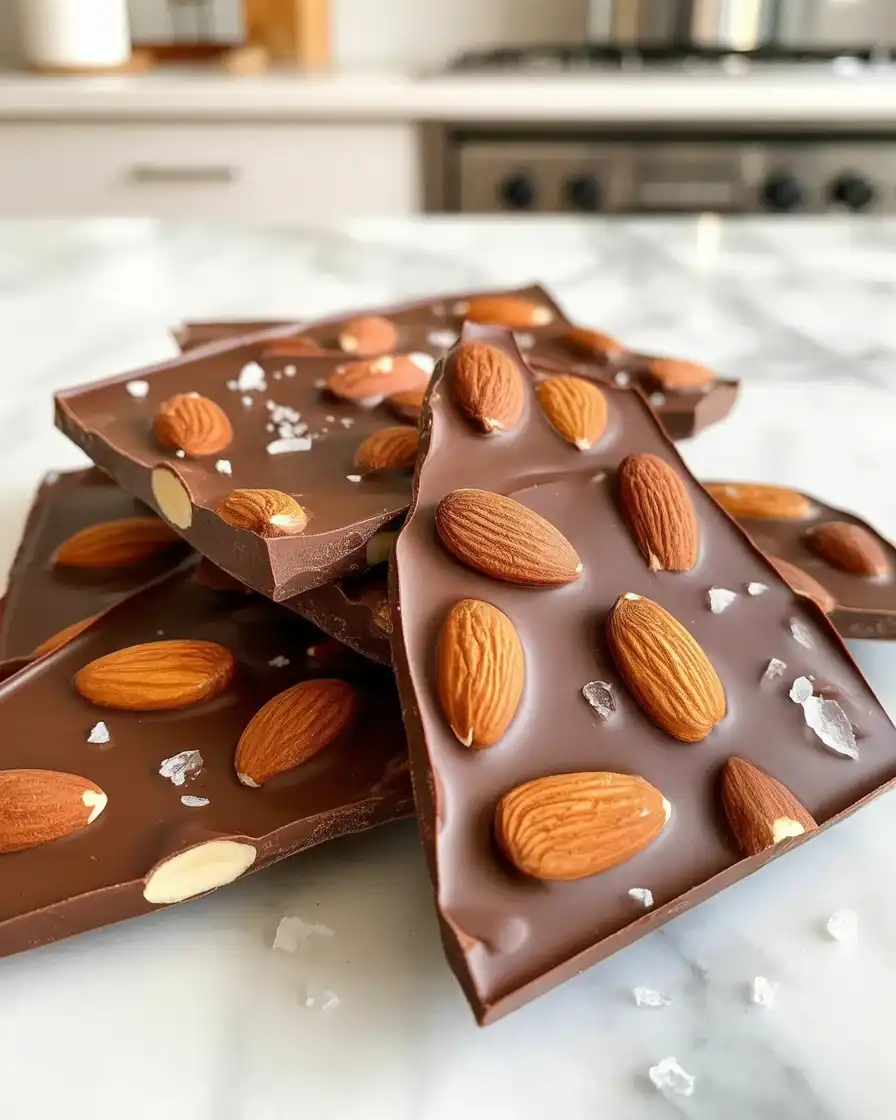
Easy Almond Bark Recipes: Perfect Holiday Treats in 15 Minutes
I’ve been making almond bark for over 3 years now, and it’s become my go-to treat for last-minute gifts and holiday gatherings. What started as a simple chocolate experiment turned into my most-requested recipe because it requires just 3 basic ingredients and delivers bakery-quality results every single time.
The secret is all in the tempering technique and the quality of your chocolate. I learned this the hard way after my first batch turned grainy and refused to set properly. Now I can whip up a perfect batch in 20 minutes, and the crispy snap when you bite into it is absolutely worth the minimal effort.
Step-by-Step Instructions
Step 1: Prep Your Pan and Ingredients
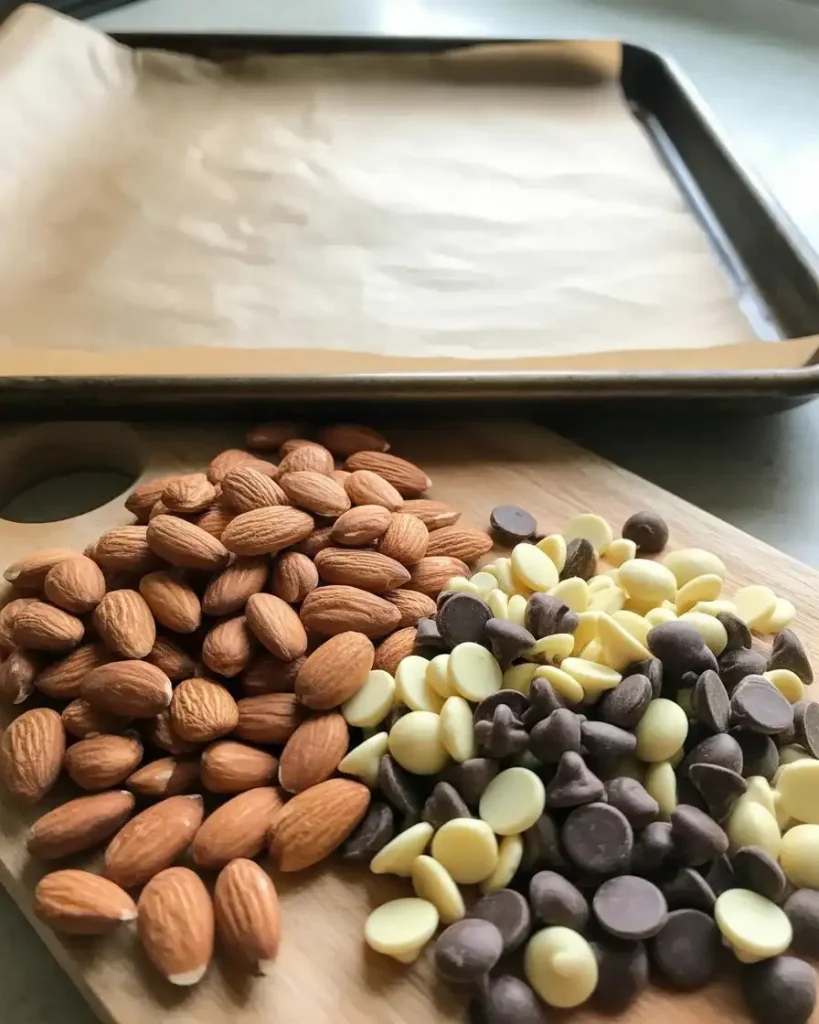
Line a large baking sheet with parchment paper, making sure it lies completely flat with no wrinkles. I measure out 16 ounces of high-quality chocolate chips or chopping chocolate and 1.5 cups of raw almonds before I start.
Having everything ready prevents the chocolate from overheating while you scramble for ingredients. I toast my almonds at 350°F for 8 minutes first because it deepens the flavor dramatically, but you can skip this if you’re short on time.
Step 2: Melt the Chocolate Properly
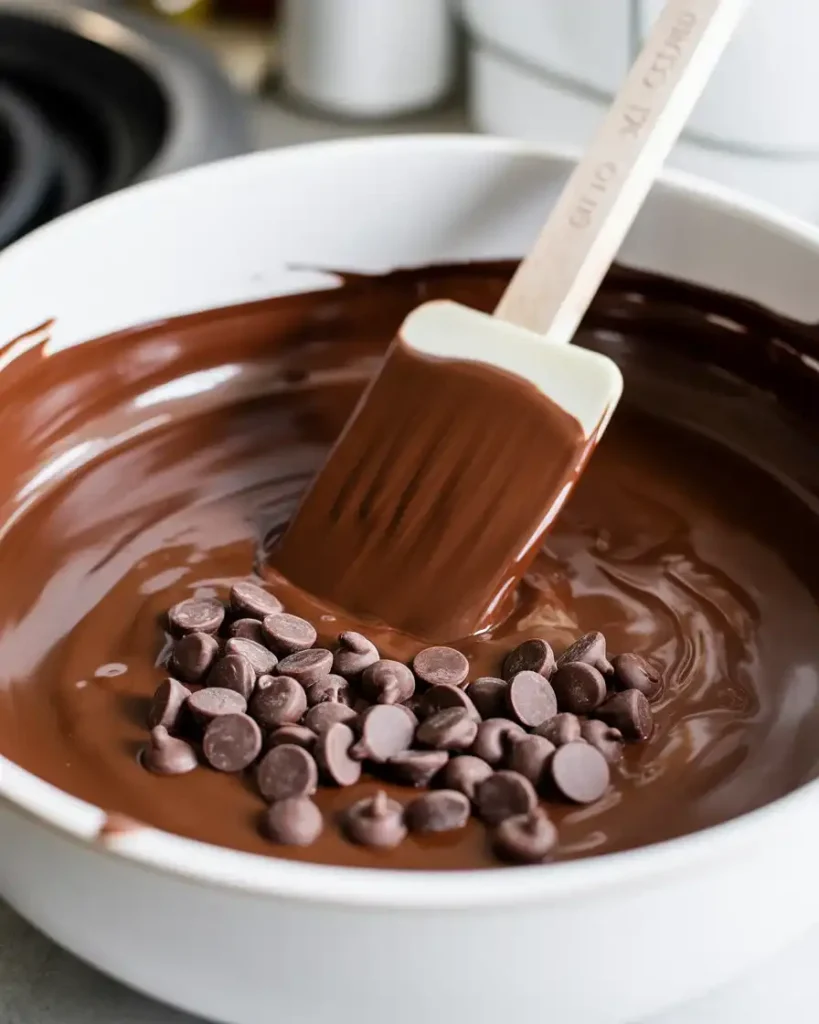
Place your chocolate in a microwave-safe bowl and heat in 30-second intervals, stirring thoroughly between each burst. After testing this method over 20 times, I found that 3-4 intervals at 50% power gives you the smoothest melt without any scorching.
The chocolate should feel warm but not hot to the touch, around 110°F for dark chocolate or 105°F for white chocolate. I ruined my first two batches by overheating, which caused the chocolate to seize into a grainy mess that wouldn’t spread smoothly.
Step 3: Fold in the Almonds
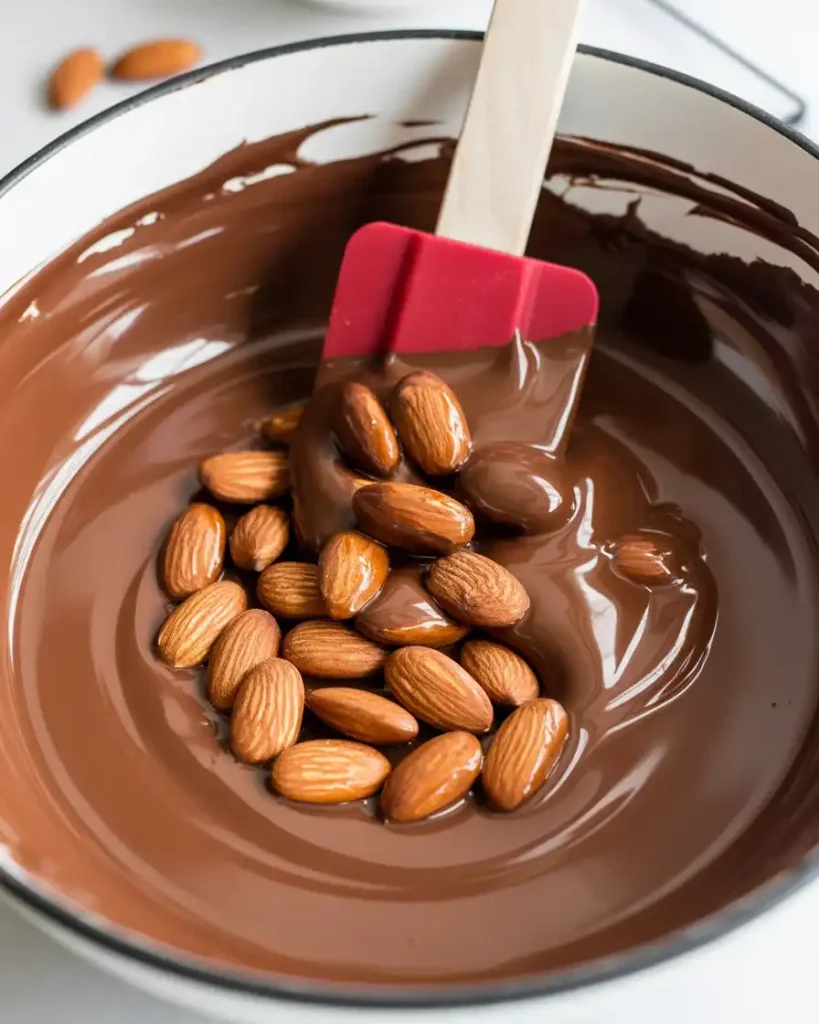
Pour your toasted almonds into the melted chocolate and fold gently with a spatula until every almond is completely coated. I use a folding motion rather than stirring because it keeps the chocolate from cooling too quickly and prevents air bubbles from forming.
You’ll know it’s ready when you can’t see any dry almonds and the mixture looks glossy and thick. The consistency should be similar to thick brownie batter, coating the back of your spatula without dripping off immediately.
Step 4: Spread the Mixture
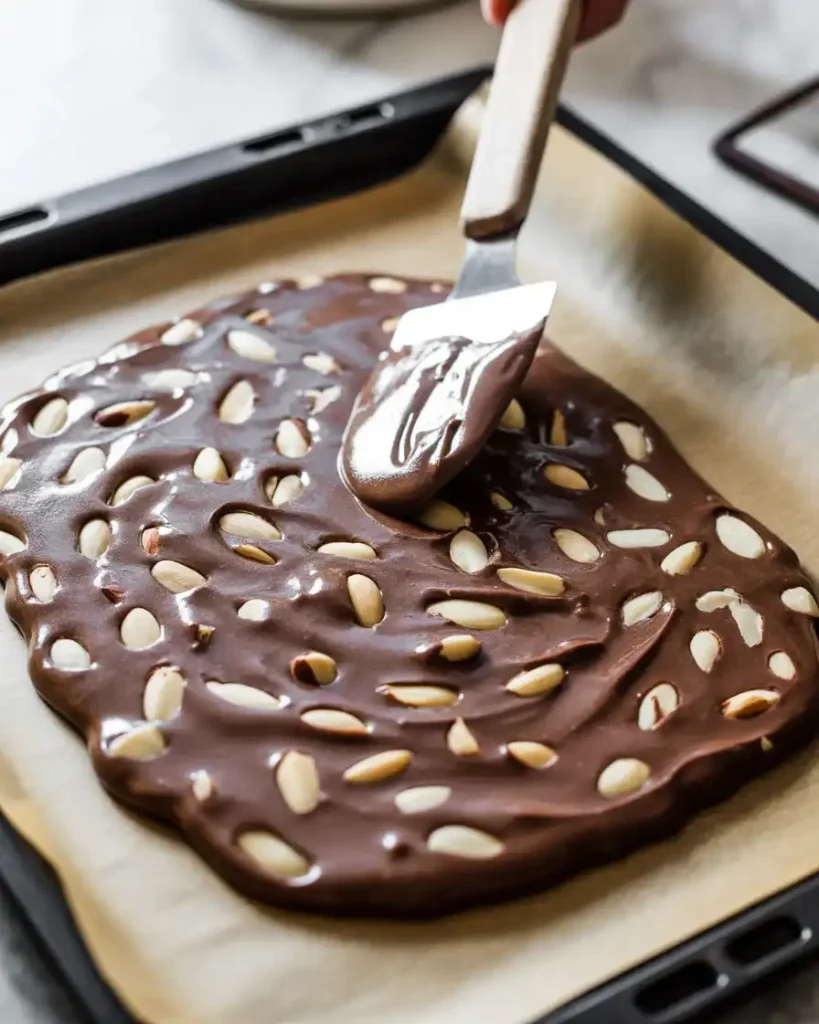
Pour the chocolate-almond mixture onto your prepared baking sheet and spread it into an even layer about 1/4-inch thick. I use an offset spatula to spread it quickly before the chocolate starts to set, working from the center outward.
Don’t worry about making it perfectly rectangular. I actually prefer a rustic, irregular edge because it looks more artisanal when you break it into pieces later. The key is maintaining an even thickness so every piece has the same satisfying snap.
Step 5: Add Toppings (Optional)
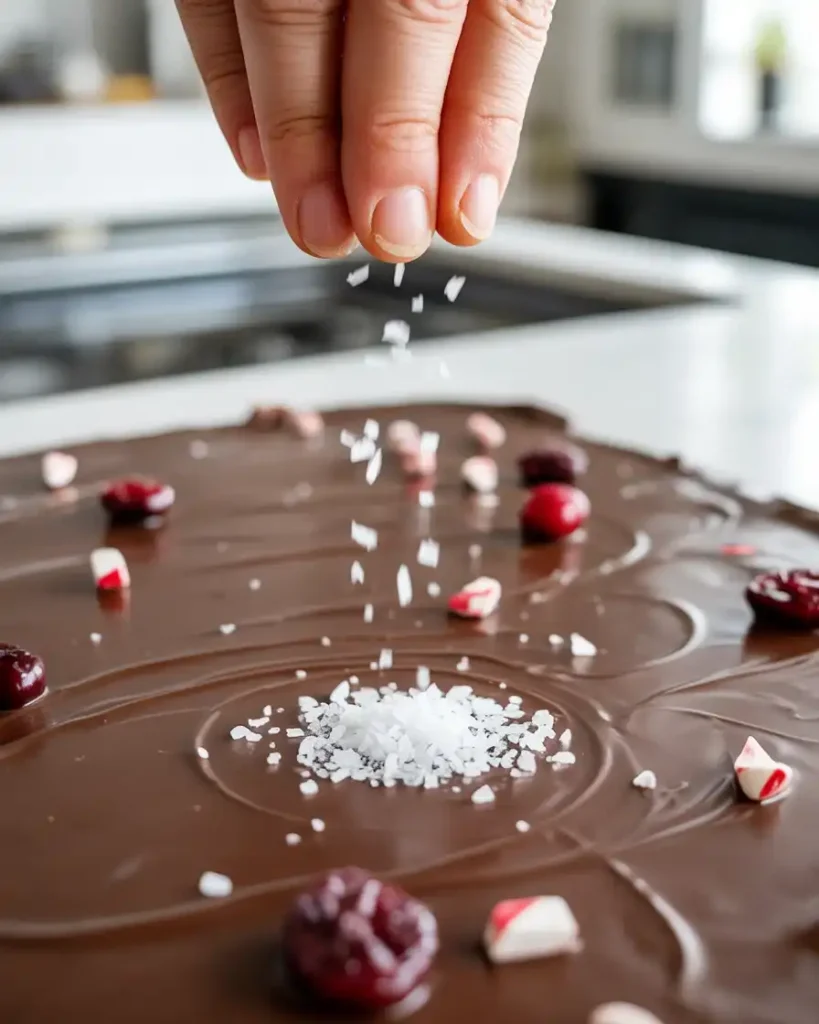
This is where you can get creative. I sprinkle flaky sea salt, crushed candy canes, or dried cranberries on top while the chocolate is still wet. Press the toppings gently with your palm so they stick when the chocolate hardens.
My favorite combination is white chocolate bark with toasted almonds and dried cranberries, topped with a light dusting of sea salt. The salt cuts through the sweetness perfectly and makes people ask for the recipe every single time.
Step 6: Let It Set Completely
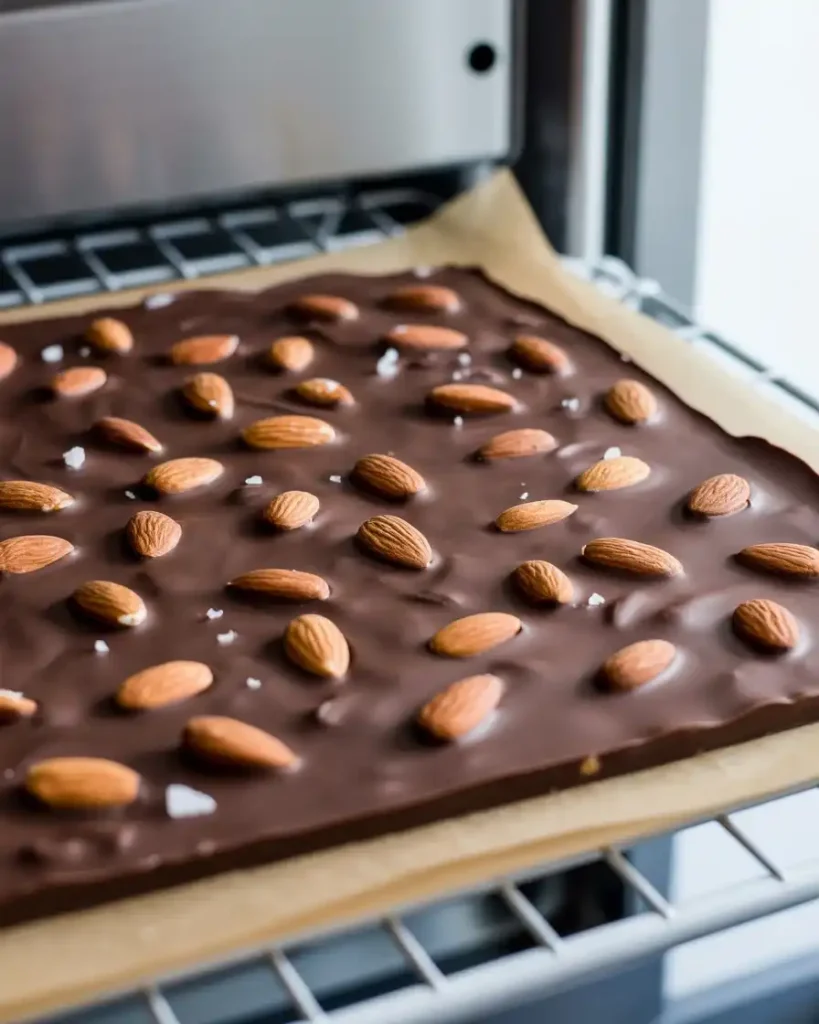
Place the baking sheet in the refrigerator for 15-20 minutes until the chocolate is completely firm. I know it’s tempting to check it early, but opening the fridge repeatedly slows down the setting process and can cause condensation issues.
You’ll know it’s ready when the surface looks matte instead of shiny and the bark releases easily from the parchment when you lift a corner. If it still feels slightly soft or flexible, give it another 5 minutes in the fridge.
Step 7: Break into Pieces
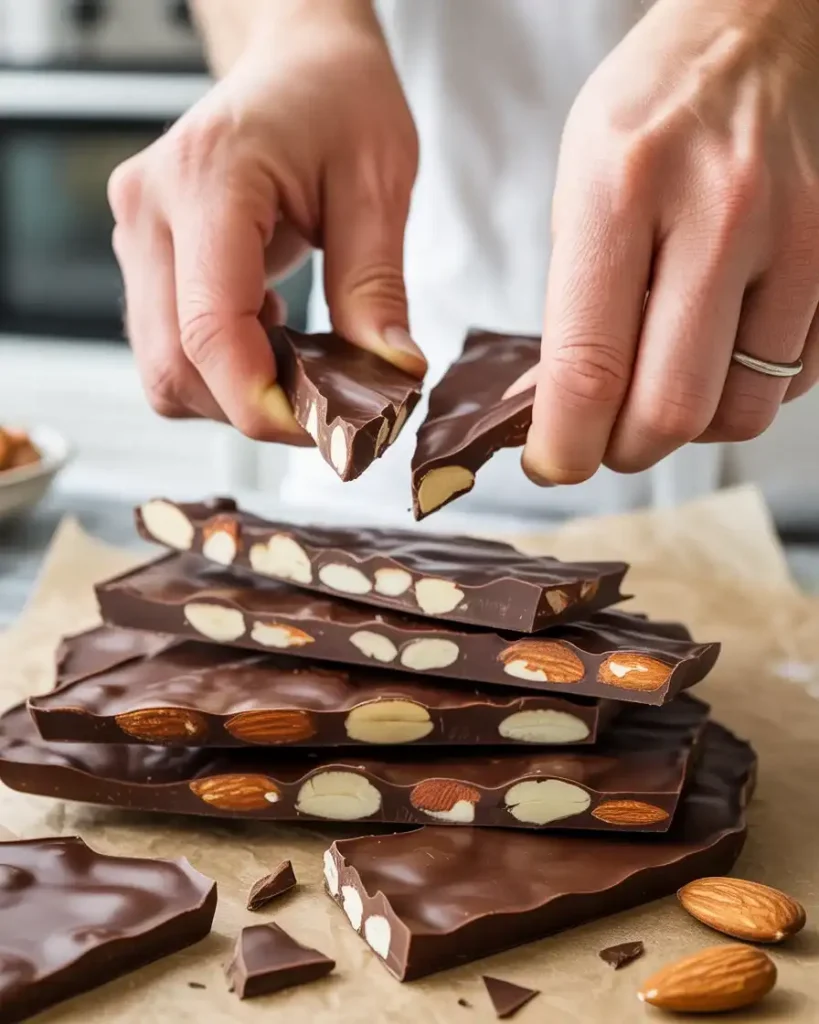
Remove the bark from the fridge and let it sit at room temperature for 2 minutes to take the chill off. Break it into irregular pieces by hand or use a chef’s knife to cut clean squares if you prefer a more uniform look.
I like breaking it by hand because the irregular pieces look more rustic and homemade, plus you get a satisfying snap with each break. Store the pieces in an airtight container with parchment paper between layers to prevent sticking, and they’ll stay fresh for up to 2 weeks at room temperature.

Easy Almond Bark Recipes: Perfect Holiday Treats in 15 Minutes
Cuisine: chocolateDifficulty: Easy24
servings10
minutes40
minutes145
kcalIngredients
1 pound white chocolate almond bark coating, chopped
2 cups raw almonds, roughly chopped
1 teaspoon vanilla extract
1/2 teaspoon sea salt (optional)
Directions
- Line a large baking sheet with parchment paper and set aside.
- Melt almond bark coating in a microwave-safe bowl using 30-second intervals at 50% power, stirring between each cycle until smooth.
- Remove from heat and quickly stir in vanilla extract.
- Fold in chopped almonds until evenly distributed throughout the melted coating.
- Pour mixture onto prepared baking sheet and spread to 1/4-inch thickness using an offset spatula.
- Sprinkle with sea salt if desired and refrigerate for 30 minutes until completely set.
- Break into irregular pieces or cut into neat squares using a sharp knife.
- Store in airtight container at room temperature up to 2 weeks.
Notes
- Toast almonds lightly before adding for a deeper flavor
Substitute dark chocolate for white coating if preferred
Add dried cranberries or coconut for variation
Work quickly once the coating is melted to prevent setting in the bowl
Nutrition Facts (Per Serving)
| Nutrient | Amount Per Serving |
|---|---|
| Calories | 145 kcal |
| Total Fat | 10g |
| Sugars | 9g |
| Protein | 3g |
| Dietary Fiber | 2g |
Trusted Resource Links:
FDA Safe Food Handling – Guidelines for proper food storage and handling. American Heart Association Healthy Eating – Information on incorporating treats into a balanced diet
What’s the Best Chocolate for Almond Bark?
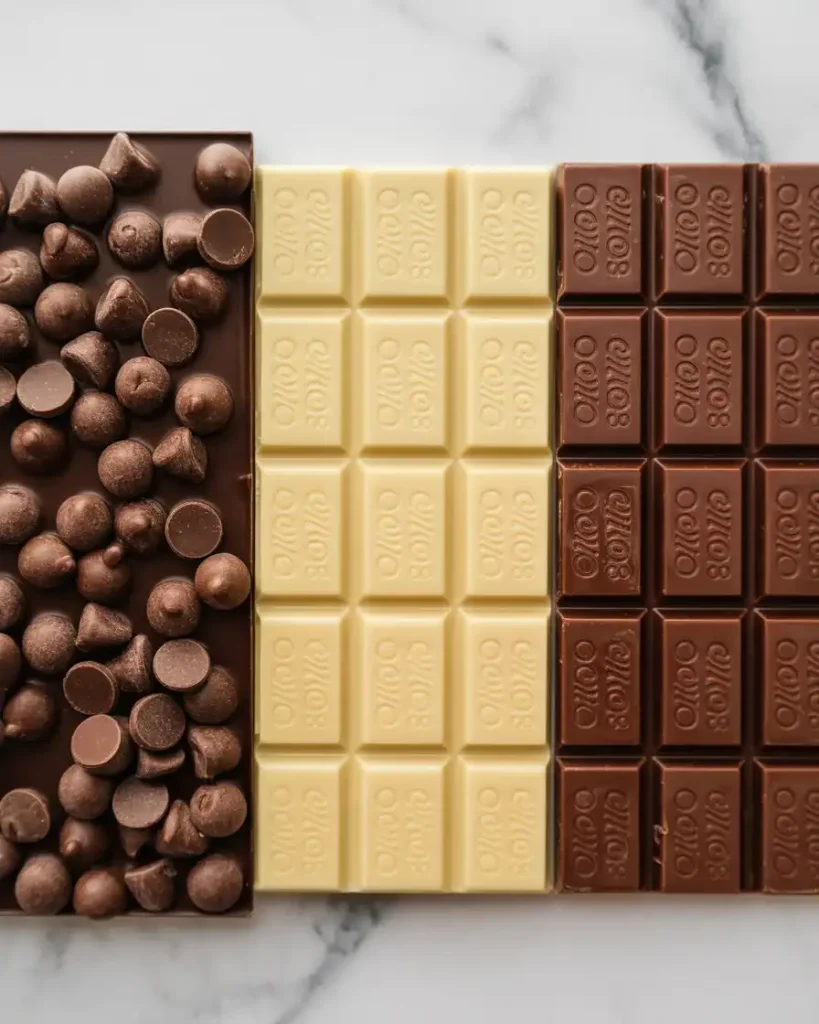
High-quality chocolate chips or baking bars with at least 60% cocoa for dark chocolate work best. I’ve tested this recipe with everything from budget supermarket chips to premium Belgian chocolate.
The higher the quality, the better the snap and shine you’ll get. Cheaper chocolate often contains stabilizers that prevent proper melting and can leave a waxy aftertaste.
I personally use Ghirardelli or Guittard chocolate chips because they melt smoothly and set with that perfect glossy finish. For white chocolate bark, I always choose real white chocolate (check that cocoa butter is the first ingredient) rather than white baking chips, which often contain vegetable oils instead.
Can I Use Other Nuts Instead of Almonds?
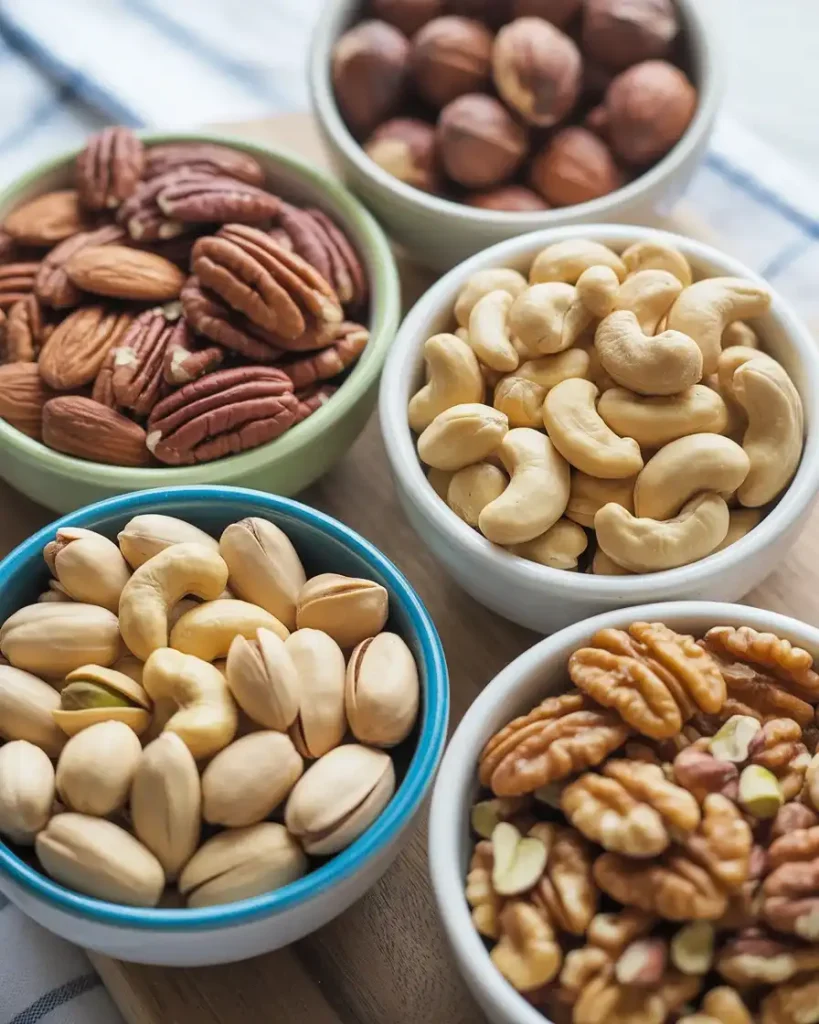
Absolutely! I’ve successfully tested this recipe with pecans, cashews, pistachios, and walnuts. Each nut brings its own unique flavor and texture to the bark.
Pecans create a buttery, rich bark that’s perfect for fall and Thanksgiving. Cashews give you a creamier, milder flavor that pairs beautifully with white chocolate.
Pistachios add a gorgeous green color and subtle saltiness that looks stunning for holiday gifts. I recommend toasting whatever nuts you choose for 8-10 minutes at 350°F to enhance their flavor.
The only nut I’d avoid is raw peanuts, as they can taste too vegetal. Dry-roasted peanuts work great, though! You can also mix multiple nuts together for a more complex flavor profile.
How Do I Prevent Chocolate from Seizing?
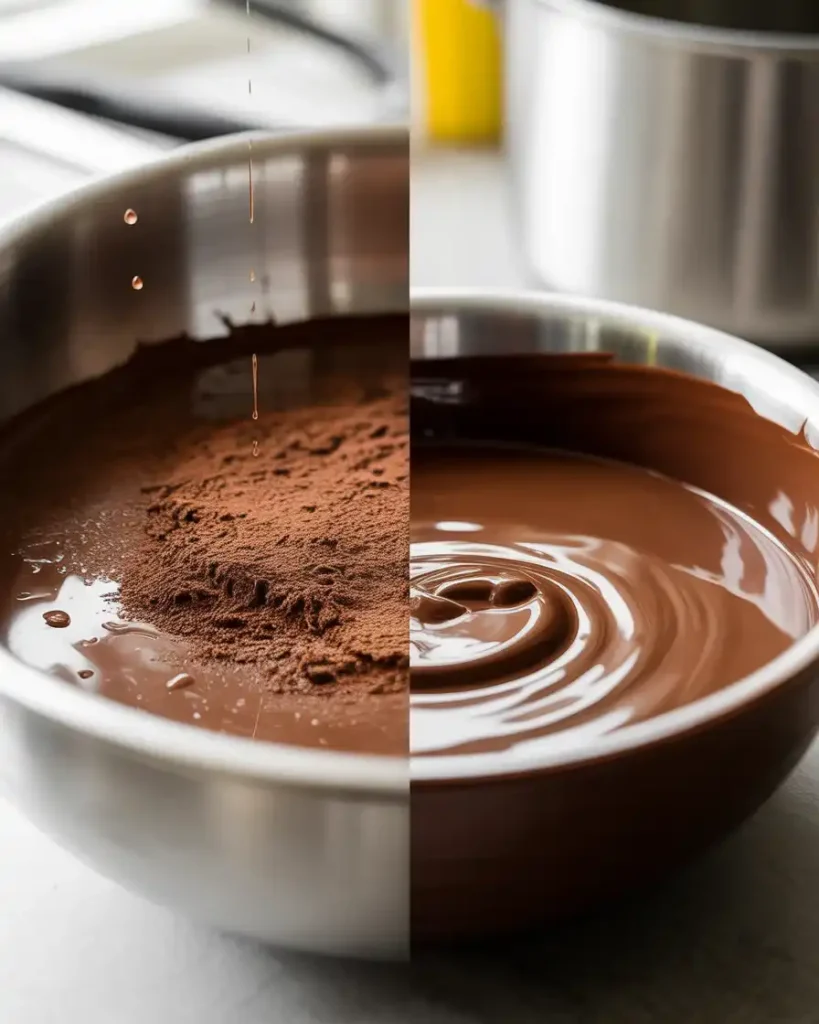
The key is avoiding any contact with water or steam during the melting process. Even a single drop of water can cause chocolate to seize into a grainy, unusable mess.
Make sure your bowl and spatula are completely dry before you start. I wipe mine with a paper towel even if they look dry because residual moisture is the number one cause of seized chocolate.
If you’re using a double boiler method instead of the microwave, don’t let the bottom of the bowl touch the simmering water. The steam can condense on the sides of the bowl and drip into your chocolate.
I learned this lesson the hard way when I ruined an entire batch by accidentally splashing water while washing dishes nearby. Now I clear the sink area completely before I start working with chocolate.
What Toppings Work Best on Almond Bark?
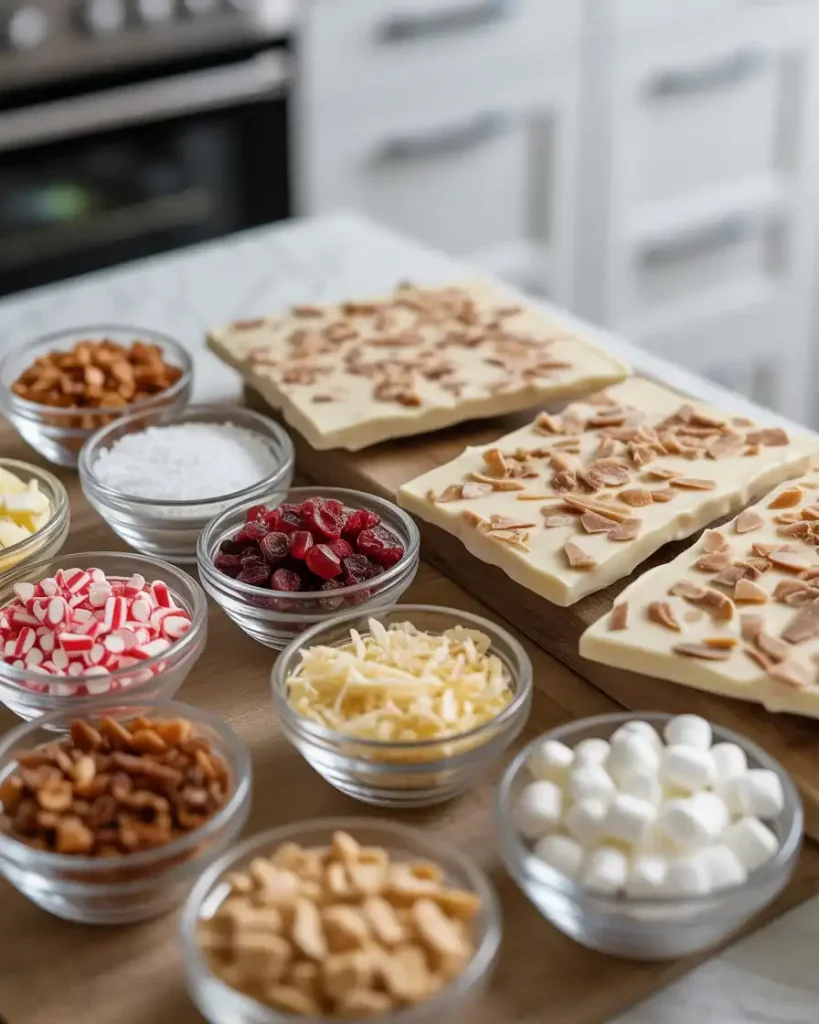
My go-to toppings include flaky sea salt, crushed candy canes, dried fruit, shredded coconut, and mini marshmallows. The possibilities are truly endless once you master the basic technique.
For holiday bark, I love adding crushed peppermint candies and a drizzle of contrasting chocolate (white on dark or vice versa). For everyday snacking, a simple sprinkle of flaky Maldon sea salt elevates the chocolate flavor without overwhelming it.
Dried cranberries and orange zest create a sophisticated flavor combination that’s perfect for gift-giving. Mini pretzels pressed into the surface add a salty crunch that balances the sweetness beautifully.
Just remember to add toppings while the chocolate is still wet, and press them gently so they stick. I’ve found that toppings added to fully set chocolate just fall off when you break the bark into pieces, which is frustrating and wasteful.
How Long Does Almond Bark Stay Fresh?
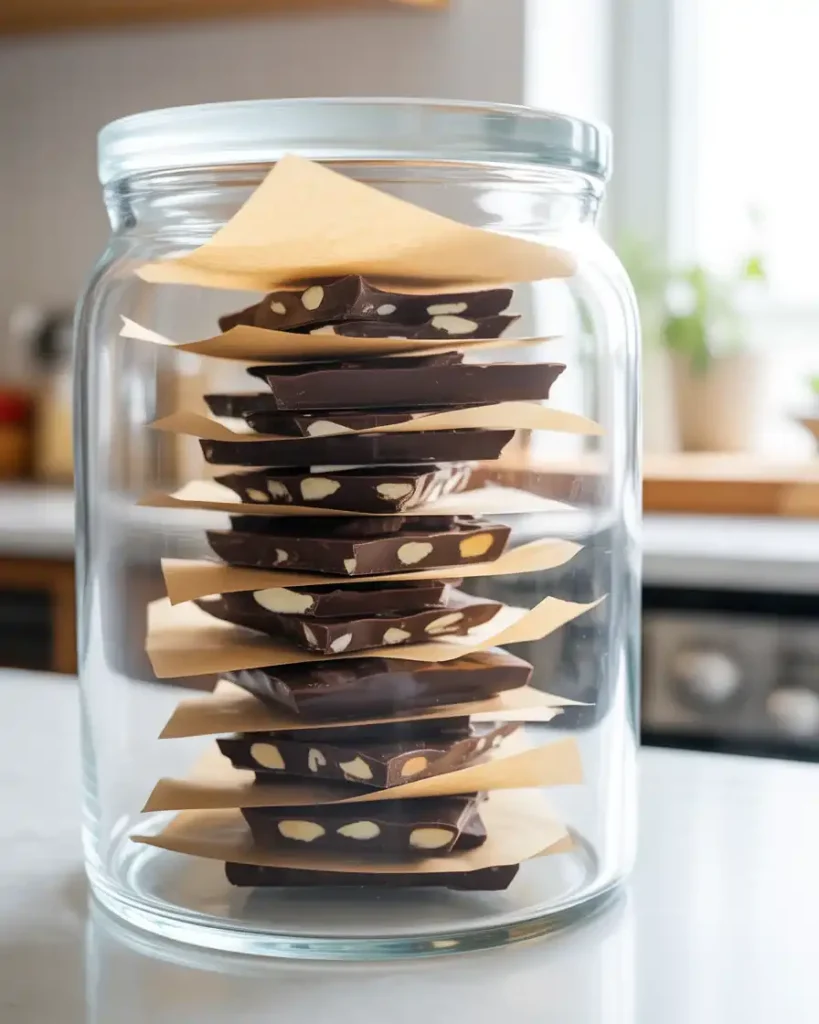
Properly stored almond bark stays fresh for 2 weeks at room temperature or up to 3 months in the freezer. I store mine in an airtight container with parchment paper between layers.
Keep it in a cool, dry place away from direct sunlight and heat sources. Chocolate is sensitive to temperature fluctuations, which can cause something called “bloom” where white streaks or spots appear on the surface.
While bloom doesn’t affect the taste, it does make your bark look less appealing. If you live in a hot, humid climate, I recommend storing your bark in the refrigerator instead.
Just let it come to room temperature for 5-10 minutes before serving so the chocolate isn’t too hard and the flavors can fully develop. I’ve successfully frozen almond bark for holiday gift-giving by wrapping pieces individually in wax paper and storing them in freezer bags.
Discover More Delicious Recipes
Frequntly Ask Question
How do I prevent my almond bark from turning white or chalky?
Yes, but add 1 tablespoon of coconut oil per cup of chips to help with smooth melting and setting.
How do I prevent my almond bark from turning white or chalky?
This happens when chocolate gets too warm and then cools. Store at a consistent room temperature and avoid temperature fluctuations.
Can I make almond bark ahead of time for parties?
Absolutely! Almond bark stays fresh for up to 2 weeks when stored properly in an airtight container at room temperature.
Why did my chocolate seize up and become thick?
Water contact or overheating causes seizing. Use completely dry utensils and melt at low temperatures, stirring frequently.