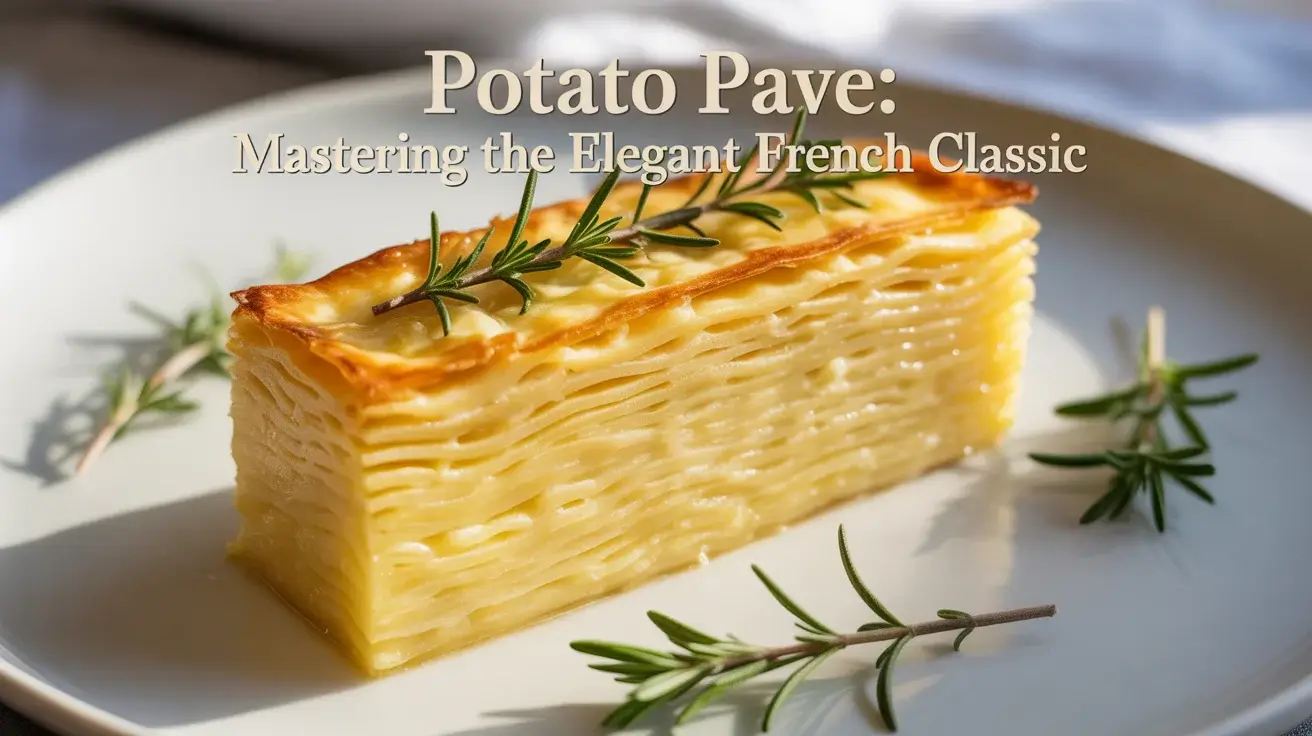
Potato Pave: Mastering The Elegant French Classic
There’s something deeply satisfying about slicing into a perfectly layered potato pave. This French masterpiece transforms humble potatoes into something truly restaurant-worthy, with paper-thin slices stacked high and pressed into crispy, creamy perfection.
Potato pave (pronounced pah-VAY) means “pavement” in French, referring to the neat, rectangular shape and tightly packed layers. It’s surprisingly simple to make at home, requiring just a handful of ingredients and a bit of patience.
Whether you’re planning a special dinner or want to elevate your holiday table, this dish delivers impressive visual appeal and unforgettable flavor. The crispy edges and tender, buttery interior make every bite worth the effort.
Why You’ll Love This Recipe
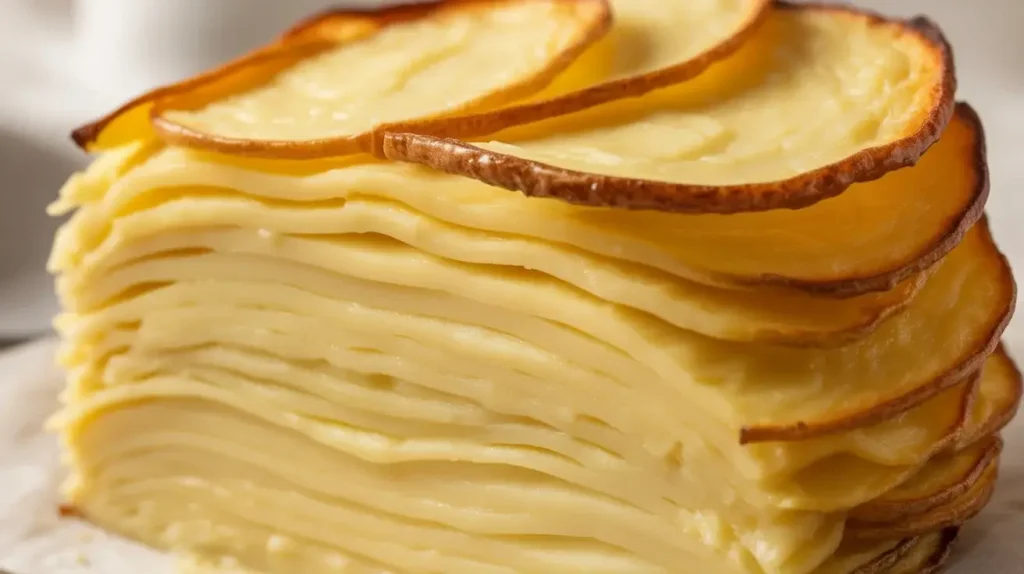
This potato pave recipe strikes the perfect balance between impressive presentation and achievable technique. You don’t need professional chef skills—just a mandoline or sharp knife and a bit of time.
The crispy, caramelized exterior contrasts beautifully with the creamy, layered interior. Each slice showcases the careful stacking, making it an instant conversation starter at any dinner party.
Make-ahead friendly and endlessly versatile, this dish pairs wonderfully with roasted meats, fish, or can even stand alone as a vegetarian main. It’s comfort food elevated to art.
Ingredients You’ll Need
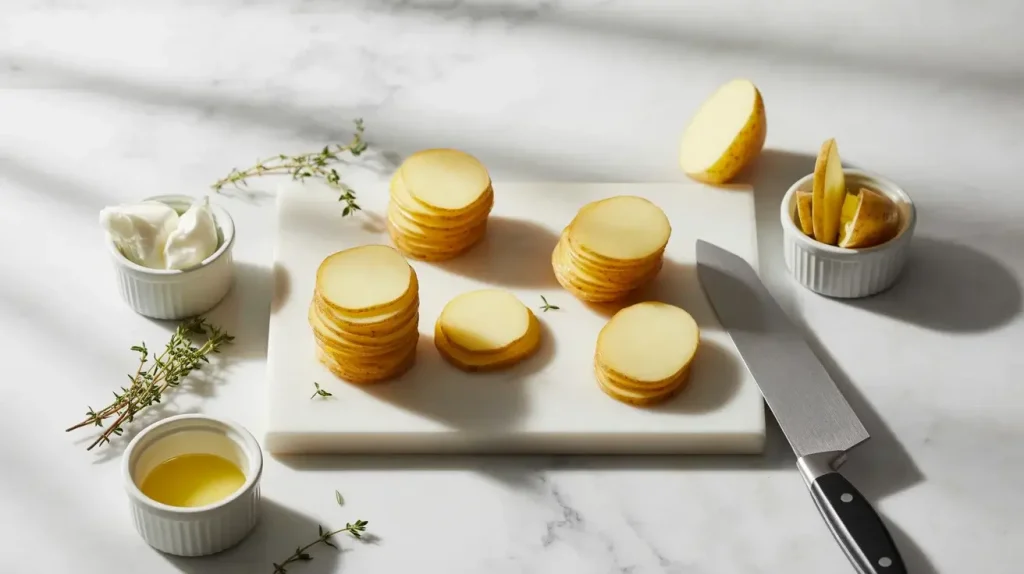
For the Potato Pave:
For Assembly:
Yukon Gold potatoes are ideal because of their creamy texture and ability to hold their shape. Their natural buttery flavor enhances the finished dish without becoming gummy or falling apart during baking.
Step-By-Step Instructions
Prep the Potatoes
Start by preheating your oven to 325°F. Line your baking dish with parchment paper, leaving overhang on the sides for easy removal later.
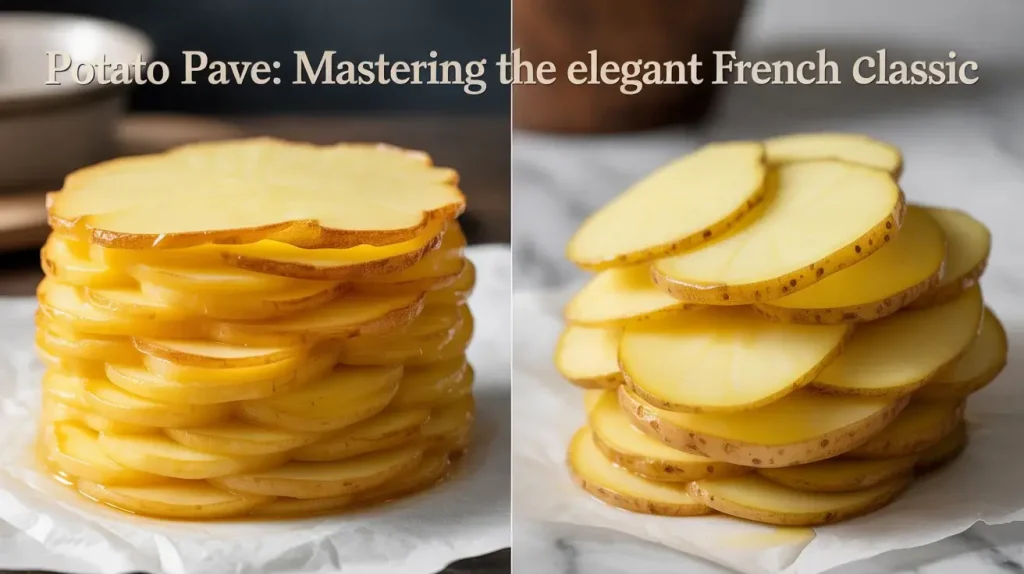
Using a mandoline set to 1/8 inch, slice potatoes into uniform rounds. Place them in a large bowl immediately to prevent browning.
In a separate bowl, whisk together cream, melted butter, garlic, thyme, salt, pepper, and nutmeg. Pour this mixture over the potatoes and toss gently to coat every slice evenly.
Read More: Famous Crab Bombs Classic: The Ultimate Appetizer Everyone Loves
Layer and Press
Begin layering potato slices in your prepared pan, overlapping them slightly and keeping layers as flat and tight as possible. Press down firmly after every few layers to remove air pockets.
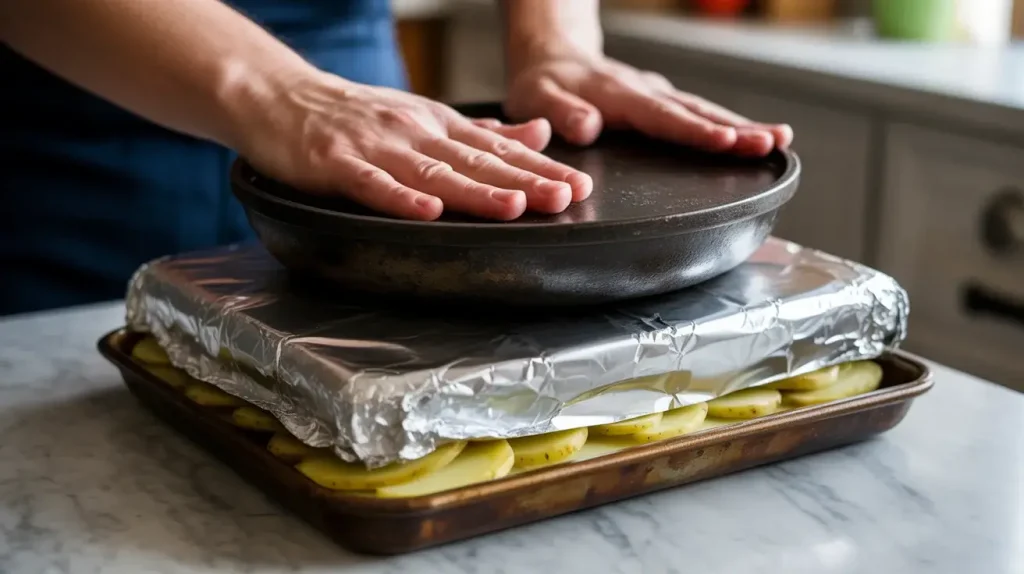
Continue until all potatoes are used, ending with a neat top layer. Pour any remaining cream mixture over the top, then cover tightly with parchment and aluminum foil.
Place another baking dish on top and add oven-safe weights (canned goods work great). This pressure is essential for achieving the dense, sliceable texture.
Bake to Perfection
Bake weighted for 1 hour and 30 minutes. Remove weights and foil, then increase temperature to 400°F and bake uncovered for 30-40 minutes until the top is deeply golden and crispy.
Let cool in the pan for 20 minutes, then refrigerate for at least 4 hours or overnight. This chilling step is crucial—it allows the pave to fully set so you can cut clean slices.
When ready to serve, lift out using parchment overhang, slice into portions, and pan-fry in butter for 2-3 minutes per side until edges are crispy and golden.
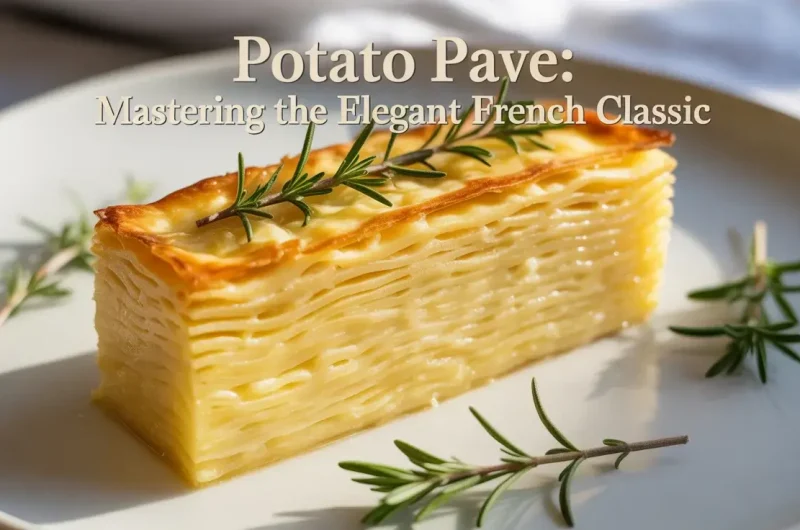
Potato Pave: Mastering The Elegant French Classic
Course: Appetizers, Side DishCuisine: FrenchDifficulty: Intermediate8
servings30
minutes6
hours10
minutes6
hours40
minutesElegant French potato pave features paper-thin potato slices layered with cream and butter, pressed and baked until golden. Crispy outside, silky inside—restaurant-quality at home.
Ingredients
3 lbs Yukon Gold potatoes, peeled
1 cup heavy cream
6 tablespoons unsalted butter, melted (plus more for pan-frying)
4 cloves garlic, minced
2 teaspoons fresh thyme leaves
1½ teaspoons salt
½ teaspoon black pepper
¼ teaspoon nutmeg (optional)
Directions
- Preheat oven to 325°F. Line an 8×8-inch baking dish with parchment paper, leaving overhang on sides.
- Slice potatoes to 1/8 inch thickness using a mandoline. Place in large bowl.
- Whisk together cream, melted butter, garlic, thyme, salt, pepper, and nutmeg. Pour over potatoes and toss to coat.
- Layer potato slices in prepared pan, overlapping slightly and pressing down firmly to remove air pockets. Continue until all potatoes are used.
- Pour the remaining cream mixture over the top. Cover tightly with parchment and foil.
- Place another baking dish on top with oven-safe weights. Bake for 1 hour 30 minutes.
- Remove weights and foil. Increase the temperature to 400°F. Bake uncovered 30-40 minutes until golden and crispy.
- Cool for 20 minutes, then refrigerate at least 4 hours or overnight.
- Lift the parchment out using parchment. Slice into portions. Pan-fry in butter 2-3 minutes per side until edges are crispy.
Notes
- Uniform slicing is key—use a mandoline for best results
Don’t skip the chilling step, or slices won’t hold their shape
Can be made 2 days ahead; just pan-fry before serving
Try adding grated Parmesan between layers for extra flavor
Russet potatoes can be substituted, but they may be slightly less creamy
| Nutrient | Per Serving |
|---|---|
| Calories | 264 kcal |
| Total Fat | 8 g |
| Sugars | 9 g |
| Protein | 5 g |
| Dietary Fiber | 4 g |
Pro Tips For Perfect Pave
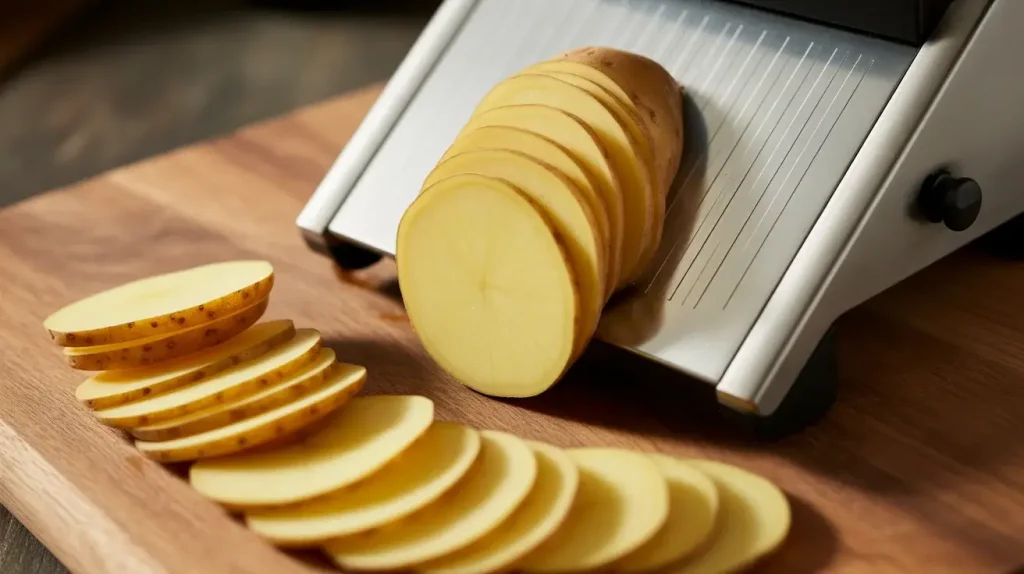
Patience is your best friend when making potato pave. Rushing the chilling step will result in slices that fall apart, so planand give it proper refrigeration time.
The mandoline setting matters—too thick and layers won’t compress properly, too thin and potatoes may break. Aim for 1/8 inch, about the thickness of two credit cards.
For extra crispy tops and bottoms, brush the exposed surfaces with melted butter before the final high-heat bake. This creates an irresistible golden crust that shatters under your fork.
Flavor Variations
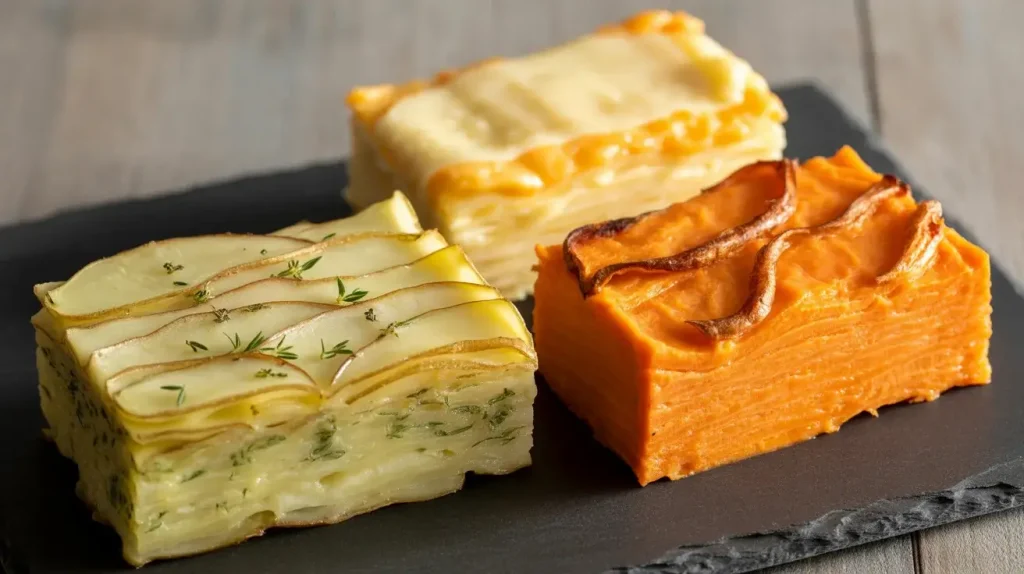
Transform your potato pave with simple additions between the layers. Try thinly sliced onions or shallots for sweetness, or add grated Gruyère or Parmesan for a cheesy twist.
Fresh herbs like rosemary, sage, or tarragon bring aromatic complexity. Truffle oil drizzled between layers creates an ultra-luxurious version perfect for special occasions.
For a colorful presentation, alternate layers of white and sweet potatoes. The slight sweetness pairs beautifully with the savory cream and creates a stunning visual contrast when sliced.
Serving Suggestions
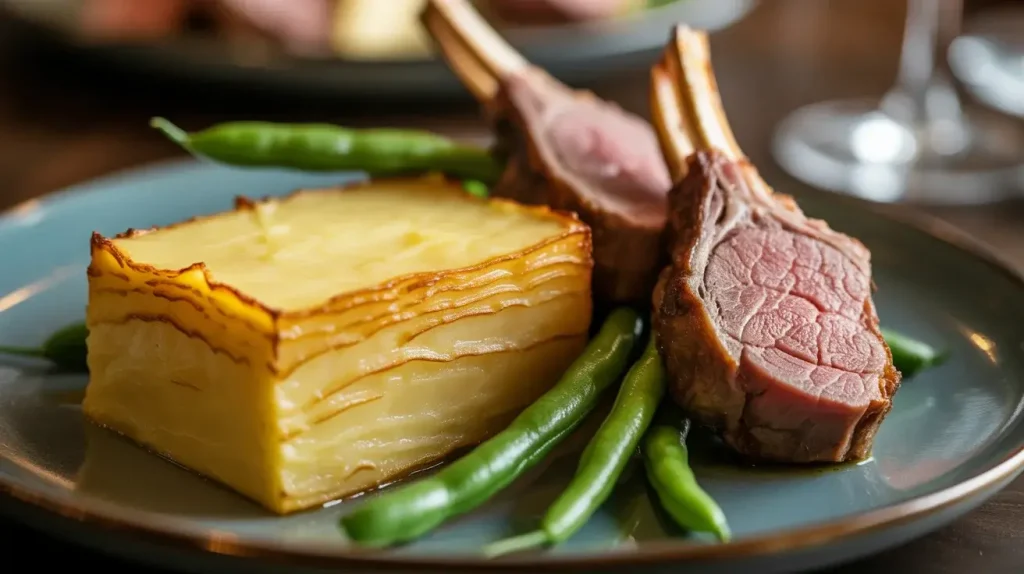
Potato pave shines alongside roasted meats—think beef tenderloin, roasted chicken, or lamb chops. The rich, buttery flavor complements simple protein preparations beautifully.
For lighter fare, serve with pan-seared salmon or halibut. A crisp green salad with vinaigrette balances the richness of the potatoes perfectly.
Consider cutting into smaller squares for appetizers or holiday party bites. Top each with a dollop of crème fraîche and chives for elegant passed hors d’oeuvres.
Storage and Reheating
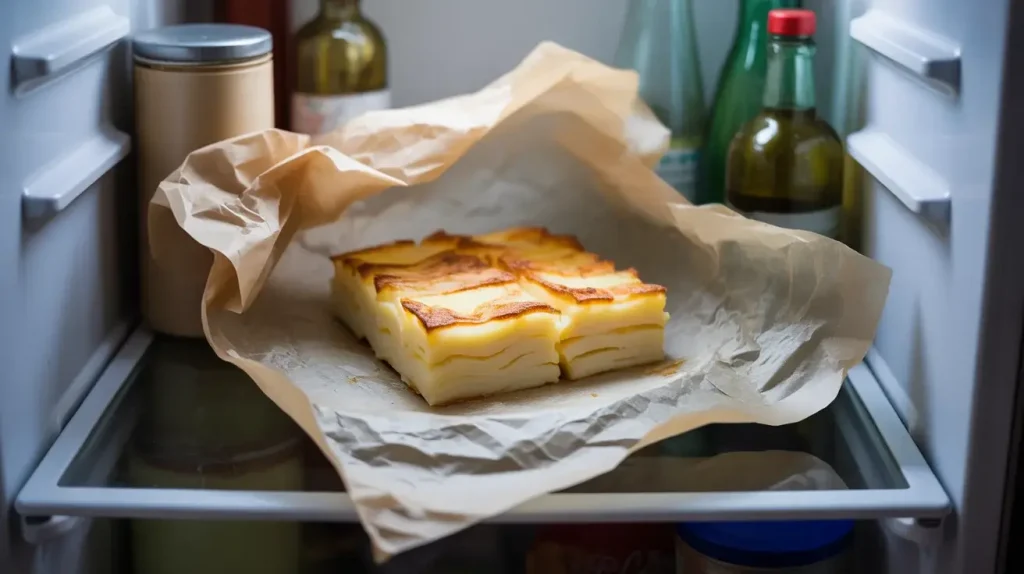
Store unbaked or cooked potato pave wrapped tightly in the refrigerator for up to 3 days. The compressed structure holds up well, making it excellent for meal prep and entertaining.
Reheat individual portions in a skillet with butter for the crispiest results. Alternatively, warm in a 350°F oven for 10-15 minutes until heated through.
Freezing isn’t recommended as the cream and potato texture can become grainy. However, the make-ahead nature means you rarely need to freeze—just prepare 1-2 days before serving.
Common Mistakes To Avoid
Skipping the weights during baking results in fluffy, gratin-like potatoes rather than the dense, sliceable pave texture you’re after. Always press firmly with proper weight.
Using starchy russet potatoes exclusively can make the dish gummy. Stick with Yukon Gold or a mix of waxy potatoes for the best creamy yet firm texture.
Cutting before fully chilled is the most common error. The starches need time to set in the cold, so resist the temptation and wait the full 4 hours minimum.
Frequently Asked Questions
Can I make potato pave ahead of time?
Absolutely! In fact, potato pave benefits from being made 1-2 days ahead. Complete through the baking and chilling steps, then slice and pan-fry just before serving. This makes it perfect for dinner parties when you want to minimize last-minute cooking. The flavors also develop and meld beautifully with time.
What if I don’t have a mandoline?
A sharp chef’s knife works, though it requires more patience and a steady hand. Slice as thinly and uniformly as possible—inconsistent thickness leads to uneven cooking. Some food processors have slicing attachments that can work in a pinch. The key is getting slices around 1/8 inch thick for proper layering and compression.
Why is my potato pave falling apart when I slice it?
This usually means it wasn’t chilled long enough or wasn’t pressed with enough weight during baking. The starches need both compression and time to set properly. Make sure you refrigerate at least 4 hours (overnight is even better) and use substantial weight—at least 5 pounds—during the initial baking phase.