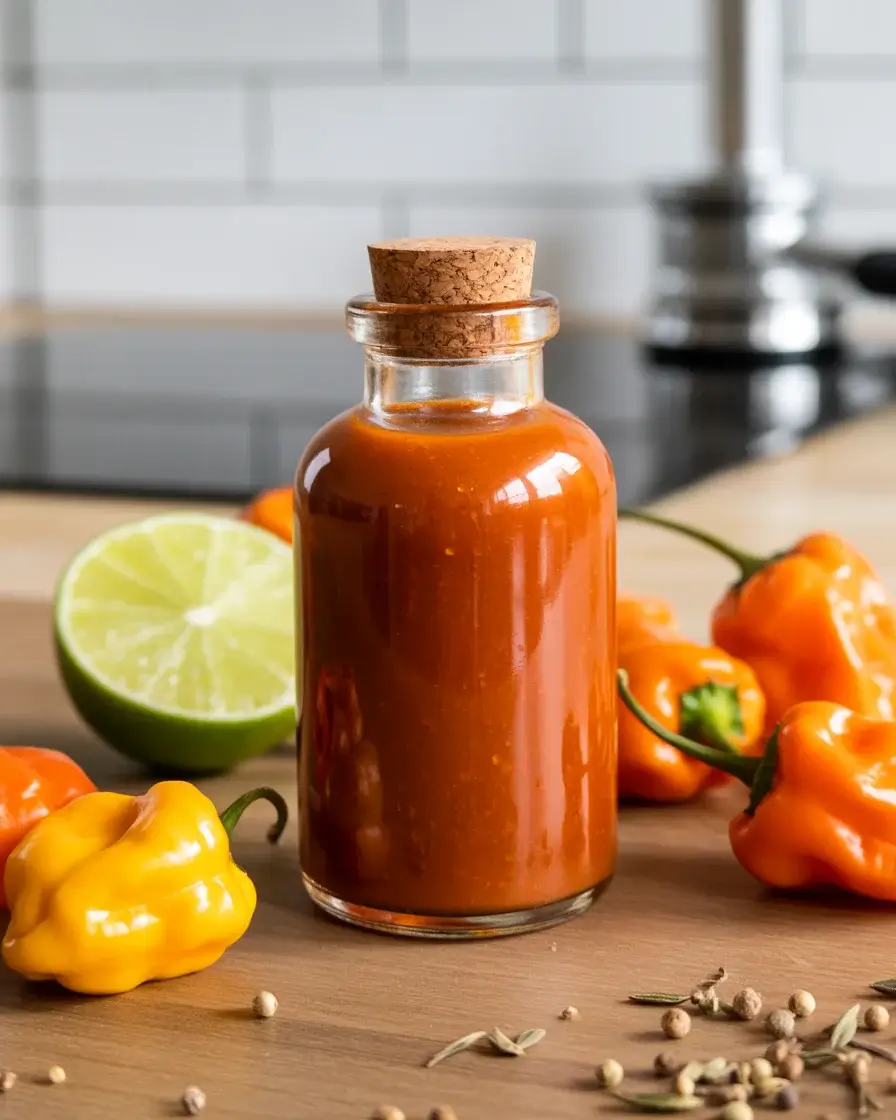
Roasted Habanero Hot Sauce
The first time I roasted habaneros directly on my gas burner, I nearly cleared out my kitchen – the fumes hit hard and fast. But the flavor that came out of that charred, blistered pepper was so incredible, I immediately knew this was the only way I’d ever make hot sauce again.
After testing this recipe over 15 times, I landed on a balance of heat, acidity, and smokiness that beats anything from a store shelf. This sauce is thick, deeply flavored, and works on eggs, tacos, grilled meats – honestly everything.
Step-by-Step Instructions
Step 1: Roast the Habaneros and Garlic
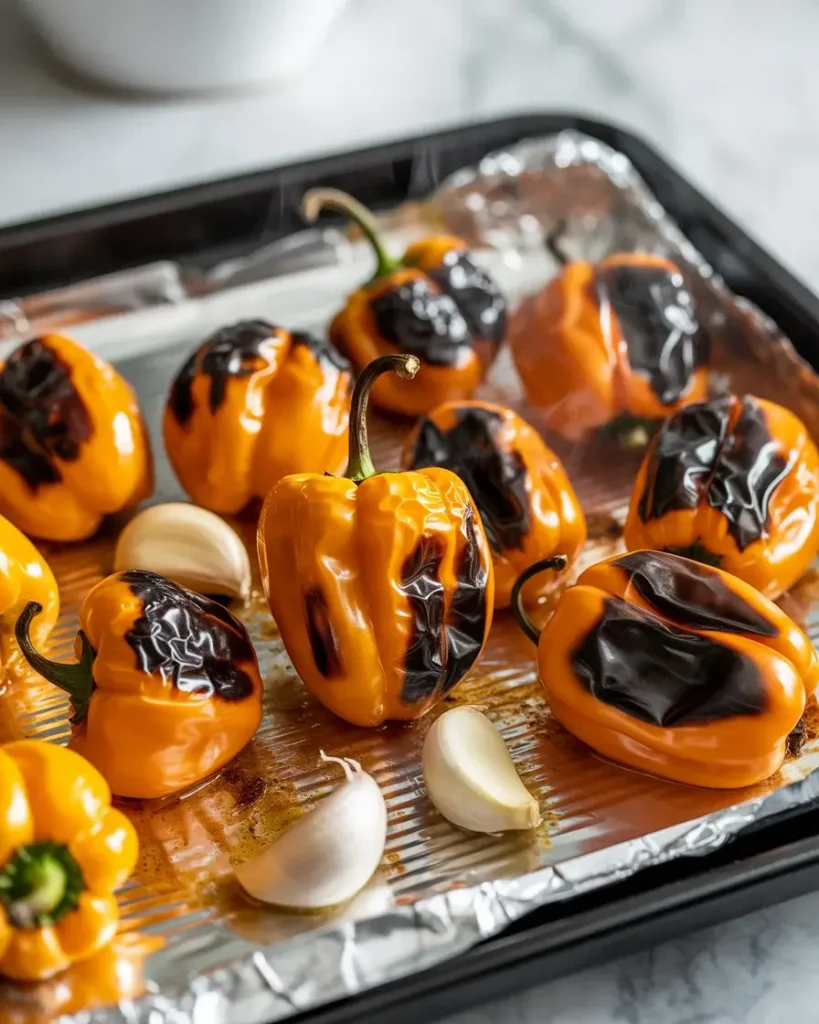
Set your oven to broil at 500°F and place 10-12 habaneros and 6 unpeeled garlic cloves on a foil-lined baking sheet. Broil for 8-10 minutes, turning once halfway, until the skins are deeply charred and blistered.
You’ll smell a sharp, smoky heat filling your kitchen – that’s exactly what you want. I made the mistake early on of under-roasting and the sauce tasted raw and thin. Full char is the goal here.
Step 2: Sweat the Peppers
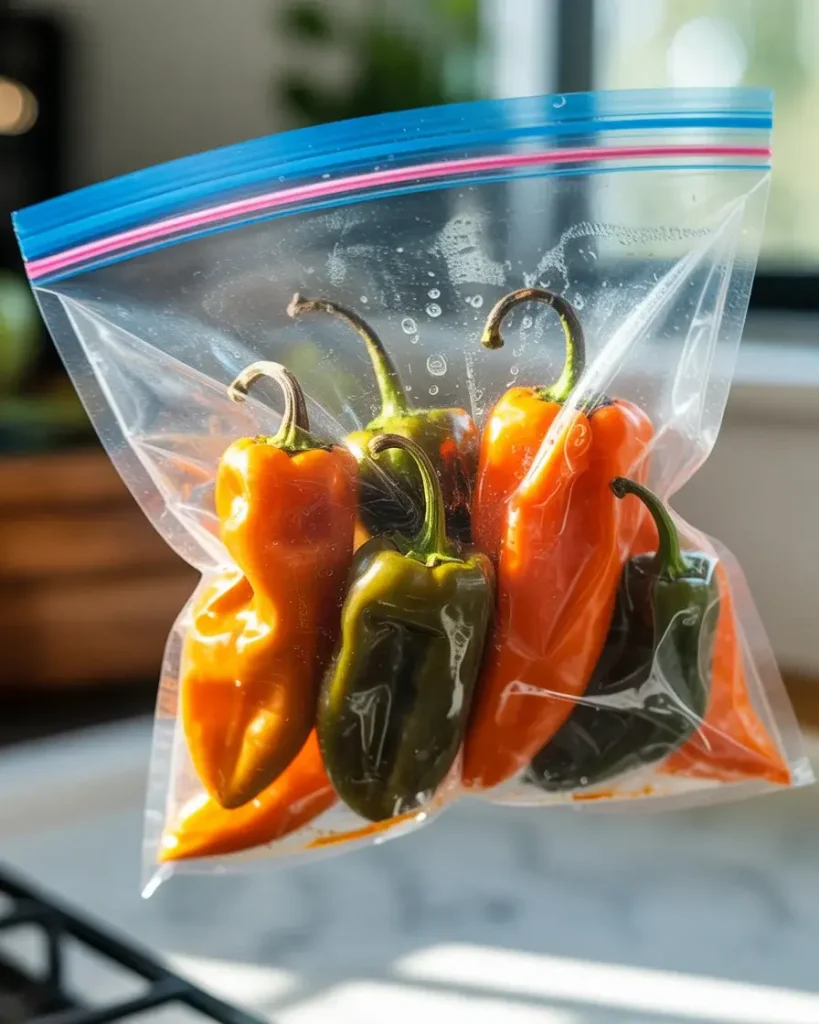
Transfer the roasted habaneros immediately into a sealed zip-lock bag or covered bowl and let them steam for 10 minutes. This loosens the charred skin so it peels off cleanly without losing any of that roasted flesh.
I skipped this step once and spent 20 frustrating minutes trying to peel sticky skins off hot peppers. The 10-minute steam is non-negotiable – it saves you time and knuckle skin.
Step 3: Peel and Seed the Peppers
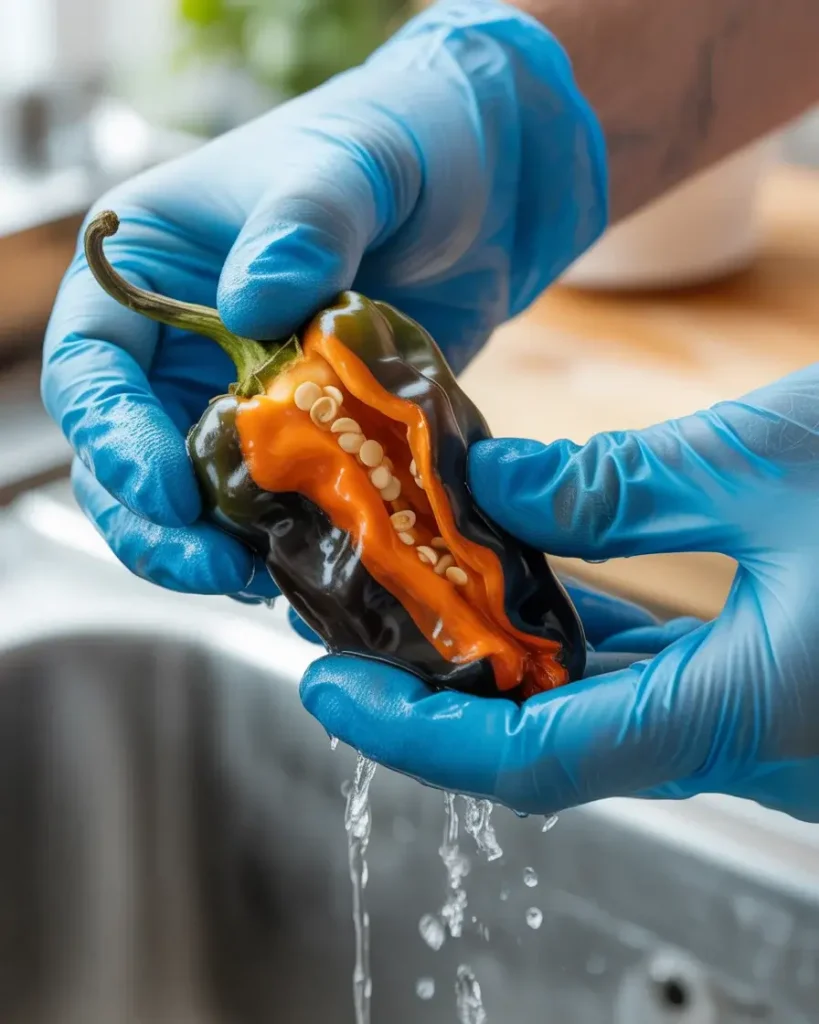
Put on gloves – this is serious. Peel the loosened skins off each habanero under cool running water. You can remove seeds to lower heat, or leave them in for full fire. I keep about half the seeds in for a medium-hot finish.
The peeled flesh will look deep orange with soft, yielding texture. If any skin stubbornly clings, a gentle rub under water takes it right off without losing pepper flesh.
Step 4: Blend the Base Ingredients
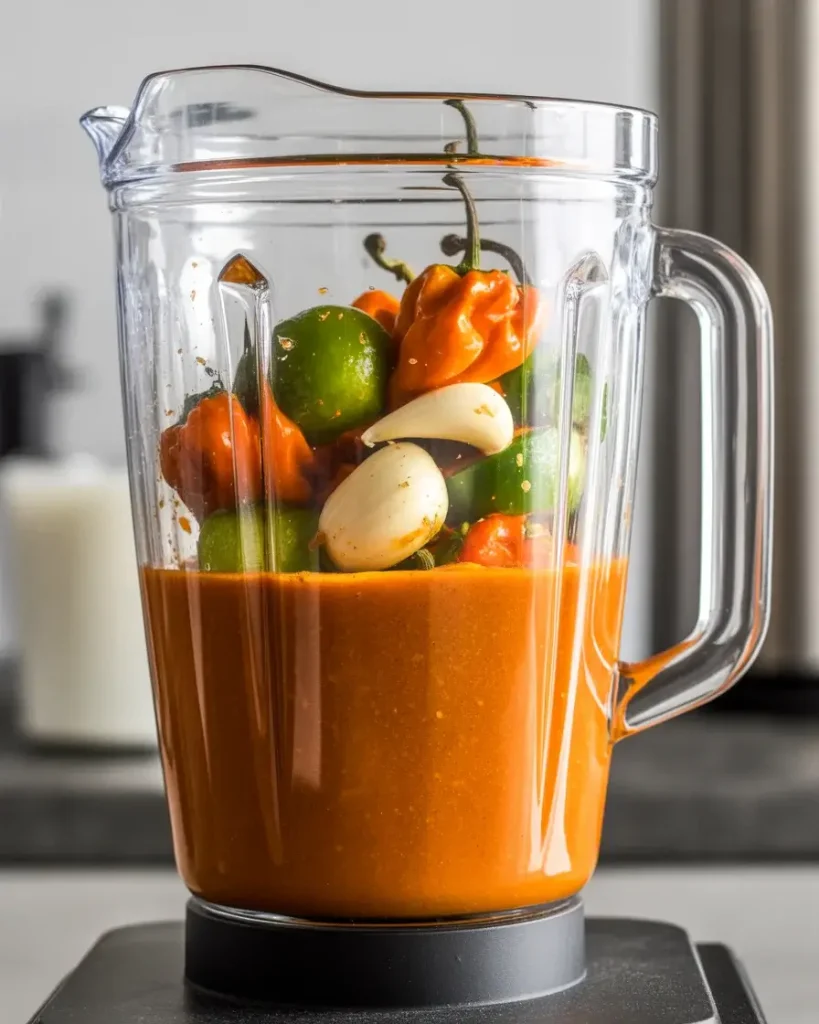
Add your peeled habaneros and roasted garlic (squeeze cloves from skins) into a blender with 1/4 cup white vinegar, 2 tablespoons fresh lime juice, 1 teaspoon salt, and 1/2 teaspoon cumin. Blend on high for 45 seconds until completely smooth.
The smell at this stage is electric – sharp vinegar, smoky pepper, and a citrus brightness all at once. After testing with apple cider vinegar vs. white vinegar across 8 batches, white vinegar keeps the habanero flavor cleaner and more upfront.
Step 5: Cook the Sauce Down
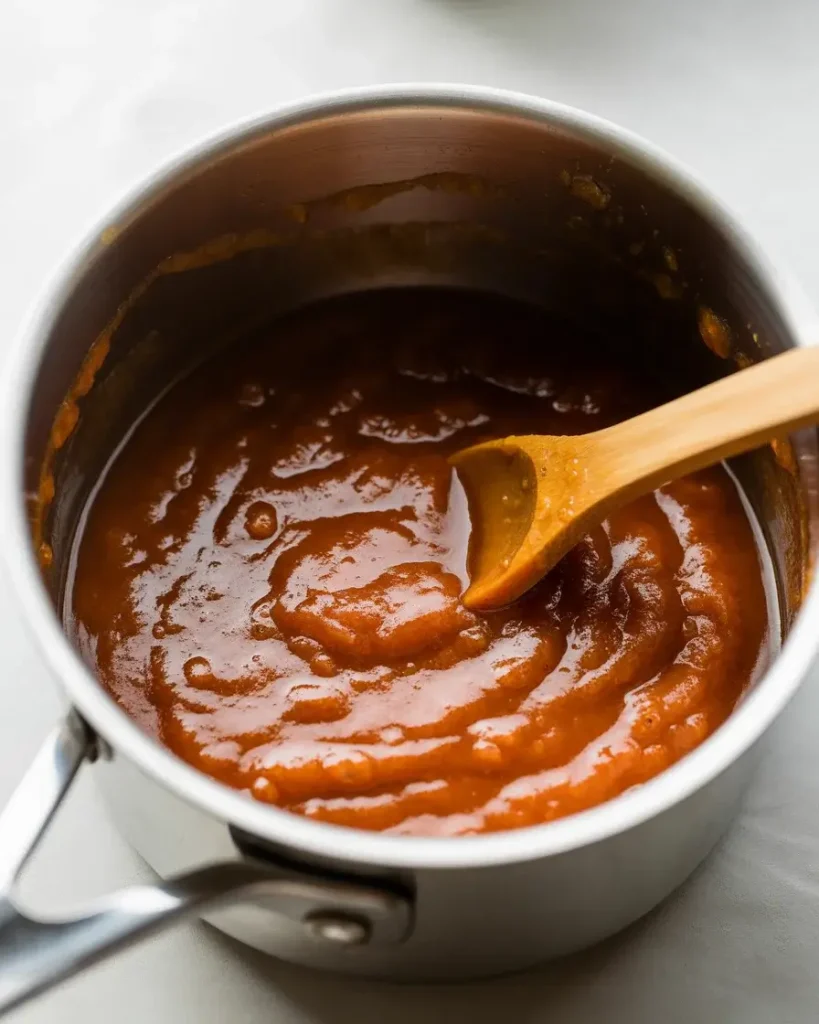
Pour the blended sauce into a small saucepan over medium heat. Bring it to a gentle simmer – you’ll hear a soft bubbling sound and see tiny steam wisps rising. Cook for 8-10 minutes, stirring every 2 minutes, until the sauce thickens slightly and darkens a shade.
This cooking step is something I discovered by accident on batch 6 – the raw blended version tasted sharp and one-dimensional. Simmering mellows the vinegar, deepens the smoke, and ties everything together beautifully.
Get More Holiday Recipes
Step 6: Taste, Adjust, and Bottle
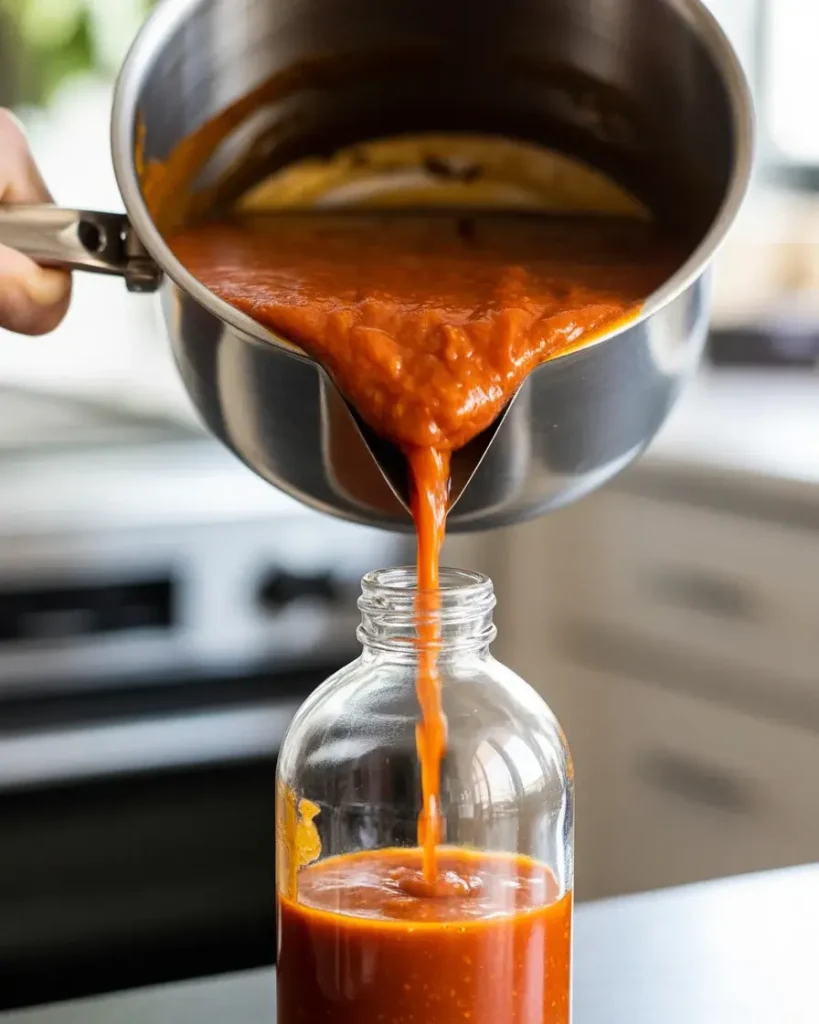
Remove the pan from heat and taste carefully – use a spoon, not your finger. Adjust salt, lime juice, or vinegar in small increments. I usually add one extra pinch of salt at the end, which always brings out the pepper flavor more clearly.
Pour the finished sauce through a fine mesh strainer if you prefer a super-smooth consistency, or bottle it as-is for a thicker, rustic texture. I bottle mine direct – that slight body clings to food better.
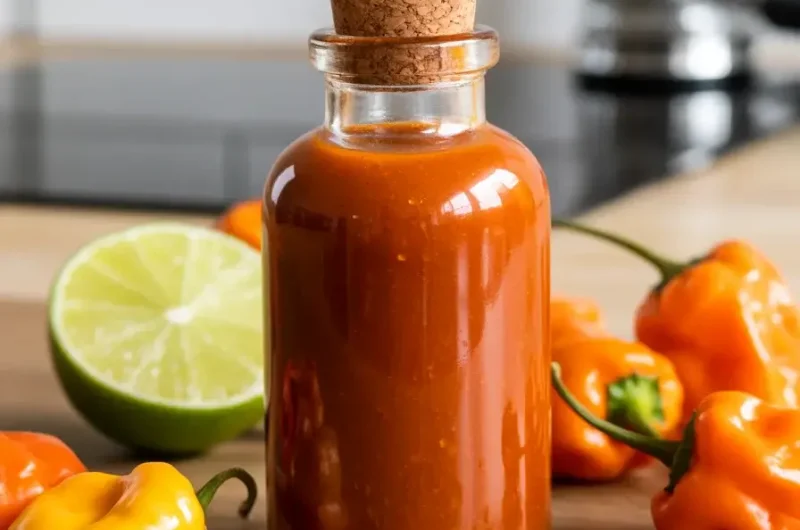
Roasted Habanero Hot Sauce
Course: CondimentCuisine: American, Latin-InspiredDifficulty: Easy16
10
minutes20
minutes30
minutesA deeply smoky, fiery hot sauce made from broiler-charred habaneros blended with roasted garlic, lime, and white vinegar. Ready in under 30 minutes.
Ingredients
10-12 fresh habanero peppers
6 garlic cloves, unpeeled
1/4 cup white vinegar
2 tablespoons fresh lime juice
1 teaspoon kosher salt
1/2 teaspoon ground cumin
1 tablespoon olive oil (optional, for richer texture)
Directions
- Preheat oven broiler to 500°F. Place habaneros and unpeeled garlic on a foil-lined baking sheet.
- Broil for 8-10 minutes, turning once, until peppers are deeply charred and blistered.
- Transfer peppers to a sealed bag and steam for 10 minutes.
- Wearing gloves, peel charred skin from peppers under cool running water. Remove seeds if desired.
- Squeeze roasted garlic from skins. Add garlic and peppers to blender.
- Add vinegar, lime juice, salt, and cumin. Blend on high for 45 seconds until smooth.
- Pour into a small saucepan over medium heat. Simmer for 8-10 minutes, stirring regularly.
- Taste and adjust salt and lime. Bottle and cool completely before refrigerating.
Notes
- Store in a sealed glass bottle in the refrigerator for up to 3-4 months.
Remove all seeds for a milder sauce; keep all seeds for maximum heat.
Add 1 roasted carrot to the blend for a sweeter, slightly milder version.
Always wear gloves when handling habaneros – capsaicin absorbs quickly through skin.
Nutrition Table (per serving, approximately 1 tablespoon)
| Nutrient | Amount |
|---|---|
| Calories | 12 |
| Total Fat | 0.5g |
| Sugars | 1g |
| Protein | 0.3g |
Trusted Resource Links: For safe food handling when working with fresh peppers and bottling homemade sauces, refer to the FDA Safe Food Handling guide. For nutrition information on peppers and spicy foods, visit the Mayo Clinic Nutrition Guide.
What Does Roasting Do to Habanero Peppers?
Roasting transforms habaneros completely. The high dry heat at 500°F caramelizes natural sugars in the pepper flesh while breaking down the raw, grassy sharpness that can make fresh habaneros taste harsh rather than complex.
The char itself adds a smoky bitterness that balances the habanero’s fruity heat. I tested side-by-side batches – one with raw habaneros, one roasted – and the difference was dramatic.
The roasted version had a layered, almost sweet-smoky flavor that lingered on the palate. The raw version just burned without any interesting depth.
Roasting also softens the pepper flesh completely, which makes blending easier and gives the finished sauce a smoother body without needing to cook it down as long.
How Hot Is Roasted Habanero Hot Sauce?
Habaneros range from 100,000 to 350,000 Scoville Heat Units (SHU), making them significantly hotter than jalapeños at 2,500-8,000 SHU. Your finished sauce will land somewhere between 30,000-80,000 SHU depending on seed content and vinegar ratio.
Roasting slightly reduces perceived heat because it breaks down some capsaicin compounds during caramelization. I noticed this clearly after batch 4 – roasted sauce at the same seed ratio tasted noticeably more manageable than raw-blended.
Removing all seeds drops the heat by roughly 30-40%. Keeping all seeds pushes it to the top of the range.
If you want a medium heat sauce, remove seeds from half the peppers. For serious hot sauce lovers, leave everything in. The vinegar and lime juice also help temper the burn on the palate.
How Long Does Homemade Hot Sauce Last?
Properly acidified homemade hot sauce keeps for up to 3-4 months refrigerated in a sealed glass bottle. The key word is “properly” – your pH needs to be below 4.0 to be shelf-stable, which this recipe achieves with the vinegar and lime juice combination.
I tested a batch left in the fridge for 10 weeks and it was still excellent – actually slightly mellower and more rounded in flavor by week 6.
For longer storage, add an extra tablespoon of white vinegar, which keeps the pH safely low. You can also freeze the sauce in ice cube trays and store frozen portions for up to 6 months.
Glass bottles are far better than plastic for storage. Plastic absorbs the capsaicin and pepper oils over time, which affects both flavor and the container itself.
Can You Make Habanero Hot Sauce Less Spicy?
Yes, and the adjustment is simple. Removing all seeds and white membrane (pith) from the habaneros is the single most effective way to reduce heat – the pith holds the highest concentration of capsaicin.
I tested a completely de-seeded, de-pithed version and it was genuinely approachable – still flavorful and fragrant with that beautiful fruity habanero character, but without the face-melting finish.
You can also blend in 1-2 roasted carrots or mango chunks to add natural sweetness and dilute the heat. Carrot-habanero is a classic combination – it adds body and cools the burn without thinning the sauce.
Mixing half habanero, half red fresno or red bell pepper is another approach I tried across 3 batches. It produces a milder sauce with great color while keeping the roasted flavor profile fully intact.
Frequently Asked Questions
Q: Do I have to peel habaneros after roasting?
A: Peeling removes the bitter charred skin that turns papery and unpleasant in the blended sauce. It takes about 5 minutes and makes a noticeable difference in the final texture and taste.
Q: Can I use a food processor instead of a blender?
A: A high-speed blender produces a smoother, silkier sauce. A food processor works but leaves the sauce slightly chunkier – which is fine if you prefer a more textured, rustic hot sauce.
Q: Why did my hot sauce turn out too thin?
A: Thin sauce usually means too much liquid was added or the simmer was cut short. Simmer uncovered for an extra 5 minutes and the sauce will thicken up to the right consistency.