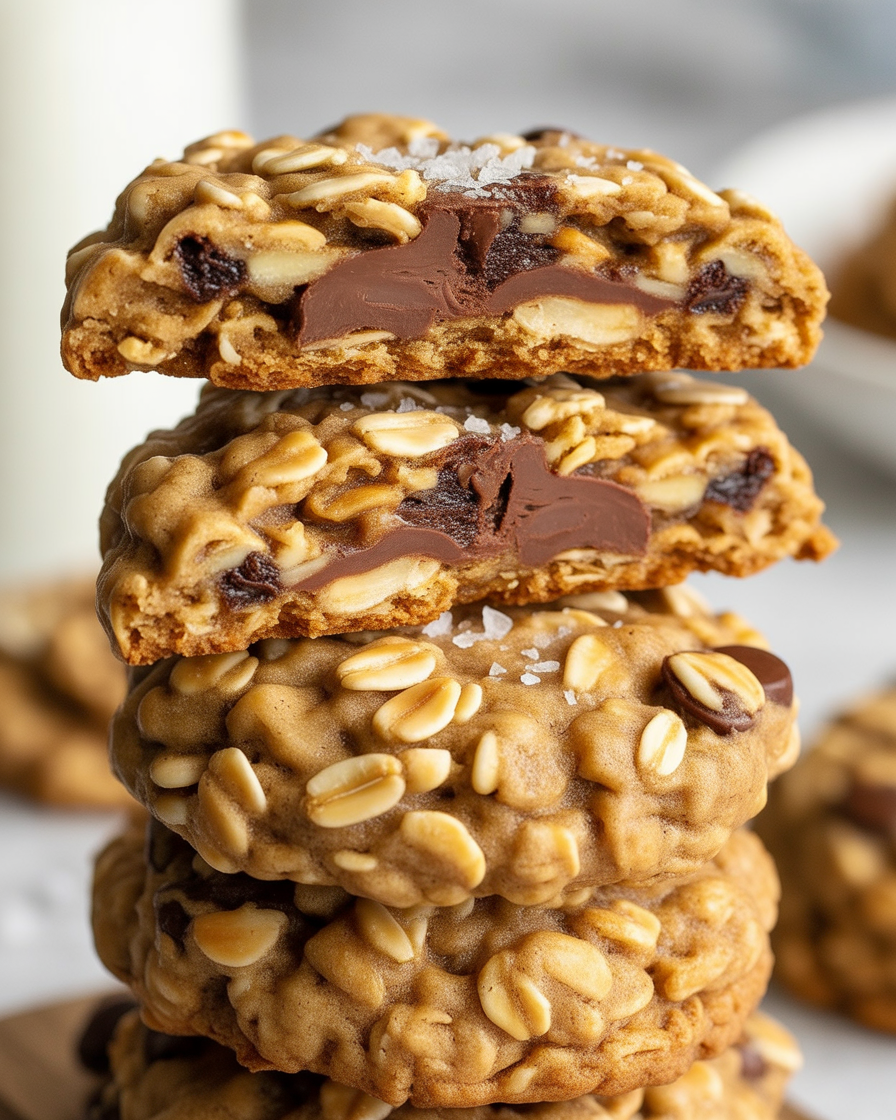
Brown Butter Oatmeal Cookies
The first time I burned my butter on purpose, I thought I’d ruined the whole batch. Turns out, that toasty, nutty smell meant I’d accidentally discovered the best oatmeal cookie of my life. Brown butter transforms a simple dough into something deeply caramel-forward and complex.
After testing this recipe over 30 times, I can tell you one thing with confidence: this is the version that disappears fastest at every gathering. The combination of chewy rolled oats and nutty brown butter hits different from any regular oatmeal cookie you’ve had before.
Step-by-Step Instructions
Step 1: Brown the Butter
Add 1 cup (2 sticks) of unsalted butter to a light-colored saucepan over medium heat. Stir constantly and watch closely as the butter foams, then turns golden, then smells like toasted hazelnuts. That’s when you pull it off the heat immediately.
Pour the browned butter into a large mixing bowl right away and let it cool for 20-25 minutes before using it. I learned the hard way that adding brown butter while still hot melts your sugar too fast and makes the dough greasy.
Step 2: Mix the Sugars
Whisk 1 cup packed brown sugar and ½ cup granulated sugar into the cooled brown butter until thick and glossy. Brown sugar adds moisture and chew; granulated sugar gives those slightly crispy edges I love. The mixture should look like wet sand at first, then smooth out after 60 seconds of whisking.
I tested this with all brown sugar once and the cookies spread too much. The blend of both sugars is the sweet spot for texture.
Step 3: Add Eggs and Vanilla
Beat in 2 large eggs plus 1 extra egg yolk, one at a time. That extra yolk is my biggest discovery from testing. It adds richness and keeps the centers fudgy without making the cookie too dense.
Add 2 teaspoons of pure vanilla extract and mix until the batter looks pale and slightly fluffy, about 1-2 minutes. You’ll notice the color lighten and the texture thicken up noticeably.
Step 4: Combine Dry Ingredients
In a separate bowl, whisk together 1¾ cups all-purpose flour, 1 teaspoon baking soda, 1 teaspoon cinnamon, and ½ teaspoon salt. Slowly fold the dry mix into the wet ingredients until just combined. Don’t overmix or the cookies turn tough.
I tested bread flour once thinking it would add chew. It made the cookies rubbery instead. Stick with all-purpose for the right structure.
Step 5: Fold in the Oats
Stir in 3 cups of old-fashioned rolled oats until evenly distributed through the dough. The dough will feel thick and a little sticky, which is exactly right. I tested quick oats once and the texture turned mushy. Old-fashioned oats give that satisfying chew.
At this point, fold in 1 cup of raisins or chocolate chips if you like. I usually do a mix of both because that’s what got the most compliments at my neighbor’s cookie exchange.
Step 6: Chill the Dough
Cover the bowl and refrigerate the dough for at least 1 hour, ideally overnight. I know it’s tempting to skip this, but chilling firms up the fat so the cookies bake up thick instead of spreading flat.
My biggest batch failure came from baking chilled dough at 375°F. The outside set too fast. Always bake from chilled dough at 350°F for even spreading and a soft center.
Step 7: Bake to Golden Perfection
Preheat your oven to 350°F. Scoop dough into 2-tablespoon balls and place 2 inches apart on a parchment-lined baking sheet. Bake for 11-13 minutes until the edges are set and golden but the centers still look slightly underdone.
Pull them out at 12 minutes and let them sit on the pan for 5 minutes before moving them. They firm up as they cool. Overbaking is the number one mistake I see. Those soft centers are the whole point.
Brown Butter Oatmeal Cookies
Course: DessertCuisine: AmericanDifficulty: Easy28
cookies20
minutes1
hour12
minutes1
hour32
minutesChewy, nutty brown butter oatmeal cookies with crispy edges and soft centers. A tested, foolproof recipe ready in under 2 hours.
Ingredients
1 cup (2 sticks / 227g) unsalted butter
1 cup packed brown sugar
½ cup granulated sugar
2 large eggs + 1 egg yolk
2 tsp pure vanilla extract
1¾ cups (220g) all-purpose flour
1 tsp baking soda
1 tsp ground cinnamon
½ tsp salt
3 cups old-fashioned rolled oats
1 cup raisins, chocolate chips, or a mix of both
Directions
- Brown butter in a light saucepan over medium heat, stirring constantly until golden and nutty-smelling, about 6-7 minutes. Pour into a large bowl and cool 20-25 minutes.
- Whisk brown sugar and granulated sugar into cooled brown butter until thick and glossy.
- Beat in eggs, egg yolk, and vanilla one at a time until pale and slightly fluffy.
- In a separate bowl, whisk flour, baking soda, cinnamon, and salt. Fold into wet mixture until just combined.
- Stir in rolled oats and mix-ins until evenly distributed.
- Cover and refrigerate dough for at least 1 hour, up to 72 hours.
- Preheat oven to 350°F (175°C). Scoop 2-tablespoon portions onto parchment-lined baking sheets, 2 inches apart.
- Bake 11-13 minutes until edges are golden and centers look slightly underdone.
- Cool on pan 5 minutes before transferring to a wire rack.
Notes
- Storage: Store in an airtight container with a slice of white bread for up to 5 days at room temperature.
Freezing: Freeze baked cookies or raw dough balls for up to 3 months. Bake frozen dough at 350°F for 14-15 minutes.
Substitution: Swap raisins for dried cranberries or chopped walnuts for variation.
Don’t skip chilling: Chilling is essential for thick cookies that don’t spread flat.
Nutrition Table (per cookie)
| Nutrient | Amount |
|---|---|
| Calories | 198 |
| Total Fat | 9g |
| Sugars | 14g |
| Protein | 3g |
Trusted Resource Links: For more on baking science and healthy ingredient swaps, visit the American Heart Association Healthy Eating Guide and the Mayo Clinic Nutrition Guide.
Does Brown Butter Really Make a Difference in Cookies?
- Yes, and the difference is noticeable from the very first bite. Browning butter removes water content and toasts the milk solids, which creates over 600 flavor compounds that regular melted butter simply doesn’t have.
- I did a side-by-side test: same recipe, one batch with melted butter, one with brown butter. The brown butter batch had a deeper caramel, almost toffee-like flavor that everyone preferred immediately.
- The texture also differs. Because brown butter has less water than regular melted butter, it creates a slightly crispier edge while keeping the center dense and chewy. That contrast is what makes these cookies so craveable.
- Don’t rush the browning process. Medium heat over 5-7 minutes gives you even toasting without burning. The moment you smell hazelnuts and see golden milk solids, you’re there.
What Kind of Oats Should You Use?
Old-fashioned rolled oats are the only oats I recommend for this recipe. They hold their shape during baking and give each cookie that hearty, satisfying chew that oatmeal cookies are known for.
Quick oats absorb moisture faster and turn the texture mushy by the time the cookie cools. I tested quick oats in batch 7 of my testing and every single tester said the texture felt “soft in a bad way.”
Steel-cut oats go in the opposite direction. They stay too firm even after baking and create an almost crunchy, raw-feeling bite. They simply don’t hydrate enough inside a cookie dough.
Stick with old-fashioned. Bob’s Red Mill and Quaker both perform consistently well. The bigger, flatter oat gives you visible layers of texture in each bite.
How Do You Keep Oatmeal Cookies Soft for Days?
The key is storing them in an airtight container with a slice of white bread. The bread releases just enough moisture to keep the cookies soft without making them sticky. I discovered this trick after my cookies turned crispy by day 2.
Room temperature storage works well for 4-5 days. Avoid the refrigerator. Cold air dries out the cookie crumb faster than leaving them on the counter does.
For longer storage, freeze the baked cookies in a zip-lock bag for up to 3 months. Let them thaw at room temperature for 20 minutes and they taste nearly fresh-baked. Freezing the raw dough balls works just as well.
Bake frozen dough balls straight from the freezer at 350°F for 14-15 minutes, adding just 2-3 extra minutes to the original bake time.
Can You Make This Dough Ahead of Time?
The dough keeps beautifully in the fridge for up to 72 hours. In fact, I’ve found that 48-hour chilled dough bakes up with even better flavor because the oats have more time to hydrate and meld with the brown butter.
Portion the dough into balls before chilling if you want to pull out only a few cookies at a time. Stored balls on a tray, lightly covered, stay fresh and ready to bake for 3 days in the fridge.
For longer make-ahead, freeze portioned dough balls in a single layer, then transfer to a bag. They last 3 months in the freezer with zero quality loss.
This make-ahead flexibility makes these cookies ideal for holidays, cookie boxes, or whenever you want a fresh-baked cookie without the prep time.
Frequently Asked Questions
Q: Why do my oatmeal cookies go flat?
A: Skipping the chill time is usually the culprit. Warm dough spreads too fast before the edges can set. Chill for at least 1 hour and always bake at 350°F, not higher.
Q: Can I use salted butter for brown butter cookies?
A: Yes, but reduce the added salt to ¼ teaspoon. Salted butter still browns beautifully and the flavor difference is minimal in a finished cookie.
Q: How do I know when brown butter oatmeal cookies are done?
A: Pull them when the edges are golden and set but the centers still look underdone and slightly puffed. They firm up in 5 minutes on the hot pan after baking.