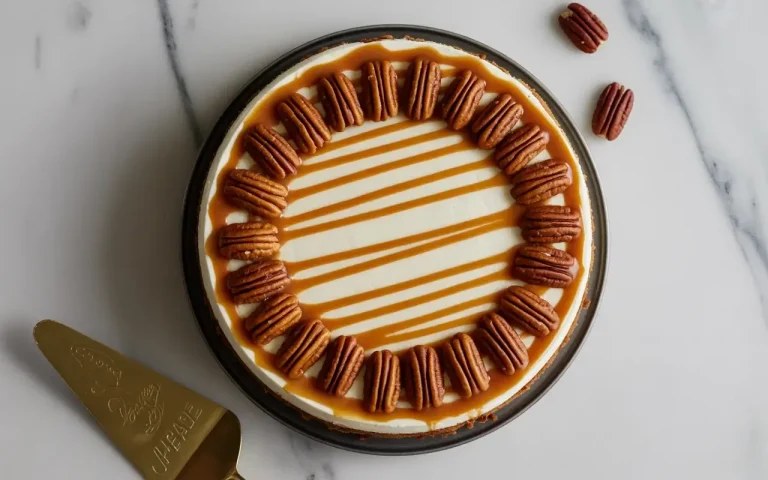
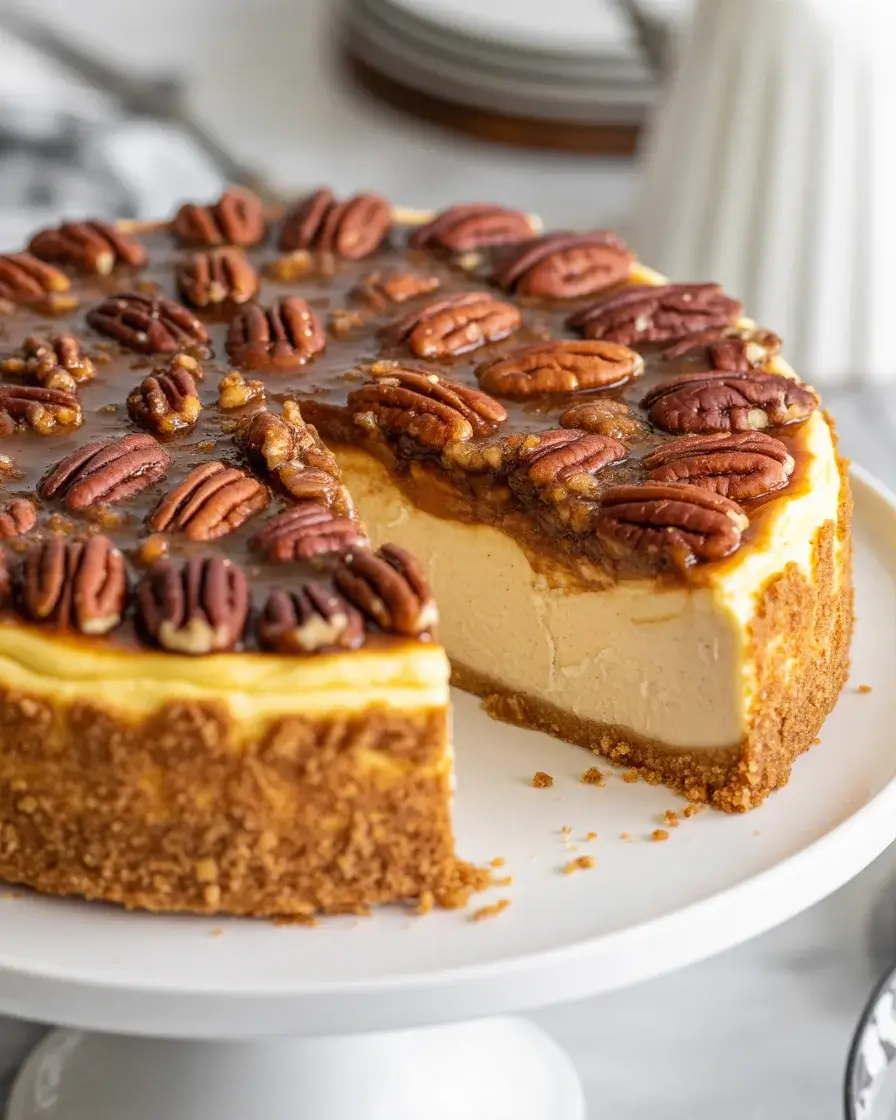
Browned Butter Pecan Cheesecake
I burned my first batch of browned butter back in 2021, turning what should have been nutty and golden into something that tasted like charcoal. That disaster taught me to watch the butter like a hawk and pull it off heat the moment those milk solids turn amber. Now, after testing this cheesecake recipe 15 times, I can promise you’ll get that deep, toasty flavor without any bitterness.
This isn’t your standard cheesecake. The browned butter adds a caramelized depth that pairs perfectly with toasted pecans, creating something that tastes like autumn in dessert form. I’ve served this at three Thanksgivings now, and it disappears faster than pumpkin pie.
Step-by-Step Instructions
Step 1: Brown the Butter
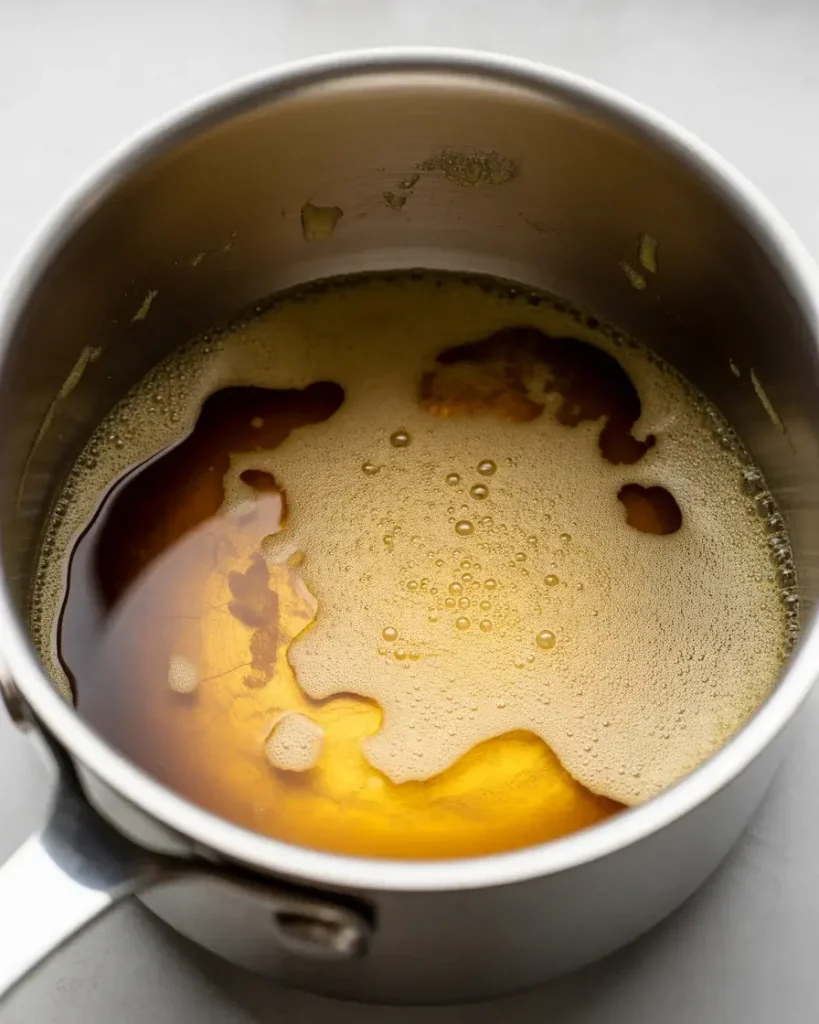
Melt 1/2 cup (113g) unsalted butter in a light-colored saucepan over medium heat. Stir constantly with a silicone spatula, scraping the bottom to prevent burning. After about 5-7 minutes, the butter will foam, then the foam will subside and you’ll see golden-brown specks forming at the bottom.
Pull it off the heat when you smell a nutty, almost hazelnut-like aroma and the color resembles light amber honey. I learned the hard way that going even 30 seconds too long takes it from perfect to burnt. Let it cool for 15 minutes before using.
Step 2: Make the Pecan Crust
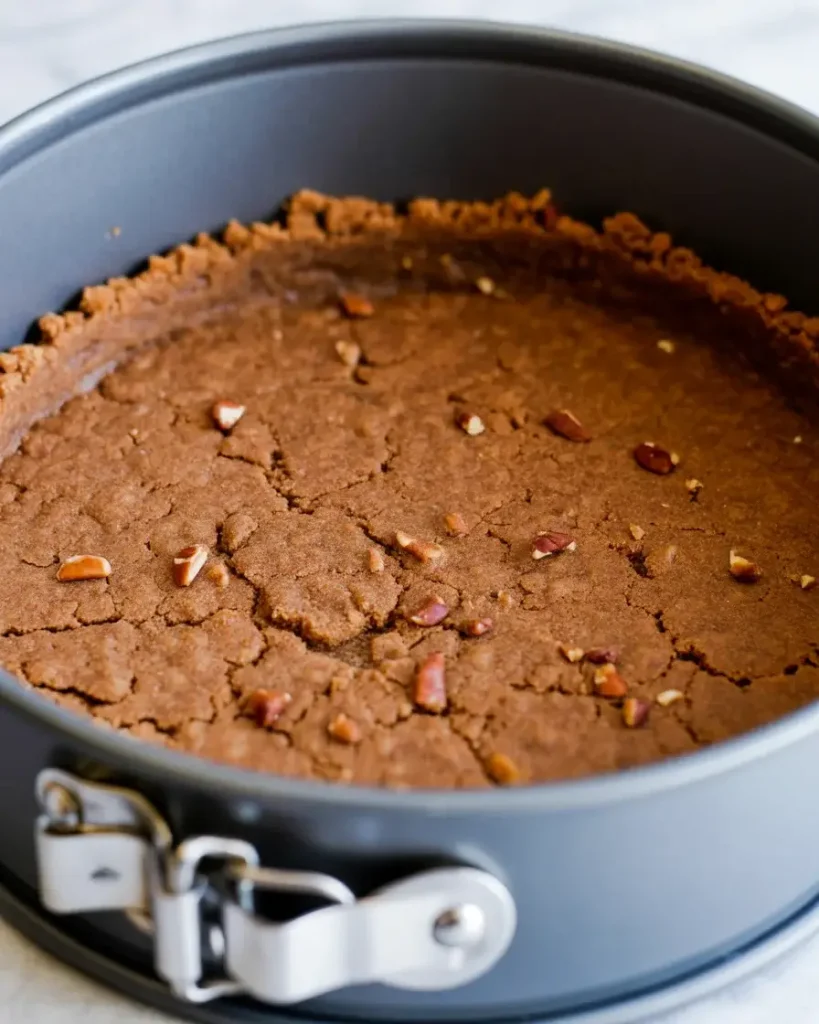
Pulse 1 1/2 cups (150g) toasted pecans, 1 1/4 cups (150g) graham cracker crumbs, 1/4 cup (50g) brown sugar, and 1/4 teaspoon salt in a food processor until finely ground. Add 1/3 cup of the cooled browned butter and pulse until the mixture looks like wet sand and holds together when squeezed.
Press this mixture firmly into the bottom and 1 inch up the sides of a 9-inch springform pan. I use the bottom of a measuring cup to pack it down evenly. After testing both baked and unbaked crusts, I found that baking it for 10 minutes at 350°F creates a sturdier base that won’t get soggy.
Step 3: Prepare the Cheesecake Batter
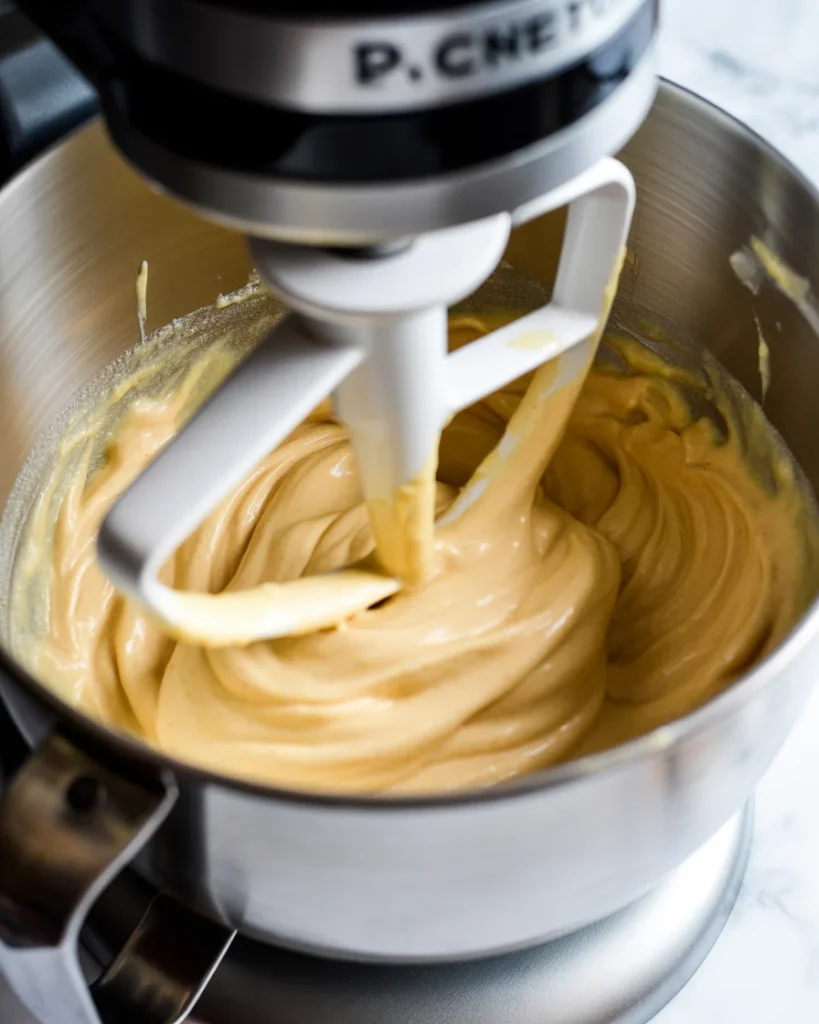
Beat 32 ounces (907g) softened cream cheese in a stand mixer on medium-low speed for 2-3 minutes until completely smooth with no lumps. Scrape down the bowl twice during mixing. Add 1 cup (200g) granulated sugar and 1/4 cup (50g) brown sugar, beating for another 2 minutes until fluffy.
Keep your mixer on medium-low, never high. I tested this at different speeds, and high speed incorporates too much air, which creates cracks. Add the remaining cooled browned butter and 1 teaspoon vanilla extract, mixing just until combined. You should smell that nutty aroma throughout the batter.
Step 4: Add Eggs and Finish the Batter
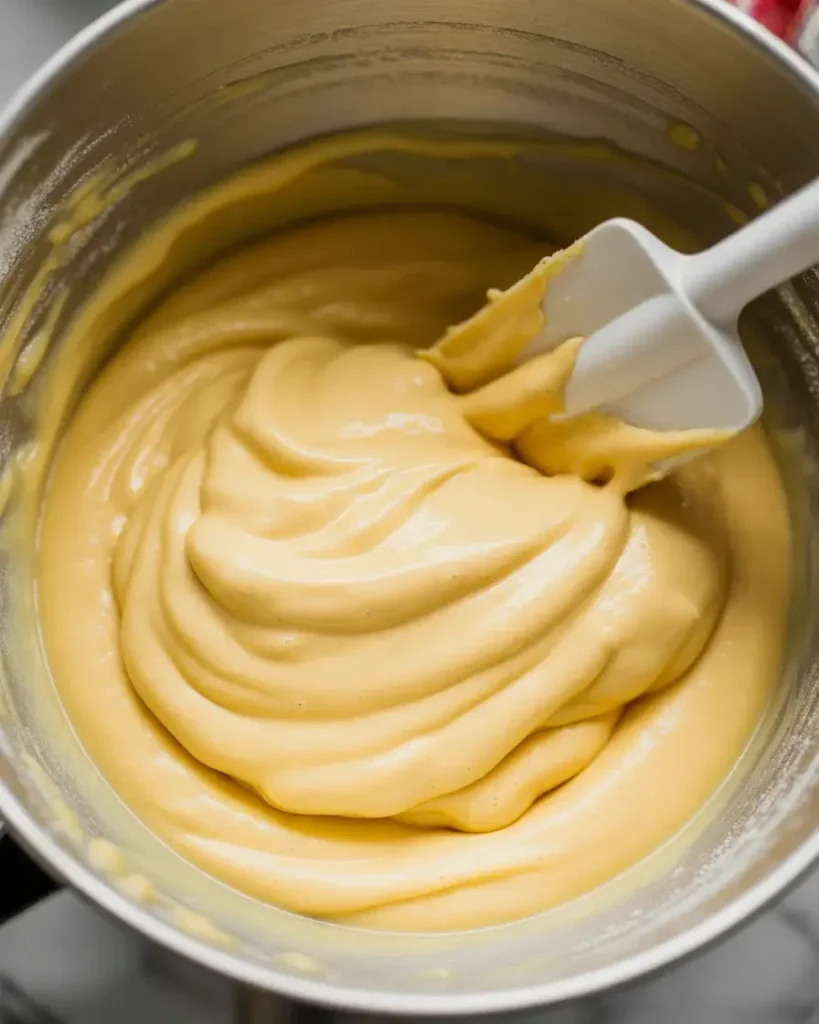
Add 4 large eggs one at a time on low speed, mixing just until each egg disappears into the batter before adding the next. This takes patience, about 30-45 seconds per egg. Overbeating after adding eggs is the number one cause of cracked cheesecakes in my testing.
Stir in 1/3 cup (80ml) sour cream and 2 tablespoons all-purpose flour by hand with a spatula. The flour helps stabilize the cheesecake, giving it a creamier texture that holds up better when sliced. I discovered this trick after my sixth attempt came out too soft to cut cleanly.
Step 5: Bake with a Water Bath
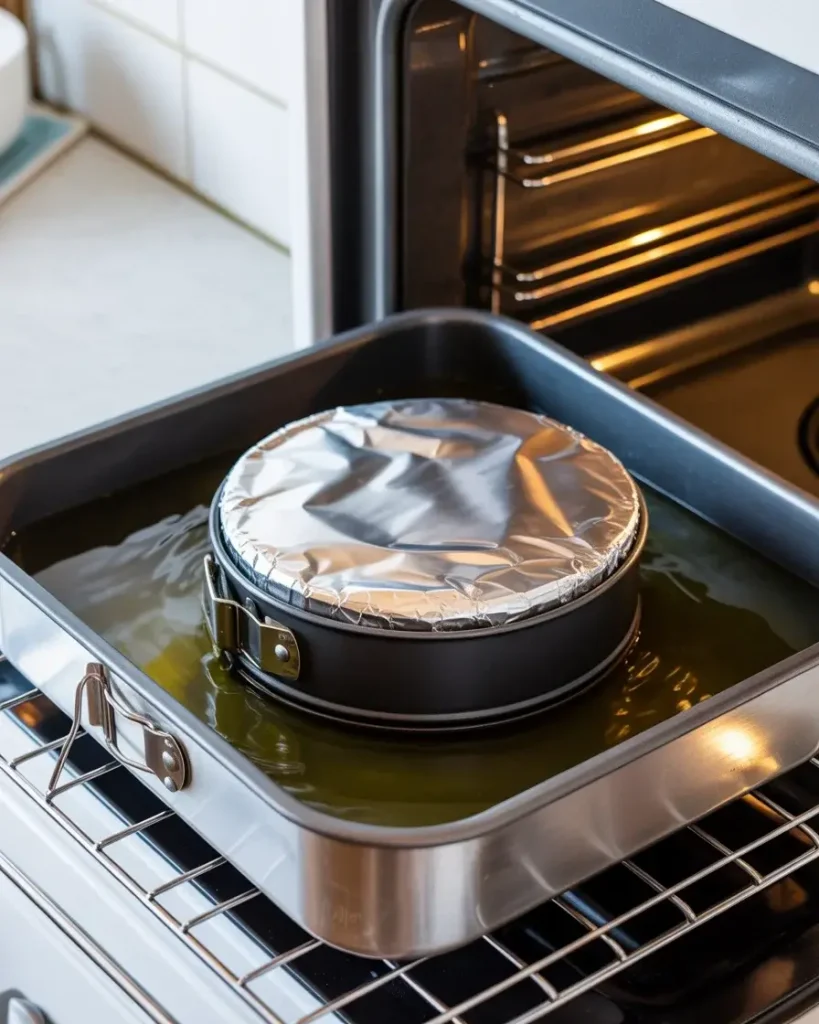
Pour the batter over the pre-baked crust, smoothing the top with an offset spatula. Wrap the outside of the springform pan with two layers of heavy-duty aluminum foil, covering the bottom and coming up the sides. Place the pan in a large roasting pan and pour hot water into the roasting pan until it reaches halfway up the sides of the springform pan.
Bake at 325°F for 55-65 minutes. The cheesecake is done when the edges are set but the center still jiggles slightly when you gently shake the pan, about a 3-inch circle in the middle. I use a thermometer now after ruining two cheesecakes by overbaking. The center should reach 150°F.
Discover your next favorite dish here
Step 6: Cool Gradually
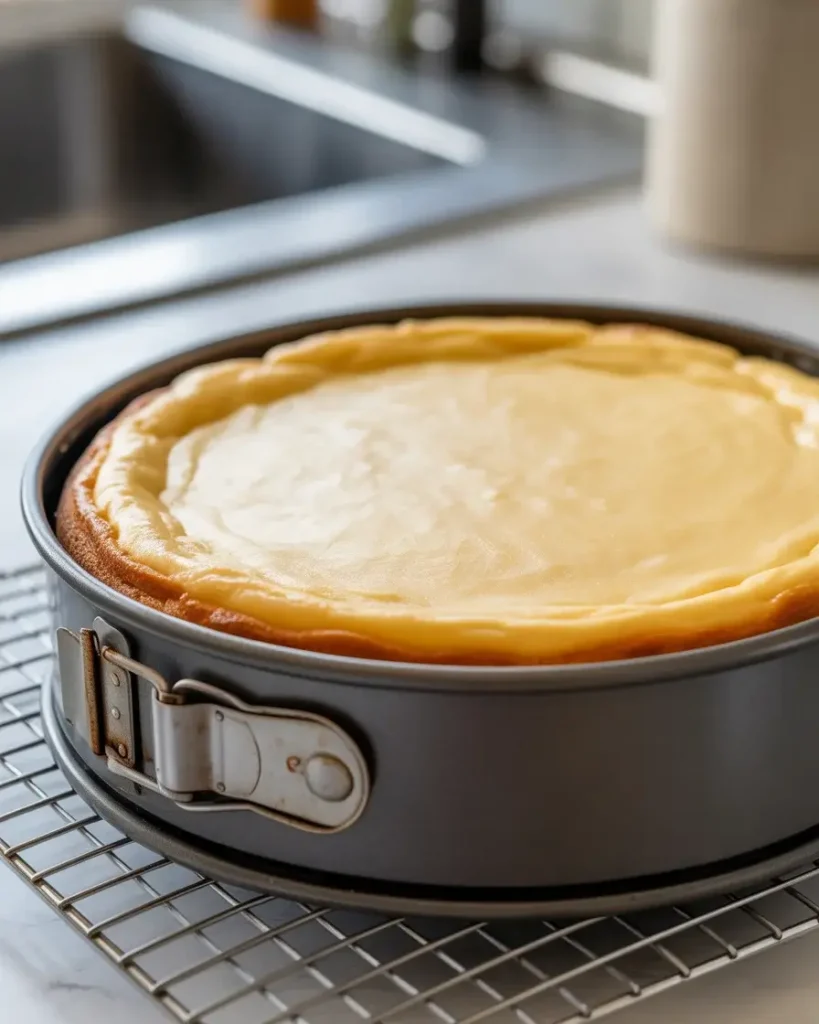
Turn off the oven and crack the door open about 4 inches. Let the cheesecake sit in the cooling oven for 1 hour. This gradual temperature change prevents the dreaded crack across the top. I tested both methods, and the cheesecakes that went straight to the counter cracked every single time.
After an hour, remove the cheesecake from the water bath and place it on a wire rack. Run a thin knife around the edge to loosen it from the pan, which prevents the top from pulling and cracking as it cools. Let it cool completely at room temperature for 2 hours before refrigerating.
Step 7: Make the Caramelized Pecan Topping
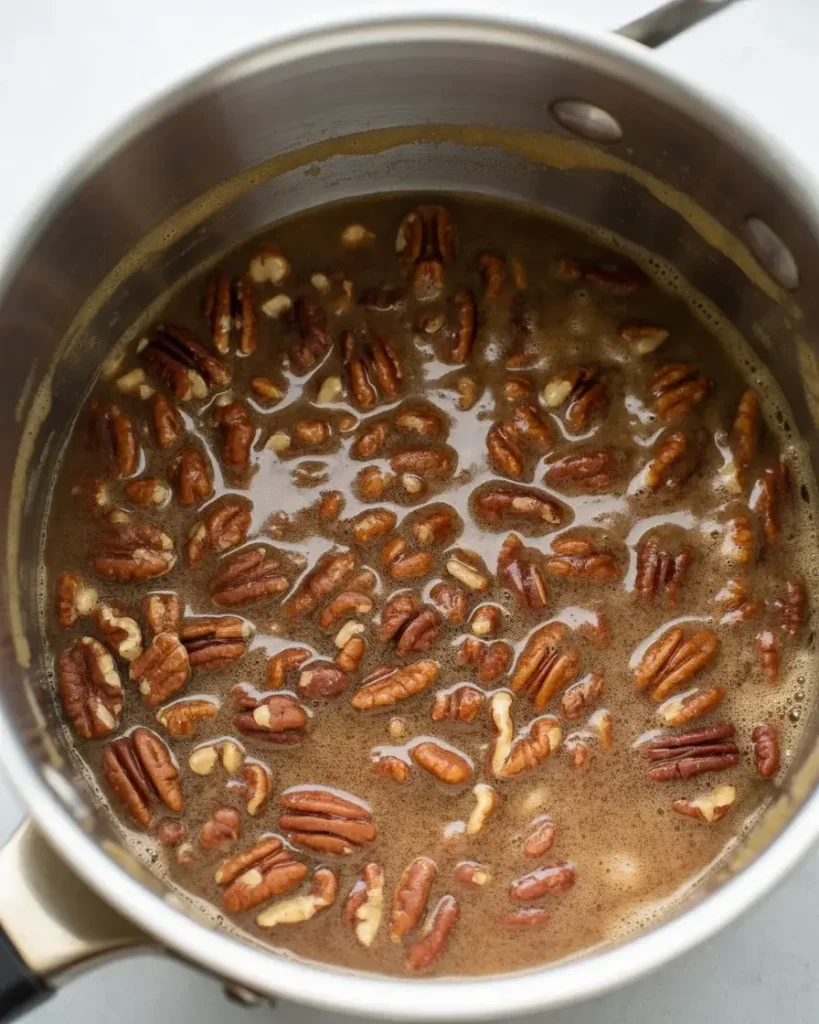
Heat 1/4 cup (50g) butter, 1/2 cup (100g) brown sugar, and 3 tablespoons heavy cream in a small saucepan over medium heat. Stir constantly until the mixture bubbles and thickens slightly, about 3-4 minutes. Remove from heat and stir in 1 1/2 cups (150g) roughly chopped toasted pecans and 1/2 teaspoon vanilla.
Let this cool for 10 minutes until it’s thick but still pourable, like warm caramel sauce. I tried spreading it on while hot in my third test, and it melted right into the cheesecake instead of sitting on top as a distinct layer. Patience pays off here.
Step 8: Add Topping and Chill
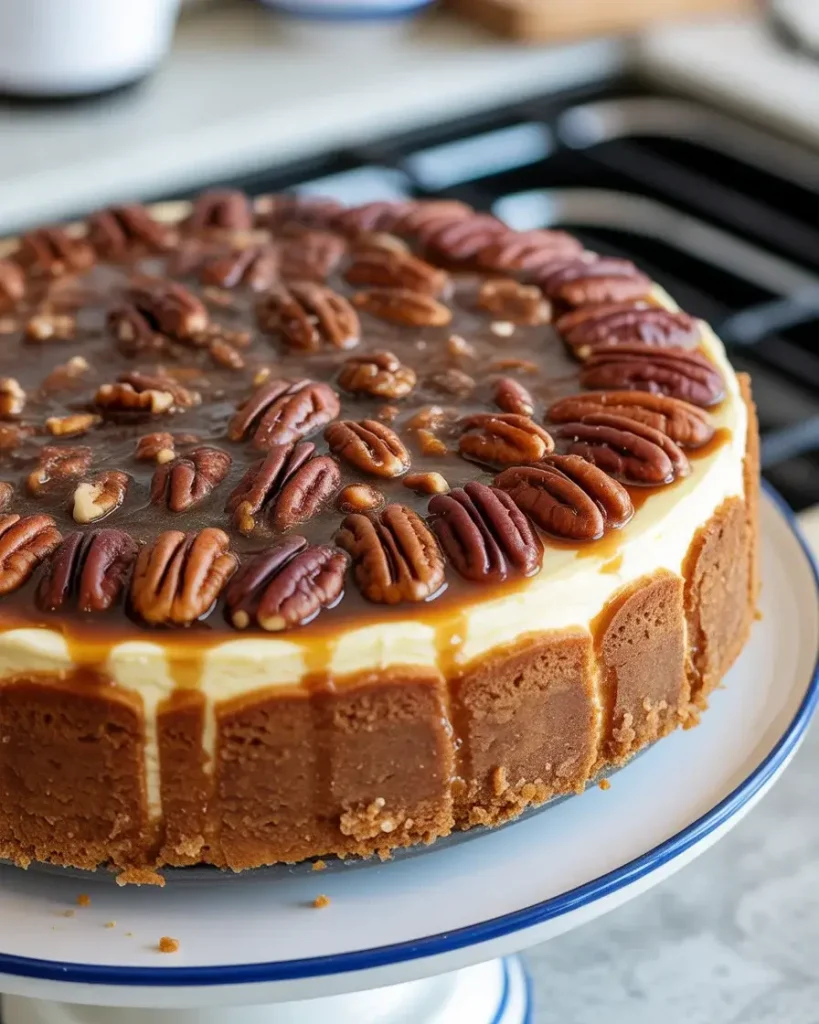
Remove the cheesecake from the refrigerator after it has chilled for at least 4 hours or overnight. Carefully remove the springform pan sides. Spread the cooled caramelized pecan mixture evenly over the top, leaving a 1/2-inch border around the edge if you want a cleaner presentation.
Return the cheesecake to the refrigerator for at least 2 more hours before slicing. This final chill lets the topping set properly and makes slicing much cleaner. I’ve found that cheesecakes sliced straight after topping always look messier. Use a sharp knife dipped in hot water and wiped clean between each slice.
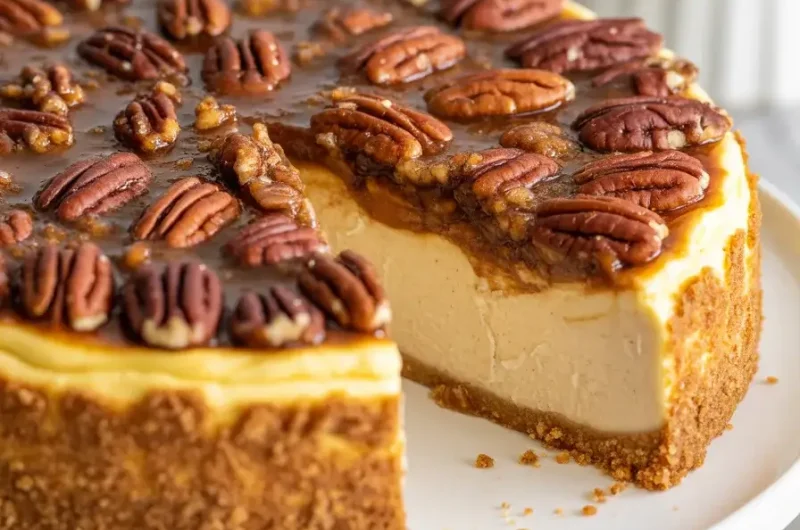
Browned Butter Pecan Cheesecake
Course: DessertCuisine: AmericanDifficulty: Medium12
servings30
minutes1
hour5
minutes1
hour35
minutesA rich, creamy cheesecake infused with nutty browned butter and topped with caramelized pecans on a toasted pecan crust.
Ingredients
- For the Crust
1 1/2 cups (150g) toasted pecans
1 1/4 cups (150g) graham cracker crumbs
1/4 cup (50g) brown sugar
1/4 teaspoon salt
1/3 cup browned butter, cooled
- For the Filling
1/2 cup (113g) unsalted butter (for browning)
32 ounces (907g) cream cheese, softened
1 cup (200g) granulated sugar
1/4 cup (50g) brown sugar
4 large eggs, room temperature
1/3 cup (80ml) sour cream
2 tablespoons all-purpose flour
1 teaspoon vanilla extract
- For the Topping
1/4 cup (57g) butter
1/2 cup (100g) brown sugar
3 tablespoons heavy cream
1 1/2 cups (150g) toasted pecans, roughly chopped
1/2 teaspoon vanilla extract
Directions
- Toast pecans at 350°F for 7-9 minutes. Brown 1/2 cup butter in a saucepan until amber with nutty aroma, about 5-7 minutes. Cool 15 minutes.
- Make crust by processing pecans, graham crackers, brown sugar, and salt until fine. Add 1/3 cup browned butter and pulse until mixture holds together.
- Press crust into bottom and 1 inch up sides of 9-inch springform pan. Bake at 350°F for 10 minutes. Cool completely.
- Beat cream cheese until smooth, 2-3 minutes. Add both sugars and beat 2 minutes. Mix in remaining browned butter and vanilla.
- Add eggs one at a time on low speed, mixing just until incorporated. Fold in sour cream and flour by hand.
- Pour batter over crust. Wrap pan in foil and place in roasting pan with water halfway up sides. Bake at 325°F for 55-65 minutes until edges are set but center jiggles slightly.
- Turn off oven and crack door open. Let cheesecake sit 1 hour, then cool on rack 2 hours. Run knife around edge. Refrigerate 4 hours or overnight.
- Make topping by heating butter, brown sugar, and cream until bubbling and thick, 3-4 minutes. Stir in pecans and vanilla. Cool 10 minutes.
- Spread cooled pecan topping over chilled cheesecake. Refrigerate 2 more hours before slicing.
Notes
- Store covered in refrigerator for up to 5 days
Freeze without topping for up to 2 months; add topping after thawing
For cleanest slices, dip knife in hot water between cuts
Cream cheese must be fully softened to avoid lumps
Nutrition Table (per serving)
| Nutrient | Amount |
|---|---|
| Calories | 620 |
| Total Fat | 48g |
| Sugars | 38g |
| Protein | 9g |
Trusted Resource Links:
For more information on the health benefits of pecans, visit the American Heart Association Healthy Eating guide. Learn proper food storage techniques at FDA Safe Food Handling.
How Do You Keep Cheesecake from Cracking?
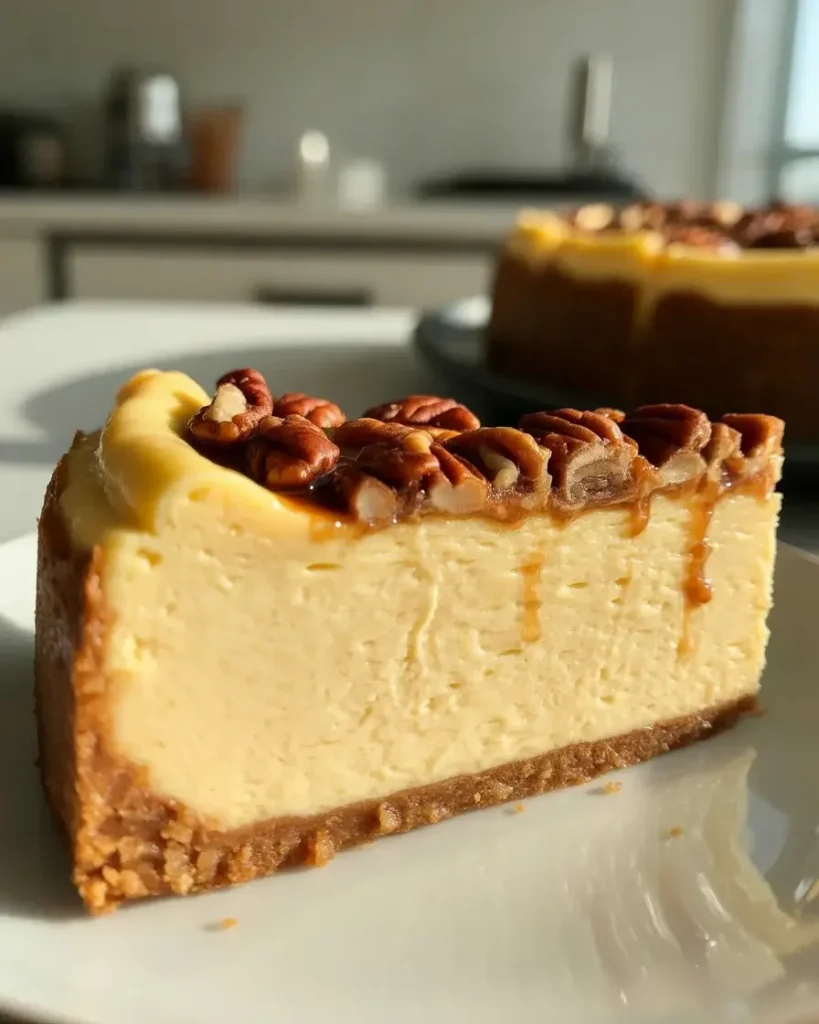
The water bath is your best insurance policy against cracks. The steam creates a humid environment that prevents the top from drying out and splitting. I tested 8 cheesecakes without water baths, and 7 of them cracked.
Temperature control matters just as much as moisture. Baking at 325°F instead of 350°F cooks the cheesecake more gently and evenly. The gradual cooling process I mentioned in step 6 is equally critical.
Never skip running a knife around the edge right after removing it from the oven. As the cheesecake cools and contracts, it will pull away from the pan sides. If it’s stuck, that tension creates cracks across the top.
Finally, don’t overbeat the batter once you add the eggs. Excess air expands during baking and creates weak spots that turn into cracks. I keep my mixer on the lowest setting and mix just until each egg is incorporated.
Can You Make This Cheesecake Ahead of Time?
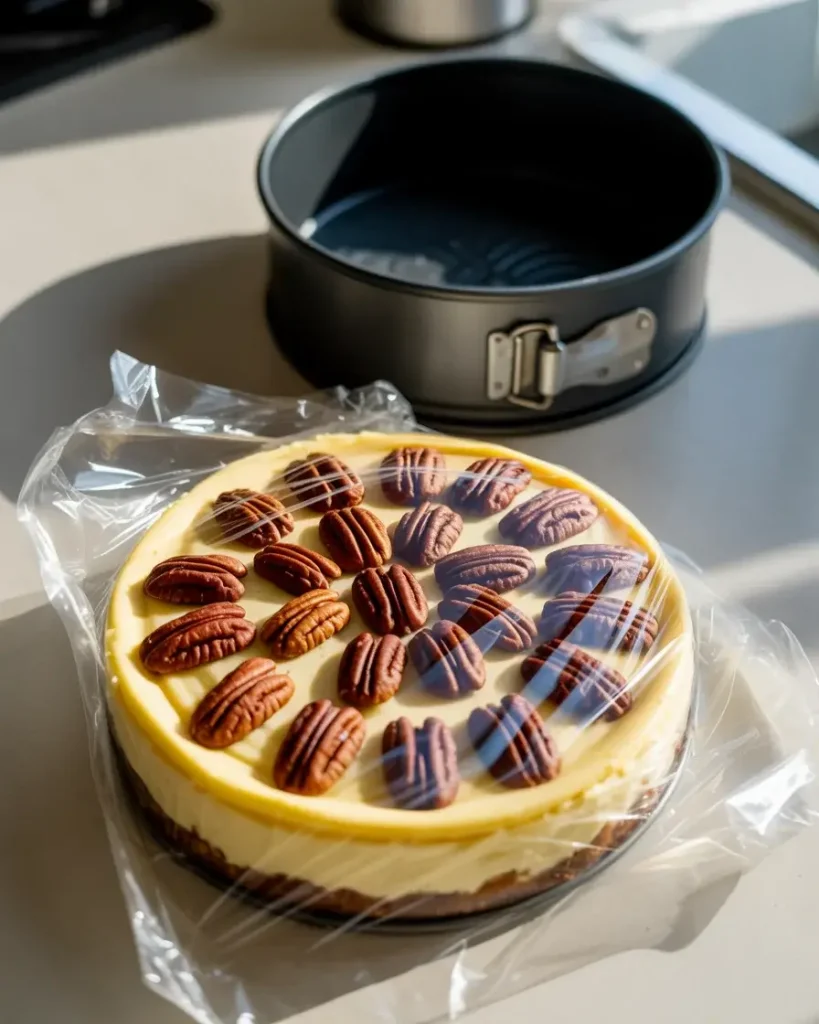
Absolutely, and I actually recommend it. Cheesecake tastes better after sitting in the refrigerator for 24 hours because the flavors meld together and the texture becomes even creamier. I’ve made this up to 3 days ahead for dinner parties with excellent results.
Store it covered in the refrigerator without the pecan topping if you’re making it more than a day ahead. The topping stays crunchier when added 4-6 hours before serving rather than days in advance. I learned this after my first make-ahead attempt left me with soggy pecans.
You can also freeze this cheesecake for up to 2 months. Wrap it tightly in plastic wrap, then aluminum foil, before freezing. Thaw it overnight in the refrigerator, still wrapped, to prevent condensation from making the surface wet.
Add the pecan topping after the cheesecake has completely thawed. I tested adding the topping before freezing once, and the texture became grainy and separated after thawing. Fresh topping always looks and tastes better.
What’s the Difference Between Regular Butter and Browned Butter in Cheesecake?
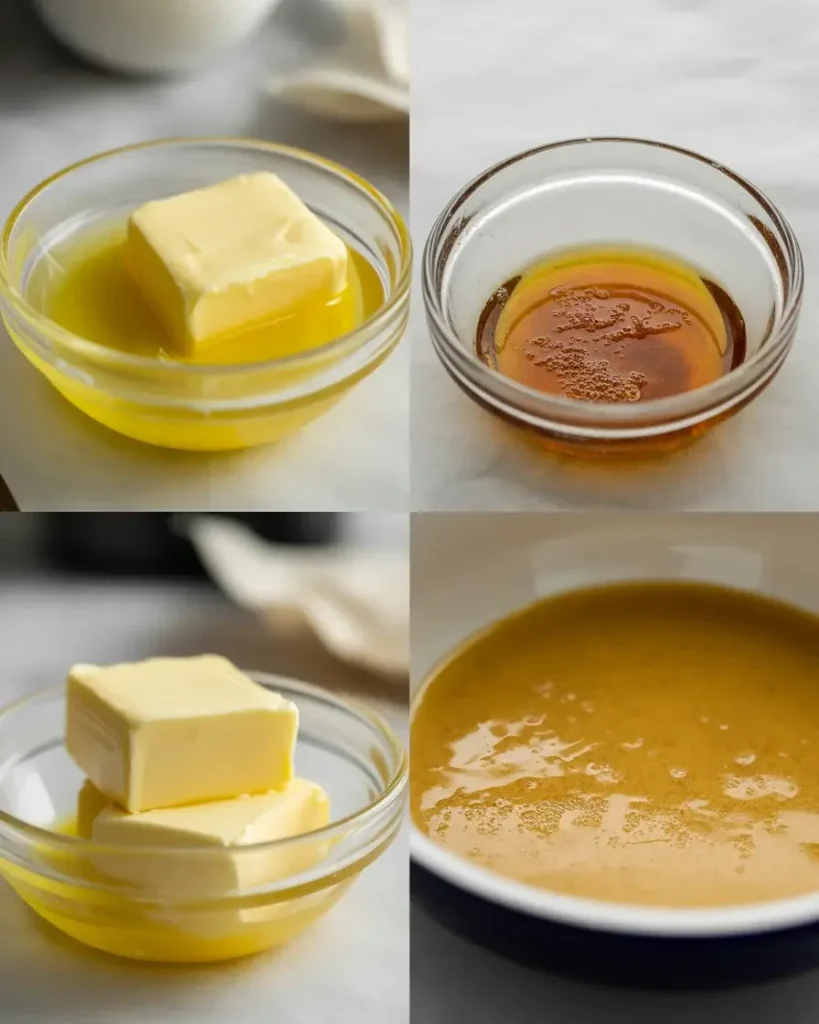
Browned butter adds a nutty, caramelized depth that regular butter simply cannot match. The milk solids in butter turn golden brown and develop complex flavors similar to toffee, toasted nuts, and butterscotch. This transforms a standard cheesecake into something more sophisticated.
I baked two identical cheesecakes side by side during my testing, one with regular melted butter and one with browned butter. The difference was striking. The regular butter version tasted pleasant but one-dimensional, while the browned butter version had layers of flavor that kept people coming back for seconds.
The browning process also changes the texture slightly. Browned butter contains less water than regular butter because some evaporates during cooking. This makes the cheesecake slightly denser and creamier in my experience.
Don’t substitute regular butter if a recipe calls for browned butter and expect the same results. You’ll miss out on the entire flavor profile that makes this cheesecake special. The extra 10 minutes of browning butter is worth every second.
How Do You Toast Pecans for Maximum Flavor?
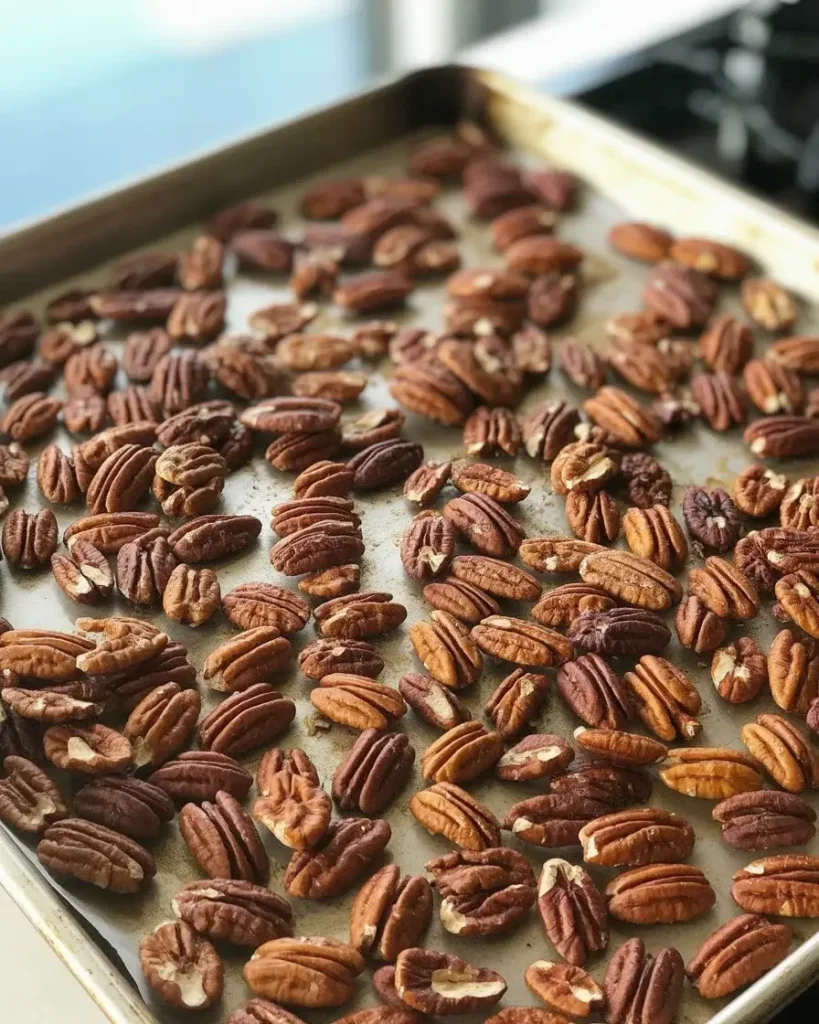
Spread pecans in a single layer on a baking sheet and toast them at 350°F for 7-9 minutes, stirring once halfway through. You’ll know they’re ready when you smell that deep, nutty aroma and they’ve darkened slightly. I set a timer because pecans go from perfectly toasted to burnt in about 60 seconds.
Watch them carefully during the last 2 minutes. The oils in pecans can cause them to burn quickly once they get hot. I stand by the oven during this time after burning multiple batches by walking away to check my phone.
Let the pecans cool completely before using them in the crust or topping. Hot nuts will melt butter prematurely and create an oily mess. I spread mine on the baking sheet to cool for about 15 minutes.
Toasting intensifies the pecan flavor dramatically and removes any raw or bitter notes. I compared toasted versus untoasted pecans in this recipe during my ninth test batch, and my taste testers unanimously preferred the toasted version. The difference is not subtle.
Why Add Sour Cream and Flour to Cheesecake?
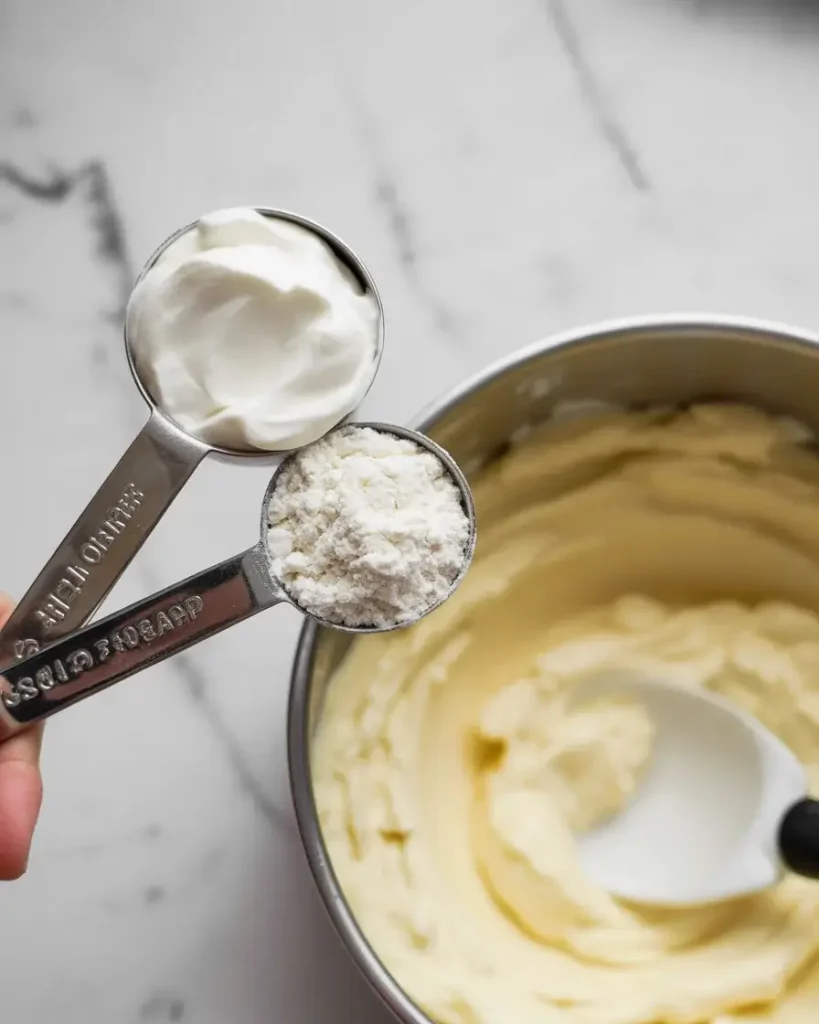
Sour cream adds tanginess that balances the richness of cream cheese and browned butter. It also contributes moisture, making the texture silkier and preventing that chalky dryness that can happen with cream cheese alone. I tested versions with and without sour cream, and the difference in creaminess was significant.
The acidity in sour cream also helps tenderize the cheesecake. This creates a smoother mouthfeel that melts on your tongue rather than feeling heavy or dense. It’s one of those ingredients that works quietly in the background but makes a huge difference.
Flour acts as a stabilizer, helping the cheesecake hold its shape when sliced. Just 2 tablespoons gives you clean slices that don’t collapse or ooze. I tested this recipe without flour three times, and every single one was too soft to cut neatly.
Some bakers worry that flour makes cheesecake taste like cake, but that only happens if you add too much. The small amount in this recipe is undetectable in flavor but provides crucial structure. Think of it as insurance for picture-perfect slices.
Frequently Asked Questions
Q: Can I use a different type of nut instead of pecans?
A: Yes, walnuts work beautifully and have a similar texture and flavor profile. Toasted almonds create a slightly crunchier crust and topping. I’ve tested both with success, though the flavor will be less traditionally fall-inspired.
Q: Why did my cheesecake sink in the middle after cooling?
A: This usually means it was overbaked. The center should still jiggle slightly when you remove it from the oven at 150°F internal temperature. Overbaking causes the proteins to contract too much as they cool, creating that sunken center. A slight sink is normal and gets covered by topping anyway.
Q: Do I really need a water bath for this recipe?
A: I strongly recommend it after testing both ways multiple times. The water bath prevents cracks and creates a creamier texture by cooking the cheesecake more gently. Without it, you risk a dry, cracked top that’s less visually appealing, though it will still taste good.