Cashew Brittle
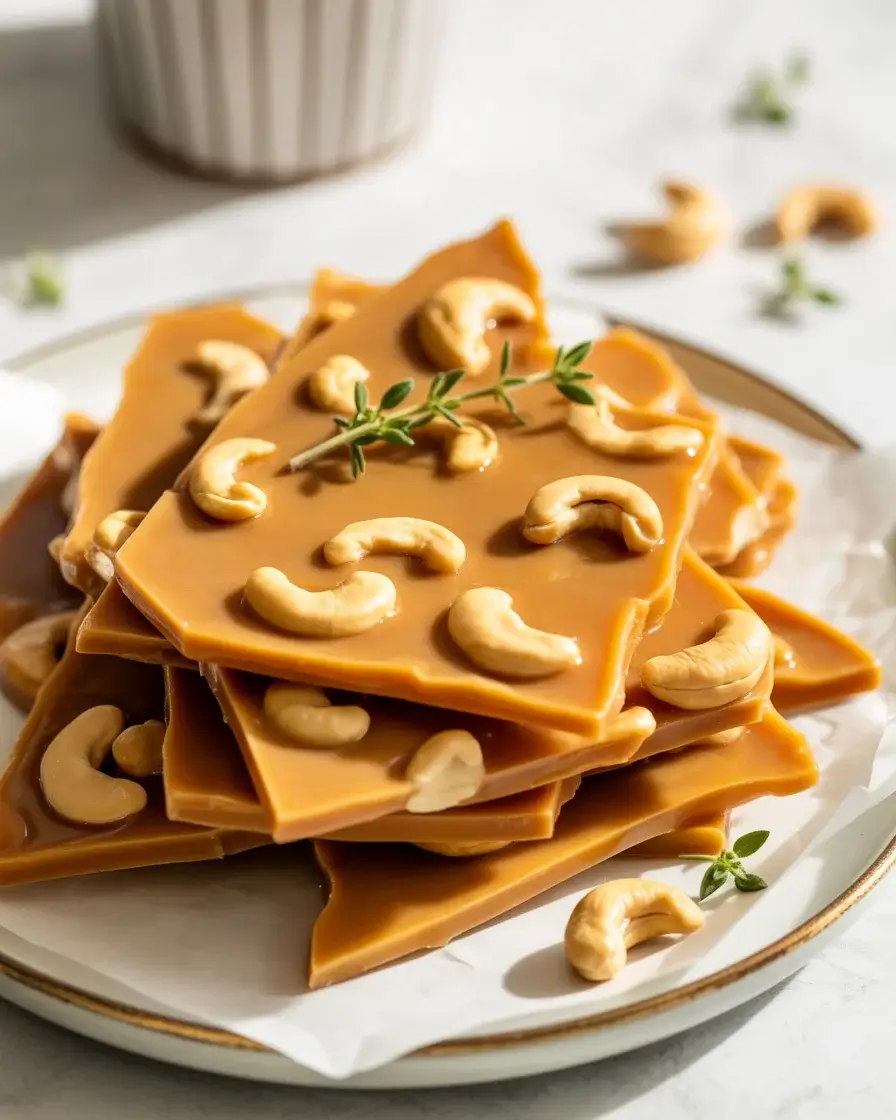
The first time I attempted cashew brittle, I pulled a sticky, chewy disaster from my pan instead of the satisfying snap I was after. After 15+ batches and one smoke alarm incident, I finally cracked the formula for brittle that shatters cleanly every single time.
What sets this recipe apart is the baking soda trick at the very end, which creates tiny air bubbles that give the brittle its signature light crunch. Paired with buttery, lightly salted cashews, the result is genuinely addictive.
Step-by-Step Instructions
Step 1: Prepare Your Pan and Tools
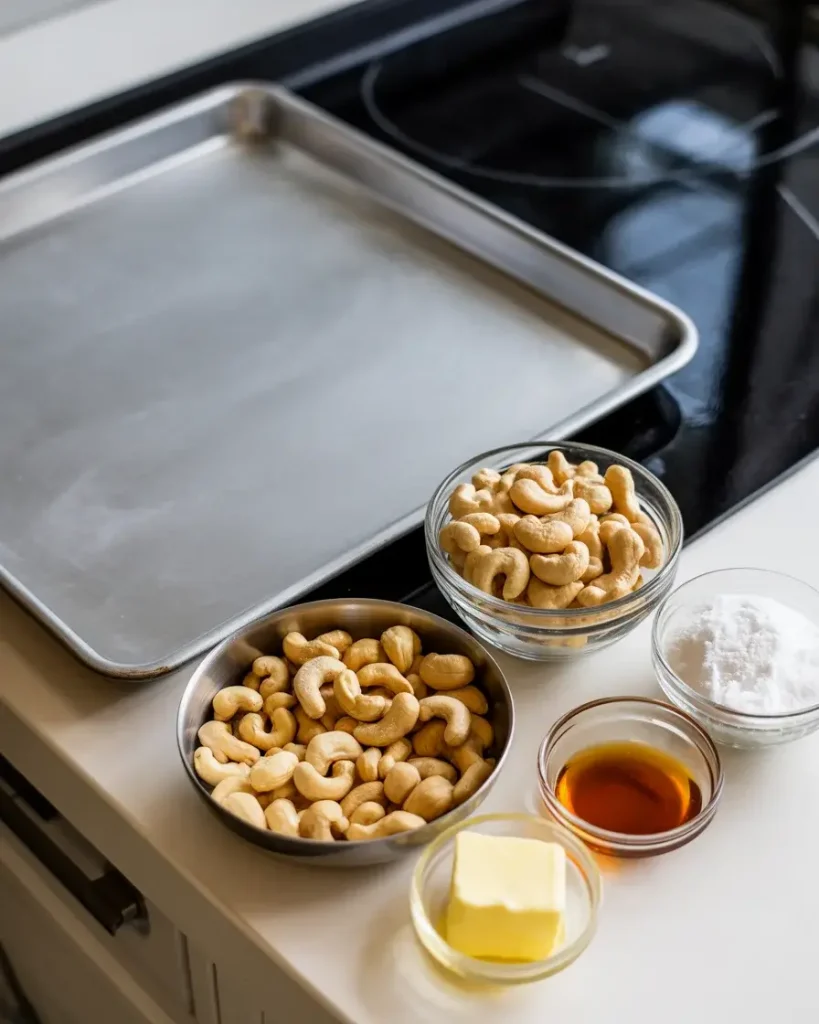
Before you heat anything, grease a large baking sheet generously with butter and set it near your stove. Have your baking soda, butter, vanilla, and cashews pre-measured and ready to go.
Once sugar syrup hits the hard crack stage, you have maybe 60 seconds to work. I learned this the hard way when I stopped to measure vanilla mid-pour and ended up with a crystallized, grainy mess that went straight in the trash.
Step 2: Cook the Sugar Syrup
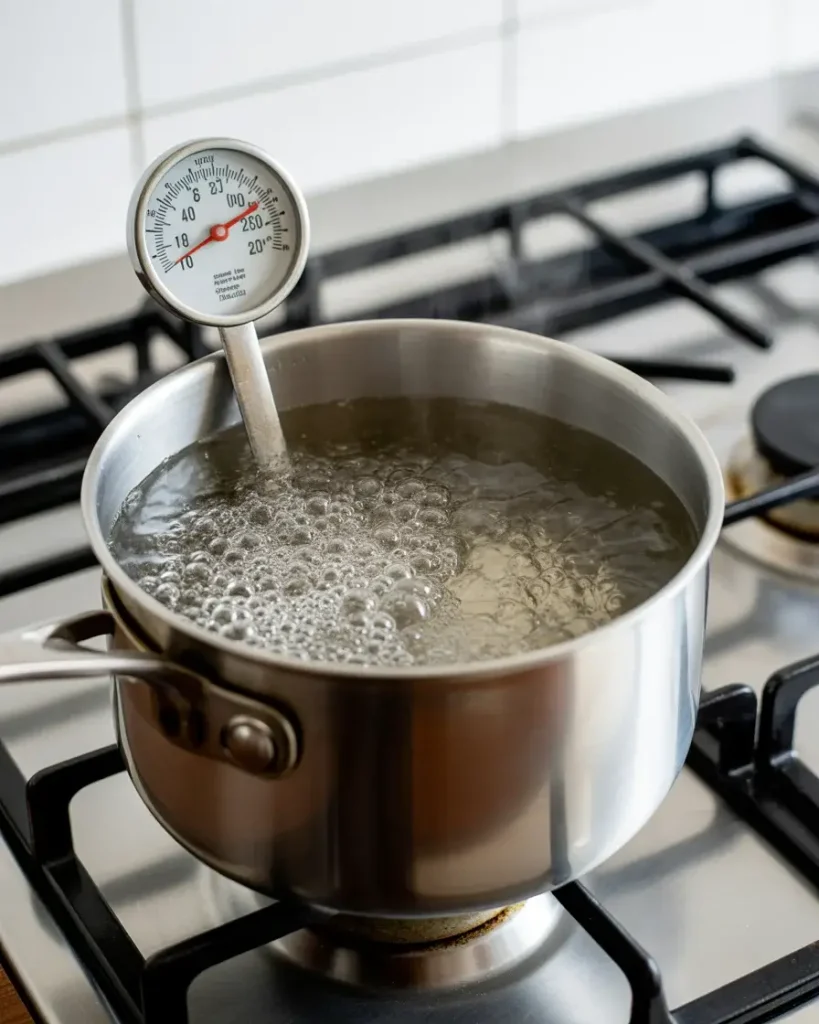
Combine sugar, corn syrup, and water in a heavy-bottomed saucepan over medium-high heat. Stir only until the sugar dissolves, then stop stirring completely and let the syrup bubble undisturbed.
Clip a candy thermometer to the side of the pan. I tested this at both medium and high heat – medium-high is the sweet spot. High heat scorches the edges before the center cooks through, which I discovered after two batches of bitter, dark brittle.
Step 3: Add the Cashews at 300°F
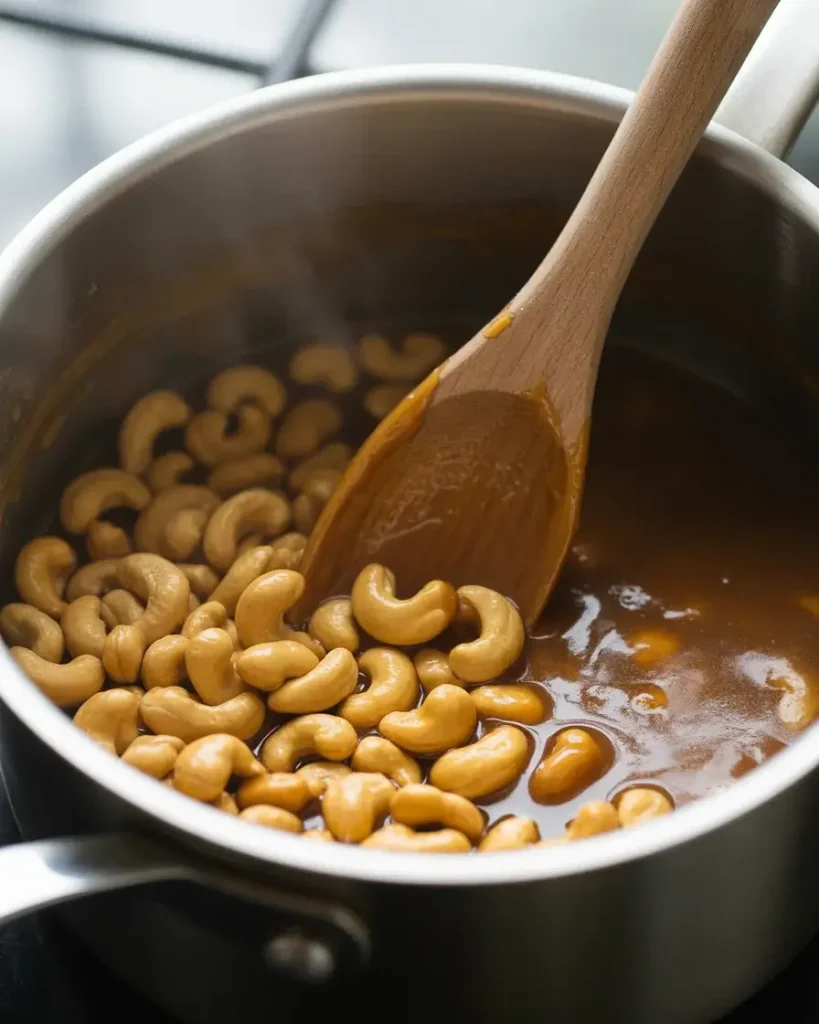
When the thermometer reads exactly 300°F, add the cashews immediately and stir constantly. The mixture will look thick and amber-colored, and you will smell a deep, nutty caramel aroma filling your kitchen.
Keep stirring for about 2 minutes until the syrup turns a rich golden-brown and the cashews smell toasted. Don’t walk away – this stage moves fast and the difference between golden and burnt is about 30 seconds at this temperature.
Step 4: Add Butter, Vanilla, and Baking Soda
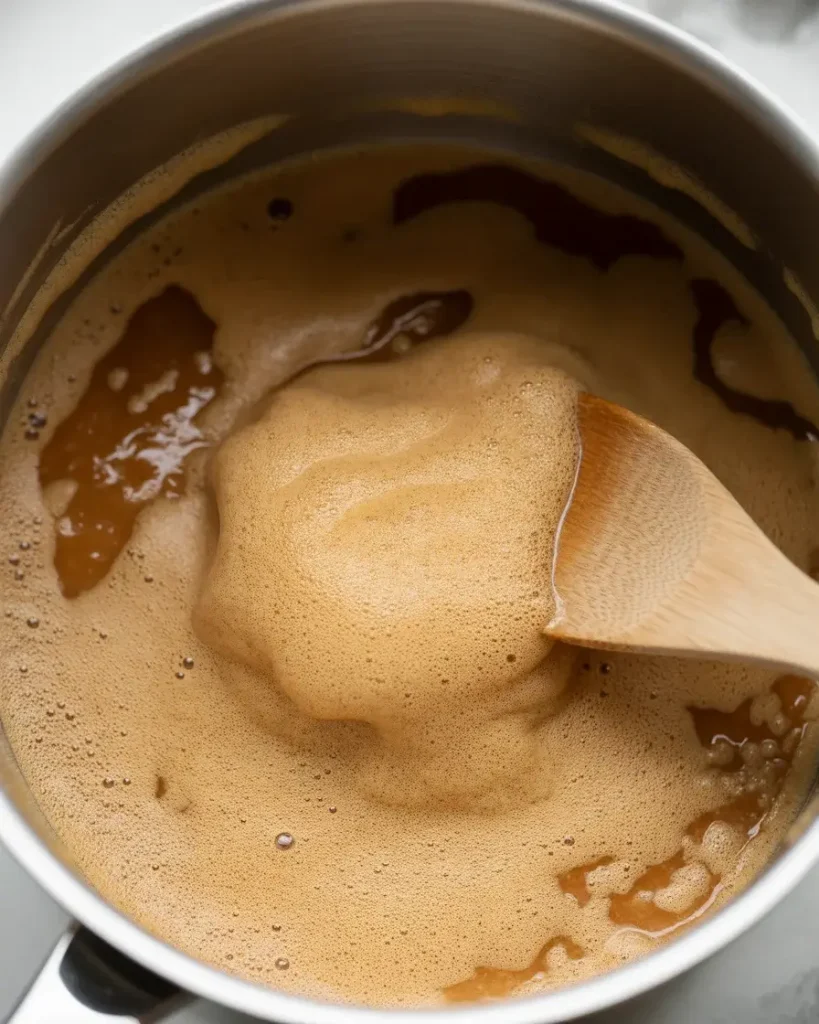
Remove the pan from heat and quickly stir in butter and vanilla. The mixture will bubble and steam dramatically – that’s normal. Then immediately add the baking soda and stir fast.
The baking soda reacts with the hot acid in the syrup and the mixture will foam up and lighten in color. This is the magic step that makes the brittle airy instead of rock-hard tooth-breakers. I tested batches without it and they were noticeably denser and harder to eat.
Step 5: Pour and Spread Immediately
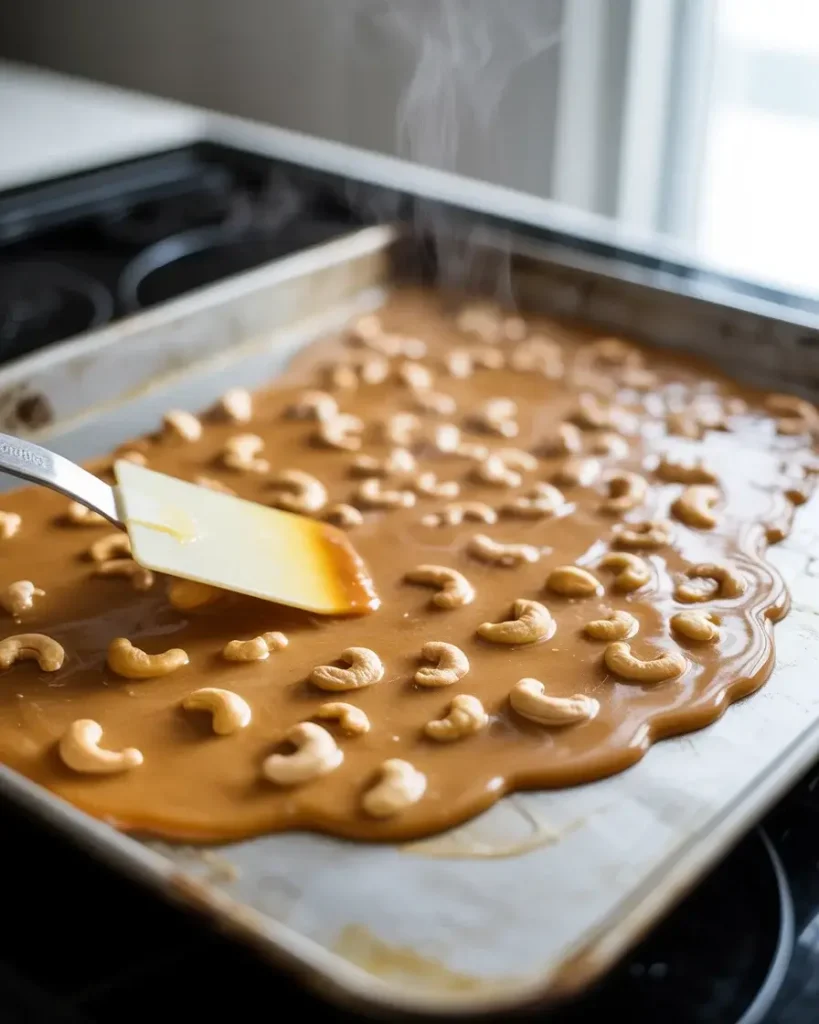
Pour the foaming mixture onto your prepared baking sheet right away and spread it thin using a buttered spatula or the back of a buttered spoon. Work fast – you have about 90 seconds before it starts setting.
Don’t press too hard or you’ll deflate the air bubbles the baking soda just created. A gentle, quick spreading motion is all you need. The thinner you spread it, the more satisfying the snap will be when it sets.
Discover More Delicious Recipes
Step 6: Cool Completely and Break
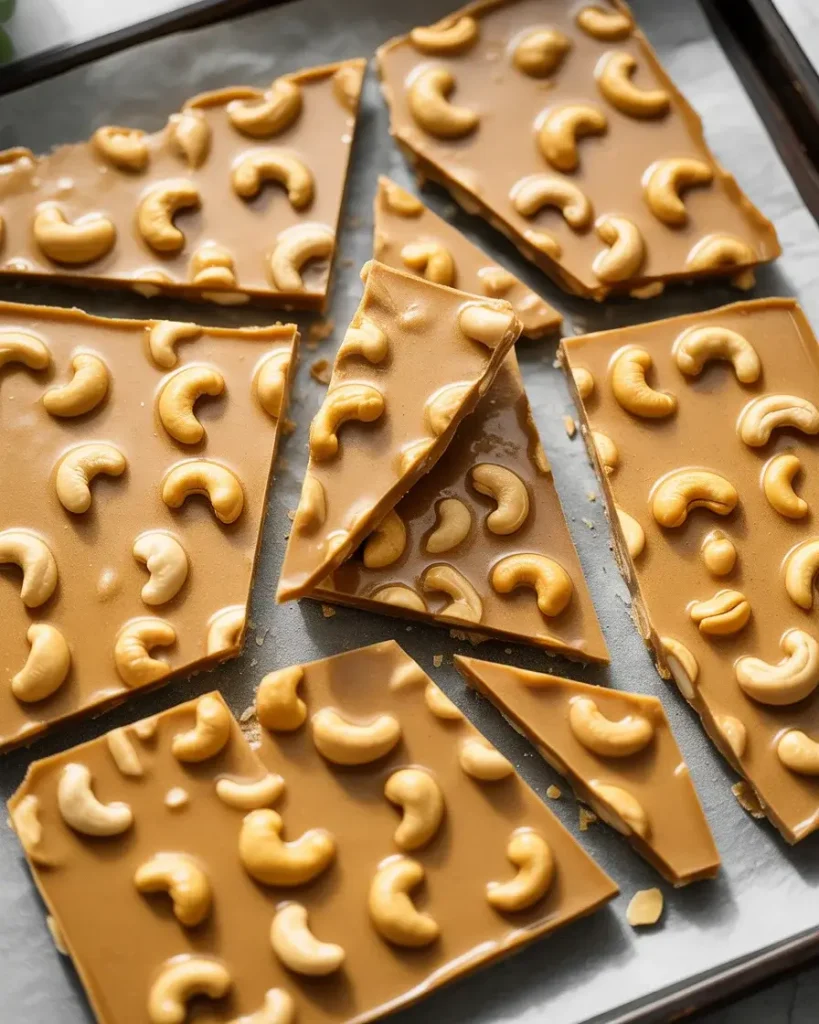
Let the brittle cool at room temperature for at least 30 minutes. Don’t put it in the fridge – the moisture will make it sticky. You’ll know it’s ready when it’s completely firm and no longer warm to the touch.
Once fully set, lift it from the pan and break it into irregular pieces by pressing down firmly with your hands. The sound of it cracking is genuinely satisfying. I tested cooling times from 20 to 45 minutes and 30 minutes is the reliable minimum for a clean break.
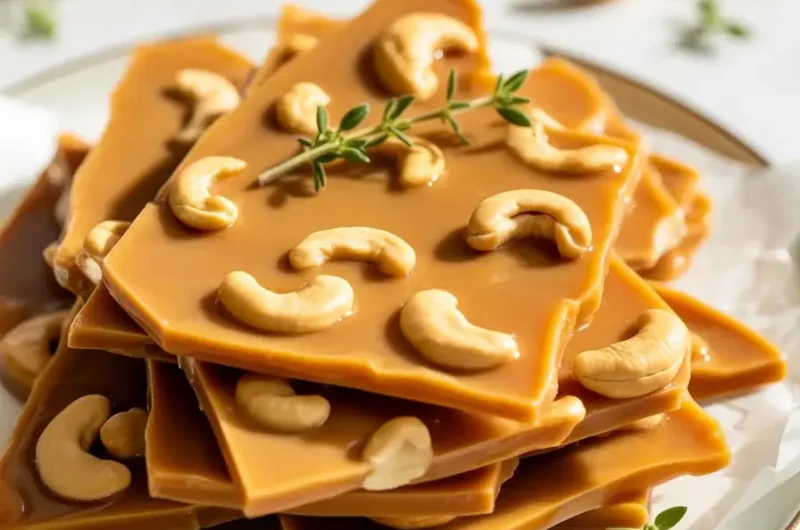
Cashew Brittle
Course: DessertCuisine: AmericanDifficulty: Medium24
10
minutes20
minutes30
minutesButtery, crunchy cashew brittle with a perfect glassy snap. Made in one pan with simple ingredients in under 30 minutes of active cooking time.
Ingredients
2 cups granulated white sugar
1 cup light corn syrup
1/2 cup water
2 cups raw cashews
2 tablespoons unsalted butter
1 teaspoon pure vanilla extract
1 1/2 teaspoons baking soda
1/2 teaspoon fine sea salt
Directions
- Grease a large rimmed baking sheet generously with butter and set aside near the stove.
- Combine sugar, corn syrup, and water in a heavy-bottomed saucepan over medium-high heat. Stir until sugar dissolves, then stop stirring.
- Clip a candy thermometer to the pan. Cook without stirring until mixture reaches 300°F.
- Add cashews and stir constantly for 1 to 2 minutes until mixture turns deep golden amber and smells toasted.
- Remove from heat. Quickly stir in butter and vanilla, then immediately add baking soda and stir fast until fully foamy.
- Pour mixture onto prepared baking sheet and spread thin immediately using a buttered spatula.
- Cool at room temperature for 30 minutes until completely firm. Break into pieces and serve.
Notes
- Store in an airtight container at room temperature for up to 2 weeks.
Raw peanuts, almonds, or pecans can replace cashews using the same method.
Avoid making on very humid days as brittle absorbs moisture quickly.
A candy thermometer is strongly recommended for accurate results.
Nutrition Table (per serving)
| Nutrient | Amount |
|---|---|
| Calories | 185 |
| Total Fat | 7g |
| Sugars | 26g |
| Protein | 3g |
Trusted Resource Links: For food safety when working with high-temperature sugar syrups, refer to FDA Safe Food Handling guidelines. For nutrition information on nuts and added sugars in your diet, visit the American Heart Association Healthy Eating resource.
What Temperature Does Brittle Need to Reach?
Cashew brittle must reach 300°F to 310°F, which is the hard crack stage on a candy thermometer. Below 300°F, the candy stays chewy and sticky instead of crisp. Above 310°F, it begins to burn.
I ruined two batches early on by pulling the syrup at 290°F because I was impatient. The brittle stuck to my teeth and tasted under-cooked – not the crisp snap I was going for.
A reliable candy thermometer is non-negotiable here. Digital instant-read thermometers work well, but a traditional clip-on candy thermometer keeps both hands free for stirring, which I found far more practical after 15 batches.
If you don’t have a thermometer, the cold water test works in a pinch. Drop a small amount of syrup into ice water – it should form hard, brittle threads that snap immediately. Soft or pliable threads mean you need more cooking time.
Why Did My Brittle Turn Out Chewy?
Chewy brittle almost always means the sugar syrup didn’t reach 300°F. Humidity in your kitchen can also cause finished brittle to soften over time, even if it set perfectly at first.
I tested this recipe on both a dry winter day and a humid summer afternoon. The summer batch turned slightly tacky within a few hours, even though it snapped perfectly right after cooling.
On humid days, cook the syrup 5 degrees higher, to about 305°F, to compensate for extra moisture in the air. Store finished brittle in an airtight container with a silica packet or a few saltine crackers to absorb ambient humidity.
Avoid refrigerating brittle – the temperature change draws moisture onto the surface and turns it sticky fast. A cool, dry pantry or countertop in an airtight tin is genuinely the best storage method I’ve found.
Can I Use Other Nuts Instead of Cashews?
Yes, peanuts, almonds, pecans, and macadamia nuts all work well using the exact same recipe and temperatures. Each nut brings a slightly different flavor and texture to the finished brittle.
I’ve tested peanut brittle, almond brittle, and pecan brittle using this same base recipe. Peanuts give the most classic flavor, almonds add a firmer crunch, and pecans bring a buttery richness that pairs beautifully with the caramel.
For macadamia nuts, reduce the cashew quantity slightly because macadamias are larger and softer – you want the caramel to fully coat each nut. Avoid walnuts, as their higher tannin content turns bitter when exposed to this level of heat.
Raw nuts work better than pre-roasted because they toast inside the hot caramel during cooking. Pre-roasted nuts can over-toast and turn slightly bitter by the time the syrup reaches 300°F.
How Should I Store Cashew Brittle?
Store cashew brittle in an airtight container at room temperature for up to two weeks. Layer pieces between sheets of parchment paper so they don’t stick together.
After testing storage methods across several batches, I found that metal tins outperform plastic containers. Plastic can trap residual moisture that softens the brittle faster, while metal tins keep it crisp longer.
Do not freeze brittle. When it thaws, condensation forms on the surface and turns the candy sticky and grainy. Room temperature in a sealed container is genuinely the best option.
For gifting, I wrap individual portions in small cellophane bags tied with twine. They hold up beautifully for three to four days in packaging, making this one of the best homemade candy gifts I’ve made.
Is Corn Syrup Necessary in Brittle?
Corn syrup is not strictly required, but it plays a critical role in preventing sugar crystallization. Without it, your brittle has a high chance of turning grainy and white instead of smooth and glassy.
I tested a batch using only granulated sugar and no corn syrup. It started to crystallize around the 280°F mark and turned into an opaque, sandy mess before it even reached hard crack stage.
Corn syrup is an invert sugar that interferes with crystal formation and keeps the caramel smooth and clear. Golden syrup or honey can substitute, but both add a distinct flavor that changes the brittle’s taste profile noticeably.
If you prefer to avoid corn syrup entirely, add 1/4 teaspoon of cream of tartar to the sugar and water mixture before heating. It acts as an acid that breaks down sucrose and reduces crystallization, though it’s slightly less reliable than corn syrup in my testing.
Frequently Asked Questions
Q: Can I make cashew brittle without a candy thermometer?
A: You can use the cold water test – drop a small amount of syrup into ice water. It should form hard, brittle threads that snap cleanly. A thermometer is much more reliable and consistent though.
Q: Why did my brittle turn white and grainy?
A: Sugar crystallization caused this, usually from stirring the syrup after it started boiling or from moisture on the spoon or pan. Make sure all tools are completely dry and stop stirring once the syrup starts boiling.
Q: Can I double the cashew brittle recipe?
A: I’d recommend making two separate batches rather than doubling in one pan. A doubled batch is harder to control temperature-wise and spreads too thick on a standard baking sheet, resulting in chewy spots.