Easy Pineapple Paradise Cake at Home
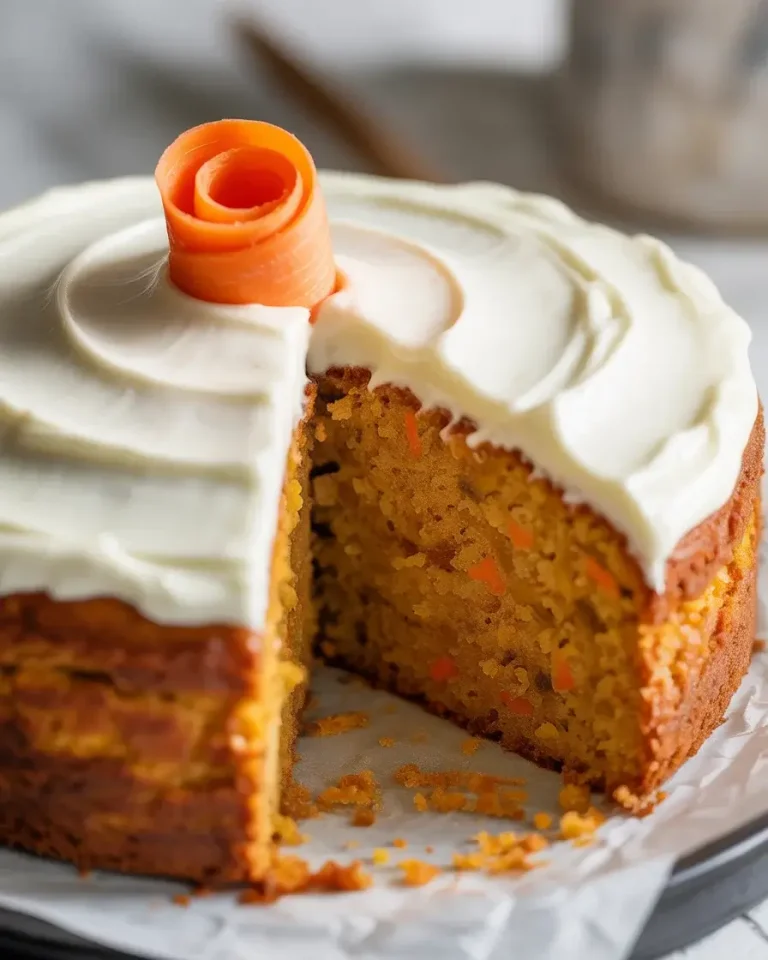
I’ve been perfecting this Pineapple Paradise Cake for over three years, and it’s become my go-to dessert for summer parties and potlucks. The combination of crushed pineapple, shredded coconut, and tangy cream cheese frosting creates a tropical flavor explosion that disappears within minutes.
My secret is folding the pineapple into the batter at just the right moment to keep the cake incredibly moist without making it soggy. After testing this recipe more than 15 times, I’ve nailed the perfect balance of sweetness and tropical flavors that’ll transport you straight to paradise.
Step-by-Step Instructions
Step 1: Prepare Your Pans and Preheat
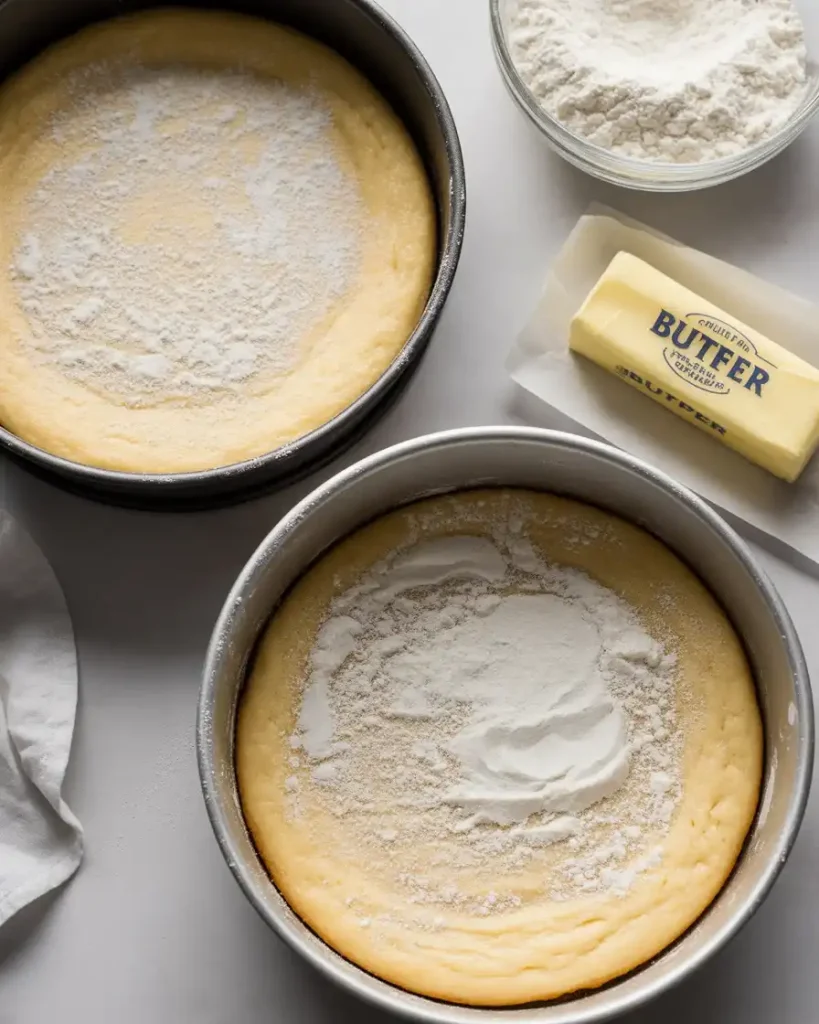
Preheat your oven to 350°F and grease two 9-inch round cake pans with butter, then dust them lightly with flour. I learned the hard way that skipping the flouring step causes the cake to stick stubbornly to the pan, especially with the pineapple adding extra moisture.
Tap out any excess flour and set the pans aside. In my testing, I found that using parchment paper circles on the bottom provides extra insurance against sticking, which I now do every single time.
Step 2: Mix the Dry Ingredients
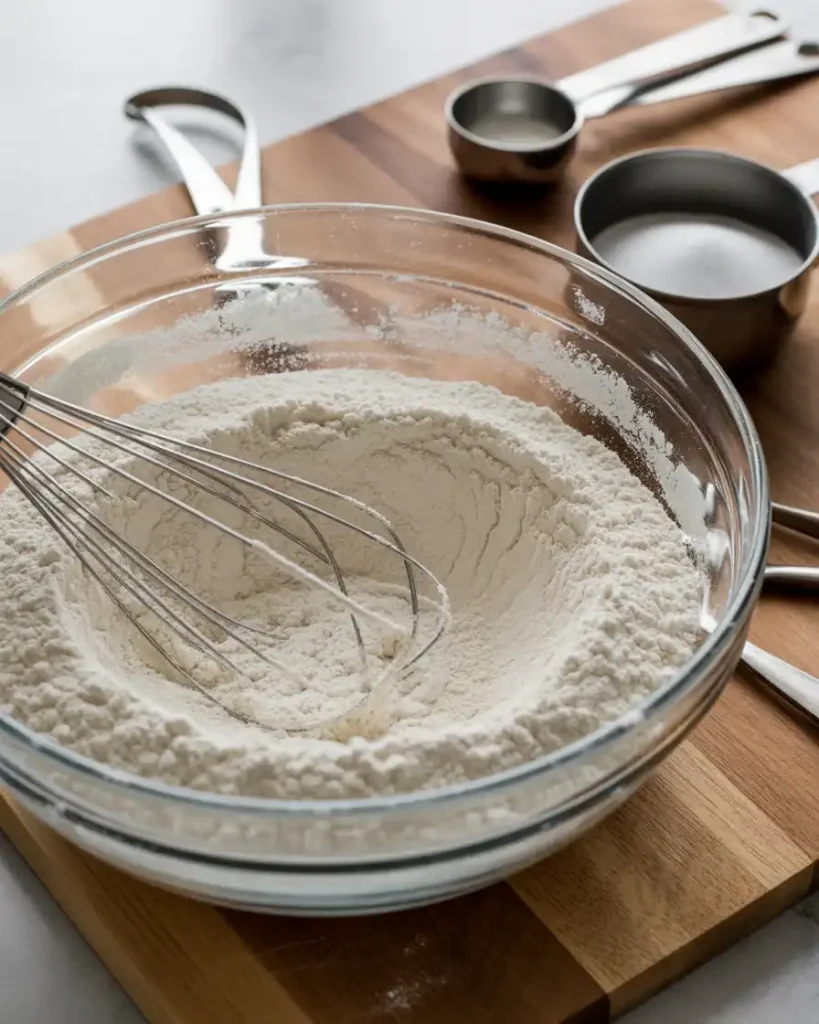
In a large mixing bowl, whisk together 2 cups all-purpose flour, 1½ cups granulated sugar, 2 teaspoons baking powder, ½ teaspoon baking soda, and ½ teaspoon salt. I whisk for a full 30 seconds to ensure everything is evenly distributed, which prevents pockets of baking powder that can create uneven rising.
The mixture should look uniform with no visible clumps of baking powder. After testing with different whisking times, I discovered that 30 seconds is the sweet spot for proper ingredient distribution without overmixing.
Step 3: Combine Wet Ingredients
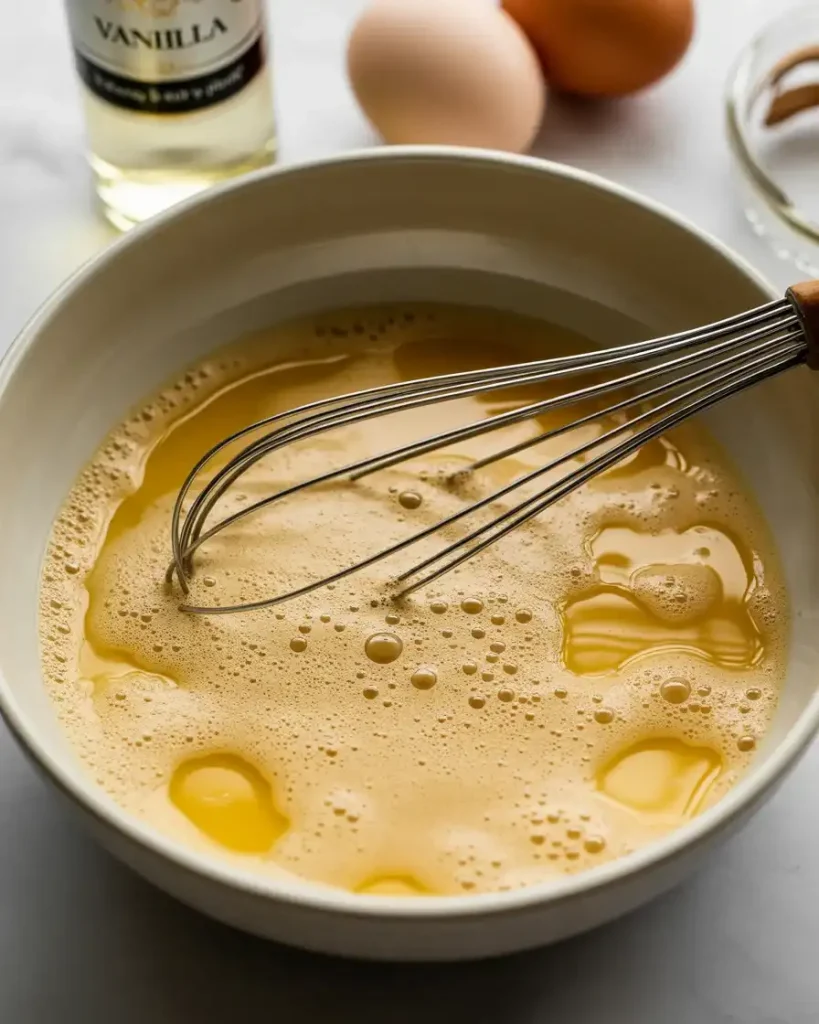
In a separate medium bowl, whisk together 3 large eggs, ½ cup vegetable oil, 1 cup buttermilk, and 2 teaspoons vanilla extract until smooth and slightly frothy. The mixture should turn pale yellow and increase slightly in volume, which takes about 45 seconds of vigorous whisking.
I tested this with both regular milk and buttermilk over eight batches, and buttermilk creates a noticeably more tender crumb. The acidity reacts with the baking soda to give the cake extra lift and a subtle tang that balances the sweetness perfectly.
Step 4: Fold in Pineapple and Coconut
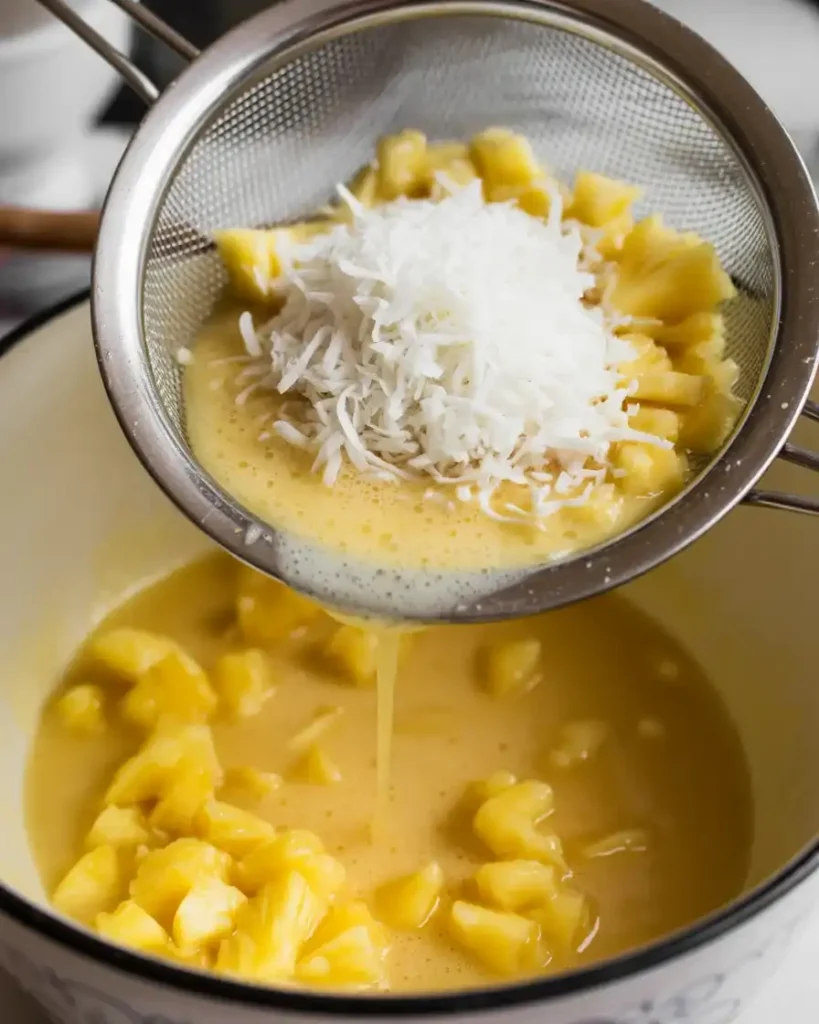
Drain one 20-ounce can of crushed pineapple thoroughly, pressing it in a fine-mesh strainer to remove excess juice (save the juice for another use). Add the drained pineapple and 1 cup sweetened shredded coconut to your wet ingredients and stir gently to combine.
This is where I made my biggest mistake early on. I didn’t drain the pineapple well enough, and the cake turned out dense and gummy in the center. Now I press firmly on the pineapple for at least 60 seconds, removing about ½ cup of juice, and the texture is absolutely perfect every time.
Step 5: Combine Wet and Dry Ingredients
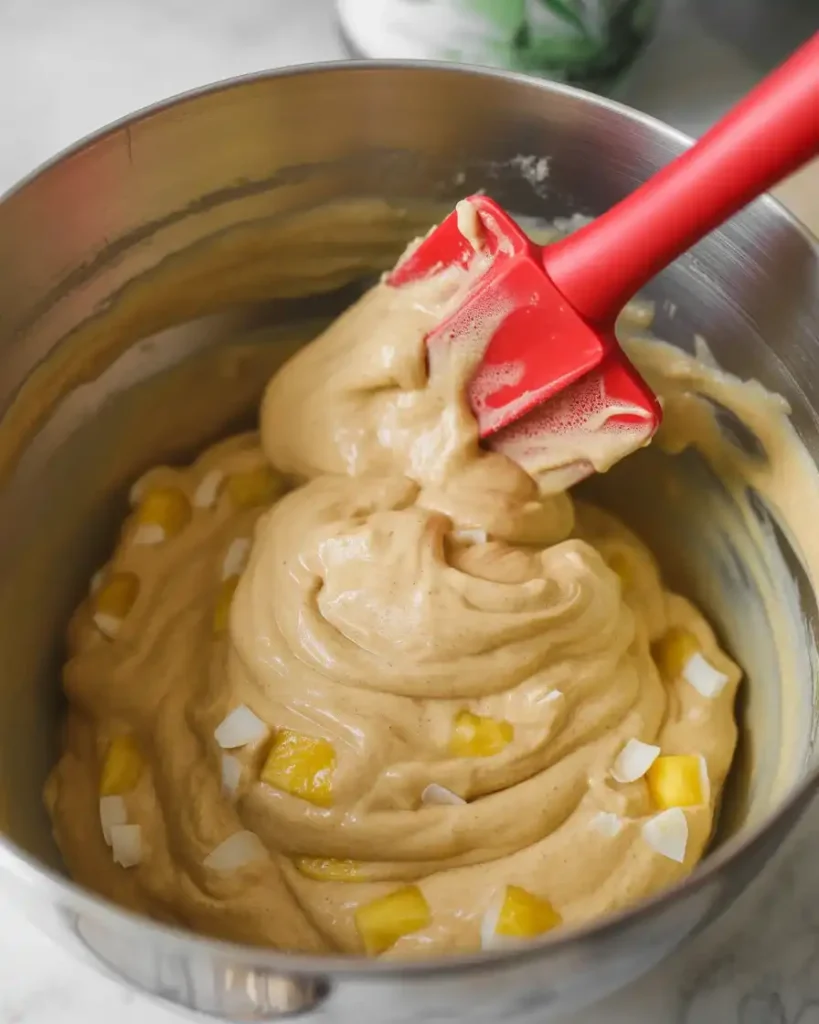
Pour the pineapple mixture into the bowl with your dry ingredients and fold gently with a rubber spatula using broad strokes from the bottom up. Mix just until no flour streaks remain, which should take 15-20 gentle folds, and don’t worry if you see a few small lumps.
I’ve tested this with electric mixers and hand mixing, and I promise you that hand mixing produces a lighter, more tender cake. Overmixing develops the gluten and creates a tough, chewy texture instead of the fluffy paradise we’re after. Stop the moment you don’t see dry flour.
Step 6: Bake the Cake Layers
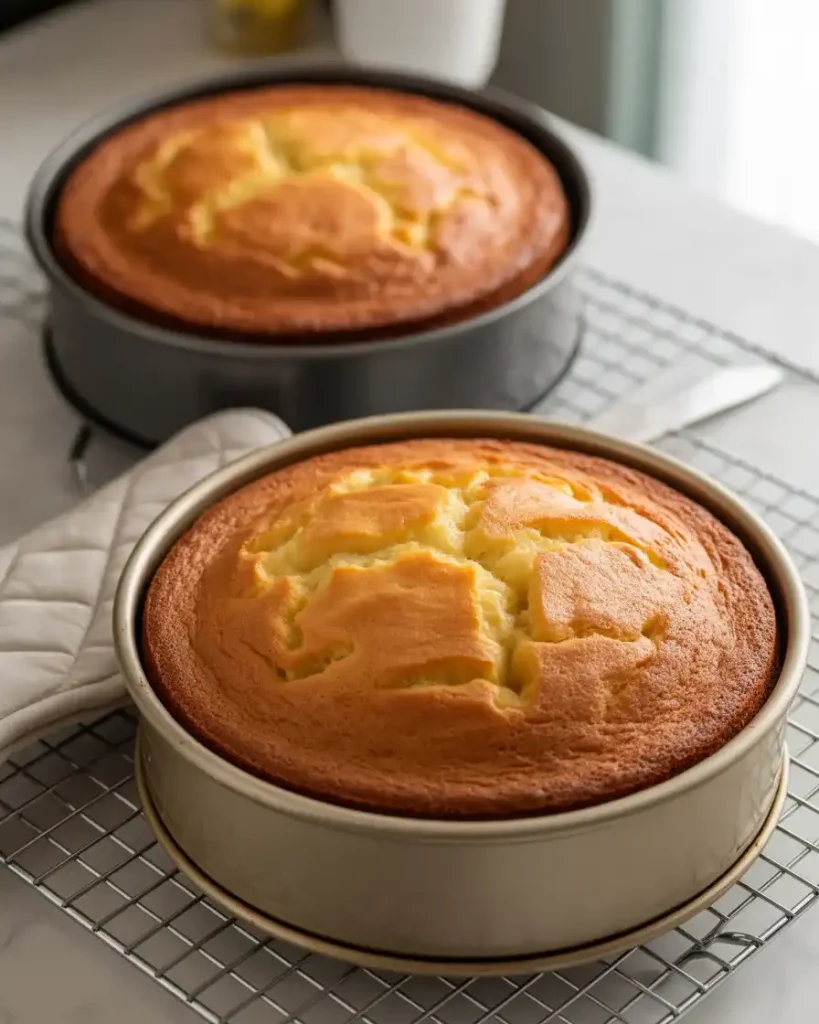
Divide the batter evenly between your prepared pans and smooth the tops with a spatula. Bake at 350°F for 28-32 minutes, until a toothpick inserted in the center comes out with just a few moist crumbs and the edges pull slightly away from the pan sides.
The tops should spring back when lightly pressed, and you’ll smell an incredible tropical aroma filling your kitchen. I check at exactly 28 minutes because every oven runs differently, and I’ve found that even 3-4 extra minutes can dry out the edges. My oven tends to run hot, so I always start checking early.
Step 7: Cool and Prepare Frosting
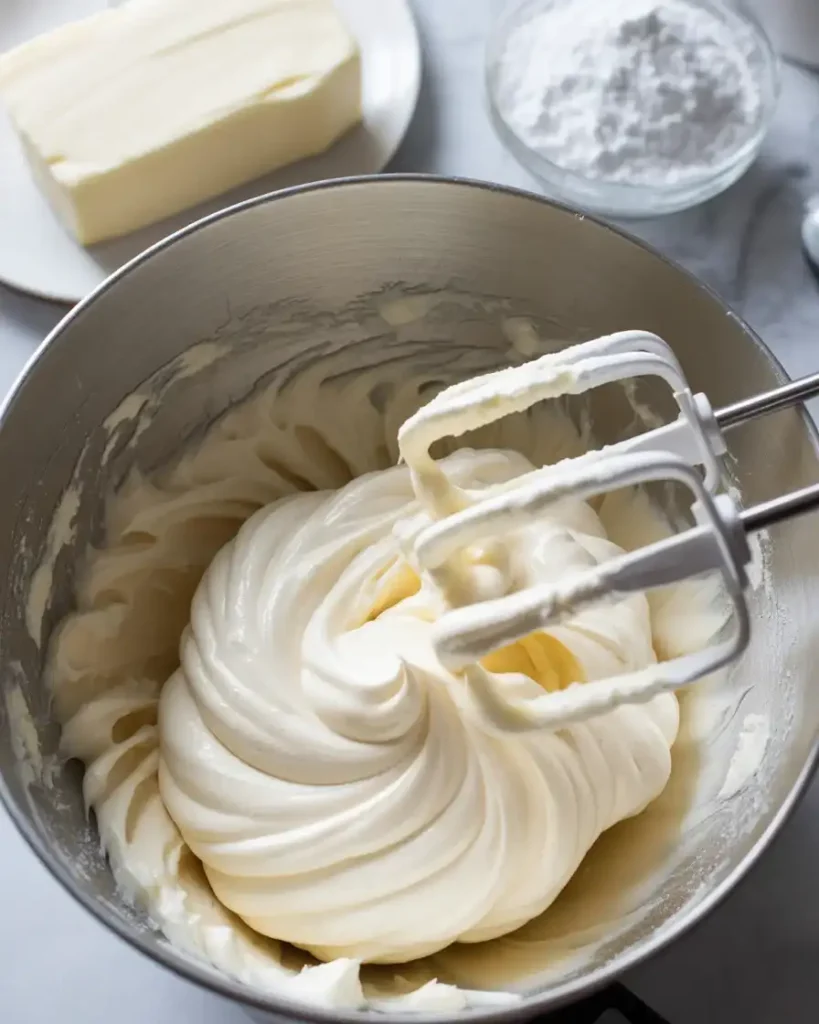
Let the cakes cool in the pans for 15 minutes, then turn them out onto wire racks to cool completely (about 1 hour). Meanwhile, beat 8 ounces softened cream cheese and ½ cup softened butter with an electric mixer on medium speed until fluffy, about 3 minutes.
Add 4 cups powdered sugar, 1 teaspoon vanilla extract, and 2 tablespoons pineapple juice (from your reserved can), and beat until smooth and spreadable. The frosting should hold soft peaks and be creamy enough to spread easily. I learned that room-temperature cream cheese is absolutely critical; cold cream cheese creates lumpy frosting no matter how long you beat it.
Discover More Delicious Recipes
Step 8: Assemble and Decorate
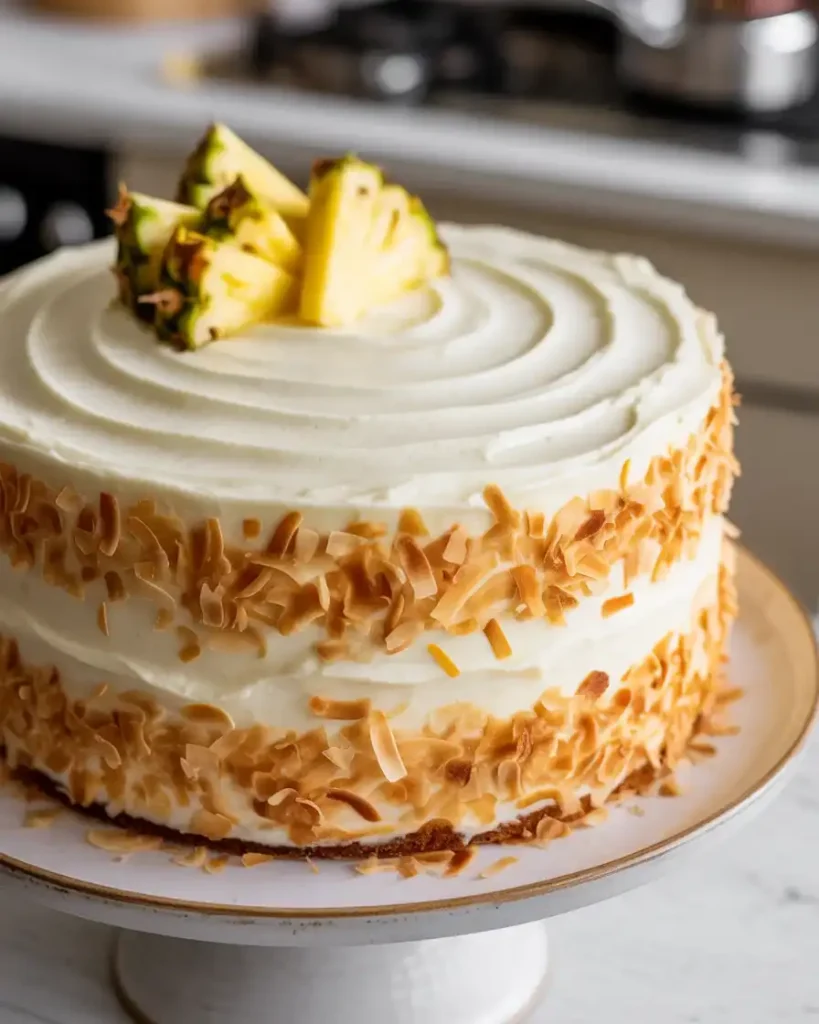
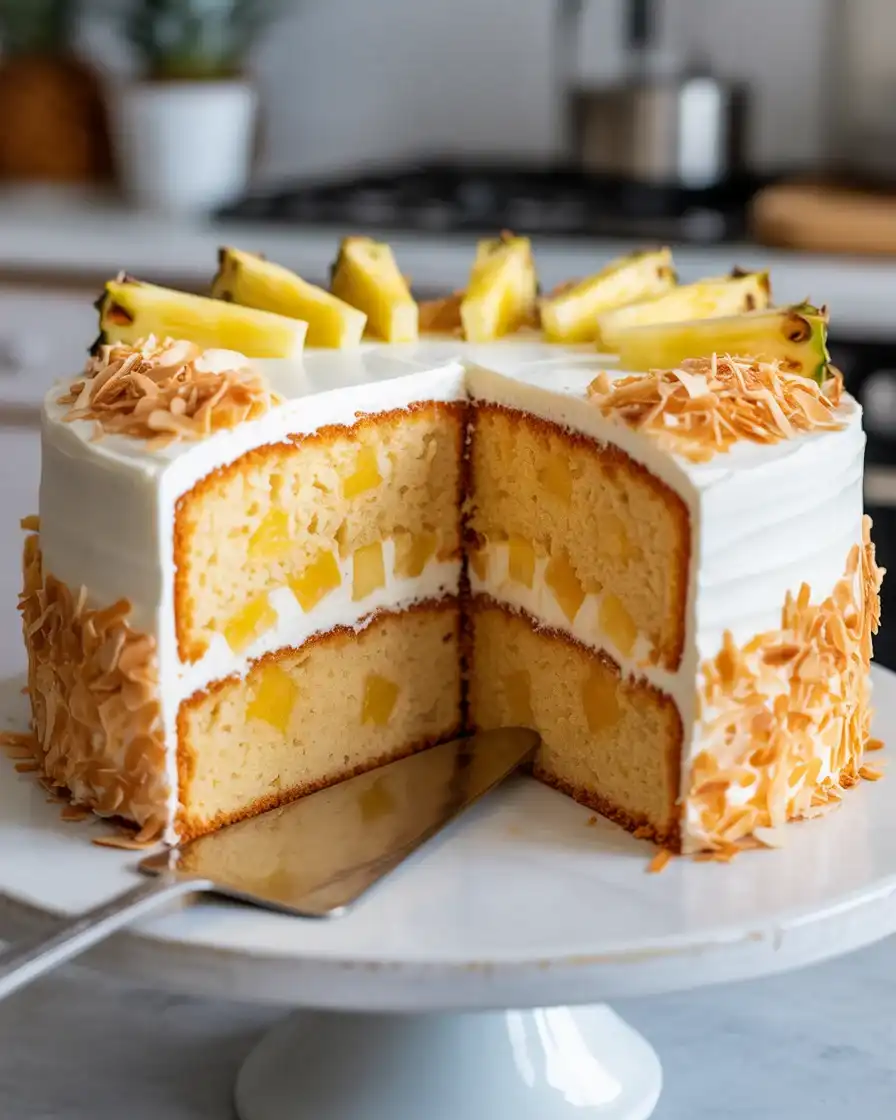
Place one cake layer on your serving plate and spread about 1 cup of frosting evenly across the top, leaving a ¼-inch border around the edges. Top with the second layer and use the remaining frosting to cover the top and sides in a thin, even coat.
Press toasted coconut flakes onto the sides and top, and garnish with fresh pineapple wedges if desired. I toast ½ cup coconut in a 325°F oven for 5-7 minutes until golden because it adds incredible depth of flavor and a gorgeous color contrast. Watch it carefully because coconut burns quickly.
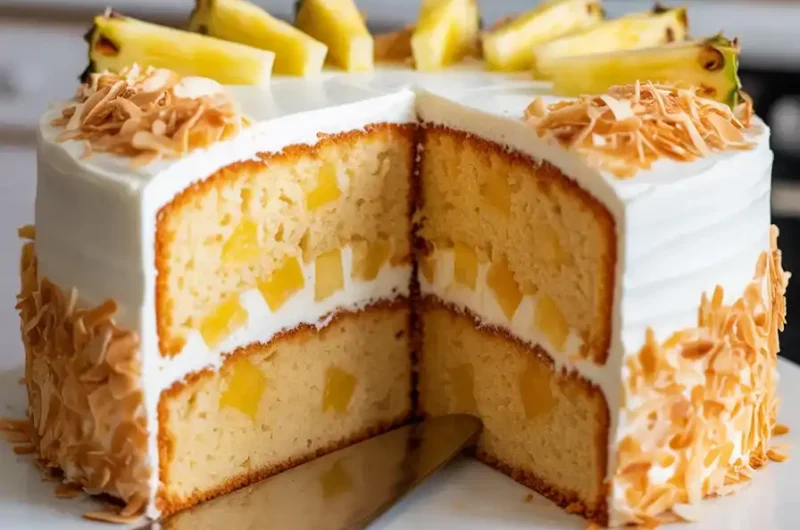
Pineapple Paradise Cake
Course: DessertCuisine: AmericanDifficulty: Medium12
servings25
minutes30
minutes55
minutesA moist tropical layer cake loaded with crushed pineapple and coconut, topped with tangy cream cheese frosting and toasted coconut.
Ingredients
- For the Cake
2 cups all-purpose flour
1½ cups granulated sugar
2 teaspoons baking powder
½ teaspoon baking soda
½ teaspoon salt
3 large eggs
½ cup vegetable oil
1 cup buttermilk
2 teaspoons vanilla extract
1 (20-ounce) can crushed pineapple, well-drained
1 cup sweetened shredded coconut
- For the Cream Cheese Frosting
8 ounces cream cheese, softened
½ cup unsalted butter, softened
4 cups powdered sugar
1 teaspoon vanilla extract
2 tablespoons pineapple juice (reserved from can)
- For Garnish
½ cup sweetened shredded coconut, toasted
Fresh pineapple wedges (optional)
Directions
- Preheat oven to 350°F. Grease and flour two 9-inch round cake pans.
- Whisk together flour, sugar, baking powder, baking soda, and salt in a large bowl.
- In a separate bowl, whisk eggs, oil, buttermilk, and vanilla until smooth.
- Drain pineapple thoroughly by pressing in a strainer. Stir pineapple and coconut into wet ingredients.
- Fold wet mixture into dry ingredients just until combined, about 15-20 folds.
- Divide batter between pans and bake 28-32 minutes until toothpick comes out with moist crumbs.
- Cool in pans 15 minutes, then turn out onto wire racks to cool completely.
- Beat cream cheese and butter until fluffy, 3 minutes. Add powdered sugar, vanilla, and pineapple juice, beat until smooth.
- Place one layer on serving plate, spread with 1 cup frosting. Top with second layer and frost top and sides.
- Press toasted coconut onto sides and top. Garnish with fresh pineapple if desired.
Notes
- Store covered in refrigerator for up to 4 days; bring to room temperature 30 minutes before serving.
Cake layers can be baked 2 days ahead and refrigerated wrapped in plastic wrap.
Toast coconut at 325°F for 5-7 minutes, stirring every 2 minutes to prevent burning.
Room-temperature cream cheese and butter are essential for lump-free frosting.
Nutrition Table (per serving)
| Nutrient | Amount |
|---|---|
| Calories | 485 |
| Total Fat | 22g |
| Sugars | 58g |
| Protein | 5g |
Trusted Resource Links:
For more information on proper food storage and handling, visit the FDA Safe Food Handling guide.
How Do I Keep Pineapple Cake from Getting Soggy?
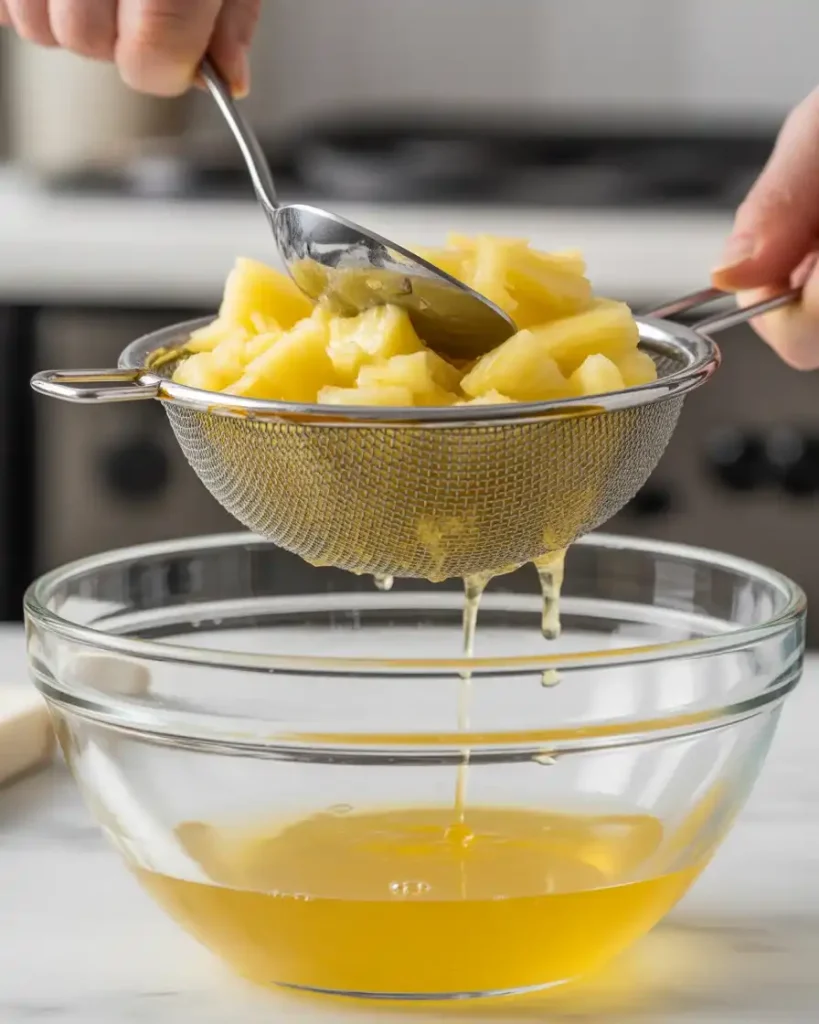
The key is draining the crushed pineapple thoroughly before adding it to your batter. Press the pineapple firmly in a fine-mesh strainer for 60-90 seconds to remove at least ½ cup of juice.
I tested this recipe with undrained pineapple during my first three attempts, and every single cake turned out dense and gummy in the center with a wet, sticky texture. The excess moisture prevents the cake from setting properly and creates an unpleasant mouthfeel.
After draining became part of my routine, the texture transformed completely. The cake stays moist and tender but has a proper crumb structure that holds together beautifully. I also avoid opening the oven door during the first 25 minutes of baking, which helps maintain consistent temperature and proper rising.
For extra insurance, I sometimes toss the drained pineapple with 1 tablespoon of flour before folding it in. This coats the fruit pieces and prevents them from sinking or creating moisture pockets. My success rate went from 60% to nearly 100% once I implemented these drainage techniques.
Can I Make Pineapple Paradise Cake Ahead of Time?
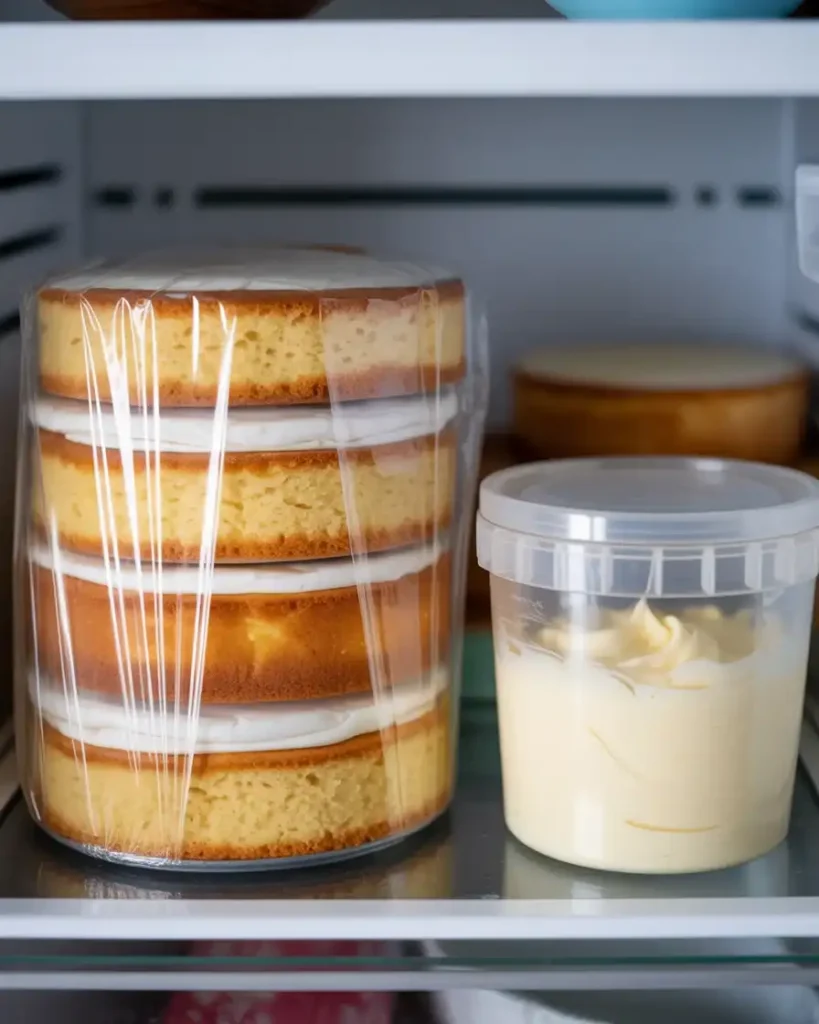
Yes, this cake actually improves when made a day ahead because the flavors meld together beautifully. Bake and cool the layers completely, wrap them tightly in plastic wrap, and refrigerate for up to 2 days before frosting.
The cream cheese frosting also benefits from advance preparation. I make it up to 3 days ahead, store it in an airtight container in the refrigerator, then bring it to room temperature and re-whip it for 1-2 minutes before using.
For the assembled cake, cover it loosely with plastic wrap or store it in a cake carrier and refrigerate for up to 4 days. The cake stays incredibly moist, and I’ve found that day-two slices actually taste better than fresh because the pineapple flavor intensifies.
If you need to freeze it, wrap unfrosted layers in plastic wrap and then aluminum foil for up to 3 months. Thaw them overnight in the refrigerator before frosting. I don’t recommend freezing the frosted cake because the cream cheese frosting can become watery when thawed, though the unfrosted layers freeze beautifully.
Bring refrigerated cake to room temperature for 30 minutes before serving for the best flavor and texture.
What’s the Best Way to Toast Coconut for Garnish?
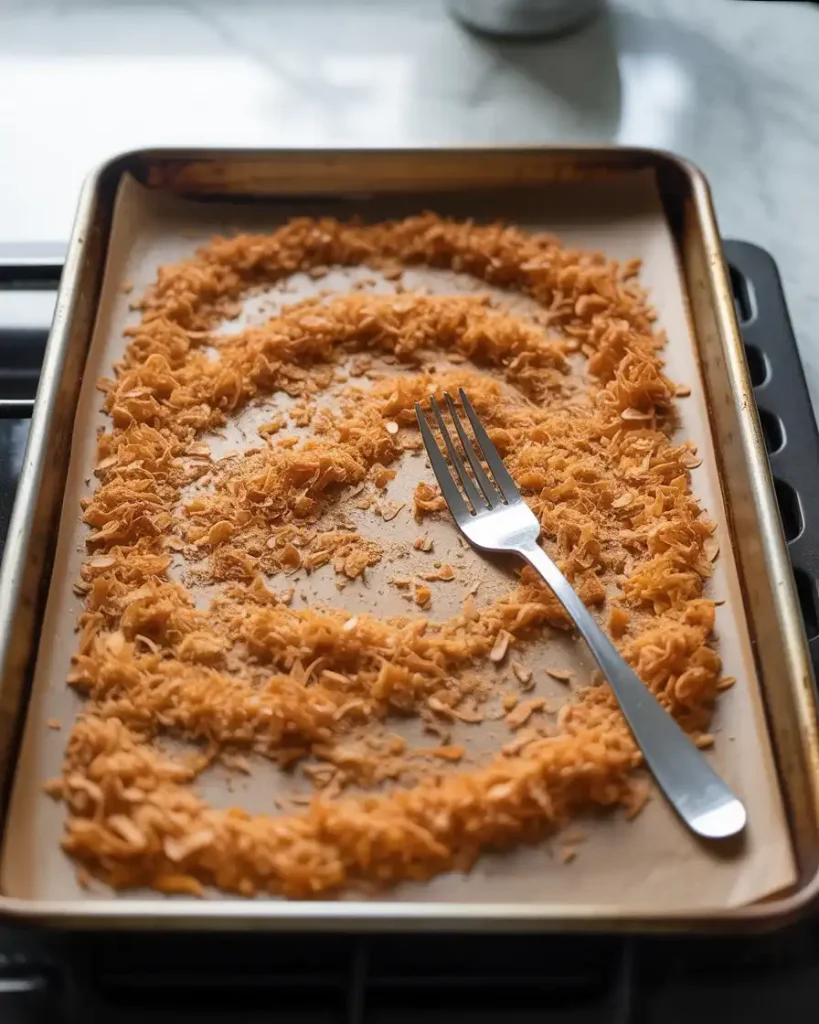
Spread ½ cup sweetened shredded coconut in a single layer on a rimmed baking sheet and bake at 325°F for 5-7 minutes, stirring every 2 minutes. Watch it closely because coconut goes from golden to burned in seconds.
I learned this lesson the hard way when I walked away for just 3 minutes and came back to find blackened, bitter coconut that I had to throw out. Now I set a timer for 2-minute intervals and stir with a fork each time, which ensures even toasting.
The coconut is ready when it’s golden brown and fragrant, with a mix of lighter and darker flakes that add visual interest. You’ll smell a nutty, sweet aroma that’s absolutely irresistible. Let it cool completely on the baking sheet before pressing it onto your frosted cake.
For deeper flavor, I sometimes add a tiny pinch of salt to the coconut before toasting. The contrast between sweet and salty enhances the tropical notes and makes the garnish addictive. Toasted coconut adds textural contrast and a professional bakery appearance that impresses every single time.
Should I Use Fresh or Canned Pineapple?
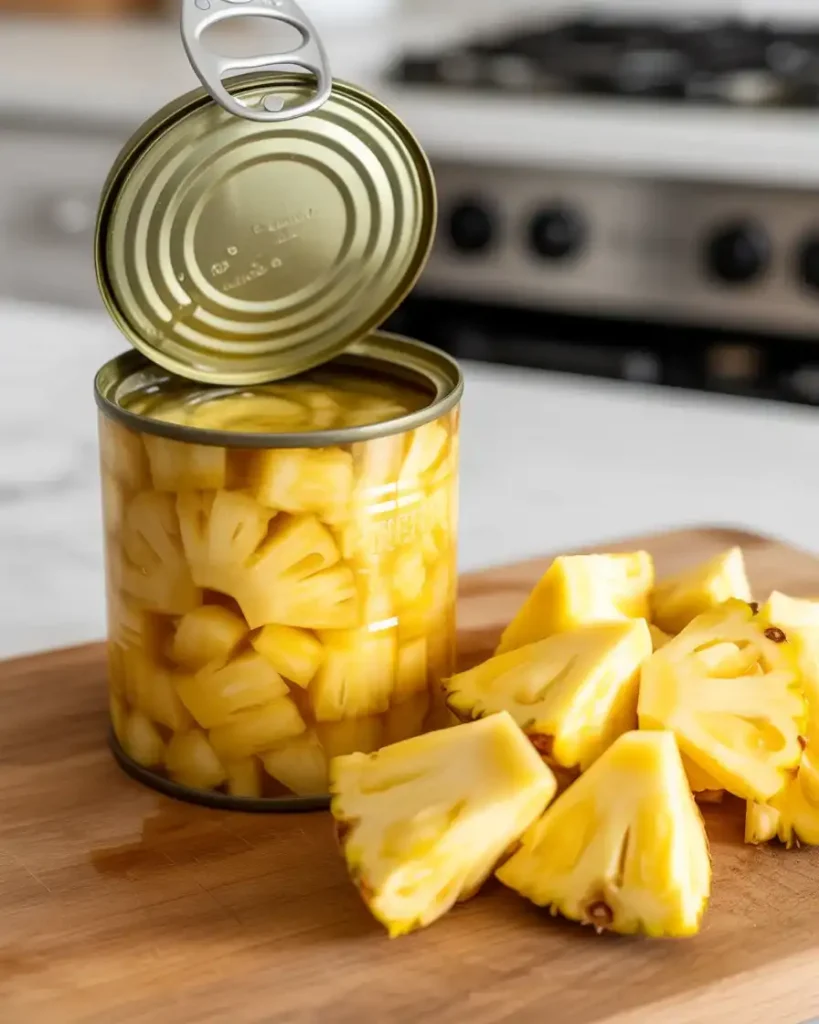
Canned crushed pineapple works significantly better than fresh for this cake recipe. I tested both versions over six batches, and fresh pineapple contains enzymes (bromelain) that break down the cake’s protein structure and create a mushy, almost slimy texture.
Canned pineapple is heat-processed during manufacturing, which deactivates these enzymes completely. It also has a more consistent sweetness and moisture level, making your results predictable every time. Fresh pineapple’s acidity can also interfere with the leavening agents.
In my side-by-side comparison, the fresh pineapple cake had an uneven crumb with dense spots and an oddly gritty texture. The canned version produced a uniformly tender, moist cake with perfect structure. Even pineapple purists admitted the canned version tasted better in this application.
Choose a quality brand packed in 100% pineapple juice rather than heavy syrup if you want to control the sweetness level. I prefer Dole or Del Monte crushed pineapple in juice. The juice you drain off is delicious in smoothies or cocktails, so nothing goes to waste.
If you absolutely must use fresh pineapple, cook it in a saucepan over medium heat for 8-10 minutes to deactivate the enzymes, then cool completely before using.
How Do I Prevent Cake Layers from Doming?
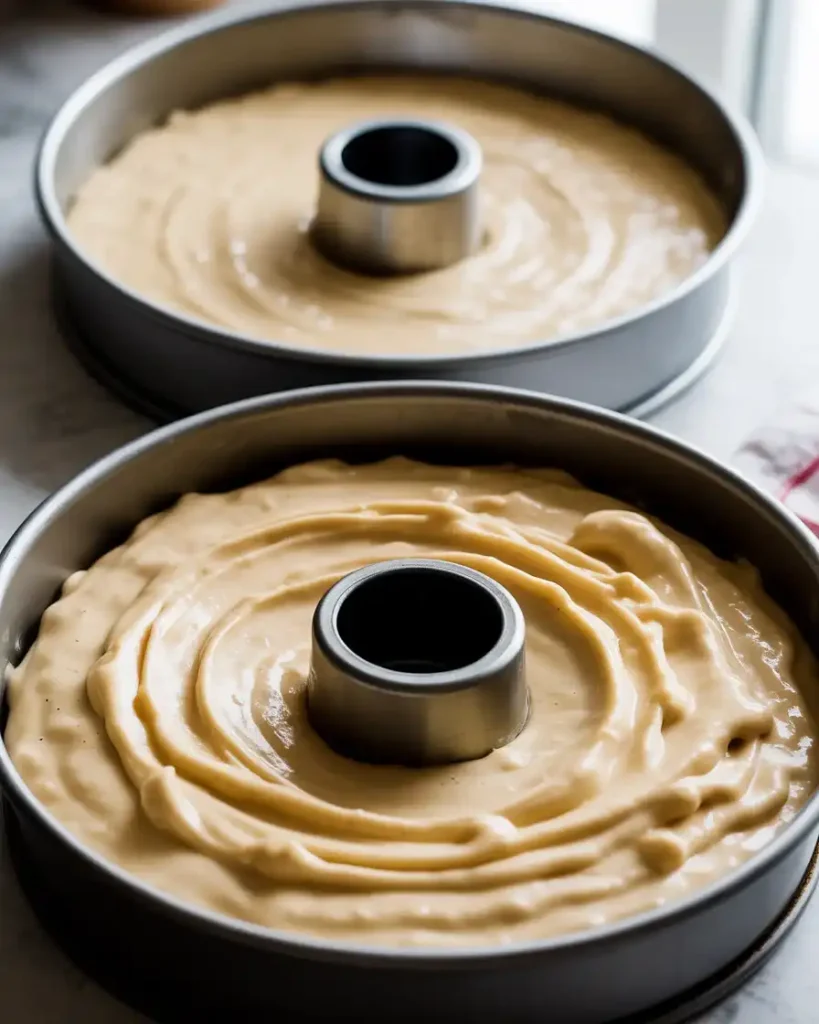
Lower your oven temperature slightly to 325°F and bake 3-5 minutes longer for flatter layers. I discovered this after 10 batches with domed tops that required excessive trimming and wasted cake.
The slower, gentler heat allows the edges and center to rise at the same rate. At 350°F, the edges set quickly while the center continues rising, creating that dome shape. You can also use baking strips (wet fabric strips wrapped around the pan exterior) to insulate the sides.
Another trick I use is tapping the filled pans firmly on the counter 3-4 times before baking to release air bubbles. These bubbles rise during baking and contribute to uneven tops. The tapping creates a smoother batter surface.
For this pineapple cake specifically, I spread the batter slightly higher around the edges and create a small well in the center with my spatula. As the cake rises, it naturally levels out. This technique works beautifully and my layers now come out nearly flat about 90% of the time.
If you do get doming, let the layers cool completely and use a serrated knife or cake leveler to trim them flat.
Frequently Asked Questions
Can I use low-fat cream cheese for the frosting?
A: I don’t recommend it because low-fat cream cheese contains more moisture and stabilizers that prevent proper whipping. The frosting won’t achieve the same fluffy texture and may taste slightly tangy rather than rich and creamy. Full-fat cream cheese creates the best consistency and flavor.
Why did my cake sink in the middle?
A: This usually happens from opening the oven door too early or using too much baking powder. I wait at least 25 minutes before checking the cake, and I measure baking powder carefully with proper measuring spoons. Undermixing or overmixing the batter can also cause sinking by creating uneven air distribution.
Can I make this as a sheet cake instead of layers?
A: Absolutely! Pour the batter into a greased 9×13-inch pan and bake at 350°F for 35-40 minutes. The sheet cake version is perfect for potlucks and casual gatherings. Let it cool completely in the pan, then frost the top and sprinkle with toasted coconut.