Modern Victorian Kitchen Ideas to Inspire Your Remodel
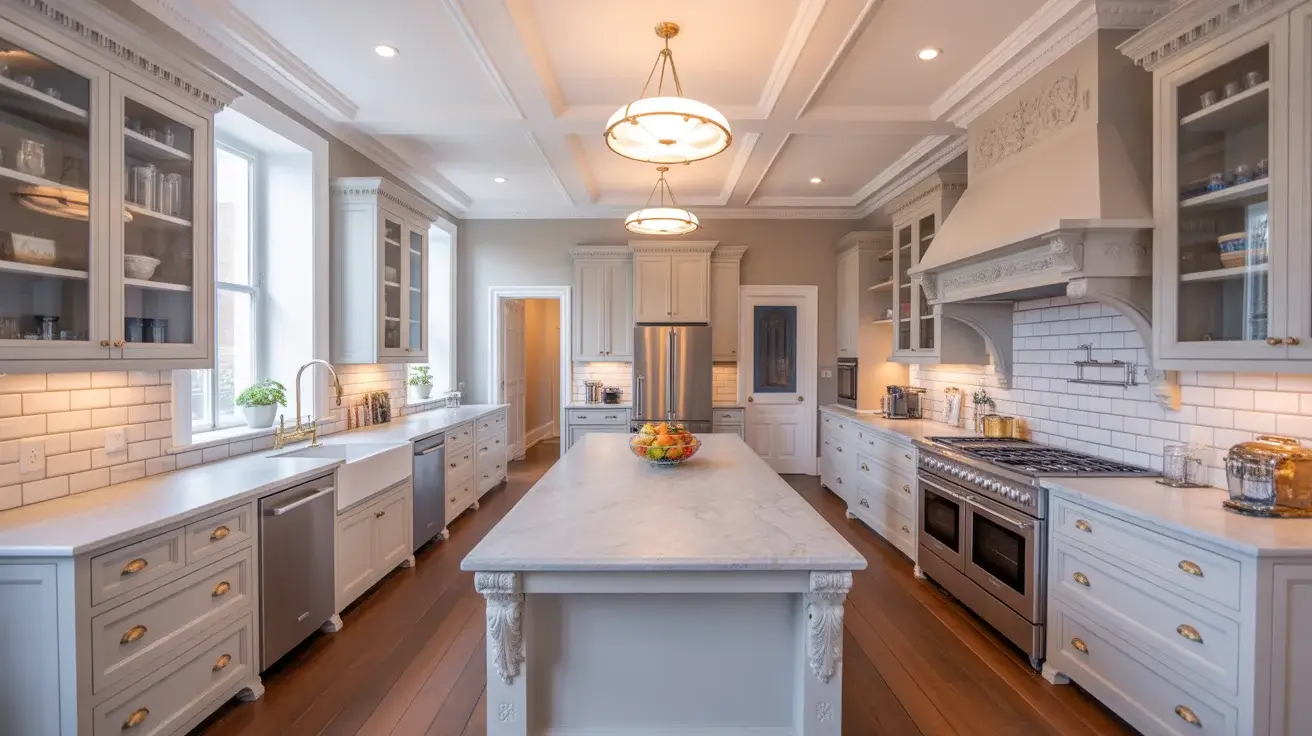
Imagine walking into a kitchen where ornate crown molding meets sleek stainless steel appliances, where vintage charm dances effortlessly with contemporary convenience. Modern Victorian kitchens represent the perfect marriage of two distinct design eras, creating spaces that are both luxurious and livable. This design style has captured the hearts of homeowners who refuse to choose between historical character and modern functionality.
Whether you’re planning a complete kitchen renovation or simply looking to infuse Victorian elegance into your existing space, understanding how to balance ornate details with clean, modern lines is essential. This guide will walk you through inspiring modern Victorian kitchen ideas that honor the past while embracing the present, helping you create a kitchen that’s both a showpiece and a practical workspace for everyday life.
Understanding the Modern Victorian Kitchen Aesthetic
The modern Victorian kitchen style takes the best elements from the Victorian era and reimagines them for contemporary living. Traditional Victorian kitchens featured rich wood cabinetry, intricate detailing, and formal layouts. Today’s interpretation softens these elements while maintaining their elegant spirit.
This design approach focuses on creating harmony between old and new. You’ll find traditional architectural details like ceiling medallions and wainscoting paired with modern amenities such as induction cooktops and smart refrigerators. The key is maintaining balance so neither style overwhelms the other.
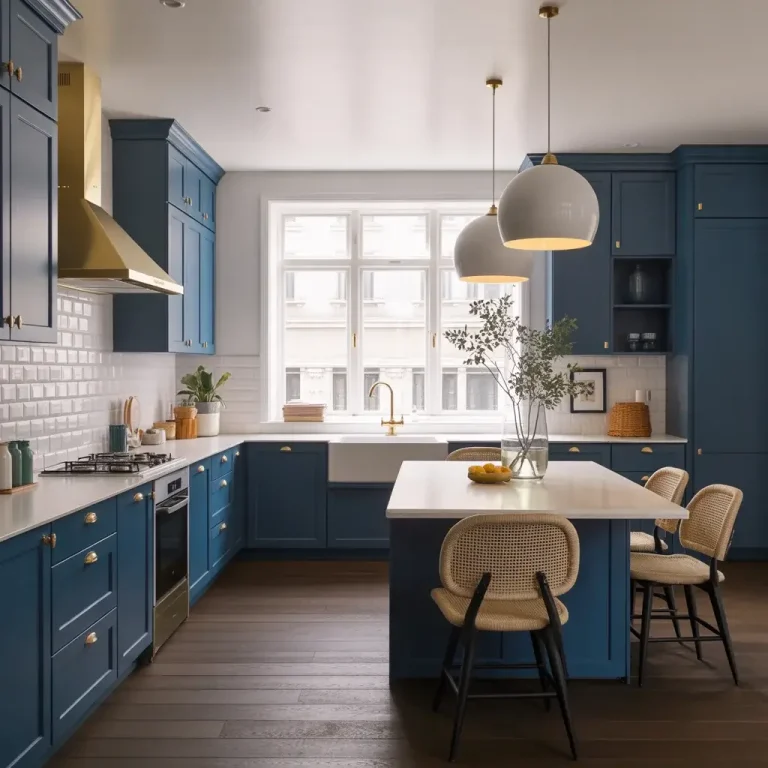
Color palettes typically lean toward sophisticated neutrals with jewel tone accents. Think soft grays, creamy whites, and deep navy blues complemented by brass or bronze fixtures. These choices create a timeless backdrop that won’t feel dated in five years.
Read More: How to Keep Your Kitchen Spotless Cleaning Tips
Cabinet Design and Hardware Selection
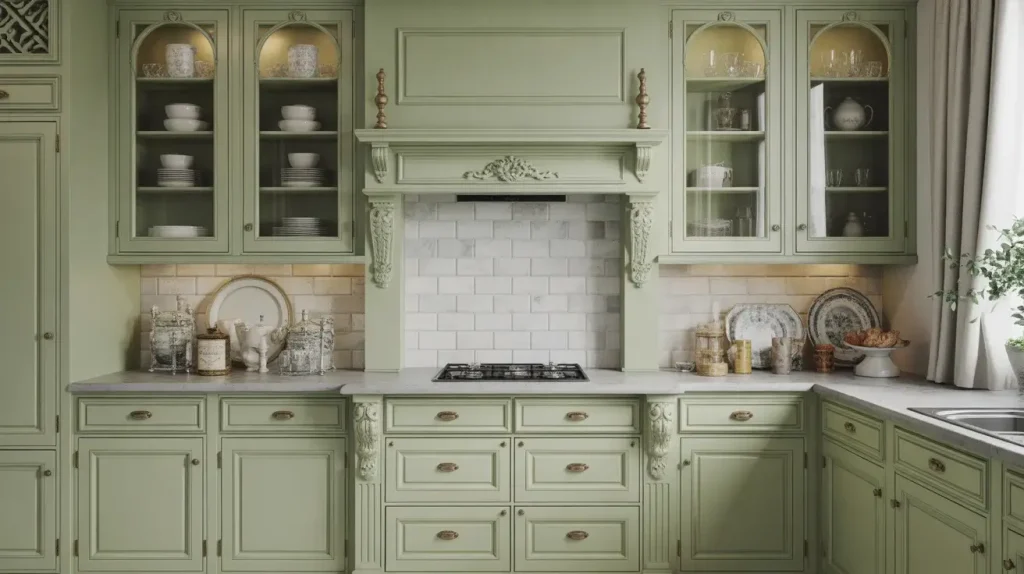
Cabinetry forms the foundation of any modern Victorian kitchen. Shaker-style beautifully because its simple panel design nods to traditional craftsmanship without feeling overly ornate. You can elevate them with sophisticated paint colors like sage green, charcoal gray, or classic white.
Glass front upper cabinets add Victorian charm while keeping the space feeling open. Consider incorporating at least a few glass door cabinets to display vintage dishware or elegant glassware. This creates visual interest and breaks up solid cabinet runs.
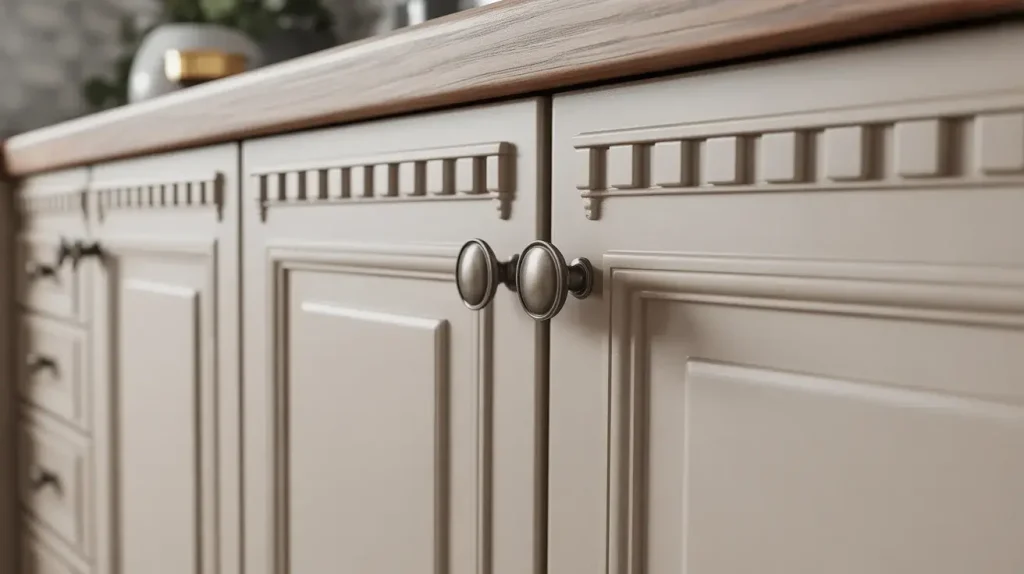
Hardware selection makes a significant impact on the overall aesthetic. Brass, bronze, or black matte finishes on knobs and pulls instantly evoke Victorian elegance. Cup pulls and bin pulls are particularly authentic to the era while remaining functional for modern use.
Don’t forget about decorative elements like corbels under countertops or stylized furniture-style bases. These small touches add architectural interest without overwhelming the space with ornamentation.
Countertop and Backsplash Materials
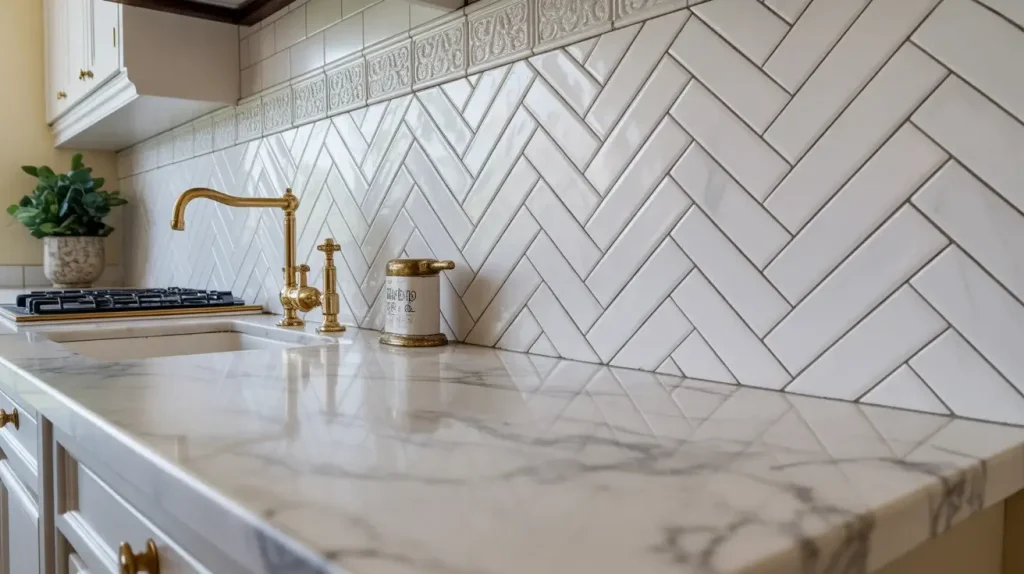
Natural stone countertops perfectly complement the modern Victorian aesthetic. Marble remains the gold standard, offering timeless elegance with its distinctive veining. Carrara, Calacatta, or even darker varieties like Nero Marquina create stunning focal points.
Quartz offers a practical alternative that mimics marble’s beauty while providing superior durability and low maintenance. Modern manufacturing techniques produce incredibly realistic patterns that satisfy both aesthetic and practical needs.
Backsplash design provides an excellent opportunity to incorporate Victorian patterns and depattern subway tiles arranged in classic patterns like herringbone or vertical stack, to create visual interest. Alternatively, decorative encaustic tiles add authentic Victorian flair as a focal point behind the range.
Consider extending your backsplash to the ceiling in key areas. This not only protects walls but creates a dramatic backdrop that draws the eye upward, emphasizing the room’s architectural features.
Flooring Options That Balance Old and New
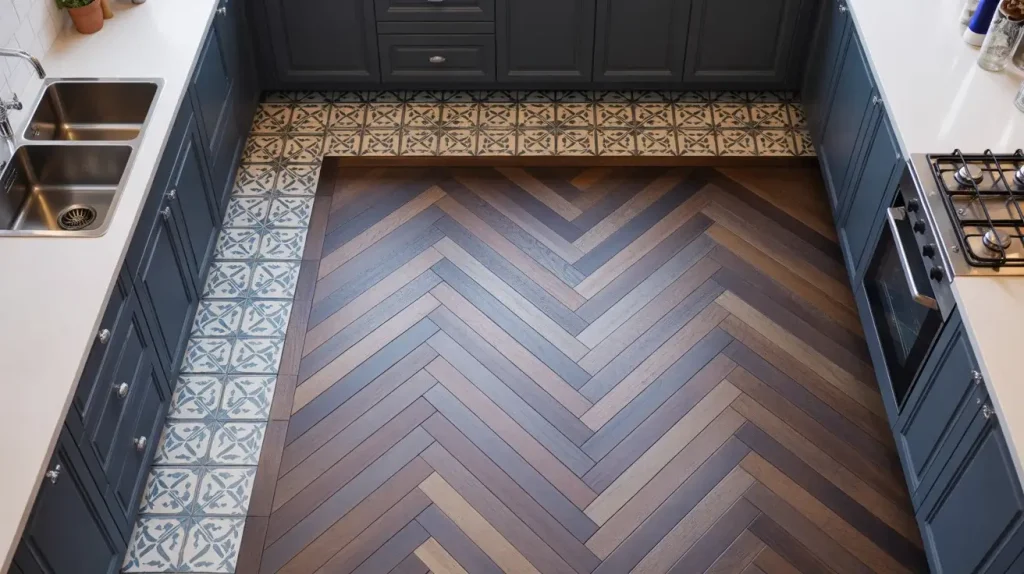
Flooring choices significantly influence your kitchen’s overall character. Hardwood floors in rich tones like walnut or oak immediately evoke Victorian warmth. Wide plank flooring feels particularly authentic to the period while maintaining contemporary appeal.
Patterned tile offers another excellent option for modern Victorian kitchens. Encaustic cement tiles with geometric or floral patterns create a stunning visual impact. Use them throughout the entire floor or as a decorative runner in front of key work areas.
For practical considerations, luxury vinyl plank flooring now replicates wood and stone with remarkable accuracy. This budget has water resistance and easy maintenance without sacrificing style.
Whatever material you choose, ensure it complements rather than competes with other design elements. The floor should ground the space while allowing architectural details and cabinetry to shine.
Lighting Fixtures as Statement Pieces
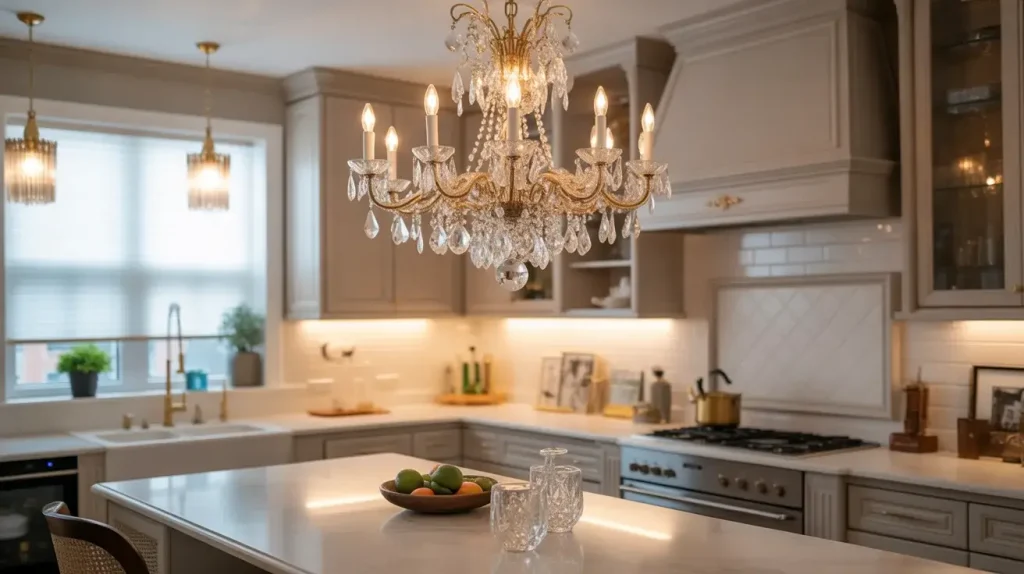
Lighting serves both functional and decorative purposes in modern Victorian kitchens. A statement chandelier or series of pendant lights over the island immediately establishes the room’s character. Look for fixtures with crystal details, aged brass finishes, or vintage inspirvintage-inspired
Layer your lighting with recessed cans for general illumination, under cabinet under-cabinet lighting, and decorative fixtures for ambiance. This approach ensures adequate brightness for cooking while creating a warm, inviting atmosphere for gathering.
Sconce lighting flanking windows or positioned strategically on walls adds another layer of Victorian charm. Choose fixtures with glass shades, intricate metalwork, or vintage silhouettes that complement your overall design scheme.
Don’t overlook natural light opportunities. Victorian homes traditionally featured large windows to maximize daylight. If possible, enhance existing windows or add new ones to flood your kitchen with natural illumination.
Color Palettes and Paint Choices
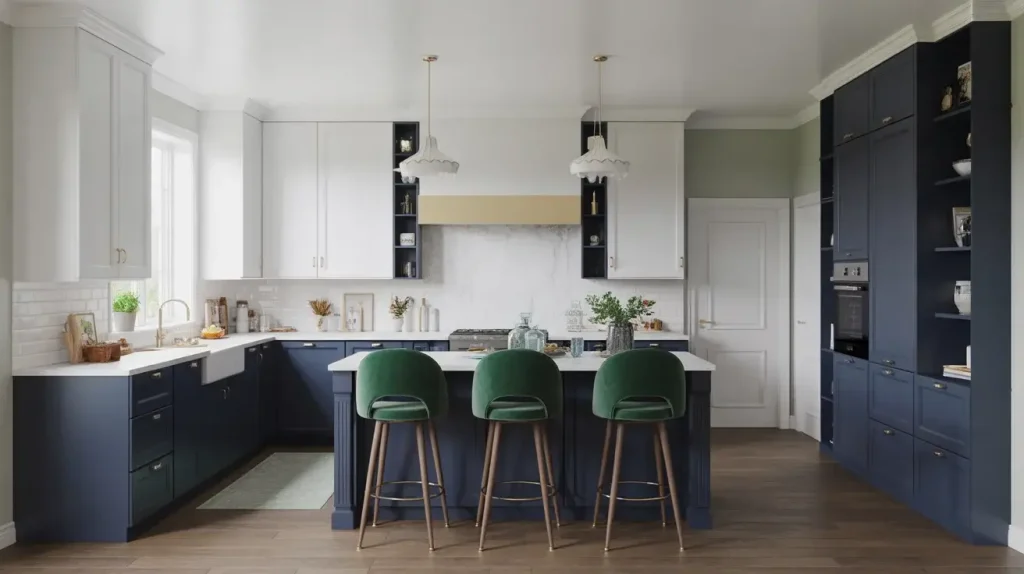
Color selection dramatically impacts how traditional or contemporary your modern Victorian kitchen feels. Classic white creates a fresh, bright foundation that allows architectural details to shine. It’s timeless, versatile, and makes spaces feel larger.
Two-tone. Two-tone became increasingly popular in modern Victorian designs. Pair white upper cabinets with navy, forest green, or charcoal lower cabinets for visual interest. This approach adds depth while maintaining the elegant character you’re seeking.
Accent colors through accessories, window treatments, or a painted island inject personality without permanent commitment. Jewel tones like emerald, sapphire, and ruby complement Victorian aesthetics beautifully. Use them sparingly for maximum impact.
Wall colors should enhance rather than overwhelm. Soft grays, warm taupes, or pale blues create sophisticated backdrops. If you’re brave, consider a dramatic accent wall in a rich, saturated hue behind open shelving or glass cabinets.
Incorporating Modern Appliances Seamlessly
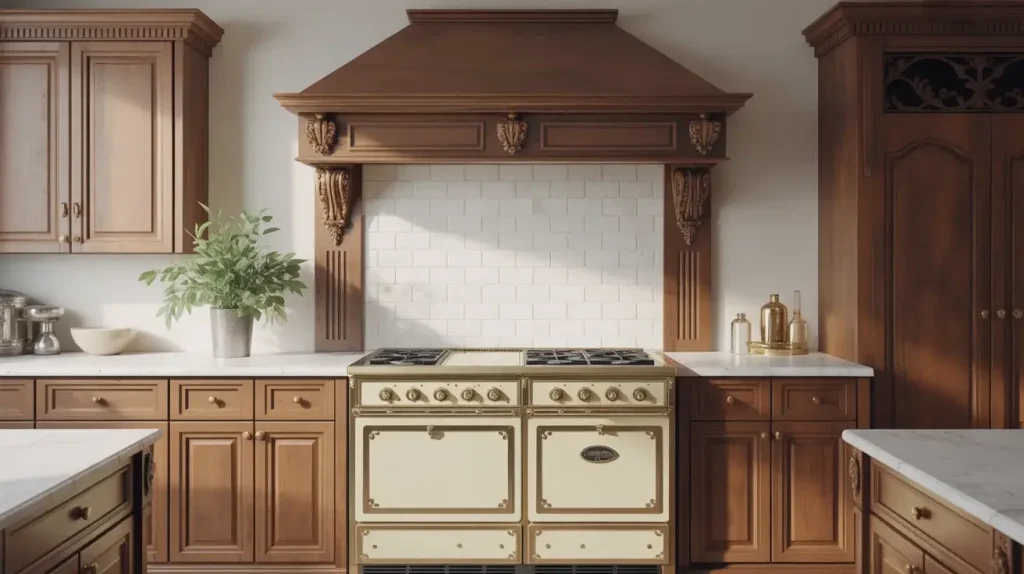
High performanHigh-performancee essential in modern kitchens, but they can clash with Victorian aesthetics if not thoughtfully integrated. Panel-ready allows you to conceal dishwashers and refrigerators behind cabinetry that matches your design scheme perfectly.
Professional style ranges from stainless steel or colored enamel options, serving as beauties, serving as focal points. Brands like La Cornue, AGA, or modern options with vintage styling, such as Big Chill, blend contemporary performance with classic appearance.
Consider appliance placement carefully to maintain the kitchen’s elegant flow. Integrated coffee stations, warming drawers, and wine refrigerators can be tucked into cabinetry runs without disrupting the visual harmony.
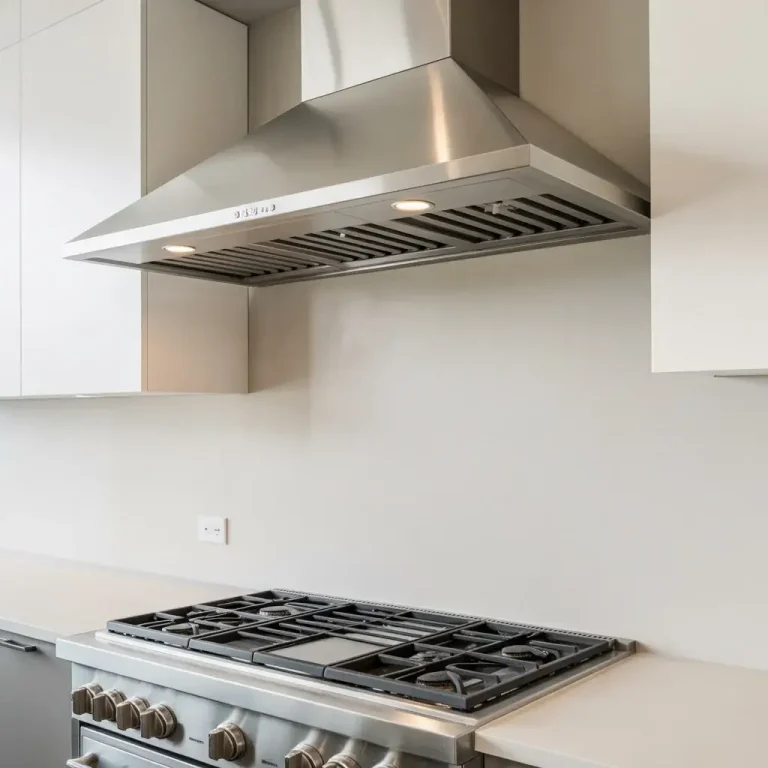
Ventilation deserves special attention in modern Victorian kitchens. A decorative range hood becomes an architectural element rather than an afterthought. Choose designs with corbels, intricate molding, or custom paneling that complements your cabinetry.
Adding Architectural Details and Millwork
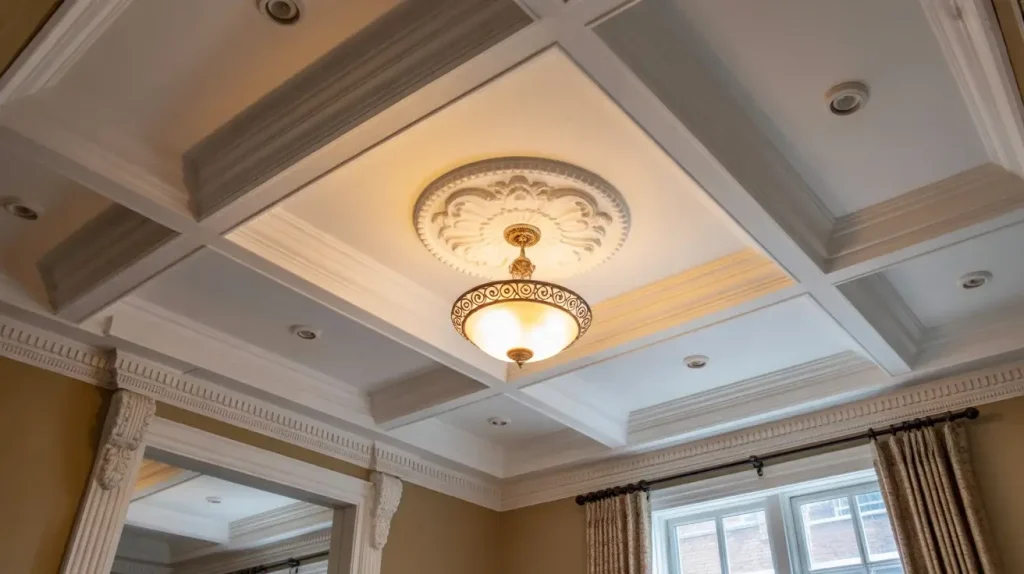
Crown molding transforms ordinary cabinets into custom-looking built-ins with appropriate san cale for your ceiling height. More ornate details work in rooms with higher ceilings, while simpler profiles suit standard eight-foot spaces.
Ceiling treatments add another dimension to modern Victorian kitchens. Coffered ceilings, decorative ceiling medallions around light fixtures, or picture frame molding create visual interest overhead. These elements draw the eye upward and emphasize room proportions.
Wainscoting or beadboard on island bases and walls injects traditional character while protecting surfaces from damage. Paint it in contrasting colors or keep it coordinated with cabinetry for different effects.
Window and door trim should be substantial enough to make an impact. Thicker casings with decorative corner blocks or rosettes enhance the Victorian character while framing views beautifully.
Island Design as a Focal Point
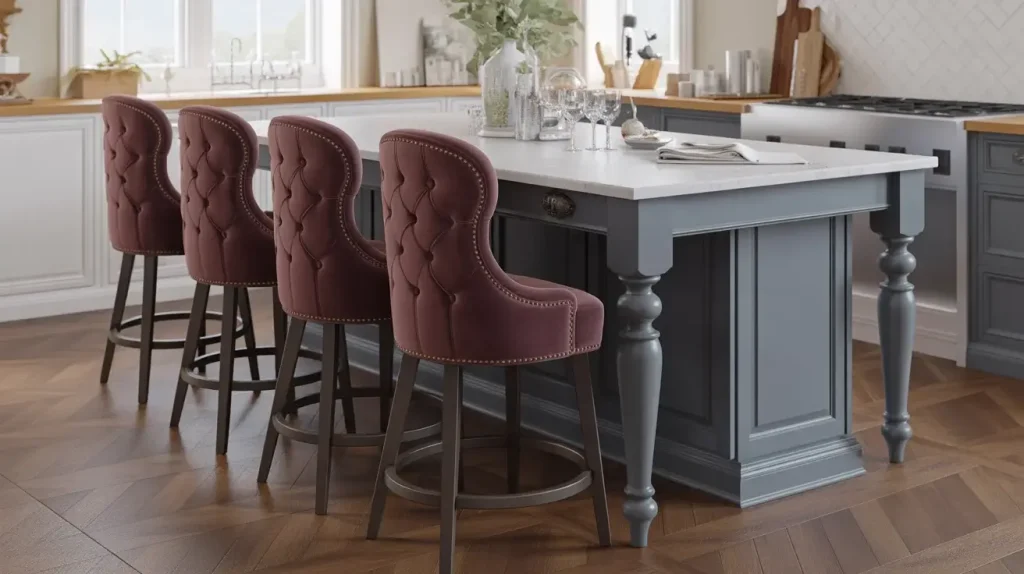
The kitchen island often serves as the room’s centerpiece in modern Victorian designs. Furniture style islands with turned legs, decorative feet, and substantial presence evoke Victorian craftsmanship while providing contemporary functionality.
Consider contrasting your island color with perimeter cabinets for visual impact. A dark walnut island against white cabinets creates a dramatic contrast, while a painted island in an accent color injects personality.
Countertop material on the island can differ from perimeter counters to create distinction. Butcher block tops add warmth and practicality for food preparation, while marble or quartz maintains elegance for serving and entertaining.
Seating arrangements deserve careful planning. Upholstered counter stools with tufted backs or nailhead trim enhance the Victorian aesthetic. Ensure adequate overhang for comfortable leg room and space between seats for ease of movement.
Open Shelving and Display Options
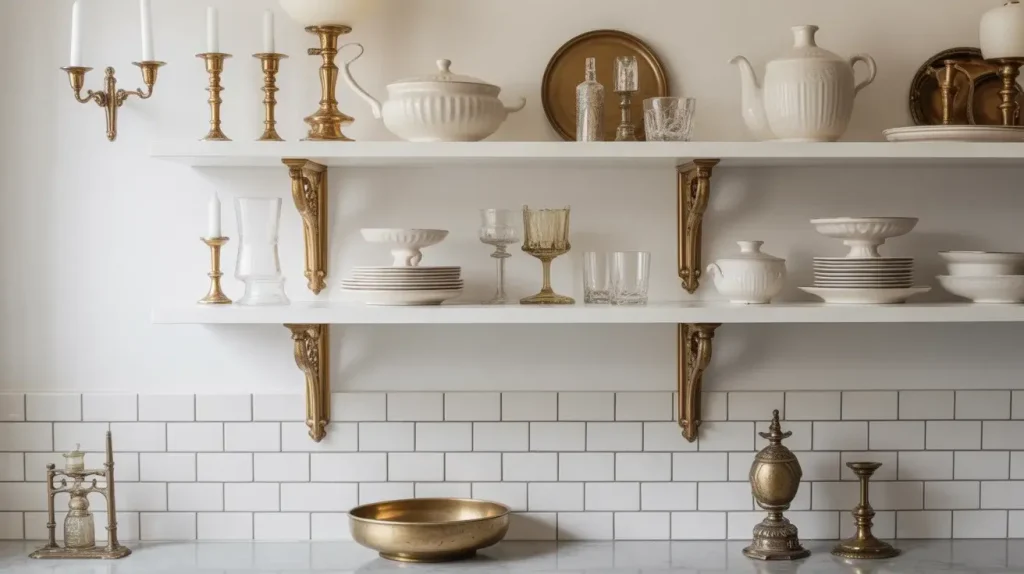
Open shelving provides opportunities to showcase beautiful dishware while keeping frequently used items accessible. Brass or wooden brackets supporting thick shelves add Victorian charm. Style shelves thoughtfully with a mix of practical items and decorative pieces.
Glass front cabinets offer another display option that feels more contained than open shelving. They protect contents from dust while allowing you to show off vintage collections, colorful dishware, or elegant glassware.
Plate racks above windows or incorporated into cabinetry runs serve both functional and decorative purposes. They’re quintessentially Victorian while remaining practical for modern kitchens.
Balance open storage with closed cabinetry to avoid visual clutter. Too much on display can feel chaotic, while too little makes the space feel sterile. Aim for thoughtful curation that reflects your personal style.
Sink and Faucet Selection
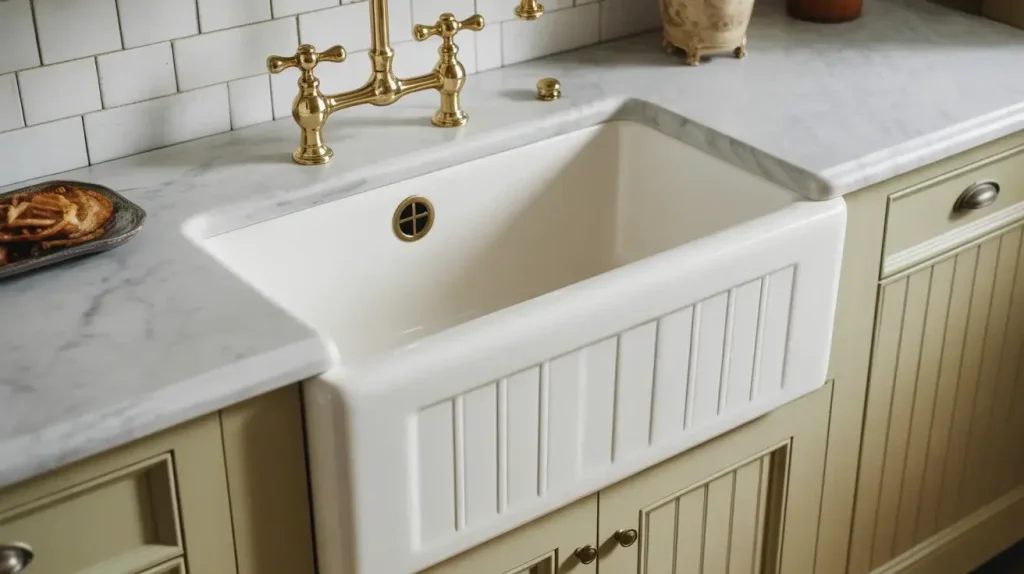
The kitchen sink deserves thoughtful consideration as both a functional workhorse and design element. Fireclay farmhouse sinks epitomize the modern Victorian aesthetic with their deep basins and classic appeal. White remains the most popular choice, though colors like charcoal and biscuit offer sophisticated alternatives.
Undermount sinks in stainless steel or composite materials provide a more contemporary option that still works within the design scheme. Choose styles with slightly curved corners rather than sharp angles to soften the modern edge.
Faucet selection significantly impacts the overall look. Bridge-style cross handles or lever options instantly evoke Victorian charm. Finishes in brass, bronze, or black complement the era’s aesthetic perfectly.
Don’t forget about secondary sinks if space allows. A small prep sink in the island with its own elegant faucet adds functionality while creating another design opportunity.
Window Treatments and Soft Furnishings
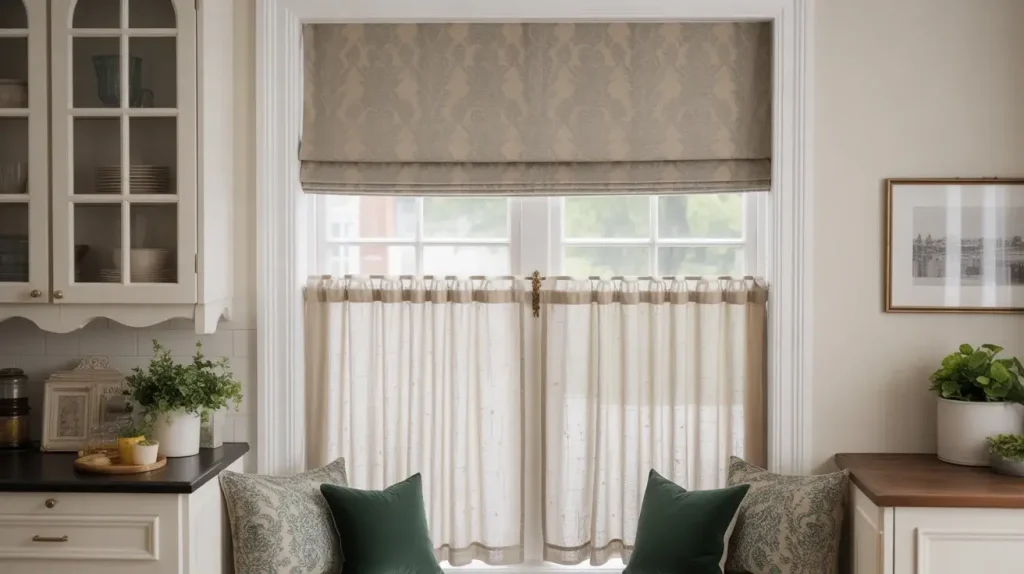
Window treatments soften the kitchen’s hard surfaces while adding layers of texture and pattern. Roman shades in linen or patterned fabrics provide clean lines with traditional sensibility. Choose fabrics that can withstand kitchen conditions or opt for faux options that look authentic.
Café curtains on lower window portions offer privacy while allowing natural light to flood in. They’re particularly appropriate for Victorian styling and work beautifully in kitchens overlooking gardens or neighboring properties.
Valances or cornices add architectural interest to window tops. Upholstered cornices in coordinating fabrics create polished, finished looks that tie together your color scheme.
Seating upholstery provides another opportunity to introduce pattern, texture, and color. Velvet, leather, or patterned fabrics on counter stools or banquette seating enhance comfort and visual appeal.
Accessorizing Your Modern Victorian Kitchen
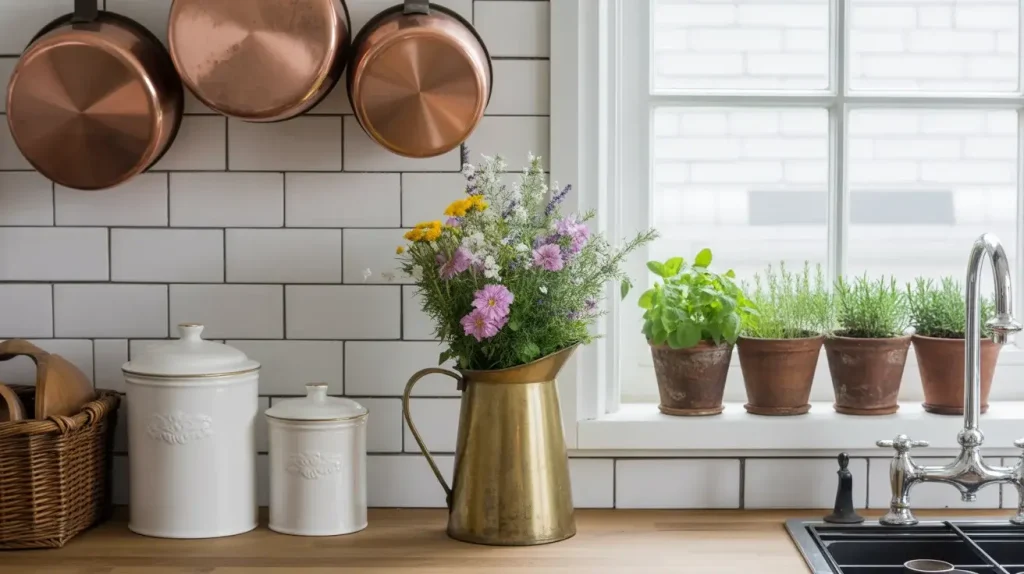
Accessories personalize your space and reinforce the modern Victorian theme. Display vintage copper cookware, ceramic canisters, or antique scales on open shelves or countertops. These functional pieces double as decorative elements.
Fresh flowers or plants in vintage-inspired life and color. Herb gardens in antique planters on windowsills provide both beauty and practical ingredients for cooking.
Artwork appropriate to the style includes botanical prints, vintage advertisements, or architectural drawings in ornate frames. Gallery walls work well in dining areas adjacent to kitchens.
Rugs define zones and add warmth underfoot. Traditional Persian or Turkish patterns complement Victorian aesthetics beautifully. Ensure they’re low pile and easy to clean for kitchen practicality.
Budget-Friendly Ways to Achieve the Look
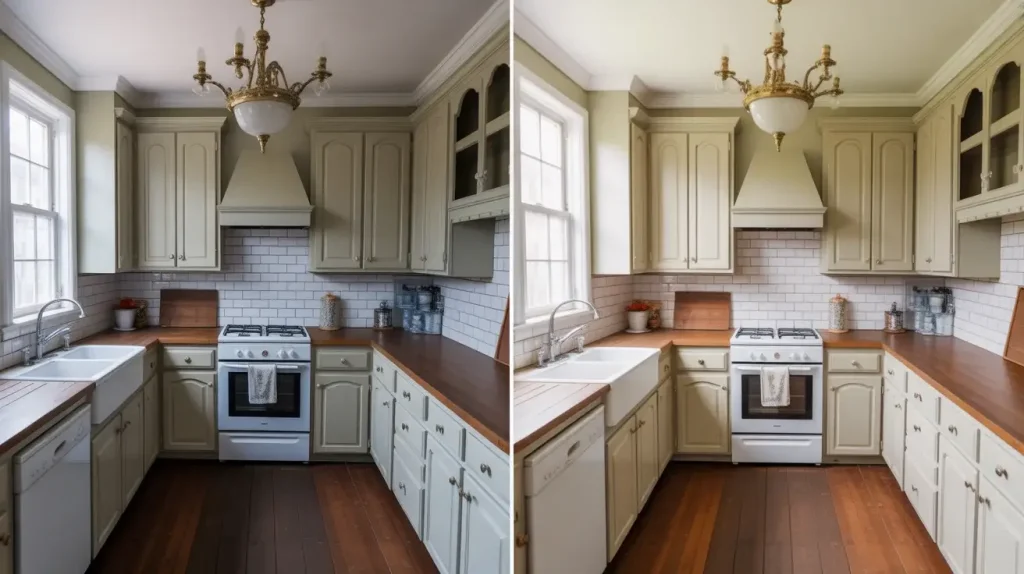
Achieving a modern Victorian kitchen doesn’t require unlimited funds. Start with paint, the most impactful and affordable transformation. Repainting existing cabinets in sophisticated colors instantly updates the space.
Replace hardware on cabinets and drawers with brass or bronze options. This simple swap dramatically changes the overall aesthetic for relatively little investment. Shop vintage stores or online marketplaces for authentic period pieces.
Add architectural details incrementally. Crown molding, window trim, or wainscoting can be DIY projects that significantly enhance character. Start with the most visible areas first.
Shop secondhand for light fixtures, furniture pieces, and accessories. Vintage and antique stores often have authentic Victorian pieces at reasonable prices. Refinish or repurpose them to fit your specific needs and design vision.
Conclusion
Modern Victorian kitchens prove that you don’t have to sacrifice historical character for contemporary convenience. By thoughtfully blending ornate architectural details, rich materials, and traditional color palettes with efficient layouts, modern appliances, and clean design lines, you create a kitchen that honors the past while fully embracing present-day living.
The key to success lies in balance, ensuring neither the Victorian nor modern elements overwhelm the space. Start with a clear vision, prioritize elements that matter most to you, and build your design incrementally if budget constraints exist. Whether you’re undertaking a complete renovation or simply adding Victorian touches to your existing kitchen, each carefully chosen detail contributes to the overall elegance and functionality of your space.
Ready to transform your kitchen into a modern Victorian masterpiece? Explore more kitchen design inspiration and expert remodeling tips on our website to bring your dream kitchen to life. Share your own modern Victorian kitchen journey with us and inspire others to embrace this timeless yet contemporary design style.
Frequently Asked Questions
What defines a modern Victorian kitchen?
A modern Victorian kitchen combines ornate architectural details and traditional design elements from the Victorian era with contemporary amenities and clean lines. It features classic elements like crown molding, decorative hardware, and rich materials balanced with modern appliances, efficient layouts, and current color palettes to create spaces that are both elegant and functional.
What colors work best in modern Victorian kitchens?
The best colors for modern Victorian kitchens include sophisticated neutrals like white, cream, soft gray, and taupe as base colors, accented with deeper tones such as navy blue, forest green, charcoal, or rich jewel tones like emerald and sapphire. Two-tone cabinetry, combining white with darker colors, creates visual interest while maintaining elegance. Brass, bronze, and black accents complement these palettes perfectly.
How do you blend modern appliances into a Victorian-style kitchen?
Modern appliances blend seamlessly into Victorian kitchens through panel-ready hide behind matching cabinetry, vintage styled professional ranges in colors or stainless steel, and custom range hoods with traditional detailing. Strategic placement within cabinetry runs and choosing appliances with classic styling rather than ultra-modern maintain the Victorian aesthetic while enjoying contemporary performance and convenience.
Are modern Victorian kitchens expensive to create?
Modern Victorian kitchens can fit various budgets depending on your approach. High-end custom cabinetry, marble countertops, and luxury appliances cost significantly more, but you can achieve the look affordably by repainting existing cabinets, upgrading hardware to brass or bronze, adding architectural molding as DIY projects, and shopping secondhand for light fixtures and accessories. Prioritize changes with the biggest visual impact first.
What flooring works best in modern Victorian kitchens?
The best flooring options for modern Victorian kitchens include hardwood in rich tones like walnut or oak with wide planks, patterned encaustic cement tiles with geometric or floral designs, natural stone like marble or slate, or high-quality planks that replicate wood or stone. Choose options that complement your overall design without competing with cabinetry and architectural details, ensuring durability for kitchen traffic and spills.