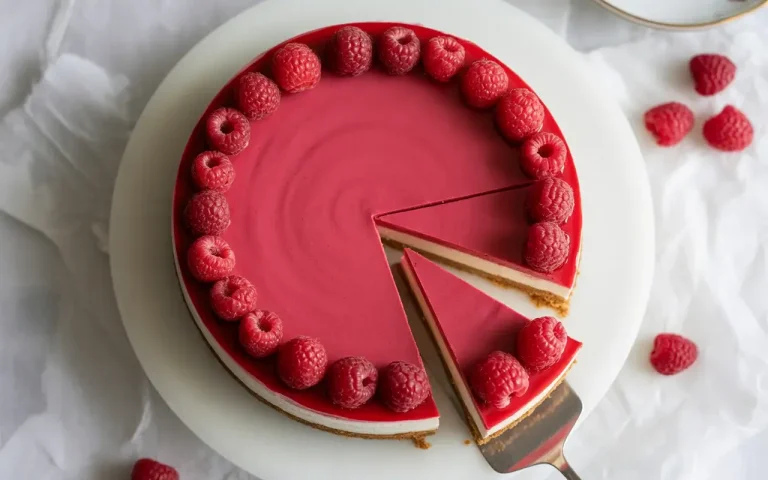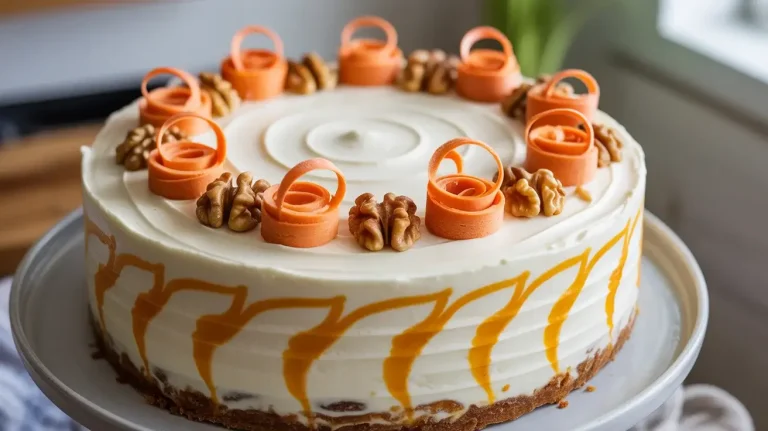
Blackberry Swirl Cheesecake
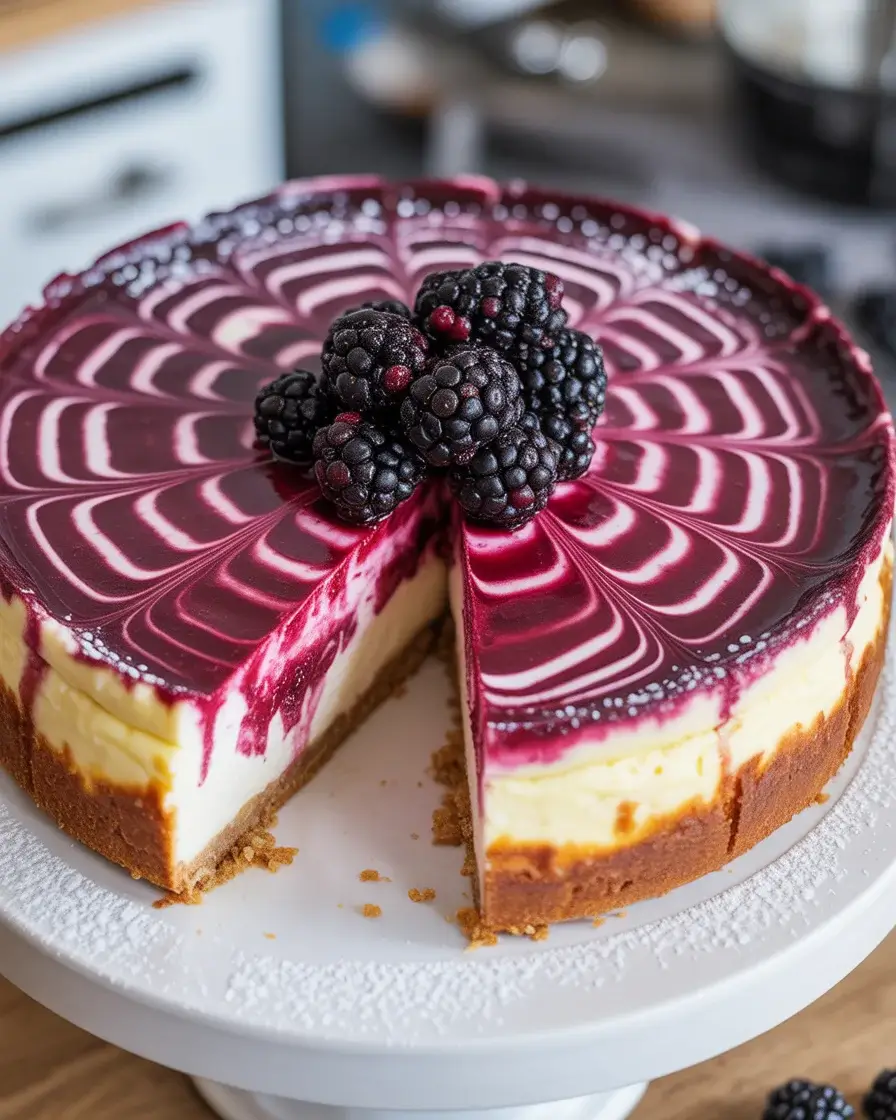
The first time I made this cheesecake, I skipped the water bath and ended up with a crater-sized crack right down the middle. After 15+ test batches, I finally nailed the technique that gives you that silky, crack-free top with gorgeous purple swirls every single time.
This recipe is perfect for dinner parties or weekend baking when you want something genuinely impressive. The blackberry swirl adds a tart, jammy contrast that cuts through the richness of the cream cheese filling beautifully.
Step-by-Step Instructions
Step 1: Make the Blackberry Swirl Sauce
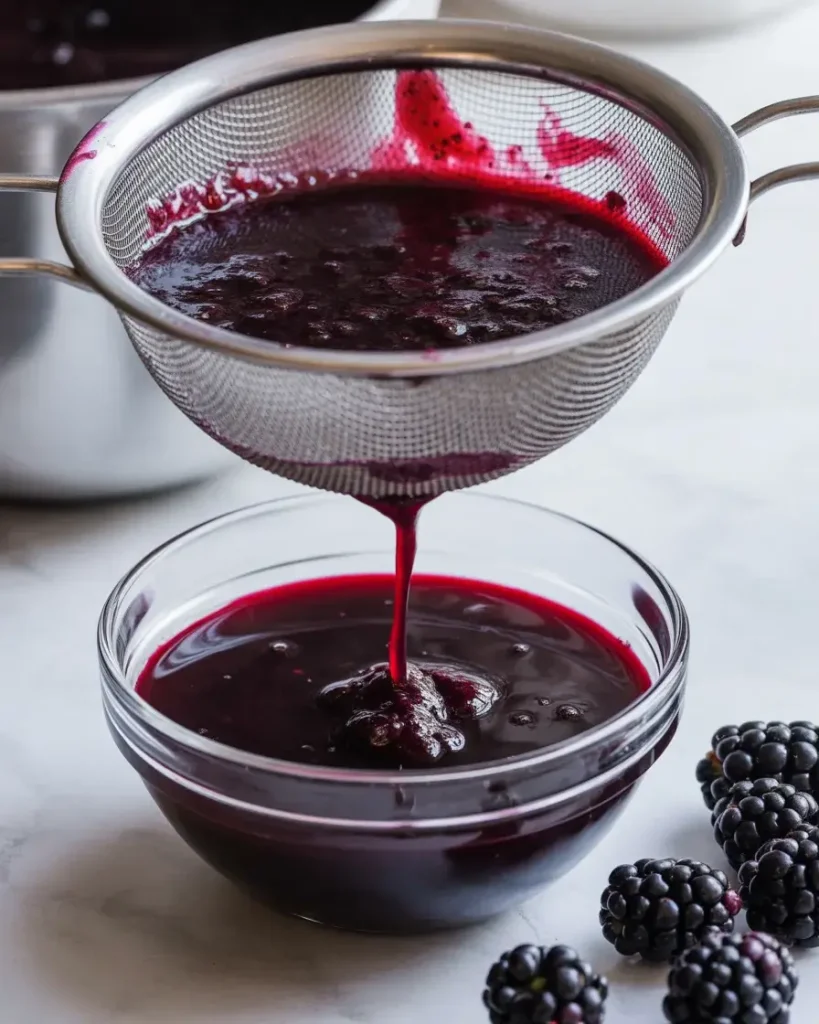
Combine 1 cup fresh blackberries with 2 tablespoons sugar and 1 teaspoon lemon juice in a small saucepan over medium heat. Cook for 8-10 minutes, stirring occasionally, until the berries break down and the mixture thickens to a jam-like consistency.
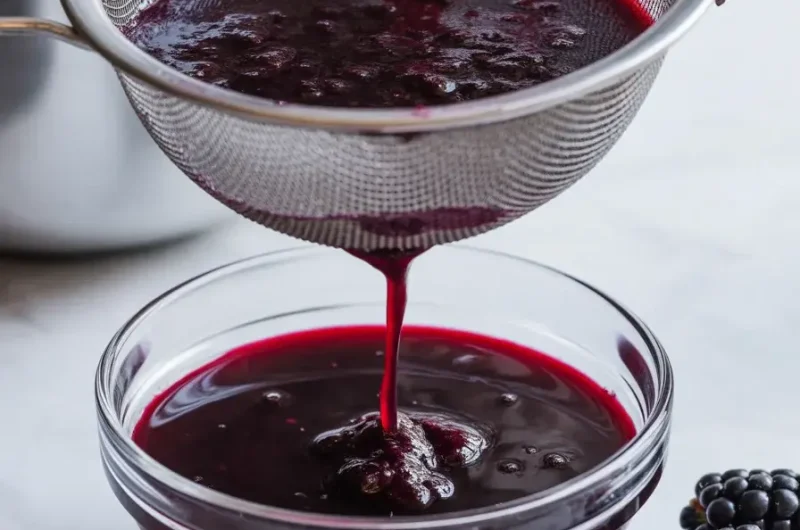
Press through a fine mesh strainer to remove seeds. I tested this both ways – keeping the seeds gives a rustic texture, but straining produces that clean, vivid purple swirl that looks stunning against the white filling.
Step 2: Prepare the Graham Cracker Crust
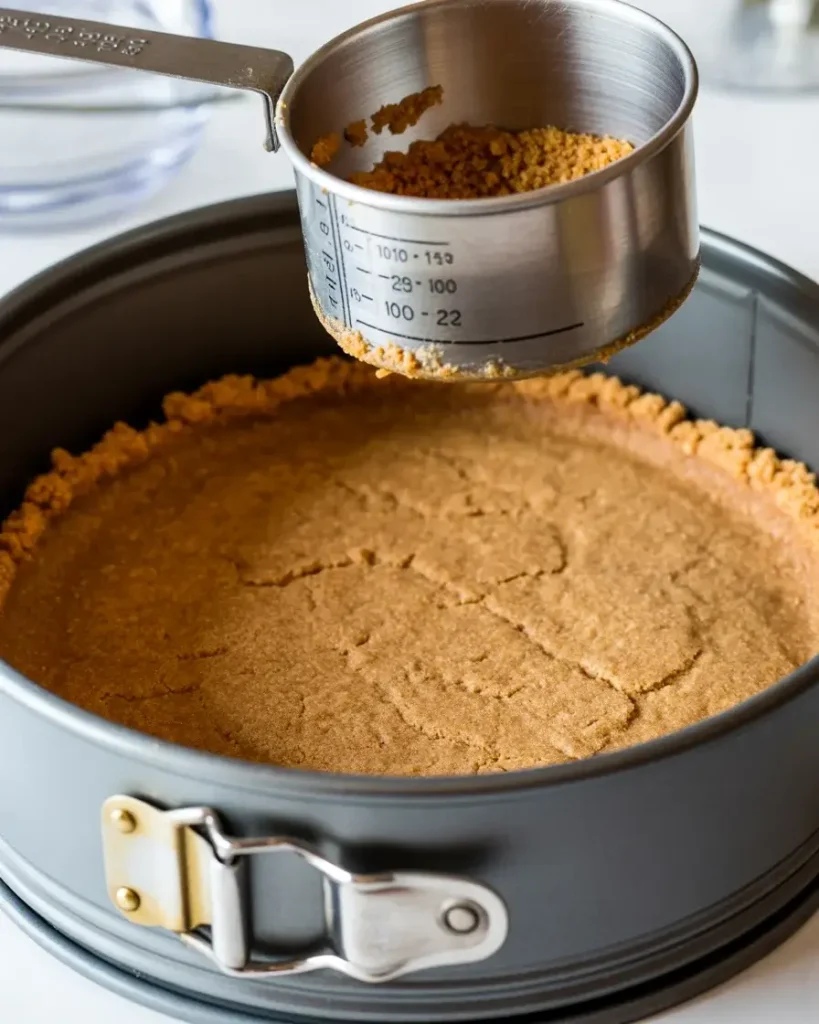
Pulse 14 full graham cracker sheets into fine crumbs. You need about 1.75 cups. Mix with 6 tablespoons melted butter and 3 tablespoons granulated sugar until the mixture feels like wet sand and holds together when squeezed.
Press firmly into the bottom of a 9-inch springform pan. I use the flat bottom of a measuring cup to get an even, compact layer. Bake at 325°F for 10 minutes until just golden and fragrant – you’ll smell that toasty, buttery aroma when it’s ready.
Step 3: Beat the Cream Cheese Filling
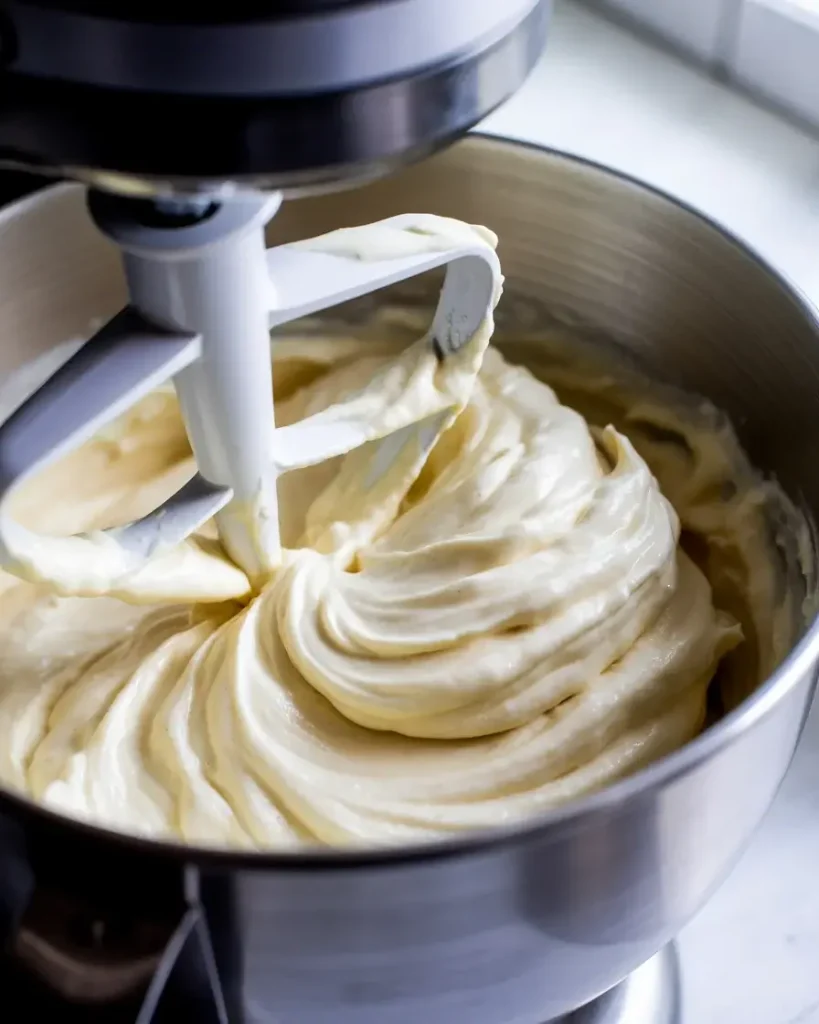
Beat 24 oz (3 blocks) full-fat cream cheese at room temperature for 3 full minutes until completely smooth and fluffy. This step is non-negotiable cold cream cheese creates lumps that no amount of mixing will fix.
Add 1 cup granulated sugar and beat another 2 minutes. Scrape down the bowl sides twice. I learned after 5 failed batches that under-mixing the cream cheese first is the number one cause of lumpy cheesecake.
Step 4: Add Eggs and Sour Cream
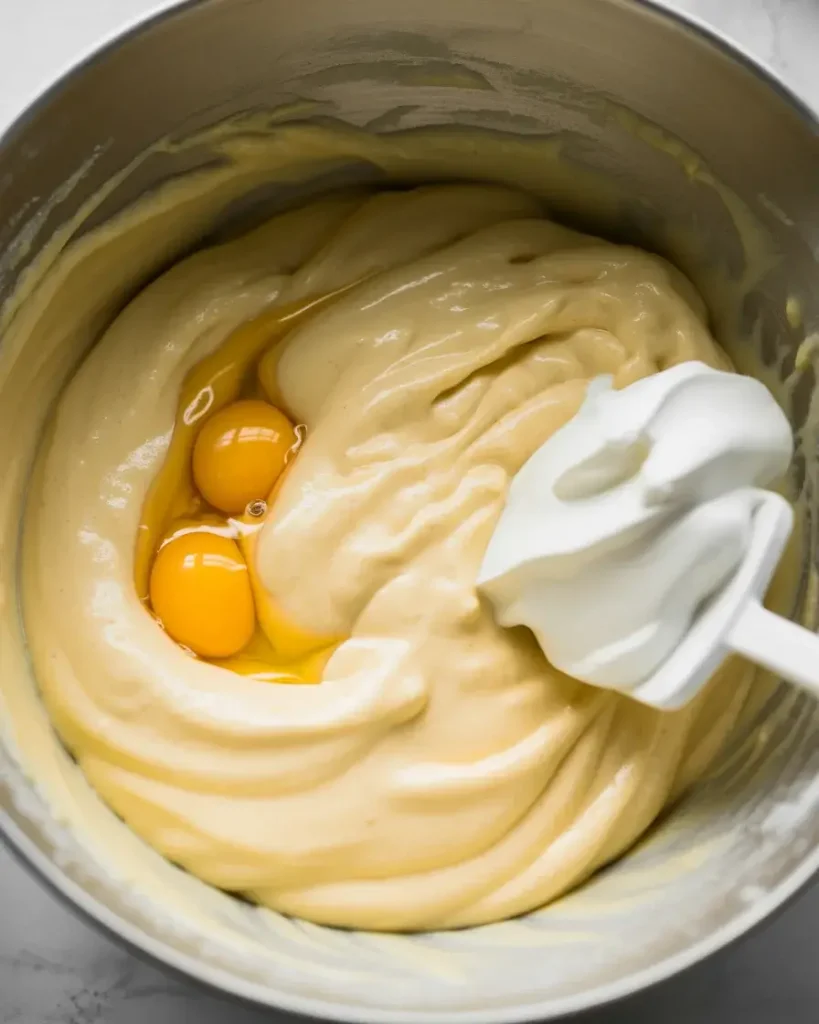
Add 3 large eggs one at a time on LOW speed, mixing just until each disappears into the batter. Overmixing after adding eggs incorporates air, which causes the cheesecake to puff and crack during baking.
Mix in 1 cup full-fat sour cream and 1 teaspoon vanilla extract until just combined. The batter should look thick, glossy, and pourable like a very thick pancake batter. If it looks foamy, you’ve overmixed and should let it rest 10 minutes before baking.
Step 5: Create the Blackberry Swirl
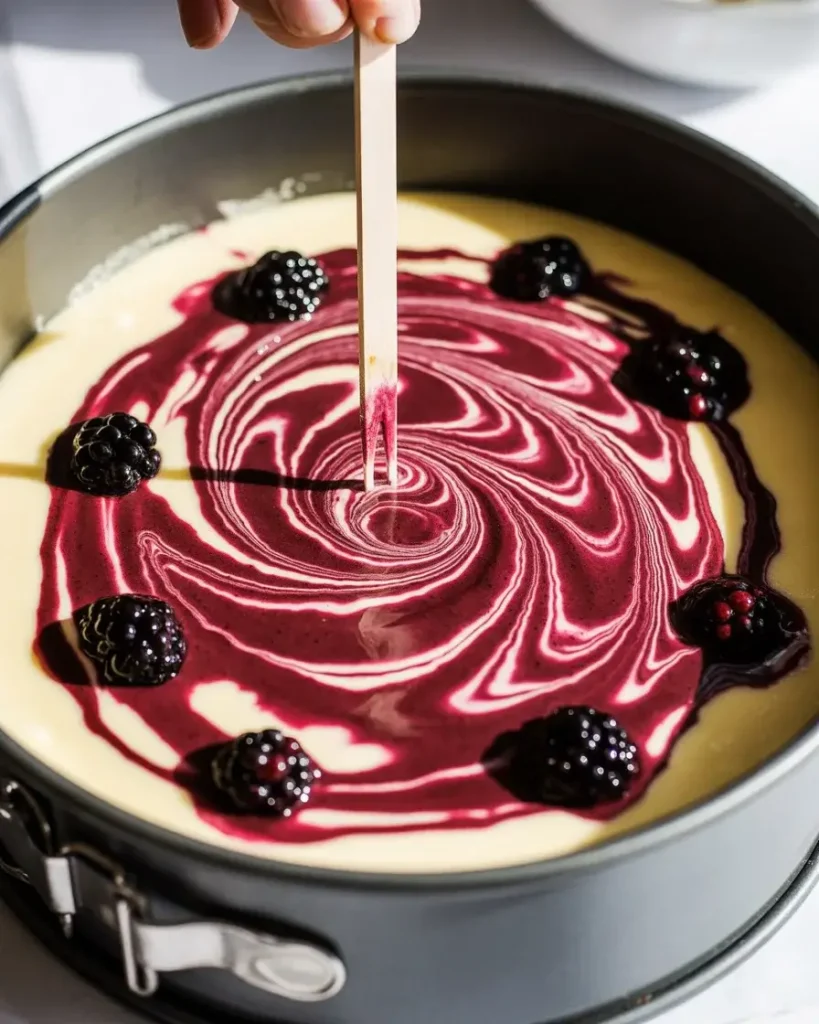
Pour the cheesecake batter over the cooled crust. Drop the blackberry sauce by spoonfuls about 8-10 small dollops across the surface. Use a wooden skewer or toothpick to drag through the sauce in a figure-8 pattern.
Step 6: Bake in a Water Bath
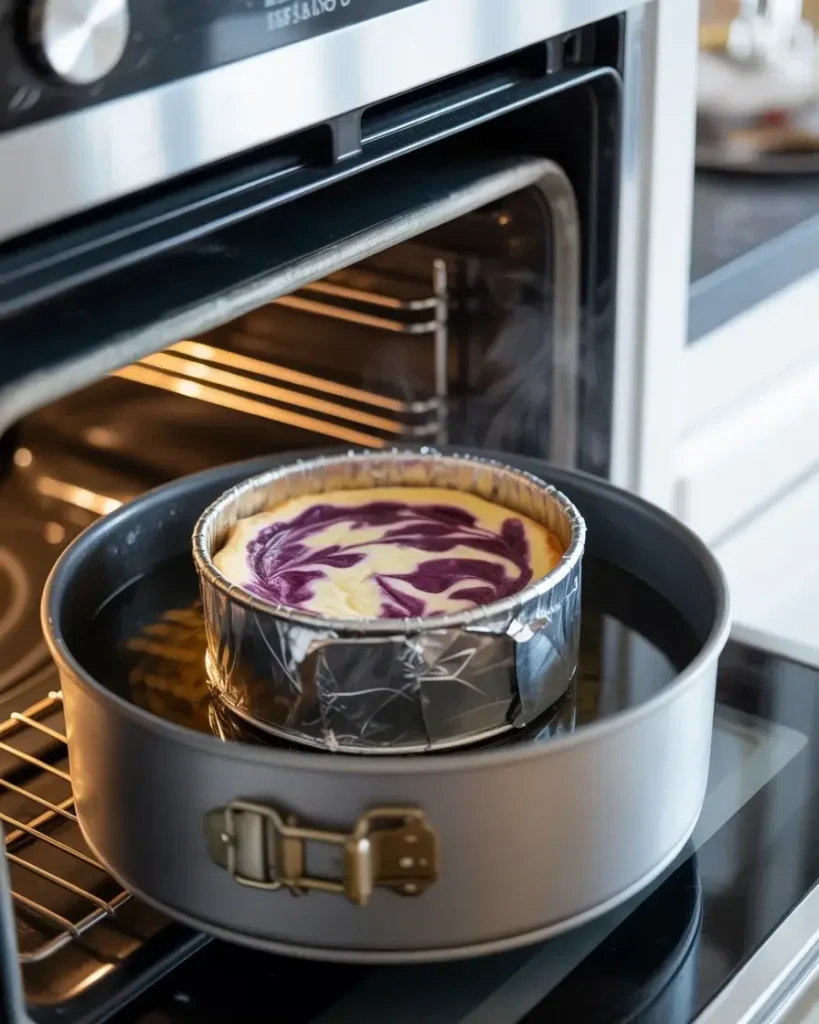
Wrap the outside of the springform pan tightly in two layers of heavy-duty aluminum foil. Place in a large roasting pan and pour boiling water halfway up the sides – about 1 inch deep.
Bake at 325°F for 55-65 minutes. The edges should look set and slightly puffed while the center still jiggles like Jell-O when gently shaken. That wobble is exactly what you want – it firms up perfectly as it chills. A fully set center in the oven means an overbaked, dense cheesecake.
Discover Delicious Cheesecakes
Step 7: Cool and Chill Overnight
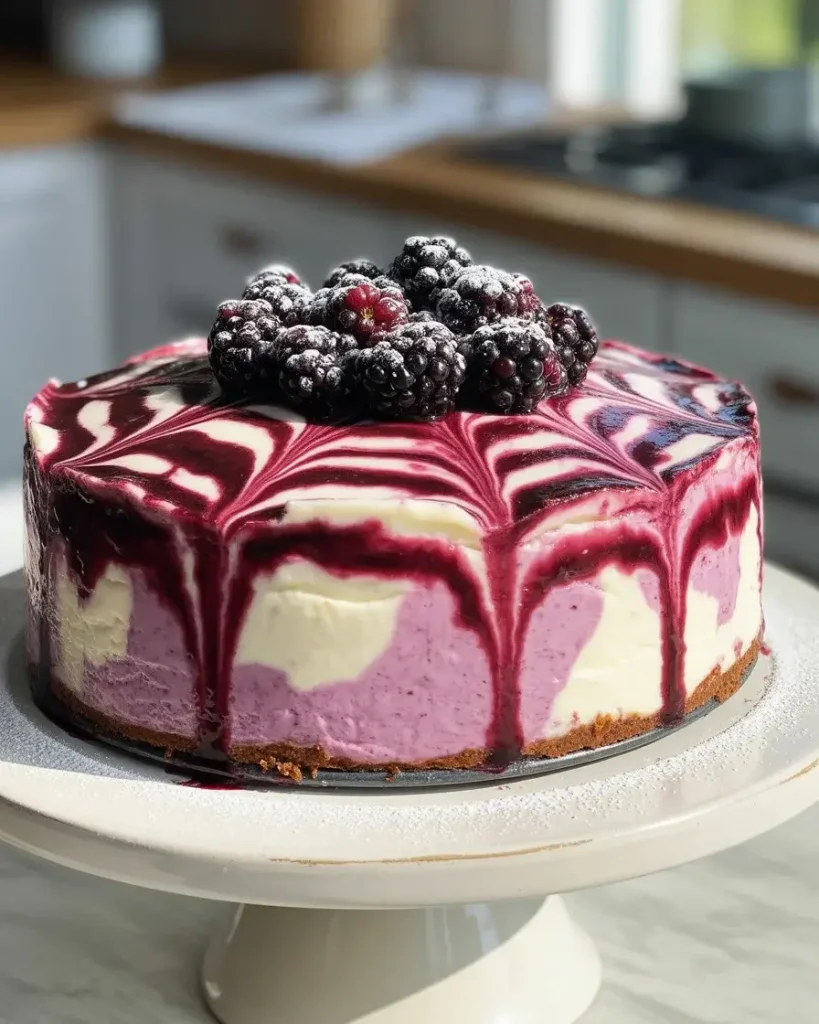
Turn off the oven and crack the door open 1 inch. Leave the cheesecake inside for 1 full hour – this gradual cooling prevents the dreaded center crack from temperature shock. I used to skip this and paid for it every single time.
Remove from the water bath, run a thin knife around the edge, and cool completely at room temperature before covering and refrigerating for at least 6 hours – overnight is better. The texture transforms from wobbly to firm and sliceable after a full chill.
Blackberry Swirl Cheesecake
Course: DessertCuisine: AmericanDifficulty: Medium4
servings30
minutes7
hours5
minutes7
hours35
minutesA rich, creamy baked cheesecake with a buttery graham cracker crust and vibrant blackberry swirl – silky, crack-free, and stunning for any occasion.
Ingredients
- For the Blackberry Swirl
1 cup fresh or frozen blackberries
2 tablespoons granulated sugar
1 teaspoon lemon juice
- For the Graham Cracker Crust
1.75 cups graham cracker crumbs (about 14 full sheets)
6 tablespoons unsalted butter, melted
3 tablespoons granulated sugar
- For the Cheesecake Filling
24 oz (3 blocks) full-fat cream cheese, room temperature
1 cup granulated sugar
3 large eggs, room temperature
1 cup full-fat sour cream
1 teaspoon pure vanilla extract
Directions
- Simmer blackberries, sugar, and lemon juice over medium heat 8-10 minutes until thick. Strain and cool.
- Mix graham crumbs, melted butter, and sugar. Press into 9-inch springform pan. Bake at 325°F for 10 minutes.
- Beat room-temperature cream cheese for 3 minutes until completely smooth. Add sugar and beat 2 more minutes.
- Add eggs one at a time on low speed, mixing just until incorporated. Stir in sour cream and vanilla.
- Pour filling over cooled crust. Drop blackberry sauce in spoonfuls across the top. Swirl gently with a skewer.
- Wrap pan in two layers of foil. Place in roasting pan with 1 inch boiling water. Bake at 325°F for 55-65 minutes.
- Turn off oven, crack door, cool inside for 1 hour. Cool to room temperature, then refrigerate at least 6 hours or overnight.
Notes
- Store covered in the refrigerator up to 5 days.
Substitute 1 cup raspberries or strawberries for a different berry swirl variation.
Cheesecake can be made 1-2 days ahead – it actually tastes better after a full overnight chill.
To freeze: wrap individual slices in plastic wrap then foil, freeze up to 2 months. Thaw overnight in the refrigerator.
Nutrition Table (per serving)
| Nutrient | Amount |
|---|---|
| Calories | 420 |
| Total Fat | 28g |
| Sugars | 26g |
| Protein | 7g |
Trusted Resource Links
For healthy dessert guidance and moderation tips, visit the American Heart Association Healthy Eating page.
What Causes Cheesecake to Crack and How Do You Prevent It?
Cheesecake cracks for three main reasons: overmixing after adding eggs, skipping the water bath, or cooling it too quickly. All three introduce either too much air or sudden temperature changes that stress the filling.
I cracked nearly every cheesecake in my first eight attempts before figuring out all three culprits. Fixing just one issue helped partially, but solving all three together is what finally gave me consistently smooth tops.
The water bath keeps oven temperature gentle and even around 300-310°F at the pan instead of the full 325°F air temperature. That 15-20 degree difference is genuinely significant for custard-based desserts.
Mix eggs on your lowest speed setting and stop the moment they’re incorporated. Then cool inside the oven for 60 minutes before removing. These three steps together make cracking almost impossible.
Can You Use Frozen Blackberries Instead of Fresh?
Frozen blackberries work perfectly for the swirl sauce – they actually break down faster and release more juice, which means a deeper purple color and more intense berry flavor in the final sauce.
I tested fresh versus frozen side by side across four batches. The frozen version produced a slightly darker, bolder swirl every time. Fresh berries give a slightly brighter, more delicate flavor, but both are genuinely excellent.
The one thing to watch: frozen berries release a lot more liquid, so you may need to cook the sauce an extra 2-3 minutes to reach the right jammy thickness. You want it to coat a spoon and not run.
Can You Make Blackberry Swirl Cheesecake Ahead of Time?
This cheesecake is actually better made 1-2 days ahead. After 24 hours in the refrigerator, the filling firms up, the flavors deepen, and the swirl pattern becomes more defined and vivid.
I’ve served this same recipe at 8 hours, 24 hours, and 48 hours of chilling. The 24-48 hour version wins every single time in both texture and flavor. The sour cream tang mellows beautifully and the berry swirl intensifies.
Wrap tightly in plastic wrap once fully cooled and store in the refrigerator up to 5 days. Add fresh blackberry garnish right before serving garnishing too early makes the berries weep and streak the top.
What’s the Best Pan Size for This Recipe?
A 9-inch springform pan is the standard and most reliable size for this recipe. A 10-inch pan produces a slightly thinner cheesecake that bakes in about 45-50 minutes, while an 8-inch pan makes a taller slice and needs closer to 70 minutes.
I’ve tested all three sizes. The 9-inch consistently delivers the best height-to-crust ratio – about 1.75 inches tall, which gives you that impressive thick slice without compromising the bake time.
Whatever pan you use, make sure it’s a springform. A regular cake pan makes removal nearly impossible without destroying that beautiful swirl top you worked so hard to create.
Frequently Asked Questions
Q: Why is my cheesecake still jiggly after baking?
A: A jiggly center is correct and expected. The middle 2-3 inches should wobble like Jell-O when the pan is gently shaken – it sets completely during the 6+ hour refrigeration period.
Q: Can I make this without a water bath?
A: You can, but cracking risk increases significantly. Without the steam, the outer edges bake faster than the center, creating stress cracks. Lower your oven to 300°F and place a separate pan of hot water on the rack below as a compromise.
Q: How do I know if my cream cheese is room temperature enough?
A: Press a finger into the block – it should indent easily with no resistance and feel neither cold nor warm to the touch. Properly softened cream cheese takes about 1.5-2 hours on the counter at 68-70°F room temperature.